Grappling with the Great Unraveling
Instead of focusing on how much I can change the world, I try to focus on who and how I want to be as we all face tough times.

Insight and inspiration in turbulent times.
Instead of focusing on how much I can change the world, I try to focus on who and how I want to be as we all face tough times.
A new report seeks to build a coherent narrative about the roots of the ‘polycrisis,’ the signs of its arrival and evolution, and why we should be thinking differently about the future.
ChatGPT and its successors and rivals, whatever their virtues, are the latest agents in the corruption of the public sphere by digital technology, threatening to extend and deepen the misinformation, fabulism, and division stoked by Twitter and other digital media.
A story is not just an allegory, or a metaphorical point. It’s a love affair, and one of the most wonderful ways of breaking the trance states being put on us at this point in time, is to figure out what you love.
And what I take from this is that we don’t get to choose whether or not there is an ending. We only get to choose what kind of ending we have, and therefore what we have left to build from.
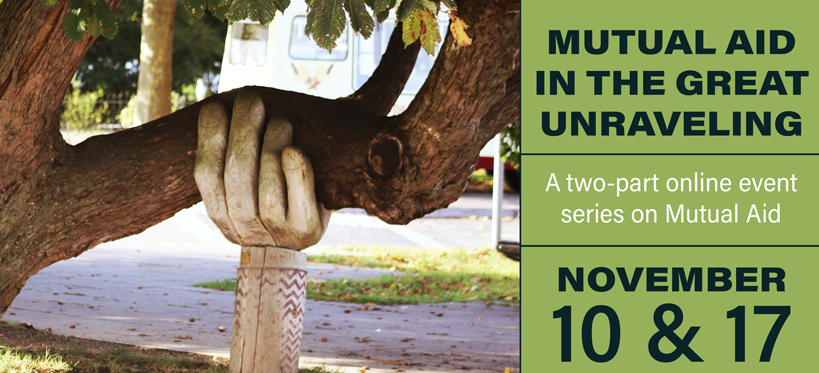
In this two-part webinar, activists and writers discuss the importance of social ties and how anyone can get involved in mutual aid efforts within their own communities.
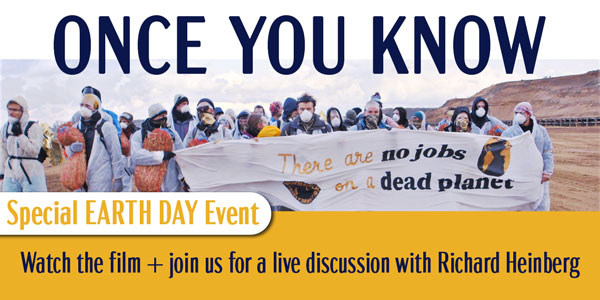
Post Carbon Institute’s Richard Heinberg briefly summarizes some of the major environmental and societal crises humanity (and other species) faces as the consequences of a fossil-fueled, growth- and consumption-based capitalist economy that’s been built on the exploitation of people and the planet.
Think of it as a garden: you start with the soil, preparing it for seeding, and you work with the grassroots, cultivating a crop and nurturing it carefully over time. Democracy is more like an annual crop than a perennial one; it needs to be refreshed periodically. It won’t keep thriving if it’s left alone.
Enrolling local tribal experts as science advisers, partners, and co-managers in addressing biodiversity loss, climate change, legacy pollutants, and other pernicious issues not only makes sense, but is the only way to effectively turn things around.
Sherri Mitchell is the Founding Director of the Land Peace Foundation, an organization dedicated to the global protection of Indigenous land and water rights and the preservation of the Indigenous way of life. After her previous appearance on episode 68, Sherri returns to the question of “What Could Possibly Go Right?”
In addition to fostering communication and thinking skills, deliberation can lead to changes in how young people engage as learners and citizens.
Ecologists have been telling us that “small is beautiful” since the 1960s, but trends have gone in just the opposite direction, resulting in the flourishing of the Superorganism. Nobody designed this vast, intricate web of global interconnectedness, and no one can control it.