

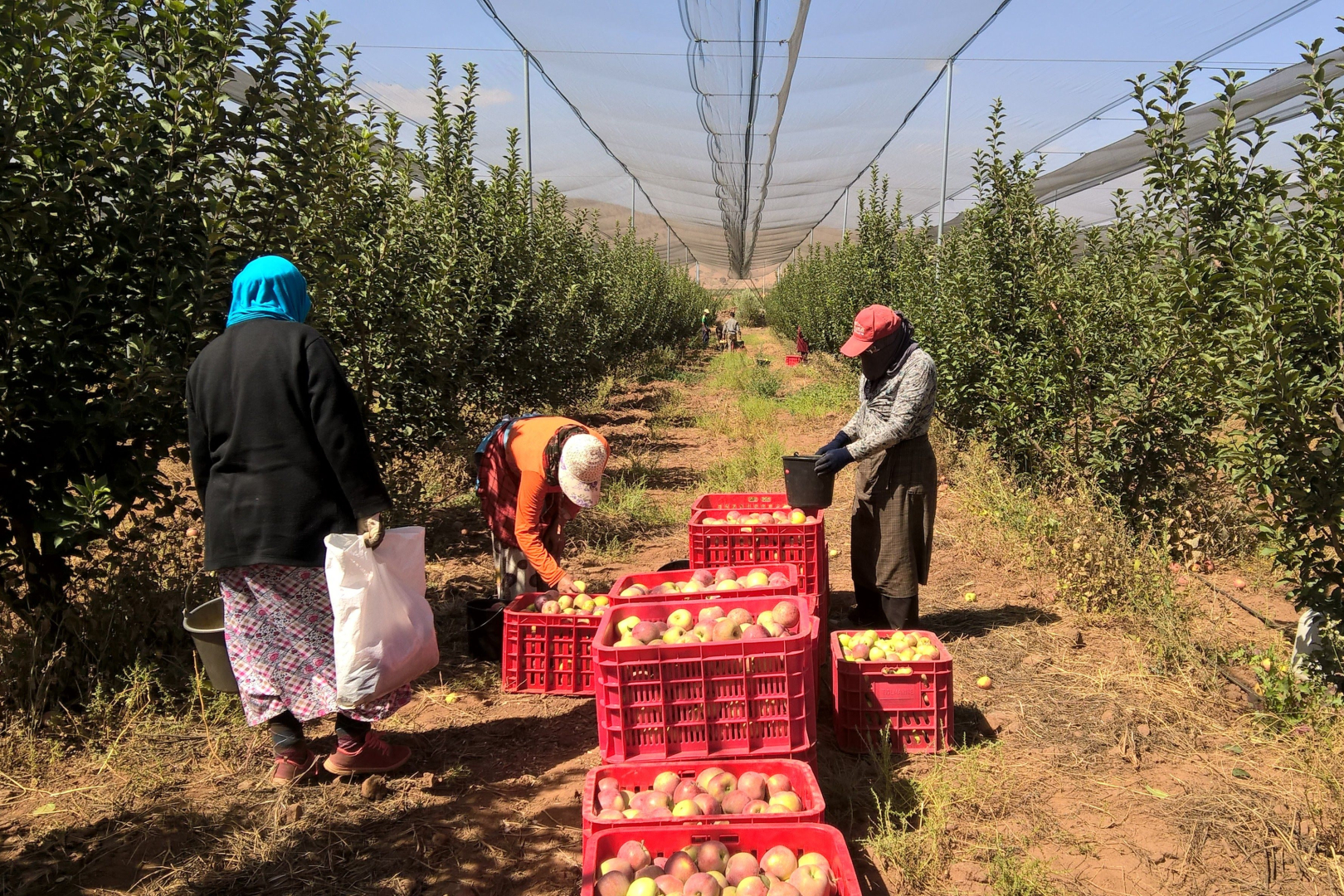
The New Geopolitics of Food: Navigating Policies for Resilient Self-Reliance, a special report by Jennifer Clapp and IPES-Food, the International Panel of Experts on Sustainable Food Systems, focuses on how countries can reduce dependence on global markets and stabilize food prices in the new global reality.
Along with the ongoing impacts of both climate shocks and the war in Ukraine, this new geopolitical reality is defined by tariff and trade wars, aid cuts and the breakdown of international institutions. The latest shock – the near-complete closing of the Strait of Hormuz – compounds these to further destabilise global food markets.
Food is being used increasingly “as a weapon of war”, Clapp pointed out at the report’s launch in a webinar last month, while in many places market concentration and import dependence/exposure accentuate problems.
A system built on just-in-time supply chains and dependence on global markets is now mired in “food price volatility, corporate profiteering, debt, and rising hunger”.
The report calls on governments to:
- Support agroecological transitions to bolster domestic food provision,
- Build infrastructure to support local and territorial food supply chains,
- Use market management tools to stabilise food markets,
- Strengthen cooperative partnerships on trade and aid.
To effectively buffer against ongoing and future shocks, these changes must not entrench “industrial input-intensive models” through “isolationism” or “harmful forms of protectionism”.
Instead, resilient, self-reliant food systems should promote “more diverse, just, and locally rooted agroecological food systems that reduce dependence on fossil fuels and external inputs, and support smaller-scale producers and local and territorial markets.”

What works – managing stocks as if people mattered
The report identifies “market management tools, including public food stockholding and supply management” as measures that can be effective, especially when combined with agroecologically aligned changes.
This is not a theoretical position – these tools have worked in the past and are working in parts of the world as economically and geographically diverse as Canada, India and West Africa right now.
At the launch event, Shalmali Guttal explained “a proven buffer against food shocks”: India’s public food stockholding.
Here, national agencies purchase wheat and rice from domestic farmers at minimum support prices set prior to harvest, which incentivises increased production. Importantly, these procurement initiatives prioritise smallholder farmers, with rules against larger-scale farmers and traders participating. These measures contributed to India seeing “a 15% and not a 200% price rise with the latest shock,” Guttal emphasised.
In this system, there are both operational and food security stocks, with the former also providing ongoing price-subsidised staples as part of a social safety net. The scale of this is impressive: “67% of the Indian population benefits from public food distribution, making it the world’s largest subsidized food distribution system,” the report states.
These sorts of activities occur at the multi-country level as well. Since 2012, the Economic Community of West African States (ECOWAS) has implemented a collaborative food storage programme. In this, regional reserves “allow countries to pool resources, spread fiscal burdens, collaboratively achieve efficiency gains, and reduce overall stockpile sizes.”
This approach integrates the local, national, regional and international levels. And again, there is a focus on the small to mid-sized domestic producer: “87% of the stocks are produced in West Africa and procured directly from producer organizations rather than large conglomerates or private traders.”
Looking to North America, Canada’s supply management system – in place since the 1970s – was developed in response to volatile prices, variable incomes and unsustainable surpluses. Production is coordinated, including through quotas, while price-setting mechanisms, such as minimum farm-gate prices and import controls, are also used.
The report argues that compared to the US and Germany, the situation for Canadian dairy farmers is far more stable. Small, family-run farms benefit from the supply management system, which also bolsters the vitality of rural communities.

No quick fixes
But this system is not without its critics, who question the governance – especially across countries, high prices, ongoing hunger, and stasis – or even reverse wealth transfers, in the case of Canada and Norway. In these countries, dairy farmers are typically wealthier than the average household. In cases such as these, “social protection programmes may be necessary to complement supply management,” the report notes.
It is also noteworthy that the Indian model integrates subsidised prices for 2/3 of the population already, and prioritises smallholders concurrently. Doing more than one thing – stabilisation for everyone’s prices, support for agroecological practices – seems to be key to unlocking multiple deeper benefits.
Isn’t this just food sovereignty?
At the report launch, I asked a straightforward question: how is this different from food sovereignty?
Jennifer Claff replied:
“We struggled with this. We talked about it. Yes, food sovereignty is important, and there are many overlaps, but we are responding to the fact that governments are stepping up, so what we are dealing with here is state involvement.”
It is the case that La Via Campesina, developers of food sovereignty as a concept, have also done much work on market stabilisation, including on market regulation and strengthening the Common Market Organisation last year and on global trade, all using food sovereignty principles.
Perhaps reinforcing similar arguments with different languages lands differently in different ears. There can be many voices in the choir.
With increasing global volatility adding to all the crises, The New Geopolitics of Food calls on governments to “meet the moment”:
“With the right policy choices – including market management, public procurement, and fairer trade arrangements – governments can seize this opportunity to rebuild food systems.”
Governments can choose now to build resilient self-reliance by ensuring fair livelihoods for farmers and stable access to food in an increasingly unstable world.


Comments
We changed commenting systems on September 10, 2026 as part of a site-wide functionality and security upgrade. Your past comments have not disappeared, and you can still log in with your old Disqus account credentials if you wish. Contact us with any questions.