

 Edited excerpts from Andrew Flachs’s new book, Feeding the World as if People Mattered: How Small Farms Produce Value Beyond Yields, available from the University of Arizona Press. It follows the previously published piece, Why we need more farms, not more food.
Amid plantation monocultures and industrialized farms built to maximize production at the expense of social and ecological costs to the public, there are also many communities where economy and ecology are not in conflict. On small farms in India, Bosnia, and the USA that I profile in Feeding the World as if People Mattered, they are complementary elements of the same force. All embrace ecological diversity as the best path to keep the farm. Farming is a means to build institutions, create life-giving spaces, and identify the value of care work. In focusing on how small farms can provide space for solidarity amid rising temperatures, fascism, and inequality, smallholding farming has a radical potential for connection, mutual aid, and social reproduction in the twenty-first century. In lieu of technical fixes that these farms might offer to solve the problems of the world, I offer a few broad lessons.
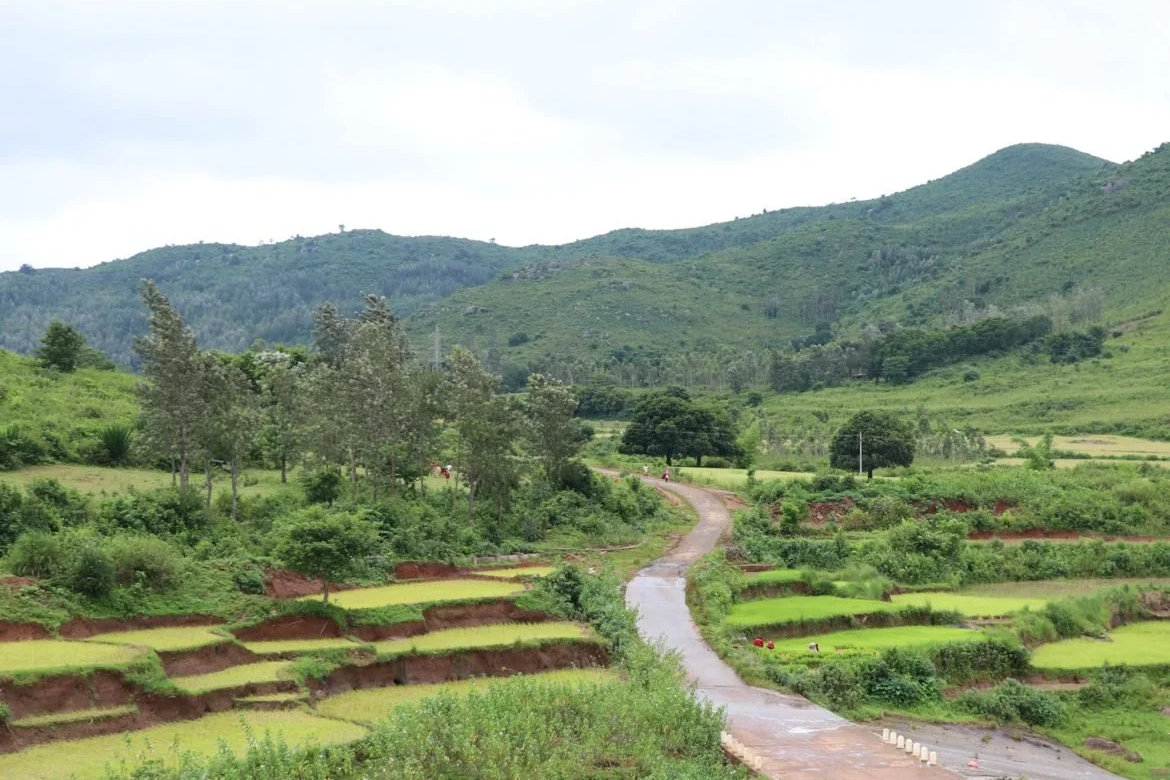
Lesson one from Araku, India: Farming is a way to keep families on their land.
“Our initial focus was really on education and development,” explained Prandeep, a field officer for an organic coffee program. We were drinking Araku coffee in his office as his team explained the kind of work they were doing in the region. Their work began in 1998 as a preschool program focused on social reproduction that would free up time for mothers and other caregivers. “We didn’t even start thinking about coffee until we linked it to the household economy,” he continued. Where many agricultural initiatives privilege farm production over other aspects of rural life, farming only entered the picture as a way to support education and health care. These program officers had instead invested in long-term relationships that made them especially effective in their work.
Both farmers and organic coffee managers had come to see agriculture as a means to an important end: land sovereignty. When farmers may not have the paperwork or the means to defend their land claims in court, organic certification can protect land ownership if prospectors illegally try to take them. Unregistered land in the Eastern Ghats can be much more easily stolen for lucrative bauxite extraction. Millions of Adivasi farmers have been displaced from their land for these mining projects, many with little or no appropriate compensation.
In securing the land from theft, coffee forests also secure future land claims by promoting agricultural biodiversity. Agroforestry requires a continued investment in complex relationships between different kinds of plants. Every clearing on the mountainside offered a stunning view of Araku Valley, but also insights into the various home garden plots that nourished the village through their bustling biodiversity: ginger grew alongside beans and fruit trees; millet was intercropped with corn and gourds; peppers, tomatoes, and eggplant popped out of every available space in each garden.
Farmers gained a connection to organic coffee-drinkers, but their broader cropping strategy helped them find public markets too. In India, the national midday meal program sources foods from farmers like them, where the extra income is especially useful. School lunches are not just a wildly successful anti-poverty mechanism. They also provide rippling benefits to a broader society by easing burdens on parents who would otherwise have to prepare that meal; they enable children to do better in school, and they provide employment for cooks, distributors, and growers who live in the area.
Lesson two from Teslić, Bosnia: Farming is a way to build solidarity
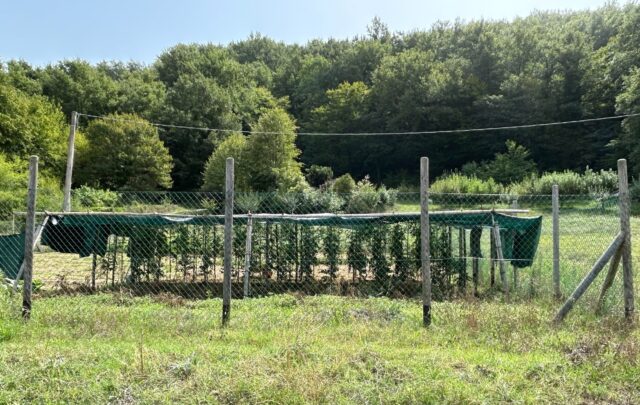
It was a warm morning in July 2022 when we noticed the goat. We were drawing maps that showed how farmers arranged plants in their gardens, counting up species and chatting with farmers about the season, crop rotations, and everything else on their mind. As we rounded the corner, we passed by Anna’s garden. And there, amid the corn, beans, and tomatoes, was a goat who didn’t belong, with a trail of half-eaten destruction in her wake.
Having watched this scene unfold, Dalia, her neighbor, sprang into action. “Come, sit,” she said firmly. Taking Anna by the elbow, Dalia walked her down the road and practically pushed her into a chair on her porch. Dalia disappeared into her house and returned moments later with cigarettes and coffee, the quintessential Bosnian welcome package. When Anna had recovered enough to take a second cup of coffee, Dalia excused herself again, returning this time with a bag full of corn, beans, and tomatoes to replace what had been lost. By the third cup of coffee, the women were reminiscing about when their children were younger, how they would play across fencerows when the village used to have more young children. No longer crying, Anna thanked Dalia for the vegetables and shook her head. “Time to fix the garden,” she said, matter-of-factly.
This moment of kindness offers a window into the enduring value of a garden where the formal economy is unreliable. These sorts of interactions power everyday life: if you owe someone, then you might be owed in the future. Dalia offered cigarettes and a sympathetic ear as Anna added this goat attack to a long list of misfortunes, including a bad marriage, distant children, unpredictable weather, and the lingering tensions of the war. Such exchanges are usually offered with prayers and promises of future commiseration, a dense web of care and support. Just as important as feeding the growers, these gardens ensure that people have something to share when the need arises. Where neither states nor markets are reliable, gardens provide a safety net.
And, of course, gardens are an ecology. They provide a physical space where people can organize the logistics of social reproduction, a diverse economy built on intimate debts and mutual aid. Exchanges of vegetables, seeds, and work are the foundation of the informal village economy. No one receives a visitor without snacks. The social, political, and economic realities of this sharing economy have a clear ecological consequence. If the ecology of agricapitalism is a monoculture plantation, then the ecology of mutual aid is a diverse, productive garden.
Lesson Three from the US Midwest: Collective work can sow the seeds for future change
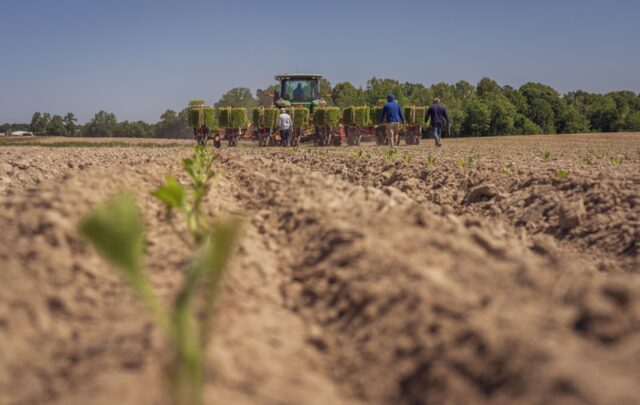
In 2020, local food networks experienced another crisis – COVID-19. The pandemic brought distinct challenges to the alternative, local food system through labor crunches, reduced purchasing power for farm and food workers, and rising local and global prices for food and fuel. Just when many local farmers and farm managers set their 2020 seasons in motion, they were forced to pivot with the rest of the food system amid socially distanced markets, closed schools, and closed restaurants. Unlike the larger centralized food system, local food networks could shift their growing and distribution system quickly in response to the needs and growing demand of local eaters.
Amid this crisis, the U.S. government stepped in to provide major support for both food-producing farmers and eaters. They focused particularly on feeding kids through schools, a local and familiar infrastructure for most Americans. Some big school systems like California diversified their food options in order to source from local growers, effectively reinvesting federal assistance money into local diversified farms that could feed kids in the region. Through a combination of universal income checks, interest-free loans, and a massive expansion of the free and reduced-price school lunch program, food became much more available for hungry people. Incredibly, while households saw an uptick in food insecurity during the first few months of the pandemic, it had fallen to pre-pandemic levels by the end of 2020. Social safety nets worked for both regional food systems and consumers – until Congress let the policy expire in 2022. A similarly popular federal program that funded nearly $1 billion in local food purchasing was similarly cancelled in 2025.
Lessons from small farm systems
Local and regional markets already provide nearly three-quarters of the world with our food, even though the majority of land and capital is vested in multinational corporate supply chains. Imagine what smallholders could do on a level playing field. Local markets are not only more resilient to global shocks like pandemics or recessions; they are also more effective at feeding hungry people and paying local farmers because they respond to local tastes and pricing.
Across three very different sorts of farms with three very different regional histories, public infrastructure is critical to distribute food and pay for lots of different sorts of farmwork. Sometimes this means aligning with existing public programs like school lunch or food hub distributors. Other times, as in Bosnia, it meant building a social safety net through the gardens themselves.
In the U.S., India, Canada, and Europe, governments already exert significant influence on local markets through state buying programs for goods like alcohol and cannabis. Investing in state-run food distribution programs focused on supporting local growers could be transformative. Small farms, gardens, and kitchens set the stage for larger acts of solidarity, mutual aid, and action. They are spaces where people gather to build something bigger and make the most of what we can share. Once we’ve eaten, they help us to come together to keep or build a landscape worth living in.



Comments
We changed commenting systems on September 10, 2026 as part of a site-wide functionality and security upgrade. Your past comments have not disappeared, and you can still log in with your old Disqus account credentials if you wish. Contact us with any questions.