

 My grandmother’s rural Pennsylvania garden was teeming with cucumbers, tomatoes, and peppers, each plant branching wildly into its neighbors. Grandma kept bees and chickens too, and when her energy began to dip, we grandkids scrubbed out her chicken coop and turned it into a clubhouse. The forest on her doorstep was home to blackberries and jewelweed. Grandma knew where each lived and how to turn them into food and medicine. Her little garden could not have been more than twenty square feet, but the family ate fresh vegetables all summer and preserves well through the winter. These foods were gifted and traded down the gravel lane, excuses to visit with neighbors or ways to show gratitude for help given as Grandma aged. Traded snacks and traded gossip held equal weight: a chance to check in on friends, to fix a broken door, to see and be seen.
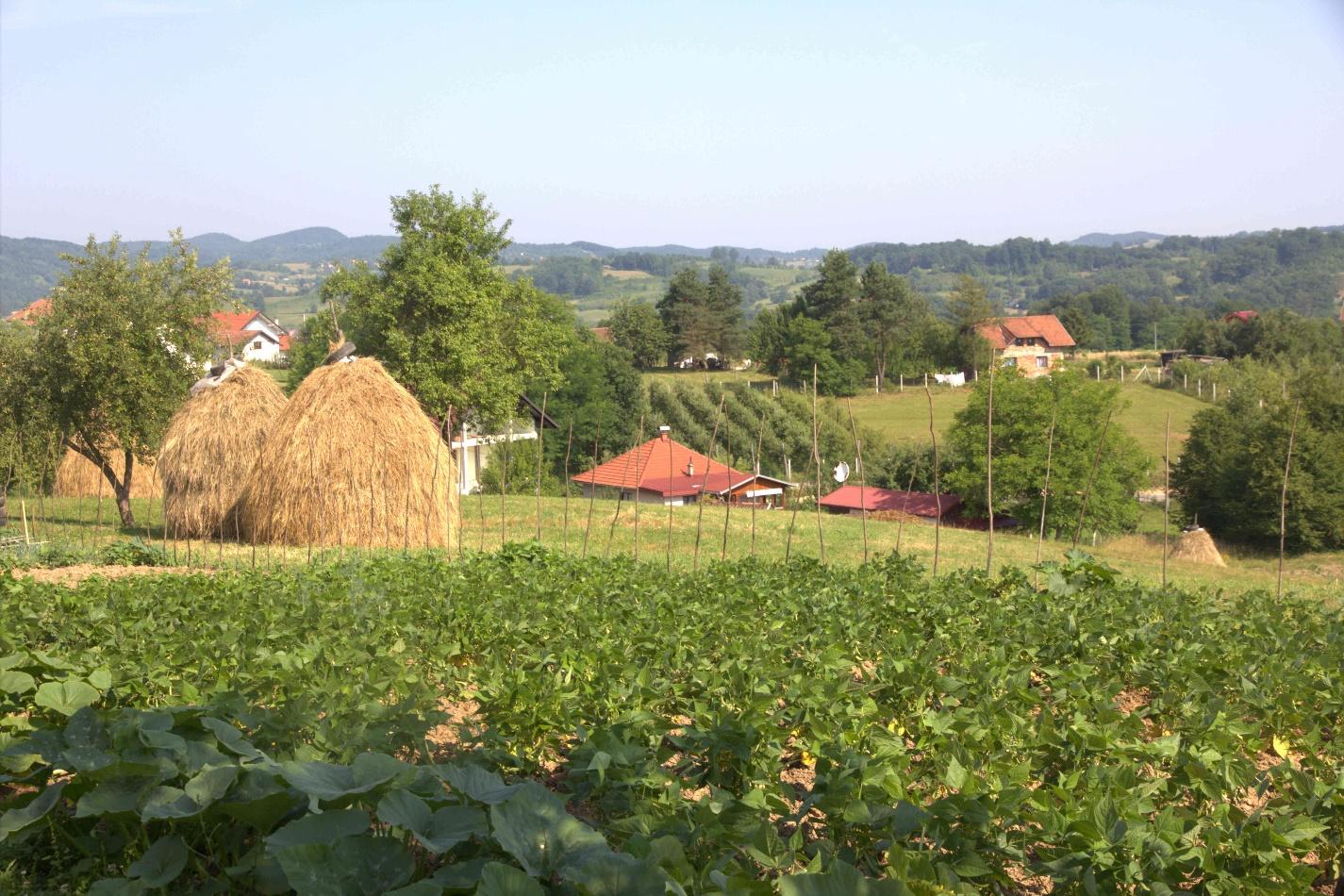
Years later, I found myself exploring these informal relationships of domestic work and shared foods in a different garden with someone else, far from Pennsylvania. “We’ve waited months for this.” Dalia grinned, plucking a deep red strawberry and passing it to me. My mouth watered. I could still feel the sun’s warmth as I held the perfectly firm berry in my hand. These strawberries weren’t destined for sale at a market or to a wholesaler. They were to be shared with family and neighbors who stopped by for coffee, snacks, and cigarettes as part of the infinite exchange of social gifts and debts that defined Dalia’s agrarian world in central Bosnia.
Strawberries recruited village kids to fix the cracking sidewalk; strawberry jam paid a metalworker to fix her stove; preserves added calories to an elderly neighbor’s bread when winter arrived and her pension did not. The strawberries were a wild variety endemic to this region that shared space with wild thyme and nourished bees who provided rich honey for the community. Each berry brought a burst of pride and joy in Dalia’s skills as a gardener and farmer, layered with the gendered expectation that Dalia provide food and hospitality to any neighbors or relatives—or anthropologists—who stopped by while her husband and son worked in a nearby city. So much depends on a perfectly ripe strawberry.
These two women grew vegetables next to their rural homes in wildly different contexts informed by geography, history, religion, language, and ecology. Dalia’s time in the garden was shaped by her experience seeing Yugoslavia dissolve, farming during a civil war and genocide that targeted her family. Her family was not necessarily food insecure, but she relied on that garden as a buffer against inflated food prices and unstable supply chains. By contrast, my grandmother descended from white settlers in North America on Lenape land. She was fortunate to live a life free from state violence or war. Her garden was a beloved choice far more than a necessity. She learned about gardens and medicinal wild plants from her local library, not from oral traditions.
But these women also share common ground, particularly their experiences of tending and caregiving. Their gardens grow more than seeds. They provide joy and facilitate community exchange. Both women use their gardens as creative outlets that transcend governments or markets to build meaningful relationships with plants, animals, and other people in their lives. Through these gardens, they reproduce life itself.
Our reactions when reading about a mutual farm or a backyard garden reveal our biases about what we think the purpose of farming really is. Neither produces export commodities or capital accumulation. But what if the purpose of farming were not to produce as many crops as possible but to farm as if people mattered? These gardens produce more than snacks.
Instead of thinking of agriculture like any other kind of business producing a narrow set of commodities, this approach acknowledges that agriculture is a living landscape produced through communities of practice. In doing so, it sustains rich and diverse rural economies anchored by lots of farms that produce meaningful work and life-giving habitats alongside market goods. Agriculture is a fundamentally social and ecological act. If we cannot value its social and ecological products, then we can’t hope to make good decisions about preserving, changing, or recuperating our shared earth.
When leaves unfurl and flowers bloom, seeds nourish bees and other pollinators in a web of life that transforms energy from the sun into astonishing networks of living beings. When we deem their leaves, roots, stems, and fruits ready, we transform them into the foods we want to eat. We shell, husk, and grind them. We cook, ferment, pickle, and salt these foods to make them palatable for our culturally variable tastes. That work and skill require us to forge connections with a community that might include relatives, neighbors, and friends, facilitated through favors, gifts, promises of food, or cash.
None of this is well captured in the yields or profits that governments and markets use to judge success. Across 15 years of research in India, Bosnia, and the US Midwest, I have seen that many small and local farmers’ yields are poor, they don’t maximize their productive potential, they don’t contribute much to national export revenue, and their work is labor-intensive. All fair critiques. But these are the wrong benchmarks. Through this work, small farmers and gardeners nourish the earth. What’s wrong is that we must argue that this reproductive work is valuable in the first place.
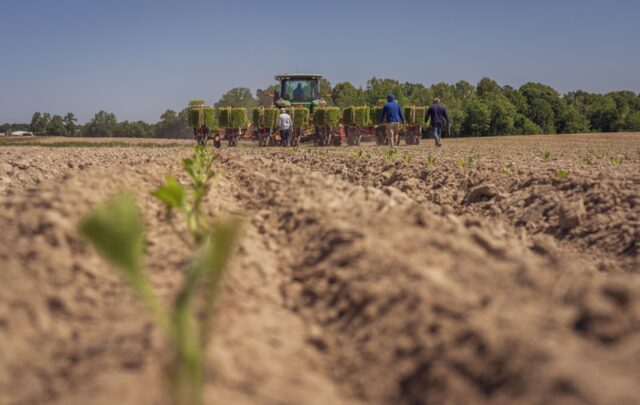
Over millennia, seeds and humans have shaped landscapes together. In some of these spaces, all sorts of communities of living beings can flourish. Ponds and ditches irrigate crops but also provide waterways for rabbits and migrating birds. These in turn bring joy to bird-watchers and dinner to rabbit-eaters, an ecological diversity that makes an economic diversity possible. At an opposite extreme, endless stretches of monoculture insist that other life must be weeded, plucked, and poisoned in the hope that this singular commercial bet will pay off. In the United States, towns dominated by industrial agriculture have seen their small businesses whither away as those farms consolidated. In the process, schools, newspapers, and churches consolidated too. Meanwhile, farm ecologies themselves shifted to chemical-intensive monocultures. In limiting ecological possibility, these landscapes limit economic potential too.
If I join economists in calling formal work “production,” then the considerable informal effort that makes it possible to go to work in the first place is a kind of “reproduction.” Even though we don’t usually think of it as formal labor, the informal work of childcare, soil building, keeping up the house, or teaching someone when to pick a fruit is all essential to making the economy run. On small farms around the world, working families collectively own and manage their resources, and their decisions create a living landscape that is also their economic livelihood. You can’t go to work if you’re not ready or able to do the job, but you can’t go to work on a farm if that particular landscape cannot continually sustain life.
Reproduction is not only a process of making groups of people who do things in the world. It is also a process of making the world itself. This reproduction includes human life, work, and play, but it also encompasses the lives of the plants, animals, and microbes that share agricultural landscapes with us. Farmers’ decisions create possibilities for many kinds of life. To see this, we have to take growers’ cultural values seriously, including taste, color, connection against loneliness, joy in helping things grow, their hopes for the next generation, and their frustrations with the struggles of food and farming.
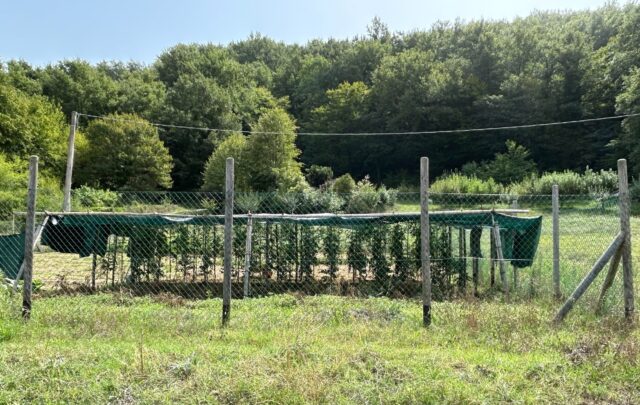
This critical, yet underpaid, work often falls to older women. Back in Bosnia, Dalia’s mother cackled when I offered this observation while touring her allotment. “Without grandmas, you wouldn’t have anything at all,” she corrected me. Gardens and kitchens facilitate village life through exchanges of material things like food, work, and cigarettes and equally important immaterial things like gossip and sympathy. This mutual aid economy is sustained through regular acts of caregiving and sharing. It is anchored by a garden that provides enough and nothing much extra. Yet it is the most real economy in many villagers’ daily lives.
Asking if the world grows enough food is the wrong kind of question. It leads to the wrong kind of answer. We don’t need to produce more food. We need to produce more farms: places where communities of living beings can thrive. Producing more farms that sustain a greater diversity of life requires a broader conception of value and the purpose of farming itself: not as a way to profit from life, but as a way to build meaningful relationships with people, plants, and the landscape that can weather pandemics, climate disasters, and authoritarian politics while nourishing life.
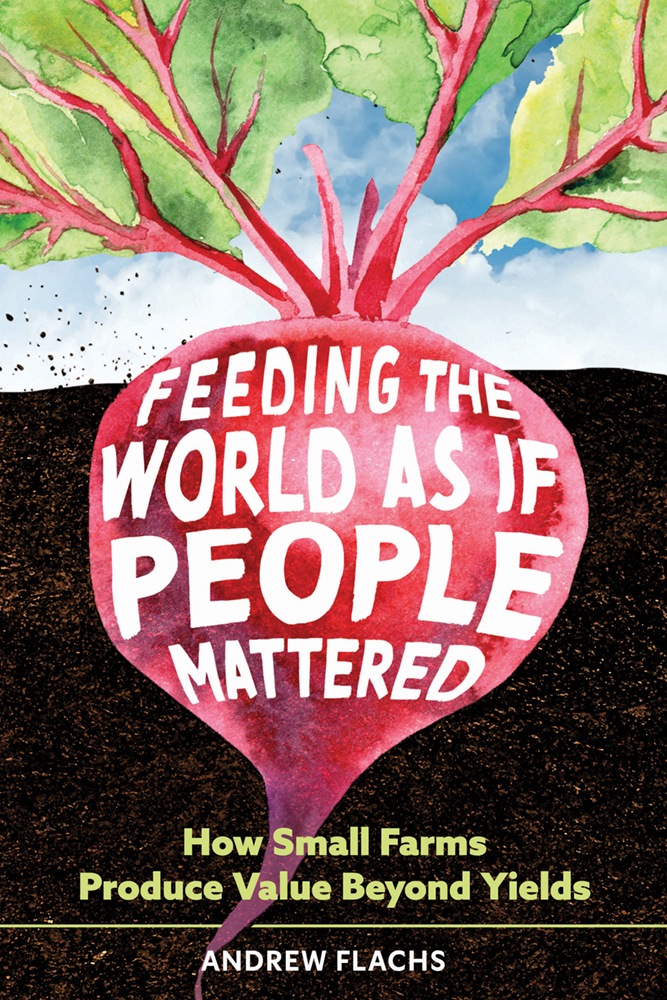
This article is an edited extract from Feeding the World as if People Mattered: How Small Farms Produce Value Beyond Yields by Andrew Flachs, available for purchase through The University of Arizona Press.


Comments
We changed commenting systems on September 10, 2026 as part of a site-wide functionality and security upgrade. Your past comments have not disappeared, and you can still log in with your old Disqus account credentials if you wish. Contact us with any questions.
And that is why I'm working to grow more food on my own bit of land, though I'm unskilled and getting older. It's a way of life that I'm trying to join, after all the other.
We don’t need to produce more food. We need to produce more farms
Yes, but the trend is the opposite, because as Earl Butz so infamously observed about capitalist agriculture, it's "get big or get out".