

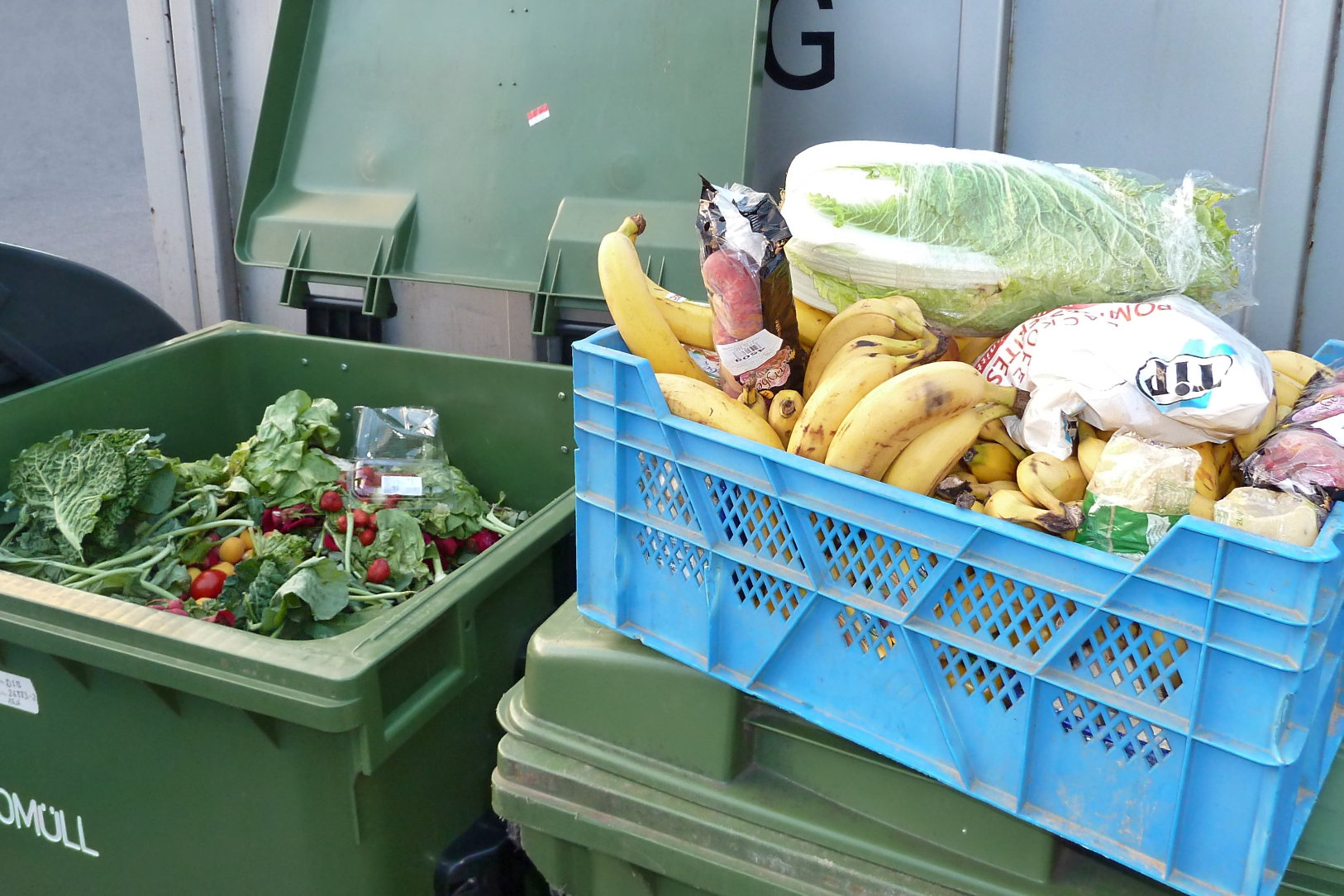
Back in June, I arrived at the 2026 ReFED Food Waste Solutions Summit expecting conversations centered on food recovery, diversion strategies, and emerging technologies. Those conversations happened. But I left thinking about something much larger.
Across discussions on policy, technology, supply chains, and community partnerships, a different pattern emerged: food waste rarely appeared as an isolated issue. Instead, it surfaced as a signal of deeper system failures and missed connections.
The more I listened, the harder it became to think of food waste as simply a waste problem.
Food waste is often framed as an issue of excess: too much food produced, purchased, or discarded. Solutions are similarly framed around recovery, redistribution, composting, or disposal. Those interventions matter. But they can also risk focusing on symptoms without fully addressing the conditions that create them.
What became increasingly clear throughout the summit was that food waste sits at the intersection of multiple systems operating simultaneously. It reflects how resources move, how incentives are structured, how information is shared, and how people interact with the systems around them.
Economics shapes what scales
One theme surfaced repeatedly across conversations, regardless of whether speakers were discussing technology, operations, or partnerships: mission alone does not drive adoption.
Many organizations enter sustainability work with compelling missions and clear intentions. Yet good intentions by themselves rarely determine whether a solution succeeds. Operational realities still matter, cost matters, ease of implementation matters, and existing workflows matter.
Several speakers emphasized understanding customer operations and reducing friction rather than asking organizations or communities to completely redesign how they work. In practice, this means successful solutions often fit naturally into existing systems rather than requiring entirely new ones.
That observation extends far beyond food waste.
Sustainability initiatives are frequently discussed as though environmental benefit itself should be sufficient motivation. In reality, organizations are often balancing multiple pressures at once: budgets, staffing limitations, operational constraints, and competing priorities. Solutions that scale tend to solve more than one problem simultaneously. They reduce costs, improve efficiency, lower risk, or create additional value alongside environmental outcomes.
This does not diminish the importance of mission, instead I believe it simply recognizes that systems respond to incentives, whether we intentionally design for them or not.
And if food waste is ultimately a systems challenge, then understanding the incentives embedded within those systems becomes just as important as understanding the waste itself.
The invisible infrastructure problem
Another theme that surfaced repeatedly was how often we focus on visible innovations while overlooking the systems that make those innovations possible. It reminded me of the idea of not being able to see the forest for the trees. We focus on the solution directly in front of us while missing the broader systems operating around it.
When people think about infrastructure, they often picture roads, buildings, machinery, or other physical assets. But infrastructure is not always visible. Sometimes infrastructure looks like data standards, shared information systems, measurement frameworks, or operational coordination across organizations and sectors.
This idea surfaced in multiple sessions, particularly a session dialed in on the importance of making measurement matter, where discussions moved beyond compliance reporting and toward operational decision-making. Food loss and waste were discussed not simply as environmental concerns but as issues linked directly to economics, efficiency, and organizational performance. Better measurement was framed as a way to improve decisions rather than simply document them.
Speakers also acknowledged a familiar challenge: gathering useful data and creating interoperability across systems remains difficult. Information often exists in separate systems, across different actors, and in inconsistent formats. Several conversations pointed to work happening in the carbon space as one example of how shared standards and common approaches can create stronger foundations, while recognizing that substantial work remains around supply chain transparency.
A separate breakout session that focused on the real climate cost of food waste highlighted another reason measurement matters. Food waste is frequently understood as the food we can physically see being discarded. But its impacts extend far beyond what ends up in a landfill or compost bin. The emissions associated with fertilizers, refrigerants, transportation systems, embedded water use, and super pollutants like methane and nitrous oxide all exist within a much larger network of environmental and economic impacts.
Much of the system exists beyond our immediate field of vision.
If we can collect the granular data needed to better understand how these systems operate, we begin to unlock opportunities that might otherwise remain hidden. Data can reveal inefficiencies, identify patterns, and strengthen decision-making. More importantly, it can help us ask better questions.
I see similar dynamics emerging in community resilience and energy transition work. Progress in these spaces often depends on measuring what we previously overlooked and paying attention to signals that initially seem invisible. The data itself is not the goal. The goal is creating a clearer understanding of how systems actually function so that solutions can be designed with greater intention.
Infrastructure, in other words, is not always something we build. Sometimes it is something we learn how to see.
Food waste reveals interconnected systems
Food waste is simultaneously an environmental, social, and economic issue. The more I listened throughout the summit, the more difficult it became to separate one impact from another because pulling on one thread seemed to reveal an entire network beneath it.
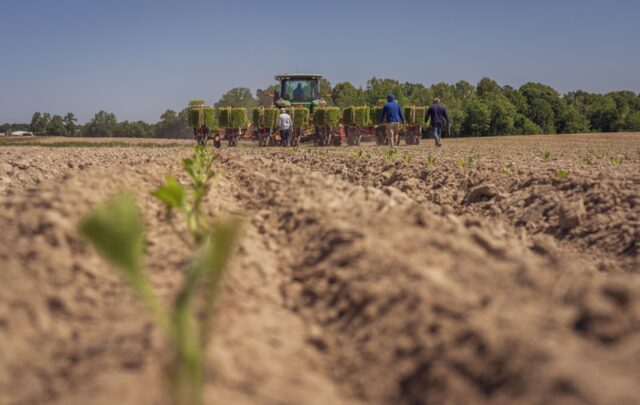
During one breakout session, a statistic that stuck with me was that agriculture uses roughly 80% of all water consumed in the US. On the surface, it sounds simple. But when thinking about food that is ultimately lost or wasted, that number suddenly represents something much larger: land use, irrigation systems, energy use, labor, transportation, and the resources required to move food from farm to consumer.
ReFED’s most recent report reinforces this interconnectedness. The organization estimates that the United States generated approximately 70 million tons of surplus food in 2024, representing nearly 29% of the country’s food supply. That surplus carried an estimated value of $380 billion while also generating emissions equivalent to 51 million cars driven for a year.
Those numbers reveal how deeply food waste is embedded in other systems. Food waste is not just about what ends up in a landfill. It is also about the energy powering cold chains, the water used throughout agricultural production, the economic resources invested across supply chains, and ultimately the people connected to each stage of that process.
Which raises another question: if systems depend on people to function, where do people fit into solutions?
Resilience depends on people, not just technology
Technology alone cannot create resilient systems.
Throughout the summit, conversations around AI and innovation highlighted exciting possibilities for improving forecasting, operational efficiency, and decision-making. I believe there is meaningful potential there. At the same time, I found myself returning to a different thought: the answer is probably somewhere in between technological advancement and human engagement.
If people are disconnected from food systems, then even the strongest technologies can only go so far. Several discussions emphasized the importance of positive messaging and meeting people where they are rather than relying solely on fear-based narratives. Encouraging consumers to understand their own relationship with food waste may ultimately create more durable change than asking people to respond to abstract statistics alone.
ReFED’s findings suggest there may already be evidence of this. Household behavior changes around shopping, meal planning, and food management contributed to recent reductions in food waste. Undoubtedly, strong systems still rely on people willing to participate in them.
That participation happens locally. It happens when communities organize around shared needs, when people teach one another, and when solutions become embedded in daily life. I have always found inspiration in examples of communities coming together to solve problems, whether through urban food gardens, food cooperatives, or local efforts to improve access and resilience.
Technology may help us move faster, or so its proponents argue, but people remain the connective tissue that determines whether systems ultimately endure.
Food waste may be one of the clearest examples of how sustainability challenges rarely fit neatly into categories. They exist between sectors, communities, and institutions, revealing connections that are easy to miss until we begin looking more closely.
If food waste is ultimately a systems challenge, then solutions may require us to think less about what gets thrown away and more about the systems we build around it. Because when we strengthen systems, we are not only reducing waste. We are creating the conditions for healthier communities, more resilient infrastructure, and a more sustainable future.



Comments
We changed commenting systems on September 10, 2026 as part of a site-wide functionality and security upgrade. Your past comments have not disappeared, and you can still log in with your old Disqus account credentials if you wish. Contact us with any questions.
In some ways we want to have waste. This is called the feed buffer. If the system didn't have waste we'd be operating with no breathing room and a short harvest would leave us hungry. Now in historic food systems the extra human food would go to livestock. This is still the case but hard to do with packaged groceries. Also, there aren't hogs in every community just waiting to eat the food waste. So by creating the CAFO hog system we centralized an aspect of the food system, and created a feed demand, that in the past could mop up our normal excess.