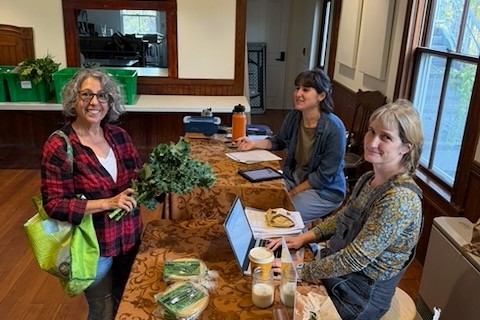
If you ask a hundred people what they want to do about climate change or other crises in the age of overshoot, approximately zero of them will enthusiastically call for rationing. But is rationing all that bad? If your grocery store is out of toilet paper thanks to pandemic-induced hoarding, maybe not so much. And considering our dangerous dependence on fossil fuels, maybe it’s time to up the ante and establish a rationing program for oil and other sources of energy. Drop the hoarding mentality, break out your coupon book, and engage your sense of fairness as Crazy Town explores the rationale behind rationing.
Asher became the Executive Director of Post Carbon Institute in October 2008, after having served as the manager of our former Relocalization Network program. He’s worked in the nonprofit sector since 1996 in various capacities. Prior to joining Post Carbon Institute, Asher founded Climate Changers, an organization that inspires people to reduce their impact on the climate by focusing on simple and achievable actions anyone can take.
Tags: building resilient societies, coronavirus strategies, Crazy Town, rationing
Related Articles
'SELECT SQL_CALC_FOUND_ROWS wp_posts.ID
FROM wp_posts LEFT JOIN wp_term_relationships ON (wp_posts.ID = wp_term_relationships.object_id)
WHERE 1=1 AND wp_posts.ID NOT IN (3480780) AND (
wp_term_relationships.term_taxonomy_id IN (5,46432,47210,47212,47214,47441,47503,47544)
) AND wp_posts.post_type = \'post\' AND ((wp_posts.post_status = \'publish\'))
GROUP BY wp_posts.ID
ORDER BY wp_posts.post_date DESC
LIMIT 0, 3'
By Nandita Bajaj, Inter Press Service News
As governments push costly pronatalist schemes to boost birthrates, the real solution, argues Nandita Bajaj, is to embrace declining fertility, expand women’s reproductive agency, and redesign economies for equity and ecological survival.
June 23, 2026
By Rachel Mural, The Conversation
As the race to build data centers across the United States accelerates, local governments worry that the tech industry mantra of “move fast and break things” puts their communities at risk of being broken, and Americans are responding to this moment with the power of their voices and votes.
June 22, 2026
By Next Economy Now, LIFT Economy
In honor of World Localization Day, Helena Norberg-Hodge, founder of Local Futures and pioneer of the Localization movement, reflects on decades of work as an activist and the dangers that global, deregulated corporations pose to the global economy and the environmental movement.
June 19, 2026