

Show notes
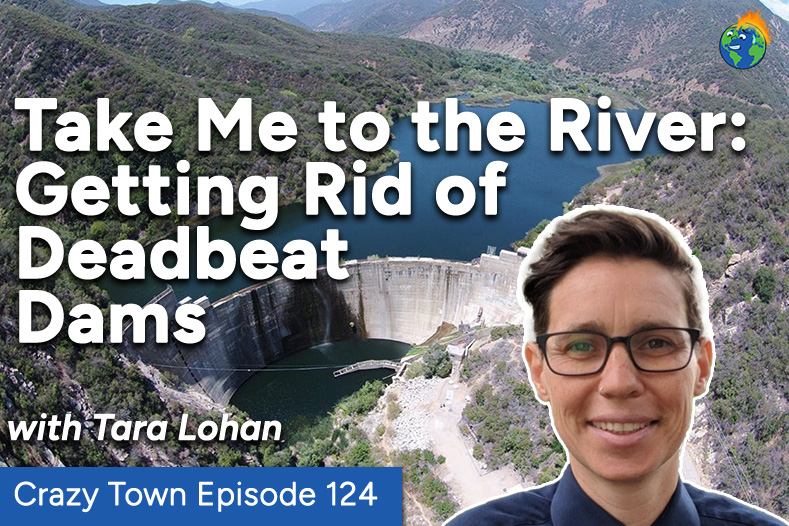
People REALLY love their impervious surfaces. Concrete structures practically permeate human-built landscapes. Rather than layering ever more concrete on top of living soils, in waterways, and all over the countryside, what if we re-established our connection with natural ecosystems and put a stop to the concrete madness? One of the most inspiring developments of environmental and cultural restoration involves the cleanup of tons and tons of concrete. We’re talking dam removal today. So grab a sledge hammer, a few sticks of dynamite, and a wrecking ball, and come along as we explore the battle between concrete placement and concrete removal. And don’t miss our interview with Tara Lohan, author of Undammed: Freeing Rivers and Bringing Communities to Life. Originally recorded on 3/17/26.
Sources & links
- The Reef Line
- “Underwater ‘traffic jam’ off Miami beach, CBS News, November 3, 2025
- Miami Beach’s New Traffic Jam Frolics With the Fishes, New York Times, December 1, 2025
- We Finally Know Why Ancient Roman Concrete Stood The Test of Time, Science Alert by Michelle Starr, October 29, 2025
- L“Concrete: From Ancient Origins to a Problematic Future” by Mary Soderstrom. University of Regina Press, 2020.
- “Concrete: From the Ground Up” by Larissa Theule. Candlewick Press, 2022.
- “This is the total weight of everything humans have created since 1990” World Economic Forum, December 6, 2021
- “Global human-made mass exceeds all living biomass” Nature.com, December 9, 2020
- “Undammed: Freeing Rivers and Bringing Communities to Life” by Tara Lohan. Princeton University Press, 2025
- Map of U.S. Dams Removed Since 1912
- “Ten years after Oregon’s largest dam removal” Oregon Department of Fish and Wildlife, 2017
- “‘Salmon Everywhere’ One Year After Klamath Dam Removal” California Department of Fish and Wildlife, 2025
- Undammed: The Klamath River Story podcast
- “First Descent: Kayaking the Klamath River after the largest dam removal in U.S. history” Oregon Public Broadcasting
- Car Free Alliance
- Auto Mat
- Transportation Action Network
- “Stop this destructive, car-centric development” Hindustan Times, December 22, 2025
- Ridges to Riffles
- Rivernetwork Member Directory
- Depave.org
Related episodes
- Episode 48, “The Taming of the Slough: Humanity’s History of Trying to Control Water”
- Episode 123, “Mailbag: The Crazy Townies Speak!”
Credits
Production and editing by Alex Leff. Editorial assistance and transcripts by Taylor Antal.
Theme music is “Way Huge” and “Don’t Give Up” by Midnight Shipwrecks, used with permission.
Thanks to all the Crazy Townies, our listeners who are trying to understand humanity’s overshoot predicament and do something about it.
Transcript
Rob Dietz:
I am Rob Dietz.

Jason Bradford:
I'm Jason Bradford.

Asher Miller:
And I'm Asher Miller. Welcome to Crazy Town where we paved paradise and put up a parking lot, a runway for private jets, a sea wall, a massive dam, oh and another 27 parking lots.

Rob Dietz:
People really love their impervious surfaces. Concrete structures practically permeate human built landscapes. Rather than layering evermore concrete on top of living soils in waterways and all over the countryside, what if we reestablished our connection with natural ecosystems and put a stop to the concrete madness? One of the most inspiring developments of environmental and cultural restoration involves the cleanup of tons and tons of concrete. We're talking dam removal today, so grab a sledgehammer, a few sticks of dynamite and a wrecking ball, and come along as we explore the battle between concrete placement and concrete removal. And don't miss our interview with Tara Lohan, author of "Undammed: Freeing Rivers and Bringing Communities to Life." Hey Jason. Hey Asher. Welcome to another edition of Crazy Town. I am going to regale you guys with a story.

Jason Bradford:
Oh, let's do this. I'll take a nap.

Asher Miller:
Is it nap time?

Jason Bradford:
I know. Exactly.

Asher Miller:
You and I had the same thought. What we're saying is Rob is boring.

Rob Dietz:
I could totally be a sleepy time podcaster. Welcome to Crazy Town.

Jason Bradford:
Let me tell you a story.

Asher Miller:
Today, sea level temperatures are up.
Up. So I want to tell you guys about Reef Line. That sounds pretty cool.
Reef Flying?

Rob Dietz:
Reef Line.

Asher Miller:
Reef Line?

Rob Dietz:
Yes. Reef Life. Reef Line is the name of a project that is attempting to restore the coral reef that used to live in the ocean off of Miami Beach, Florida.

Jason Bradford:
Oh, sounds great.

Rob Dietz:
So this is in the Southeastern U.S. Yeah, right up our alley. Coral restoration. It's this very ambitious project. Bunch of artists, architects and scientists.

Jason Bradford:
What?

Asher Miller:
Artists?

Rob Dietz:
Artists.

Jason Bradford:
Architects?

Asher Miller:
Yeah, architects?

Rob Dietz:
Yes, and scientists.

Asher Miller:
It's hotels for the coral.

Jason Bradford:
You're starting to scare the shit out of me, Rob.

Rob Dietz:
Just wait, just wait. So they develop underwater sculpture parks to make the substrate for repopulating the corals.

Asher Miller:
Oh. Because they think that will attract the coral back.

Jason Bradford:
Oh, you see this at piers and stuff. I get this.There's artificial structures often have coral -

Asher Miller:
Oh see I thought it was about appealing to them. Like curb appeal for coral.

Rob Dietz:
Yeah, it's to get the coral to want to buy a house.

Asher Miller:
Right. Exactly.

Rob Dietz:
So Phase One, which I guess got kicked off in October, of 2025 of a total 11 phases, what they did is they placed 22 cars sculpted out of concrete into the ocean. It's meant to simulate an underwater traffic jam.

Jason Bradford:
Nice.

Asher Miller:
Wait, wait, hold on. Just back this up for a second. They're not actually 22 cars. They're concrete blocks in the shape of cars.

Rob Dietz:
Yes. They have sculpted cars out of concrete and sunken.

Asher Miller:
So they decided that sinking concrete is a way to track coral back, but they need to put it in the shape of a car for some reason.

Rob Dietz:
Yeah, this is modern restoration. So from their own website, in their own words they say, "this phase of the project will install a life-size traffic jam of 22 concrete car modules for sea life to colonize."

Asher Miller:
Everything about that sentence just doesn't work for my brain.

Jason Bradford:
You had an artist.

Rob Dietz:
Yup.

Asher Miller:
Wait a second. 22 cars. That's a traffic jam. Sea life colonized. Okay.

Rob Dietz:
Yes. "Symbolically reversing the effect our actual cars have on the environment. These sculptures will contribute to restoring damaged natural habitats."

Asher Miller:
Because concrete cars are natural habitats?

Jason Bradford:
It's a symbolic restoration. Okay? It's not actual restoration. It's symbolic restoration. Alright?

Asher Miller:
Can we just point out that concrete actually consumes a lot of energy and puts out a lot of greenhouse gas emission.

Jason Bradford:
Yes it does. There's a lot of -

Asher Miller:
You need some seriously polluting energy sources to do that.

Jason Bradford:
Guys don't be such party poopers. Alright? This project is better than other ways we deploy concrete.

Asher Miller:
Do you think the coral or like, oh, that's a nice - that looks like a Buick. Good job guys. Like the coral gives a shit?

Rob Dietz:
Going to guess it's for the tourist divers who are going to be swimming alongside these sunken cars. "Look I see the cars!"

Asher Miller:
I will say, because I've been shitting on this, I am going to just take a minute to acknowledge the motivation of people for doing this. So this is according to the CBS article, "Scientists - "

Jason Bradford:
Yeah, scientists. I'm one of them.

Asher Miller:
"Are working on the project." So he's confident that native gorgonian corals will thrive because they're grown from survivors of the 2023 bleaching event. So I guess the assumption is here, look, they can withstand warmer temperatures because they survived that bleaching event, right? Because a whole bunch of coral died then. I guess they're going to be better positioned to survive the next heat wave that's even warmer. I don't know.

Jason Bradford:
I don't think anyone really knows, unfortunately.

Asher Miller:
It just feels like, now I'm going to go back to shitting on it.

Rob Dietz:
It didn't take you long, but we know who you are at this point.

Asher Miller:
It's like, I dunno, it's like a form of do-good or denialism, right?

Jason Bradford:
It's got alliteration to it. I like it.

Asher Miller:
Thank you. They've got artists involved, and scientists involved, and architects - I don't understand the architects - involved in this project, and I'm sure they obviously care about the habitat there.

Jason Bradford:
But they care about tourism as well because I mean, think about this. They also have a $5 million bond from the city of Miami Beach.

Asher Miller:
Oh, I wonder why they give them the bond.

Jason Bradford:
And Reef Line is trying to raise another 40 million to go along seven miles of coastline along the Miami Beach area.

Asher Miller:
Maybe they're trying to reboost snorkeling or something.

Jason Bradford:
Of course.

Rob Dietz:
You're going to feel good about this, Asher. You've got a colleague here from an article that I found in the New York Times where they interviewed a coral scientist named Terry Hughes. He says that, "Projects like Reef Line are part of a global growth industry, putting something out there on a degraded coral reef that gives tourists something to look at"

Jason Bradford:
Oh, Jesus.

Rob Dietz:
He says, "Concrete cars --" Well, this is what he said, "Concrete cars with coral stuck on them. The ecological relevance or utility is pretty close to zero." He also said, "Dumping cars into the sea doesn't scream ocean stewardship."

Jason Bradford:
Okay. Okay. So we're not like the lone crazy people. It is tourism. Like I said, it's about tourism and okay.

Rob Dietz:
I mean, look, we don't, like you said Asher, I think these folks are do-gooders. Maybe they're tinged with do-gooder denialism, but I do think we can contrast what they're doing with something that's a little bit more inspiring in how we use or don't use concrete. But before we do that, I think we’ve got to do some history of concrete.

Jason Bradford:
First I want to say what cement is. You take limestone and clay, you mix it up and there's some process with heat and a lot of energy, and you can get this cement, which will then when you let it solidify. It gets really hard. But if you add stone and sand, and if you've done this in a wheelbarrow, that's often what you're doing. Or it comes kind of premixed with the stone and the sand and then you add the water and sort of stir it up. So the concrete is cement mixed with this sort of sand and stone.

Rob Dietz:
Yeah, aggregates they might even call 'em.

Jason Bradford:
There you go. Thank you.

Asher Miller:
So the first concrete I think was trademarked, was patented actually in 1976 by Sir Walter Concrete.

Jason Bradford:
What the? Really?

Asher Miller:
No, I'm making this up. No. I think it might be that the first or the oldest known form of concrete comes from Göbekli Tepe, which is an archeological site in modern day Turkey. It's up to like 12,000 years old.

Jason Bradford:
Man.

Rob Dietz:
That's a long time ago.

Asher Miller:
There's a temple there that had a concrete type floor and a lot of intricate limestone. And of course concrete appears in lots of cultures ranging across the globe. You have the Ows and the Mediterranean to the Mayans, but it was primarily used as mortar for a long time until the Romans really got around to building stuff with it.

Jason Bradford:
So mortar meaning like you would take big pieces of stone and you would glue them together with the concrete?

Asher Miller:
Yes.

Jason Bradford:
Yep.

Asher Miller:
But the Romans, as we know, because a lot of artifacts remain to this day, like the coliseum, the pantheon, some of the aqueducts that they've built, they made extremely durable structures with concrete. Now reinforced concrete came on the scene much more recently in the industrial age. They've added steel rods. The concrete increasing its strength it allows you to build the skyscrapers that we're talking about, right? And dams, bridges, highways, all the things that we've come to know and love that make our environment so beautiful and bright and stunning.

Jason Bradford:
What we explained though was that the rebar increases tensile strength, which is what you need for these taller structures. But the problem is that the rebar decays and it rusts essentially.

Asher Miller:
That's a problem for later generations.

Jason Bradford:
And so all these structures just fail after a hundred years. It depends on the environment they're in.

Rob Dietz:
But one thing that's nice is we have lots of surfaces for graffiti art. So that's a beautiful thing. The part that I want to say about concrete is how much of it we use. And you guys probably remember in a previous episode we talked about this really crazy statistic, and that's sometime around 2020 the total mass of stuff built by people exceeded the total mass of natural stuff, natural living stuff. So all the trees, all the grass, all the animals all over the world. We now built stuff that weighs more than that.

Asher Miller:
Now to be fair, we've been rendering a lot of nature extinct and massively reducing those populations. So, you know.

Rob Dietz:
Yes. Less nature, more people stuff. And it's estimated that concrete makes up 33% or a third of that mass.

Jason Bradford:
It's called anthropogenic mass or something like that. I can't remember.

Rob Dietz:
So it took 3.25 million cubic yards of concrete to build Hoover Dam. And that's not even the biggest dam in the US. The biggest one is Grand Cooley Dam, where it took 12 million cubic yards. And if you want to convert the amount of concrete that's in that dam to a highway, that highway would run from Seattle, Washington in the Northwest corner of the U.S. to Miami, Florida.

Jason Bradford:
Oh, so you can go snorkeling with the concrete with the cars.

Rob Dietz:
Yes. Brilliant.

Jason Bradford:
Does it upset you to realize your precious photos and shared documents are sitting on a server farm run by an uncaring corporate behemoth? Or how about those AI conversations running on the energy from a coal power plant? Let's face it, a computerized life is now unavoidable, but it doesn't have to be unecological. It can be local and clean. Introducing Local Eco Data Co-Op. When you buy shares in Local Eco Data Co-Op, we will rehabilitate a small to mid-size dam and build out a community-oriented data center in your precious watershed. Feel good about taking that birthday party video and sharing it on the cloud. Go ahead and take on an AI lover guilt-free Local Eco Data Co-Op data centers are the first to incorporate dam embedded displays that face downstream so migratory fish as something to watch, your videos, while dying. Be first to invest in your Local Eco Data Co-Op and have server space saved to sustainably upload your brain to the cloud upon your meat life passing. Local Eco Data Co-Op, powering your artificial life with great green big electrons.

Rob Dietz:
So we've had some fun making fun of the Reef Line project as we tend to do, but I want to change the kind of fun we're having maybe to the more inspiring side. And that's the idea that rather than putting concrete and more and more concrete into water, how about taking some out? And this is where we get into what I find to be the most inspiring environmental and cultural story that I've seen in recent history. And that's the removal of dams on river systems. And we're really going to get into this, but before talking dam removal, I think we got to talk about the history of dam construction. And you guys might remember we hit this a little bit way back in episode 48. Episode 48 was the Taming of the Slew: Humanity's History of Trying to Control Water. And we hit on dams and a lot of other water control structures. But with dams, it's pretty amazing how many we've built over time. Maybe not we personally in this room, but -

Asher Miller:
I've only built three.

Rob Dietz:
Yeah, yeah. Well when you look at the whole timeline of construction and average it out, the U.S. has built essentially one large dam per day since the signing of the Declaration of Independence.

Jason Bradford:
Shut up Rob, shut up. No, no, Rob. Shut up.

Rob Dietz:
This is true.

Jason Bradford:
No. No.

Rob Dietz:
You're saying on average. We didn't actually do it every day.

Jason Bradford:
No.

Rob Dietz:
There was not a daily occurrence.

Jason Bradford:
Just just - don't say anything because you're going to, you're going to get yourself in trouble if you talk anymore.

Asher Miller:
Oh his calculator.

Jason Bradford:
This is impossible.

Asher Miller:
Jason has his calculator out.

Jason Bradford:
250 years.

Asher Miller:
Yes.

Jason Bradford:
Times 365. That's ninety-one thousand -

Asher Miller:
It's 365.25
Okay. Okay, let me reverse that. 250 years times 365.25. That's 91,312 dams, Rob.

Rob Dietz:
Yes, we have built over a hundred thousand dams in this country.

Asher Miller:
So a little more than one a day.

Jason Bradford:
Alright, I'll shut up. God.

Rob Dietz:
The nation went on a damn building frenzy. It's actually a frenzy after the Great Depression, especially in the West where we live. This is the home to the most massive fortress style dams. That dam building spasm peaked in the 1970s and it thankfully has been on the decline since

Jason Bradford:
The spasm of dam building.

Rob Dietz:
Yeah. So yeah, that's a nutshell history. We just keep building them.

Asher Miller:
We are talking about this movement now to UnDam, which I know has been going on, there have been dam removal projects in the past, but it does feel like there's a new life to this movement. Our friend Tara Lohan has written a great book about this called, "Undammed Freeing Rivers and bringing Communities to Life." And in her book, Tara characterizes rivers this way. I just want to quote her. Quote, "Free flowing rivers are an endangered species." She says, "many of us don't remember how a free flowing river looks and sounds. The effects on freshwater diversity have been devastating. They block fish migration upstream. They block sediment movement going downstream. They could turn a living river system into a hot polluted lake." And it's true. I've tried to think about how many rivers have I gotten to experience that somewhere down the line here isn't a dam, especially here in the West.

Rob Dietz:
It's rare. It's rare.

Jason Bradford:
Yeah, but what about the houseboat party industry? I mean, we haven't talked about the benefits.

Asher Miller:
That's true. That is true.

Jason Bradford:
You ever been to Lake Shasta at Spring break? I mean, come on.

Asher Miller:
That's not even, I mean, there are a much bigger party -

Jason Bradford:
Havasu?

Asher Miller:
Yeah. Lake Havasu.

Rob Dietz:
Pretty soon you can just sit in some silt at the bottom of a large canyon as the water evaporates off. No reading Tara's book. I found it amazing. And you're pointing out some of the damages, right, like fish migration. I mean I think those, I often thought of like, okay, the fish swim up to a dam, big wall, I'm stuck. But there's more to it. Like if you have a fish ladder and they get into the reservoir and can keep going upstream, for example, they actually get preyed upon more in a big - They're not really set up to be trying to navigate a giant reservoir that's hotter.

Asher Miller:
But what about when they put 'em on escalators and they shoot 'em out with guns? That's fun.

Jason Bradford:
I went to it damn recently and it was hysterical because they have this whole trucking system. This is really common, apparently. They capture the fish right near the base of the dam. They put 'em in tanker trucks and then there's this road they -

Asher Miller:
They drive them.

Jason Bradford:
That goes up the side of this mountain with this zigzag, right? Switchbacks. And then they dump 'em upstream on the lakeside.

Rob Dietz:
Yeah. No, Tara talks about this.

Jason Bradford:
Oh my god.

Asher Miller:
How disorienting that would be.

Rob Dietz:
Tara talks about this with Atlantic Salmon where they got two. Two salmon, put 'em in a truck and drove them like hundreds of miles.

Asher Miller:
Two salmon?

Rob Dietz:
Two salmon. I mean they're endangered, but -

Asher Miller:
Were they driving them to Noah's Ark? Is that what's going on?

Rob Dietz:
They were taking them to see the St. Louis Arch and then to Yosemite.

Asher Miller:
So this is a tourist - I mean they must have won some kind of prize to be able to go on that trip.

Rob Dietz:
No, it's amazing the damage. I used to work with this biologist who worked at Bill Williams National Wildlife Refuge down on the Colorado River, the lower Colorado, and she said that we've turned the Colorado River into the world's largest conveyance ditch with all the dams that we built. And of course it's a ditch that's populated almost entirely with invasive species as well.

Asher Miller:
It's just a lovely. Do they put that in the brochures you think?

Rob Dietz:
They do, yes.

Asher Miller:
Come up to the largest conveyance ditch, see all the invasive species.

Jason Bradford:
Well, okay, so there is a dam removal movement happening. In the last 25 years in the U.S. there've been about 2,000 dam removal projects. So according to Rob, we're down from about a hundred thousand dams to 98,000.

Rob Dietz:
Yeah, this is awesome.

Asher Miller:
Wait, but that assumes we're not building any more dams.

Jason Bradford:
Right. I don't know.

Rob Dietz:
That is it. There's kind of a build and remove thing going on at the same time. So the question is -

Asher Miller:
That's called economic growth, Rob.

Rob Dietz:
Yes. It's also, think of this cycle. You take the dams out, you put the dams in, you do the hokey pokey.

Asher Miller:
So kids learn the hydrological cycle and then they learn the concrete dam building and removal cycle as well. Is that what you're saying?

Jason Bradford:
Yeah. Well, I mean there is a nice map of this on the nonprofit American Rivers website. And so there have been a lot of dams removed and I think, I guess we're going to focus on the fact that when this happens, it's quite remarkable. The benefits are huge and generally these are being done for dams that are not performing what's considered useful work. They're not generating electricity. And of course they're probably pretty old. We were talking about concrete that doesn't last forever and we would have to upgrade them quite a bit, rebuild them in a sense, and it's not worth it.

Rob Dietz:
And a lot of them were made for some mill that went defunct in 1953 and the dam is still there. It's hard to remove.

Asher Miller:
Why couldn't we just export the dams like we've exported jobs.

Rob Dietz:
If we turned the ICE agency over to removing dams instead of deporting people, I mean, think of the good work they can do.

Jason Bradford:
I mean they're well funded, why not? Yeah, just do a pivot. So these are called, this is really a clever term, ready for this. I didn't make this up. Deadbeat Dams.

Rob Dietz:
Sounds like a B 52 song or something.

Jason Bradford:
So the focus right now is on the low hanging fruit of these deadbeat dams.

Asher Miller:
The Deadbeats!

Jason Bradford:
Yes.

Asher Miller:
The deadbeats, yeah.

Jason Bradford:
So thousands of dams have been abandoned. They haven't been serving a good public purpose for decades. So they're a public safety hazard. They're detrimental to ecosystem function and often they're dangerous too. There's drownings and stuff that happens.

Rob Dietz:
Look, I kicked off this section by saying that I think this is one of the most inspiring things that I've seen in the environmental movement and in really restoration of culture. And I have this little personal experience that I actually want to share with it, and that's one of my favorite places that I go to visit. I've actually taken you there before, Jason.

Jason Bradford:
I know. I remember.

Rob Dietz:
And this is a river known as the Salmon River. It's not the big one that people would probably know of out of Idaho, but this is a small tributary of the Sandy River. It comes down off the flanks of Mount Hood or Wy'East as it's sometimes known, which is the 11,250 foot strato volcano that looms over Portland and the Columbia River Gorge. And I love visiting this place in October. You actually can see chinook salmon coming in. I'm sure there are other times a year too, but this is, I don't know, it's become a pilgrimage of mine to get out there and just sit quietly by the banks, see these salmon coming home. I don't know. I really do feel a stirring of some sort. My heart feels full. I don't know. There's something about their presence that's magical.

Jason Bradford:
Yeah, salmon migration is incredible, unbelievable.

Rob Dietz:
And what I didn't realize until I found some nice interpretive signs and then went and read the history was that these species were in real short supply because this river system had been dammed. The Sandy had a couple of big dams on it. One was called Marmite Dam, which was a 47 foot high hydro-power project. And it was old like you were talking about earlier, Jason. It needed a whole bunch of upgrades and the power company was like, well, we don't want to pay for that. So they just took it out. And when they removed the dams within 10 years, the average number of spawning, chinook salmon, coho salmon and steelhead, which is your migratory rainbow trout, they increased by up to three times what their population was from when the dam was there. And so I probably wouldn't be having this experience feeling like, oh, look at this healthy watershed. And it's probably not even healthy compared to pre-industrial times, but to see these fish swimming up and spawning, I wouldn't be seeing this if the dams were still in existence.

Asher Miller:
You'd be going to a casino instead.

Jason Bradford:
Yeah.

Asher Miller:
Let's talk about the big story, I think in this field in recent years. And that's the Klamath River system and the undamming of that system. I think to begin just a quick history lesson. In 1864, the tribes of the Klamath River watershed were forced onto a reservation. In 1954, the government terminated the recognition of the tribes and took their land. This is not that long ago folks. So they had to fight to be recognized. They finally got their recognition back in 1986, but they didn't get their land. And the Klamath used to have these enormous salmon runs. The six dams were constructed on the river starting in 1918, and the building continued through the 1960s and you had chum, sockeye, pink salmon populations that could no longer access habitats in the state of Oregon because the Klamath kind of runs across.

Rob Dietz:
I did read that it was the third largest salmon run on the west coast of the continental United States. I mean this was a major, major salmon fishery.

Asher Miller:
Oh yeah, yeah.

Jason Bradford:
Amazing.

Rob Dietz:
Just incredible different species. Chum, sockeye, pinks, chinooks. So what happened here is there was an ecological disaster where the kind of battle between the dams and the salmon came to a head. In 2001, you had of course this mega drought occurring in the Western U.S., and there was this battle between farmers and ranchers. The whole irrigation setup had been constructed where they wanted to have water delivered to their farms and ranches, but the endangered species act says, well you have to take care of the salmon, so you got to have enough salmon in the river downstream of the dams rather than diverting it out to all these fields. And it really did become a political battle. Thousands and thousands of farmers and ranchers were protesting, they were not getting enough water, and you can understand their plight, right?You're just trying to grow crops or make sure that your cattle have feed and you don't have enough water for that to happen. But we've over allocated these river systems. The tribes were like, well, we need the water for our salmon. And the Fish and Wildlife service was saying, yeah, endangered species, you have to do that. Well, the irrigators won the battle.

Asher Miller:
I'm shocked.

Jason Bradford:
It was huge. I remember this. It was so fraught.

Rob Dietz:
It was kind of like the spotted owl jobs versus the owl. A really big story. But what ended up happening, because they opened these valves and sent the water to the ranches and the farms, you had a huge kill off. There was an estimate of like 34,000 to 70,000 adult chinook salmon were killed. And if you listen to the stories, which I'm going to share the name of a podcast here in a little bit, but they interview a lot of people. This was a real pivotal moment when people are like, I can't believe this is happening. The stench, just the carnage. People whose culture is intimately tied with the salmon, who feel like these are our relatives returning home, or just dying off in massive numbers. I mean it was traumatic. So yeah. Horrendous.

Jason Bradford:
Yeah. So that then spawned this movement among the tribes to really fight to recover the watershed, right?

Rob Dietz:
Yeah, and I've got to say, I love that this is happening in Oregon. I mean also in California, but I'm just kind of proud that out where we live, these dams are coming down. And I also think it's really important to recognize that the whole protest, the whole resistance was tribally led by the Klamath, the Yurok, the Karuk, the Hoopa, and other tribal folks who as you shared, Asher with the -- Sorry, I think our listeners wants to say as you "Ashared."

Asher Miller:
God.

Rob Dietz:
Yeah, sorry about that. Check our mailbag if you want more on that story. But no, this was something that was taken from them and it's like their culture they've had to suffer through, and here they are going through years and years and resisting and have finally done it. So upshot is that of the six dams that were built on the Klamath four have been removed, and this is the largest dam removal project in history. So a real win for them in a free flowing river now.

Asher Miller:
I think we just have to keep in mind it did take many, many, many years of organizing. And I think they were strategic, like you talked about them going to Scotland. It took dogged determination. And I do think on some level the wind shifting in the right direction for more and more people to recognize and support on damming efforts like this.

Rob Dietz:
Would you say that it was like they were swimming upstream and there were obstacles in their way that they had to get around?

Asher Miller:
No.

Jason Bradford:
Shut up. Shut up.

Asher Miller:
I think it's a bad metaphor, honestly. But another heartwarming, I think, part of this story is just how quickly the fish have responded with these dam removals. November 2025, so recently, new spot from the California Department of Fish and Wildlife environmental program manager Michael Harris said, "The speed of which salmon are repopulating every nook and cranny of suitable habitat upstream of the dams in the Klamath Basin is both remarkable and thrilling. We are getting reports from Oregon Department of Fish and Wildlife - "

Jason Bradford:
Uh huh. Thank you.

Asher Miller:
Those are two separate things. Fish and Wildlife, Jason, I know it's your favorite. "And tribes along the Klamath are reporting that they've seen widespread salmon spawning within the Oregon portion of the Klamath River, including within multiple tributaries upstream of Klamath Lake where they haven't seen salmon in more than a century."

Jason Bradford:
Yeah, the reason we're talking about this Oregon part is that the dams block access to all these Oregon river tributaries of the Klamath. And so the fact that they're getting up into these Oregon rivers is the big - .

Rob Dietz:
And they had this really tough border crossing from California to Oregon. You've got to have the right papers -

Asher Miller:
They were asking if you were bringing any produce in.

Jason Bradford:
So yeah, there's a really fun way - If you want to learn more, watch this. Don't just listen to us. My God. There's a first decent video that Oregon Public Broadcasting did kayaking the Klamath River after the largest dam removal in U.S. history. So, fantastic video.

Asher Miller:
This is really about what this has meant to the indigenous communities of the area, right?

Jason Bradford:
Yes. Yeah. These teens basically spent, I dunno, a couple months or something like that, and they go down 300 miles, they kayak down 300 miles. There's this amazing thing of this new generation, these teenagers and then the support they're getting from all these elders who have spent so much of their life working towards this.

Asher Miller:
When was the last time someone could do what they did?

Jason Bradford:
Right. Yeah. They couldn't kayak before. No, they couldn't.

Rob Dietz:
I had a real emotional response to the video. I was laughing along with the kids. I felt like it was on the journey. And I think the moral of it too is that the river's health really affects obviously the health of the fish, but it affects the health of the people. You've got a real sense of healing.

Asher Miller:
We tend to have pictures in our minds of what teens are doing with their time, and it's not this. And it's lovely to see teens that are out in nature, connected in this way, feeling a deep reverence, not only for the river, but like our responsibility to their elders, their ancestors. Pretty amazing to see these kids. And working their asses off, you know, trying to kayak some scary water, some hard days going across the lake. Pretty cool.

Rob Dietz:
I also want to just shout out the revegetation effort that's accompanied the dam removal. So you can think about, okay, pull out the dams, but you're going to be left with a really degraded lake bed. You're going to be left with lots of mud flats and silt and basically a mess. And the tribal restoration ecologists and all the volunteers and all the workers, they were preparing for this. They were gathering native seeds, and once the dams were out, they started reseeding all these spots. And I mean, that's a huge, huge amount of work. Jason's smiling. We've done a little bit of this work, trying to restore small little bitty waterways or a little patch. And I mean, that is some real work. And they're talking about big landscapes doing this, and it makes a difference. And same as the way that the salmon came back so fast, nature obviously knows what it's doing. The vegetation is coming back fast as well. And I said I would mention this podcast that I've been listening to. If you want a deeper dive into the damning of the Klamath River, then definitely check out the podcast "Undammed: The Klamath River Story,"which was produced or at least supported by American Rivers, a nonprofit that is deeply engaged in this whole dam removal movement. It's a really good story, really in-depth and really follows the indigenous views on what's happened.

Asher Miller:
What about their puns? Do they have enough puns or dad jokes?

Rob Dietz:
Here in Crazy Town? We love hearing from listeners and sharing with everybody some of the ideas that come about. So I have been in an email exchange with Justin who lives in Spain and works for the Car-Free Cities Alliance, and he told me about an activist group in Prague called Auto Mat that's been trying to actually convert the Magistrála Highway, which cuts right through downtown, into something better. Maybe Parkland or something like that. And he's just talked about all these different groups like the Transportation Action Network that oppose road building. And anyway, I just found it inspiring that here we are in an episode talking about concrete. There are groups out there and we hear from our listeners about these groups that are trying to take a stand, do some resistance, and do something different. Another one that he talked about was in India, in Chakar Village, citizens staged this protest at the end of 2025 against the proposed Versova-Dahisar Coastal Road Project, which was supposed to impact 45,000 to 60,000 mangroves.

Jason Bradford:
Oh geez.

Rob Dietz:
I'd say we could use the mangroves rather than another concrete expanse.

Jason Bradford:
Yes.

Rob Dietz:
So anyway, thanks Justin.

Asher Miller:
I'm on the fence. I'm just kidding.

Rob Dietz:
Yeah, so thanks Justin for getting in touch and for letting us know about some good stuff going on out there.

Tara Lohan is an environmental journalist and editor who has written stories for the nation, the American Prospect, Salon, High Country News, really all over the place. In writing about nature and environmental issues, Tara has become especially interested in water. Her recently published book is "Undammed: Freeing Rivers and Bringing Communities to Life." Tara, welcome to Crazy Town.

Tara Lohan:
Thank you so much for having me.

Rob Dietz:
Yeah, I am very, very excited to be in conversation with you. The first thing I have to say is thank you, thank you, thank you for writing "Undamned." It's a great book. You blend incredible facts and history into I think vivid and touching storytelling. And Jason, Asher and I of course discussed some of the material in it, but I'm looking forward to hearing the real deal from you.

Tara Lohan:
Thank you. I'm excited. I am a Crazy Town listener myself, so I'm happy to be joining you.

Rob Dietz:
Ah, we found one of the three listeners. Excellent. Well, let me just start with this. Can you describe what it's like to witness firsthand the process of dam removal?

Tara Lohan:
Yeah, it's quite extraordinary and I think it can look different depending on the dams. I have been to a few of them. I was at one dam removal in Virginia that was a small dam, and the entire project took less than one day of actual work on the ground. There was work that folks had done ahead of time and all the permitting and stuff, but the actual work was just blasting away at this one dam and it was all done in the space of a day. And at the end of it, it was this astonishing moment of looking at a river that looked like a river again. When I arrived there, I couldn't even see upstream, but when I left, it was even hard to tell a dam had even been there. And it was a day's work, and it really has, I think, a profound impact on that community of aquatic life and the folks that live there. But I've also had the pleasure of getting to see some larger dam removals, like on the Klamath River in California and southern Oregon, and those were four large dams that were removed. And that project took over a year to do, and I got to see a number of milestone events that happened there and just come back myself and watch from ridge tops at the progress that was happening. And it was one of the most moving experiences I think I've ever had in my life. I think a lot of people think about dam removals as the crux of it, as the moment that something has blasted away or the water comes through where the dam used to be. But for me, the most moving part of it was actually watching the river finding its way again. And that happened as soon as they drained these reservoirs that were lake like impoundments. The river had to find its way to be a river again. And it kind of looks like a muddy mess if you see photos and stuff of it in the beginning. But to me, it was actually really quite beautiful.

Rob Dietz:
I was kind of under the mistaken impression that dams were kind of a clean way to get electricity, and I always felt really conflicted. I knew that dams wreak havoc on river ecosystems and really hit migratory fish, especially hard. But I thought, oh, we get pollution free electricity. We've got gravity feeding water through a turbine and seemed fairly benign. But could you talk about why we should think twice about hydroelectricity as a clean energy source?

Tara Lohan:
Yeah. There's been folks that have been doing research on this since I think the nineties, if not before. And some of it started in Brazil where it was a tropical environment, and they were researching how much methane was coming out of reservoirs because there's organic material that gets drowned underneath the reservoir and then that breaks down and that methane is emitted to the surface and it comes out in various different ways. And so it's a little bit harder to track than say smoke coming out of a smoke stack or something like that. And understanding the emissions, because of lots of different pathways, there's areas where water just sort of bubbles up to the surface. Or if there is a dam that's producing hydroelectricity and there water is released downstream in this gush, it often releases methane in that instance too. And so there's all these different places and there's different times that methane and sometimes carbon dioxide, but mostly methane comes out of reservoirs. And so research has been going on for decades looking all over the world. And what they've found is that anytime you have these reservoirs, there are some emissions, and how much emissions come out of the reservoirs really varies incredibly. And it depends on the environment that you're in, it depends on the material and how long and how the dam is managed and all those kinds of things. But they have found those emissions in tropical areas more so than other areas. But it is still an issue in places in the United States, even in temperate areas. One study that was done by an EPA scientist and some others found that areas where they had done, where there was a lot of agricultural runoff, and so there's high productivity of phosphorus and nitrogen in the water, they found that that led to much more plant growth and everything like that, and there was much more methane emissions in those areas. And so that's a consideration, I think, for large parts of this country.

Rob Dietz:
There's another knock on dams that I picked up from your book "Undammed," which is these are not forever projects, but I was wondering if you could talk a little bit about that process of silting in and how it puts a limited lifespan on hydroelectric projects and other projects that involve dams.

Tara Lohan:
Yeah, so basically as soon as a dam is filling with water, it's filling with sediment to some extent and how much sediment depends on the geography and the geology of the area and everything. But the Matilija Dam is in Southern California. It's outside the town of Ojai, and it has filled entirely with sediment. I think the dam is about 200 feet tall. They've notched it a couple times over the years to lower the height because it has some structural problems, but the entire thing is 98% filled with sediment at this point. And so it doesn't do any of the functions it was built to do, which was to store water. When they first built it, people would take their boats out and paddle around and sail around and stuff. Now it's just, when I looked at it, it was basically just like a field. There was some stuff growing in it. There's a tiny little stream that was pushing its way through. And when they have big storms and runoff that comes through that canyon there, the water and sand and stuff over tops it and comes careening down. It's not a great situation. There's multiple fault lines that are around there. Folks have been talking about taking this dam down for many decades and there's pretty good public support to do it and stuff, but it is very complicated and expensive to figure out how to get all that sediment safely out and downstream. And the other issue is that downstream, our Pacific Ocean beaches and the city of Ventura, and they are dealing there with erosion, coastal erosion that's getting worse. And so the dam that's holding back sediment there is not only a problem for reducing the functionality of the reservoir, but also it's a problem for the downstream beaches where that sediment should be flowing downstream and helping to replenish those areas.

I think the Matilija dam is a classic kind of worst case scenario, but all dams have sediment behind them. In some cases, that sediment can become toxic or filled with chemicals, and then that can cause water quality problems for folks if the reservoirs remain. And also when it comes time to take them down, and I suspect every dam is going to have to come down at some point, it becomes quite an issue. And I know from when I was talking to folks on the West coast, there's a great need to get sediment moving downstream. When dams came down on the Elwha River in Washington, for example, it helped. They did a staged process over three years to remove sediment safely downstream. But it created this wonderful estuary at the mouth of the river and it was a great ecological benefit. But when I talked to folks that are on the Chesapeake Bay watershed and there are dams coming down and their watershed, they're very concerned about what comes out of those dams and coming into the bay where they've been working on restoration for many decades. So some dam removals require sediment to then have to be removed and hauled out and taken away. And that is quite an expensive process. And if you have toxic sediment in there, if there had been industry around the area, it complicates the process even more and makes it more expensive too.

Rob Dietz
Yeah, it's a really amazing reminder to me that our big brains are often really good at these big, grand project building, you know, throw in a dam, but we're not that good at long term consequences, thinking, understanding the systems that we're disrupting. I mean, that example you just gave about the beaches on the California coast eroding. Well, of course, we're trapping sediment that would normally make it to the beach, and the idea in Washington with the Elwha River restoring the Delta. I mean, that's amazing, but whoops, we forgot that little detail.

Tara Lohan
Yeah, absolutely, we're so smart we're dumb.

Rob Dietz
I know that you're a journalist who has to kind of have that requisite objectivity when you report on things, but you get beat down when you cover story after story of trends that are going the wrong way. And I think a lot of our listeners here have that too, which is why we're all kind of living in Crazy Town at the moment. It's like we know what's happening and we want to see a reversal or something different, and we're not getting it, but dam removal is that different. And it, to me, it's the most inspiring thing I've seen in environmental circles, really in my career. And that's why, that's one of the reasons I appreciate your book on dam so much. It really goes through all of that history and the inspiring stories and the recovery that is possible.

Tara Lohan
Yeah, yeah. I think for me, at a personal level, it was, it was a real saving grace. It's helped me kind of reinvigorate my desire to be out telling these stories. But also, it was such a learning experience, and to just meet the people that have been involved in this work and just look at the overall impact in the last 25 years, they've taken down 2,000 dams across the U.S. It's been quite extraordinary,

Rob Dietz
Yeah, yeah. Really amazing. Let's turn to the Klamath River. Like you said, the four dams have come down, biggest dam removal project so far. Can you talk about the maybe, the spirit that you witnessed of the indigenous people who have overcome decades, even centuries, worth of insults and injuries, and how that undamming project on the Klamath is affecting the culture and the people that live there.

Tara Lohan
Yeah, dams have had a huge impact, I think, on indigenous communities along the Klamath for sure. There have been tribal communities that have been displaced by dams. There have been communities that have lost their access to fishing and to the abundance of fish that used to be in the river, and so the Yurok, Karuk, Hupa, Shasta and Klamath tribes all live along - That's their historical homelands are along the Klamath River, and the upper Klamath tribes are in the upper basin of the river watershed. And they have worked for a very long time to maintain their rights to just access the river, to use the river and to practice their culture, their religion, and they have suffered many of the harms that indigenous people in other areas have suffered, which is the loss of homelands and children being removed and taken to other schools. They fought for the right to speak their own languages, and the tribes have also been fighting for the health of the river for as long as those dams have been there. And I think a lot of that was galvanized in 2002 when there was a massive fish kill on the lower part of the river. And there was a lot of people that were young folks with the Yurok tribe at that time that have ended up dedicating their lives to this work in some way, whether it has been the legal process, or the political process, or the organizing, or the science of it. And so a number of people that were in their early 20s during that time are people that now have worked for a long time to head the fisheries department, to work on the legal strategy, to guide the tribe through these processes that ended up becoming agreements to remove the dams that happened some 20 years after that fish kill. So it's been a lot of work for a lot of people, and a lot of tribes along the river were involved. They did early work. In the early days after that, the dams had come up for relicensing, and they were owned at the time by Scottish power, and so tribal members went to shareholders meetings in Scotland to raise awareness for what was happening on the Klamath River. And that company was sold to Berkshire Hathaway. And then they, you know, they went to Nebraska, and they had spent a long time doing community organizing and political advocacy and having people outside of this area understand a little bit better what was at stake. They also did, you know, all this baseline. science research. Water quality, fisheries, all this stuff that was been going on for years was incredibly helpful for monitoring, you know, for understanding what was going to happen when the dams were removed, and now for the work that's being done for restoration to the tribes that are, you know, intimately involved in that work and early leading in that work, and it's incredibly important.

Rob Dietz
I find I'm getting emotional. Like I seriously - Hearing you speak, I'm getting chills and thinking, I don't know. It's just a synergy of good for the river, good for the salmon, good for the people, repairing. It's not like we're done, haha, job done. But we're part way there, and that's so different. But I wonder if you've been exploring in your own mind how the undamming of the Klamath has affected your own psyche. It's not that far from where you have chosen to live. How has it affected you?

Tara Lohan
It's been a lot. I was there when they kind of breached the last bit of dam, and all these folks were there from tribes and from organizations that have worked for decades to be there for that moment. And it was such an incredibly moving thing to witness and to be a part of. And then I got to raft down the river with some scientists a few months laterwhen there was no dams on the river, and just to pass through that spot again where there had just been this dam, and to just see just a bit of a scar in the in the rock on the side of the river and not much else, it was really extraordinary. And I've been struck a lot by, Leaf Hillman, is a member of the Karuk tribe, and he spoke that last cofferdam breaching, and he said something about that this is an opportunity for, it's not just ecological reconnection, but it's for communities that had been severed by these dams to come together again. And I think that that's really true, and it's probably true for the indigenous communities that live along the river that have been separated from each other, even by the dams. The Klamath tribes upstream from other ones, and Shasta tribes displaced. But I think it's also true for our wider communities as a whole, and I think that that is one of the things I've been thinking about a lot with dam removals is that we people like to focus a lot on the controversy that happens. You know, if there's a dam removal, not everybody agrees, and it's so controversial. But more often than not, dam removals are really collaborative processes. They involve a lot of people that have to do a lot of different jobs and that come from different backgrounds. And in order to have projects be successful, they require collaboration. And the projects that I have seen have been wildly successful, and the groups of people that have come together to make them possible have been pretty amazing. And then I've also heard stories of people that have changed their minds, you know, that were against a project, and then saw what happened afterwards, and thought, oh this is actually quite extraordinary. This was the best thing to do. And I think it's great when people are able to say that they've changed their mind. And I think for a lot of people, they have to see it to believe it, because we don't always know what it looks like when a river changes. We've always had a dam, you know, in our backyard, and we don't necessarily understand what restoration looks like. I think that this idea of community, connection and collaboration is probably the biggest thing that I learned from the Klamath and that I've taken away from looking at so many dam removal projects across the U.S.

Rob Dietz
Yeah, thanks for sharing that. I really appreciate that. I'm interested in what more could I do? Like, how could I be involved in dam removal or something else around river restoration? So for anyone listening, and for me, personally, what do you recommend if folks want to get involved in restoring river ecosystems?

Tara Lohan
Yeah gosh, there's a lot to do. I mean, it depends on where you're coming from. I would start for most people by looking at some of the online tools. American rivers has a database of dams. There's also an inventory of dams. The South Aquatic Resources partnership has a very large inventory of dams. But you can start by looking at - Also American Whitewater. You can start by looking at an inventory of dams around where you live. There are watershed groups, usually local watershed groups. There are some organizations, American Rivers does a lot of stuff nationally. There's aquatic connectivity teams that get together in different states, and so they work on trying to talk about dams and culverts and other ways that fish passage might be blocked. And there's a lot of states, I think maybe about 30 states or so now that have those. So that's kind of a local initiative that could be happening in folks' areas. And I think, yeah, reconnecting with whatever watershed groups are locally doing work is kind of where I started here in Bend.

Rob Dietz
Yeah, yeah, thanks for that. I'm definitely going to check that out and see what other things that I don't know about where I live.

Tara Lohan
Yeah.

Rob Dietz
I don't want to over share concluding ideas from your book because I really want our listeners to read it. Go get "Undammed" by Tara Lohan. But you do kind of have that message that nature can come back if we allow that to happen, and especially if we help that to happen. And I just want to say again, thanks for being an inspiration. And please, dear listeners, go out, get a copy of "Undammed" and think about how you can help your local river systems. Thanks, Tara,

Tara Lohan
Thank you so much. I appreciate it.

Asher Miller
Okay guys. So let's talk about what our listeners can do to get involved. I mean, besides grabbing some dynamite and now to the local dam, you know, doing a little --

Rob Dietz
Monkey wrenching.

Asher Miller
Yeah, you know. Don't forget to drop flyers downstream for people so that they're prepared. No, I don't mean that. I'm not saying you should do that, people. What you should do is support indigenous groups that are working on ecological repair where you live, ideally, on native lands where you are. We mentioned earlier that the Klamath River undamming projects were led in large part by indigenous groups. One of them is a group called Ridges to Riffles, which is an indigenous conservation group. They not only work with tribes, indigenous governments, communities on the ground, on legal and policy initiatives around dam removal, but they do habitat restoration projects and stream flows and even personhood rights. So there's the whole rights of nature movement that's happening around the world. They've been part of that in fighting for personhood rights for the Klamath River here in our neck of the woods. But look for the groups that are in your area, whether they're directly working on undamming efforts, or other kinds of conservation efforts.

Jason Bradford
Well, the other place I would go to look is local watershed councils. There's thousands of watershed councils. They're usually named after the river in your area. So around here there's Mary's River Watershed Council. The other thing that you might get, and these often at the county level are soils and water conservation districts. Those organizations, which are nonprofits, tend to also do a ton of amazing work of protecting watersheds, including things like removing small barriers. They're all over the place and installing habitats and encouraging things like beavers to come back. So definitely there's other places to go.

Asher Miller
We'll drop in the show notes a link to River Network. They have a list of members of their network where you can get a lot of information about some of these watershed councils and other groups in your area that are working to protect rivers or restore rivers.

Rob Dietz
Yeah. And when I was thinking about what I could do or what a listener could do, I was kind of in your original vein of thinking, Asher where you were saying, get a sledgehammer and start busting up a dam. But that's probably a little dangerous and difficult. But you can actually participate in that sort of thing. I know that in Portland, Oregon, there's a group called depave.org that works on projects like converting unused paved parking lots into gardens. So I think you probably can find this, or if you can't find it, you could be working on that kind of project with your friends. But have you guys ever busted up concrete?

Asher Miller
Yes.

Rob Dietz
I mean, I remember, I had a relative whose backyard, the previous owner had literally paved it. They were like, I'm never gonna grow anything or mow the grass. I'm just gonna pave it. And we were out there, seriously, sledgehammers and just breaking this stuff up. That is some hard work. You're nodding, Asher.

Asher Miller
Kiersten and I, when Avi was young and we were living in Santa Rosa in California, we wanted to plant some trees in front of our house to eventually provide some shade. And so we were able to,  the city gave us permission to pull out this concrete along the sidewalk, but we had to do all the work. It was a lot of work, you know, for sure.

Rob Dietz
So I would just say that you know, anybody who's done that has felt that and knows that. So your better bet is to try to prevent more paving, rather than to restore natural ground cover after the fact.

Asher Miller
Oh I thought you were going to suggest to actually go pave some spots and then depave them. You know it's like a nice exercise thing.

Rob Dietz
Yeah. No, I was just thinking along the lines of our listener spotlight Justin in Car Free Cities Alliance. You can get involved in groups that are trying to resist and prevent the next runway or the next dam or the next whatever.

Jason Bradford
Or the next art installation off Miami Beach.

Rob Dietz
Right.

Melody Travers
That's our show. Thanks for listening. If you like what you heard and you want others to consider these issues, then please share Crazy Town with your friends. Hit that share button in your podcast app, or just tell them face to face. Maybe you can start some much needed conversations and do some things together to get us out of Crazy town. Thanks again for listening and sharing.



Comments
We changed commenting systems on September 10, 2026 as part of a site-wide functionality and security upgrade. Your past comments have not disappeared, and you can still log in with your old Disqus account credentials if you wish. Contact us with any questions.
Super cool! Thank you.