

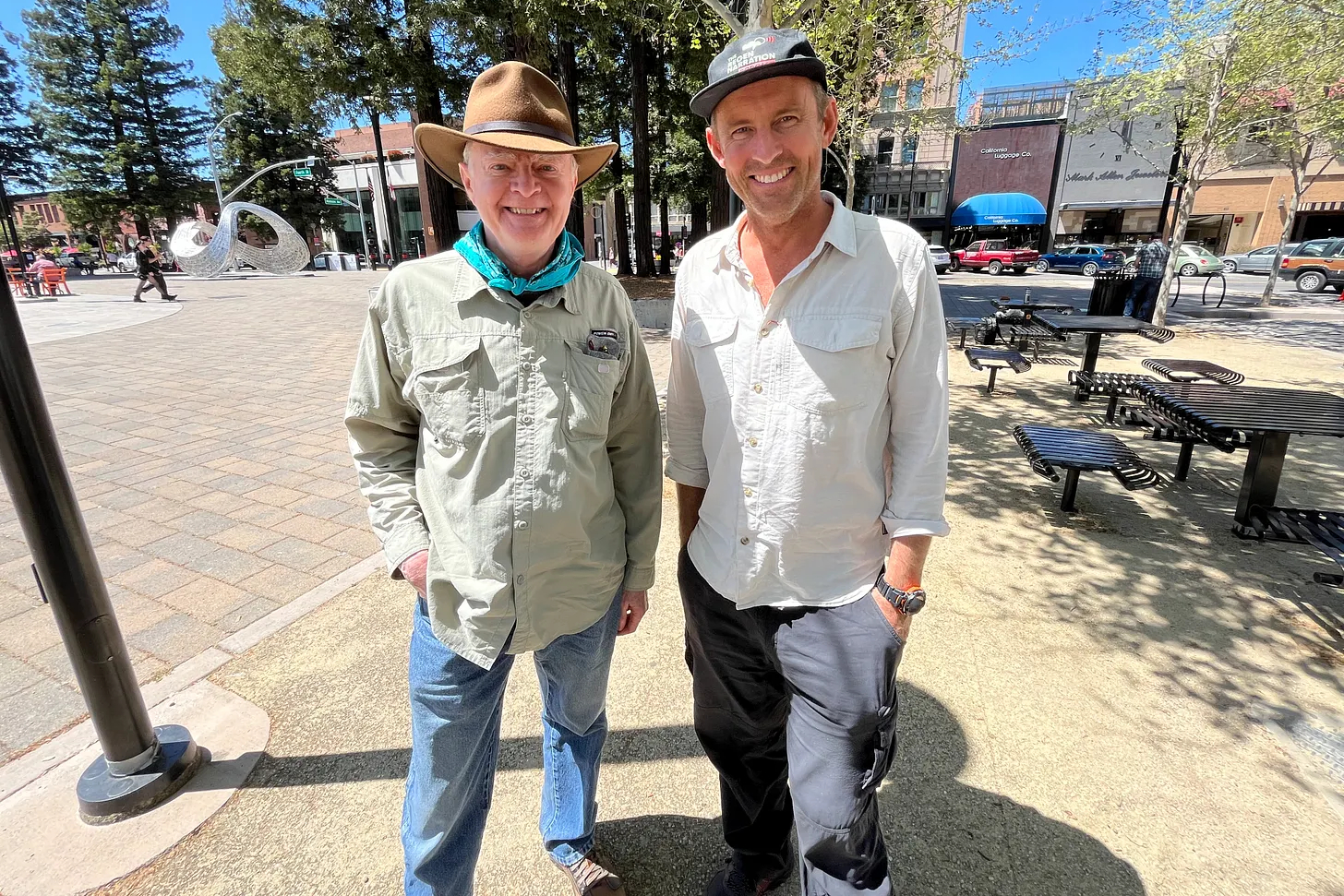
My heart sank when I saw the subject line in an email, ‘In memoriam, Richard Heinberg’. A quick search revealed an obituary, opening with this:
Richard Heinberg, world renowned author and educator, musician, artist, and husband to Janet, passed away on July 19, 2026 at the age of 75 to pancreatic cancer.
Just two weeks from diagnosis to death.
Richard is widely regarded as one of the world’s foremost advocates on the urgent need, and inviting prospects, of a transition away from fossil fuels. He’s the author of 14 books including some of the seminal works on our current energy and environmental crises.
I remember reading The Party’s Over 20 years ago, and had followed Richard’s work right through to his last book (and excellent parallel podcast series), Power: Limits and Prospects for Human Survival – and what praise that one drew, from people like Bill McKibben, Joanna Macy, Wes Jackson, Maude Barlow, Peter Buffet, Dahr Jamail, Douglas Rushkoff and Dennis Meadows.
Richard also features in countless film and other productions, along with the online course developed with the Post Carbon Institute, where Richard was a Senior Fellow for decades.
And seven years ago, Richard was kind enough to be a special online guest at a panel event I brought together in Melbourne on energy transition, which attracted a couple of hundred people and later became episode 23 on the podcast.
Richard was also an outstanding musician, with an extensive back catalogue extending from the ‘60s. All the more reason that after the event we did in 2017, we resolved to meet up if I ever made it to Santa Rosa.
That’s where this sweeping conversation took place for what became episode 205 on the podcast, Living Well As Society Transforms, on transformations in energy and food systems, us humans, and his own fascinating life. Culminating in Richard’s crystalised framing of the unprecedented challenge facing us, and how we might pull it off.
I’ll never forget it. My family and I had just arrived in San Francisco on Earth Day, April 2024, to begin a long tour with the podcast. I immediately reached out to Richard, and was welcomed with the kindness that characterised him as much as his work.
Hi AJ, glad to hear you’re in the neighborhood! I can suggest a couple of good lunch spots in Santa Rosa.
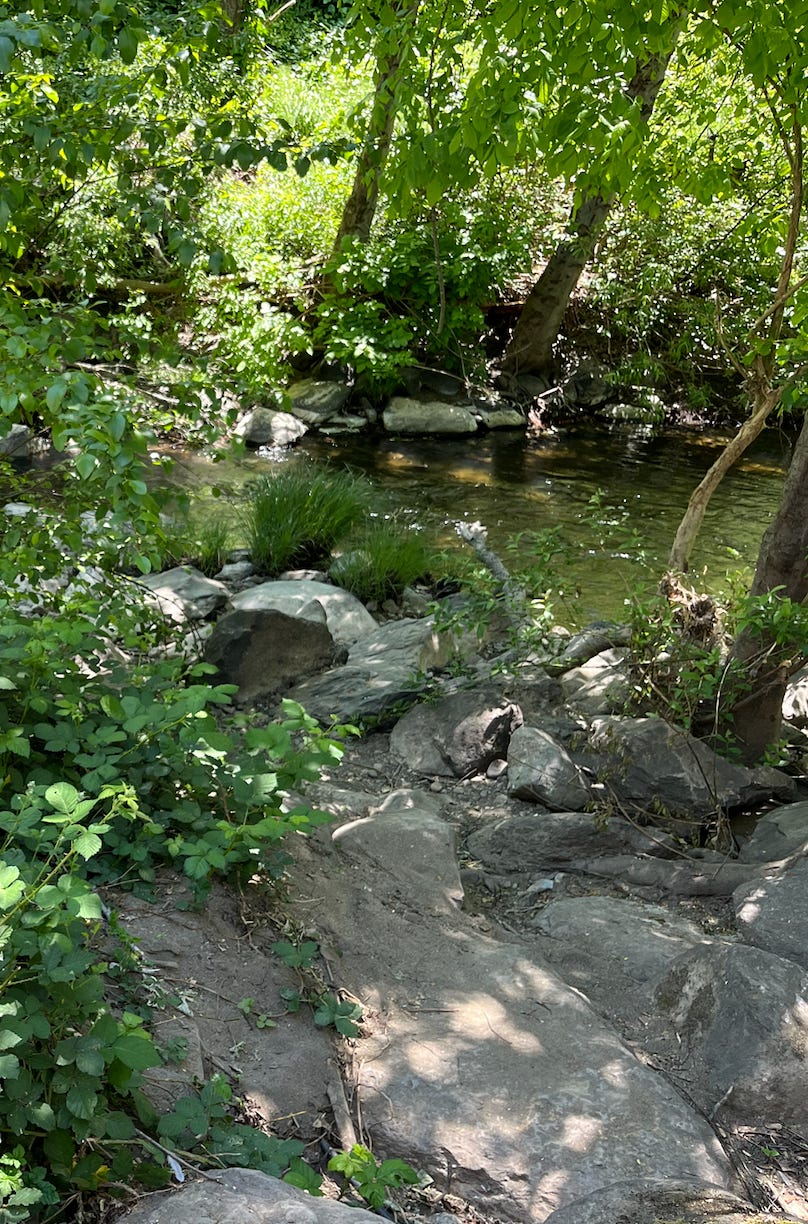
Before lunch though, our recording by the creek. I opened the episode with this quintessential passage from our conversation:
You can go around the world right now and find societies that are using energy at half the per capita rate of North Americans, and some of those are in Europe. And these people are not living in caves, right. They’re living in beautiful cities that have, you know, existed for centuries, and they have art museums and symphony orchestras and everything. And you can even find societies that use energy at half the per capita rate of Europe and are still doing quite well.
Peppered throughout our conversation too, was our shared passion for music. He explained how he had requested a violin to learn classical music at age 11, went on to be a rock musician as a young guy playing electric violin and guitar, and later returned to classical music playing in orchestras and a quartet.
Here, though, is a duo he formed, for one night only. The first 15 minutes is the music performance. The rest is some of the best of Richard’s story and insight, including ‘what the future might mean for today’s young musicians and artists, and the important role they have to play in the societal transformation ahead.’
He even played on an album called Didgeridoo Dreaming, with didg player Alastair Black. That was after spending time with Aboriginal people as he travelled Australia in the 1980s, while writing his first book, Memories and Visions of Paradise: Exploring the Universal Myth of a Lost Golden Age.
He told me he only had the old cassette of that album, but he did find the CD online.
On my eager requesting, he also dug up these gems, saying he’d ‘worked on several albums as a session player, including these two (all the string parts, overdubbed). The others have not made their way onto YouTube, unfortunately.’
The latter struck a particular chord. Parliament and Funkadelic were big influences on us too, I told him. Many fond memories of the funk!
Late in life, after an injury left him unable to play violin, he turned to jazz piano. Oh, the way he talked of Louis Armstrong towards the end of our podcast, especially of his late 1920s recordings. Louis’ story, we agreed, was like a fable for our times.
He left me with this favourite piece to find later.
As it happens, I just realised I’m wearing this treasured t-shirt I later picked up in New Orleans.

Where I also spent some reverent moments here.

The day after meeting Richard, our hearts were warmed further when Janet went out of her way to offer us this:
Hi,
This is Janet, Richard’s wife. I just returned home and Richard has told me he enjoyed the interview and time with you and your family.
I wanted to mention that the Charles Schulz Museum, the Hockey Rink and Warm Puppy Cafe and the Sonoma County Children’s Museum are all great places that you and your wife and son might enjoy while here in Santa Rosa.
Take care,
Janet
A few tips, in turn, for you, if ever in Santa Rosa.
Sadly, we had to leave town the same day. But I replied with gratitude, adding this for Richard:
Thanks again for such a brilliant conversation, on and off air. Thanks also for your very generous note. A beautiful day indeed. It’ll slot into one of your books back home!
I hope we may yet meet again. Very best to you and Janet,
AJ.

Richard’s obituary closes with an invitation:
A Celebration of Life is being planned for early October. To share your memories or appreciation of Richard, and to get updated information about memorial plans, please visit https://lnk.to/remember-Richard. To honor his memory, please consider donating to Post Carbon Institute or an environmental nonprofit of your choice.
There is also a GoFundMe page to support Janet through this time.
That obituary also describes Richard in these terms:
He was adored by those lucky enough to work with or meet him, and known for his quick wit, humility, gentleness, and cheerful truth-telling about the human predicament.
That about sums it. It’s why my heart sank at the news. And why right now it soars again, as I revel in the sound of his voice with the flowing water of that Santa Rosa creek.



Comments
We changed commenting systems on September 10, 2026 as part of a site-wide functionality and security upgrade. Your past comments have not disappeared, and you can still log in with your old Disqus account credentials if you wish. Contact us with any questions.
Nice job capturing what it was like to hang out with him and his love of music.