

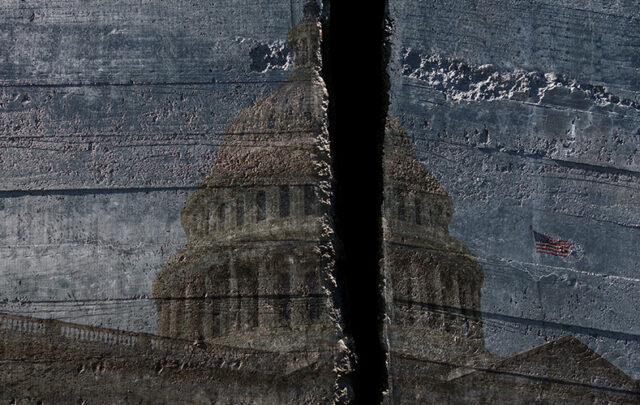
The UK Government is knowingly keeping us in the dark about climate and ecological breakdown (and associated threats from AI and geopolitics). What little has been released from the Nature Security Assessment, a report that crucially used the methodology of and had the imprimatur of the Joint Intelligence Committee, shows that the UK Government have been advised of serious risks to Britain. (See my past articles here on Resilience for details.)
We are a country especially vulnerable to food insecurity, as well as one with increased flooding and fire risk, energy instability and much more. We are being told to prepare for emergencies, which is certainly good advice, but we are not being told the latest information on what we can expect. Other than telling us we’re at risk and should prepare for three days without vital infrastructure, the UK Government has left us to figure the rest out ourselves.
When the Government won’t step up, communities need to come together to build climate resilience. In January, I penned a piece for the Church Times arguing that in the absence of Government leadership, the Church has a real role to play in the effort to make communities safer. I argue in that piece that our crises, be they from climate, AI or geopolitics, are essentially at root a spiritual crisis concerning what we value and what human existence should mean. In this endeavour, the Church is uniquely qualified.
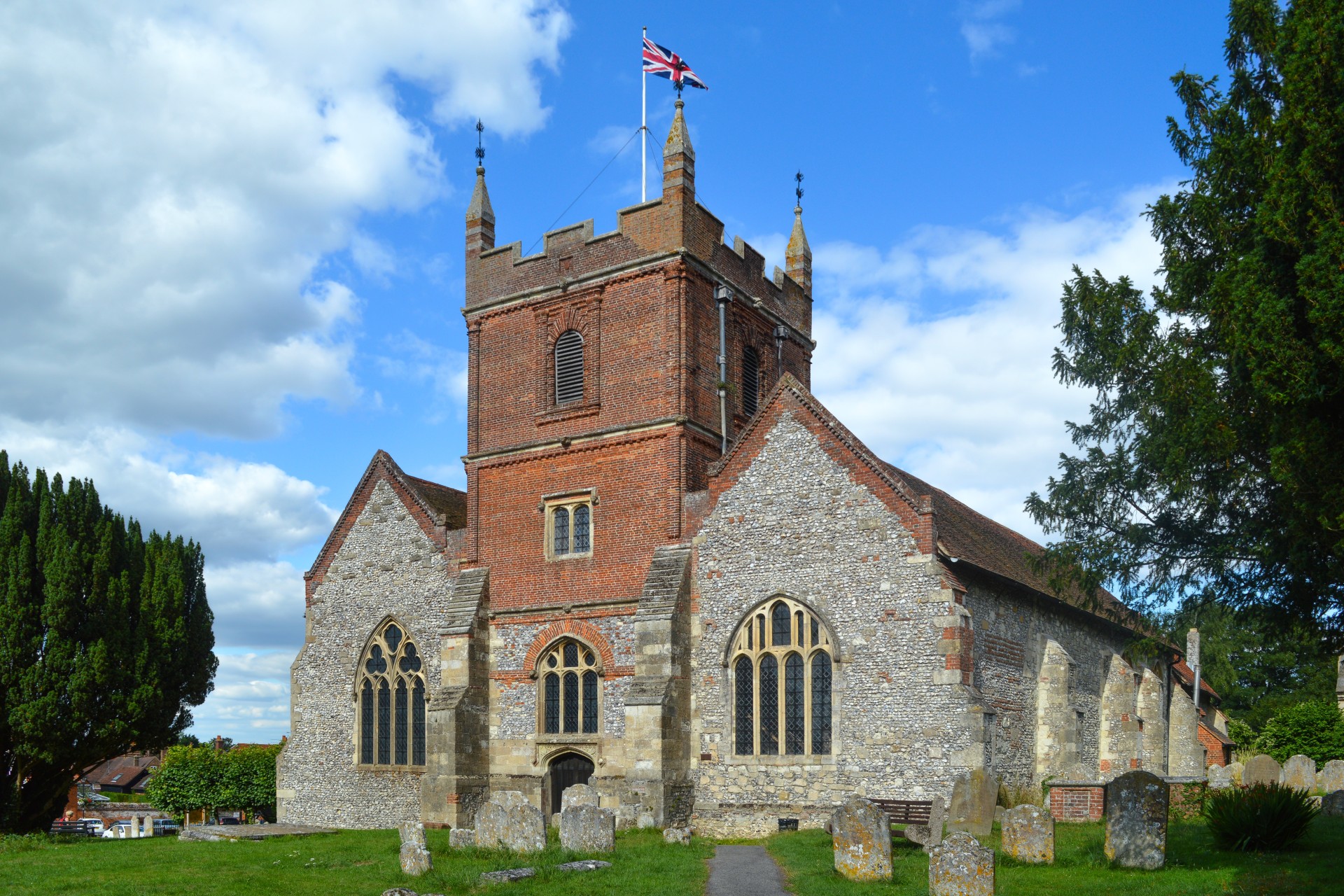
Another unique qualification of the Church is its role as a community hub. Almost every village in the country has a church; indeed, it used to be a requirement for the classification of ‘village’ status, as opposed to a mere hamlet, to have a place of worship. The Church of England website notes that they maintain over 16,000 churches across the UK. That’s 16,000 community hubs with the potential to support local resilience. And, to be honest, some of those hubs are, as things stand, in need of a role.
I am therefore thrilled to see the recent news that the Church of England is taking this seriously. The Christian Emergency Network (ReadyUK) has started sharing guidelines on how churches can improve their preparedness in the face of ever-growing threats. The Reverend Peter John, a representative of theirs in this regard, argues that household preparedness is an act of Christian neighbourliness, explicitly situating this resilience-building within the wider theology of the faith.
I would like to see more of this: more leadership, more action, and more consideration of the Church’s role in a modern, threatened Britain. And of course it shouldn’t be only the Church of England that does this. Places of worship of whatever background have a similar opportunity.
It cannot be overlooked, as I hinted above, that the Church of England has been going through somewhat of an identity crisis over the last few decades. It is not the political or social force it once was, and in some ways that is progress. As Alistair Campbell had to remind American viewers, religion now has a particular subtlety in British culture; we “don’t do God”. But the consequence is that the Church has been struggling to find its purpose in an increasingly non-theistic — what the great Max Weber might call “disenchanted” — Britain.
Here, in the face of our deepening crises, as we stare down the barrel of ecological collapse, perhaps the Church has found its calling.
Big thanks to Joe Eastoe for vital help both in researching this piece and in editorial assistance.



Comments
No.
And which ‘church’?
All religions are based upon belief – and are remarkably similar. They helped fill a void in knowledge – and perhaps assuages an angst about death.
But where we’re heading, we need to be ascertaining truths – which is the antithesis of belief. More accurately, belief runs the risk of being wrong. Truths don’t.
We therefore need to be beyond belief… so to speak