

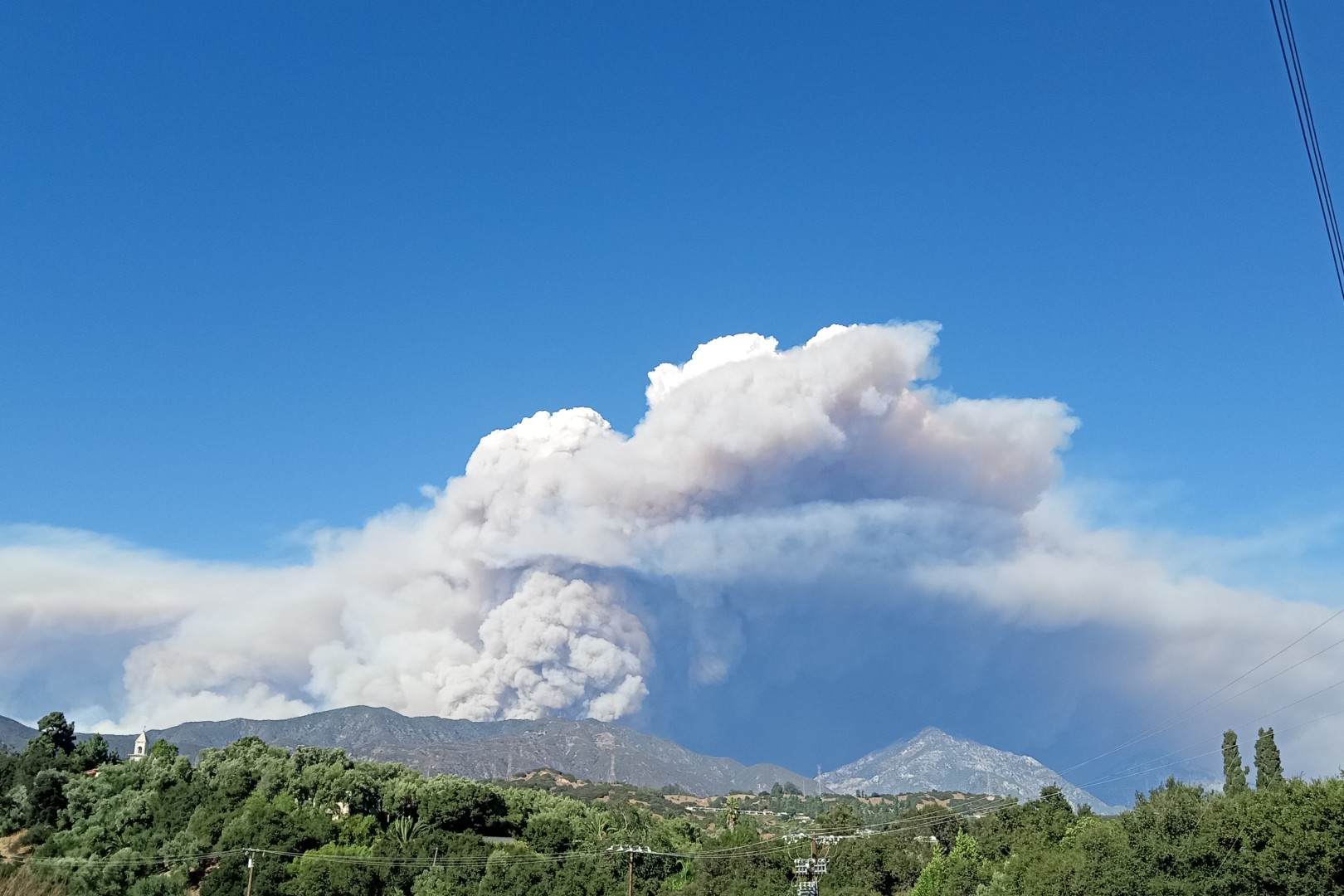
Two years ago, my wife and I narrowly escaped a major wildfire. We could see miles-high pillars of smoke rising behind the mountain ridge above our home. As the acrid odor of smoke enveloped our one-road out mountain neighborhood, we hustled around the house getting important documents to put into the car.
Nearby, friends were evacuated, and while waiting for our orders, I remember standing in the living room, looking at all of our family treasures and our art collection carefully hung on the walls. What could we take? What could we fit into the car? It was a terrible, frightening, and overwhelming feeling.
Quite frankly, we weren’t prepared.
In the end, we were lucky: winds shifted. But the Bridge Fire in the Angeles National Forest scorched 56,000 acres and destroyed 81 buildings—including 20 homes and historic cabins in idyllic Mount Baldy Village—just up the canyon.
Wildfires are far more common than most people realize—and 2026 has been a particularly destructive year. By mid-October, more than 64,000 wildfires had burned over 9 million acres across the United States. According to the National Interagency Fire Center, that’s 32% more wildfires and 43% more acreage burned than the average for this point in the year over the last 10 years.
You may never experience a wildfire, but for many families who do, the question is: will their home be safe? Fortunately, many of the most effective ways to reduce the risks are doable by the families themselves.
Here are 12 low-cost steps that you can take now to make your home safer for your family and jumpstart a more comprehensive action plan. Each step will help reduce wildfire risk, but several improvements have a greater combined effect. Many steps can be accomplished with a little homeowner elbow grease. Some steps may require a little help from a carpenter. But the single most important step is: “Get started now!”
Step 1. Begin Organizing a Five-Year Wildfire Action Plan for Your Home
To get started, you’ll need an overview of wildfire risks and solutions to get the full picture. By the end of Steps 1 and 2, you will have a prioritized list of steps for your action plan that will fit your schedule and budget—whether you tackle those steps over 12 months or incrementally over five years.
- Illustrated guide to wildfire preparation and planning: International Association of Fire Chiefs, “Ready, Set, Go! Your Personal Wildfire Action Guide.”
- Checklist for making your home wildfire-safe: National Fire Protection Association, “Home Safety Checklist: How to Have a Firewise Home.”
Step 2. Assess Your Specific Situation
Your home and its surroundings are unique, so your action plan should reflect your family’s specific needs. Using the Step 2 Assessment Worksheet, walk around your home and property. Identify which improvements apply to you. Prioritize the work based on impact, time available, and finances.
- Assess your home’s wildfire risks and priorities: The Insurance Institute for Business & Home Safety’s Wildfire Home Assessment Worksheet, “How-To Prepare Checklist Evaluation.”
Protect Your Family
Step 3. Evacuation and Communication Plan
Using Step 1’s Ready, Set, Go! guide, write a family evacuation plan. Print it out and display it prominently where your family will gather during an emergency. It should detail the exact step-by-step evacuation process and identify evacuation routes, meet-up points, and emergency contacts.
- Prepare your family to evacuate safely and stay in touch during a wildfire: International Association of Fire Chiefs, “Ready, Set, Go! Your Personal Wildfire Action Guide.”
Step 4. Emergency ‘Go Bag’
Each member of the family should have an emergency “go bag” that is easily accessible. It needs to include water, food, medications, and important documents. The bag should also contain a change of clothes, toiletries, comfortable shoes, pyjamas, spare cash, and a phone charger.
- Checklist for assembling your emergency go-bag: Woodside Fire Protection District, “Evacuation Go-Kit.”
Step 5. Grab-And-Go Document Box
Part of an evacuation plan is to prepare a grab-and-go box. Include birth certificates, Social Security, Medicare and health insurance cards, marriage certificates, homeowner’s and vehicle insurance policies, and copies of credit cards and passports. Keep it somewhere quickly accessible.
- Checklist for gathering important documents in one box, ready to grab during an emergency: Kansas State University Research and Extension, “Do homework before storm, grab-and-go box can simplify recovery.”
Protect Your Home
Step 6. Clear a Five-Foot Perimeter Around Your Home
Start by clearing combustible materials from the first five feet around your house. This includes leaves, wood piles, furniture, weeds, and trash cans. Keep this area clear of debris throughout the year. Although gravel is tidier than bare dirt, it is more expensive and no more effective.
- Illustrated guide to wildfire protection zones: Colorado State Forest Service, “The Home Ignition Zone,” booklet.
Step 7. Screen Your Vents
Install protective screening designed for the different kinds of vents used in your home. Vents are required for moving air in and out of your house; these screens help keep windblown embers from moving in. 1/8-inch mesh is commonly recommended, but some vents require special screens.
- Protect home vents from embers. See page 9: University of Nevada, Reno Extension, “Wildfire Home Retrofit Guide.” 20-page illustrated guide.
Step 8. Seasonal Debris Cleaning
Before fire season begins each year, do a spring cleaning and clear debris from your roof, gutters, decks, eaves, and the perimeter of your house. These are common places where windblown embers can land and start fires, even before the wildfire’s flames arrive.
- Checklist of areas vulnerable to flying embers: The Nevada Cooperative Extension guide “Ember Awareness Checklist,” illustrated guide.
Step 9. Seal Gaps and Openings Around the House
Since wind-blown embers are the biggest culprit in igniting household fires, look carefully for gaps where an ember could enter or ledges where embers could collect. Check around doors and windows, siding, and torn screens on an enclosed porch.
- How to seal up vulnerable gaps and openings. See pages 7–9: University of Nevada, Reno Extension, “Wildfire Home Retrofit Guide.” 20-page illustrated guide.
Step 10. Remove Combustible Materials From 5’ to 30’ Around Your House
Keep shrubs and trees near the house well-spaced and trimmed—or selectively removed. Keep grass short, and trim tree branches that hang down toward the house. Striking aerial photos of houses that survived wildfires typically show widely cleared areas around the home.
- Manage vegetation and combustibles around your home: Colorado State Forest Service, “The Home Ignition Zone,” illustrated guide.
Step 11. Replace or Remove Flammable Materials Attached to Your Home
Wooden fences, gates, and arbors that are connected to your house can create a flame bridge, allowing fire to jump quickly right to your home. Replace them with nonflammable materials—such as a steel gate instead of a wooden one—or remove them.
- Reduce risks from flammable construction attached to homes, like gates and fences. Pages 13, 16: University of Nevada, Reno Extension, “Wildfire Home Retrofit Guide.” 20-page illustrated guide.
Step 12. Investigate Ways to Finance More Expensive Actions
Your plan should also explore ways to finance more expensive improvements, such as fire-resistant roofing, siding, and windows. For example, with a 5-year, $15,000 roof replacement loan, the monthly payment may be only $300—similar to car insurance—but it protects so much more.
Roofing, window, and siding contractors may offer financing options. Otherwise, simply speak to your bank about a home improvement loan. These may be the most important investments you ever make in your home—and cost less than a master bathroom remodel.
Putting Your Plan Into Action
With a plan tailored to your home, you can decide what you can accomplish, what needs to be done first, and what can wait. These practical steps make your home safer from wildfires and are much more approachable when you tackle them a little at a time.
Many, like clearing flammable debris and screening vents, can be done on your own. Other projects may require a carpenter or landscaper. Still, to get ahead of 2027, the single biggest piece of advice this article can offer remains: “Get started now!”





Comments