


Click on the headline (link) for the full text.
Many more articles are available through the Energy Bulletin homepage
Quick hits from CERA’s Oil Day
John Kingston, Platts
There are almost 2,000 people here at the annual conference of Cambridge Energy Research Associates in Houston this week, with “oil day” kicking off the festivities. Here are some recurrent themes/interesting things being said.
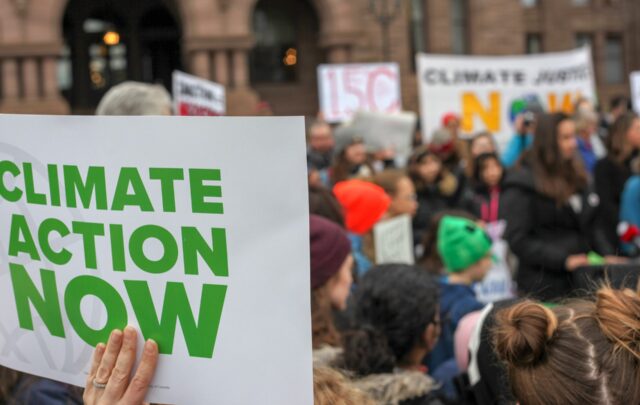
-There’s going to be a carbon tax in the US. Or there’s going to be cap-and-trade. What there won’t be is nothing. There appears to be almost no disagreement here on that issue.
–The middle distillate part of the barrel is the portion of the barrel with the highest increase in demand, yet almost all the gain in liquids supply in recent years has been supplied by such things as NGLs, biofuels, condensates, etc. The problem is that these fuels are gasoline blendstocks or substitutes, so it doesn’t help the growing squeeze on middle cuts. Yes, refineries can be retrofitted, but given the usual suspects of hurdles there — labor shortages, high steel prices, etc. — that can’t be taken care of all that easily.
— [Opening speaker John Hess, head of the emerging company Hess Oil] gave a terrific address predicting the failure of supply to keep up with demand in the next 10 years, due primarily to a lack of investment and insufficient infrastructure spending. It was a clear, no-holds-barred statement of his views.
–Costs are rising. Not so much the costs to bring on one more barrel in Saudi Arabia, but the costs of bringing on new supplies anywhere. At a morning session, James Burkhard of CERA said the price of oil dropping to less than $60, even in a recession, would be a difficult accomplishment given that a $60 price is starting to look like an average cost for bringing on new crude supply. “We see a cost floor of $60/barrel,” he said. “If it went below that the companies would react, cut back and then it would rise again. So for the next year or two we see resistance to any sustained deep move below $60.”
(12 February 2008)
Hat tip to driller.
Interview – Mankind Can’t Afford More Oil Drilling – Ex-BP Exec
Gerard Wynn, Reuters via Planet Ark
Known oil, gas and coal reserves may already contain a quarter more carbon than mankind can emit and still avoid dangerous climate change, putting the value of new oil exploration in doubt, said a former oil major executive.
The oil industry may be wasting $50 billion annually searching for new fields, said Jan-Peter Onstwedder, formerly BP’s most senior risk manager. He left BP in December.
He calculated potential carbon emissions from proven oil, gas and coal reserves at around 700 billion tonnes, compared with about 500 billion tonnes which can be emitted this century and keep temperature increases within less dangerous bounds.
“It prompts the question where does more exploration fit, do we already have all the reserves we possibly need?” he said.
“I don’t know whether they thought their strategy through.”
Onstwedder spent six years as global head of risk covering supply and trade in oil, gas and other commodities, and which account for most of BP’s sales and purchases.
(14 February 2008)
CERA: Aramco chief calls for energy planning, cooperation
Sam Fletcher, Oil & Gas Journal (PennWell Petroleum Group)
There are enough conventional and unconventional petroleum resources to satisfy global demand for liquid fuels “for many decades,” but it will require better planning and cooperation between industry and governments to accomplish that task, the president and chief executive officer of Saudi Aramco said.
In the opening address at the annual energy conference sponsored by Cambridge Energy Research Associates in Houston, Abdallah S. Jum’ah said, “The world simply cannot afford to leave massive quantities of oil, gas, and coal in the ground and move precipitously to unproven alternatives, while still hoping to satisfy future growth in global energy demand.”
(13 February 2008)
Top oil firms spend more but get less crude
Alex Lawler, Reuters
The world’s three largest fully publicly traded oil firms are investing billions of dollars more, but there is little sign yet the extra spending is leading to higher production.
Exxon Mobil Corp. (XOM.N: Quote, Profile, Research), Royal Dutch Shell Plc (RDSa.L: Quote, Profile, Research) and BP Plc (BP.L: Quote, Profile, Research) posted falling 2007 output, even though they upped capital spending to over $60 billion and some expect a further rise this year.
The drop reflects the way higher oil prices reduce the amount of oil companies get under production-sharing agreements with governments, and declining supply from ageing fields in some regions like the North Sea.
(14 February 2008)
France wants global oil tax
Associated Press
French President Nicolas Sarkozy has asked the head of the International Monetary Fund to consider a tax on oil companies’ profits to help countries without energy reserves, the finance minister said Wednesday.
Christine Lagarde told LCI television that Sarkozy had asked the new IMF chief, Dominique Strauss-Kahn, a Frenchman, to consider a tax that would affect oil companies worldwide.
(13 February 2008)



Comments