

In 1543, a Polish astronomer named Nicolaus Copernicus published a book that shattered the foundations of Western civilization’s understanding of reality. For over a thousand years, the received wisdom—backed by the authority of the Church and the apparent testimony of every human sense—was that the Earth stood fixed and motionless at the center of the universe, and that the sun, moon, planets, and stars all revolved around it. Copernicus upended all this. He demonstrated, through careful mathematical reasoning, that the Earth was simply another planet orbiting the sun, which was itself merely another star.
The implications were staggering. If the Earth was not the center of the universe, humanity could no longer claim the cosmic pedestal it had occupied. The revolution Copernicus initiated—carried forward by Galileo, Kepler, and Newton—went on to overturn, not just astronomy, but an entire worldview, reshaping philosophy, theology, and humankind’s understanding of its own place in the cosmos. This is what historians of science mean when they speak of a Copernican revolution: not merely a correction of facts, but a transformation of the framework through which reality itself is perceived.
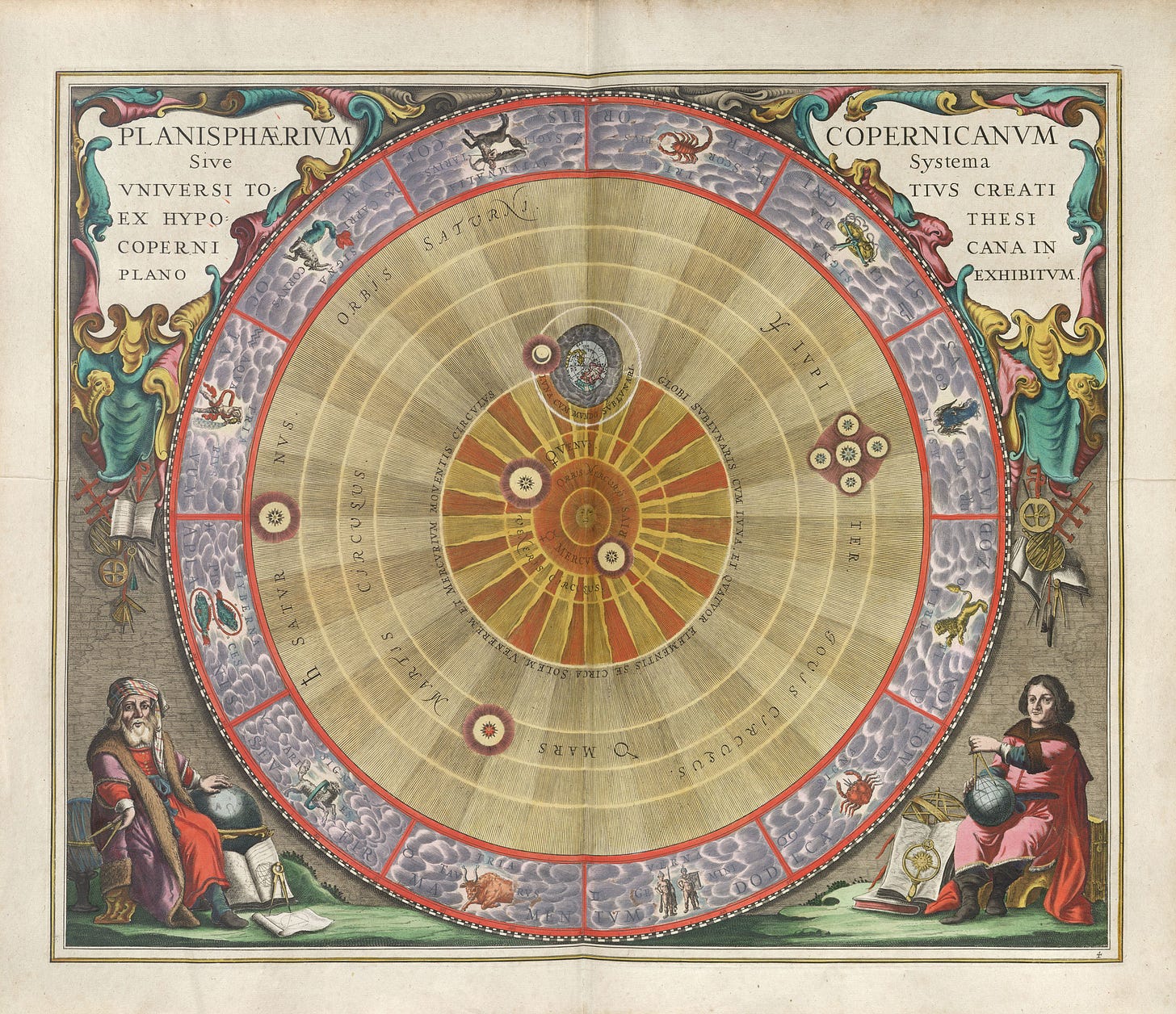
And yet, there is a deep irony buried within that revolution. The same scientific worldview that displaced Earth from the center of the universe placed “Man” at the center of the living world—as nature’s supreme conqueror and its rightful master. The very methods that revealed our planet’s cosmic insignificance were used to establish something else: the principle that nature exists primarily as a resource for human use, a complicated machine whose mechanisms can be deciphered and controlled by human endeavor. One decentering gave birth to another, far more consequential, centering—and we are still living inside it.
Today, there are signs that a second Copernican revolution may be stirring. And if it succeeds, it may be just as disruptive—and even more necessary—than the first.
The ideology of human supremacy
Here in the throes of the Anthropocene, the relationship between humanity and the rest of life on Earth is characterized by untrammeled domination and desecration. Homo sapiens, comprising only 0.01 percent of Earth’s biomass, has extinguished roughly 85 percent of all wild animals, 80 percent of marine mammals, and about half the world’s plant biomass. Humans, along with domesticated animals, now represent 96 percent of all land mammals by weight. Scientists repeatedly warn that wildlife populations are nearing “points of no return” and that we are on the verge of “shattering Earth’s natural limits”—all to no avail. We are well on the way to the Sixth Great Extinction since life began on Earth—the only one caused by the conscious activities of a single species.
The cattle, pigs, and chickens that have replaced that lost wildlife are, meanwhile, enslaved in factory farms, brutally tortured, and mercilessly slaughtered for human convenience. Every year, 85 billion animals — each one a sentient creature with a nervous system as capable of registering excruciating pain as you or me — undergo the systematic torment of an unnaturally brief life of terror and misery.
How does the vast bulk of humanity accept this ongoing holocaust of life conducted in their name? One reason is the “distancing phenomenon” by which excruciating violence, such as that suffered by domesticated animals, is kept invisible to most people. Another is the hegemony of billionaire-owned mass media ensuring that, while nearly everyone knows the winner of the Super Bowl, very few are aware of nature’s “Great Dying.”
Underlying these, however, is a deeper reason: the all-embracing but unseen ideology of human supremacy, which claims innate superiority of humans over all other life forms, rendering it morally acceptable to cause untold suffering to nonhuman life for any human convenience. As ecological philosopher Eileen Crist explains, human supremacy turns living beings into mere resources to be exploited, reclassifying fish as “fisheries” and farm animals as “livestock.” This anthropocentric doctrine gives moral license for humans to poison rivers, extirpate species, convert vibrant ecosystems into monocrop wastelands, and treat the entire Earth as a mere container of raw materials.

This extreme form of anthropocentrism is a logical outcome of the dominant worldview that the Copernican revolution helped to forge in early modern Europe. It conceives of the natural world as a mere mechanism — something to be taken apart, analyzed, and manipulated for human purposes.
Diametrically opposed to this worldview, Indigenous peoples around the globe have, for millennia, understood the world around them to be more like an extended family—a community of subjects rather than objects, of which humans are merely one lineage among others. The gulf between worldviews was summed up by Smohalla, a Wanapum medicine man in the nineteenth century, with these searing words:
You ask me to plow the ground! Shall I take a knife and tear my mother’s breast? Then when I die she will not take me to her bosom to rest. You ask me to dig for stone! Shall I dig under her skin for her bones? Then when I die I cannot enter her body to be born again. You ask me to cut grass and make hay and sell it, and be rich like white men! But how dare I cut off my mother’s hair?
Since Smohalla’s time, modern scientific insights have demonstrated a remarkable confluence with the understanding of both Indigenous knowledge and other non-European wisdom traditions. We are indeed related to all life forms, sharing more than 60 percent of our genes with fruit flies and bananas. Advances in systems sciences, complexity theory, and cognitive science have likewise contradicted the dominant worldview of separation, pointing instead to a worldview of deep interconnectedness—seeing humanity as intricately embedded in a web of connectivity.
Once we recognize there is no ethical basis for the assumption of human supremacy, an entirely different perspective opens on the norms by which our society works—and the laws that enforce them.
Rights for mother earth
The law, as it stands, is completely anthropocentric. It reserves rights and privileges only to humans and their legal constructions (such as corporations) and reduces the rest of life on Earth to the status of property. There is, of course, environmental legislation that regulates how much ecological harm can be caused by industry—but that is precisely the point. Current laws do not protect the Earth from harm caused by humans because that’s not their purpose. They exist to regulate the pace and terms of its exploitation.
Earth jurisprudence begins from a different paradigm. It recognizes nature itself as a rights-bearing subject, rather than a mere object for human ownership and regulation. As visionary priest Thomas Berry—widely regarded as the philosophical progenitor of this movement—wrote in The Great Work: Our Way into the Future:
In reality there is a single integral community of the Earth that includes all its component members whether human or other than human. In this community every being has its own role to fulfill, its own dignity, its inner spontaneity. Every being has its own voice. Every being declares itself to the entire universe. Every being enters into communion with other beings. This capacity for relatedness, for presence to other beings, for spontaneity in action, is a capacity possessed by every mode of being throughout the entire universe.
In an interconnected world, Berry elaborated, “all rights are limited and relative.” Humans have rights to nourishment, shelter, and well-being, but “no rights to deprive other species of their proper habitat” nor “to disturb the basic functioning of the biosystems of the planet.”
Acknowledging nature’s rights upends the paradigm of law with a Copernican-style transformation. As Berry explained, law becomes an extension of ecology, rather than ecology being subsumed under law. Instead of law facilitating the human destruction of nature, Earth jurisprudence grants nature the power to participate in the legal system—allowing it to make claims against individuals and corporations and demands for restoration and care.
The fact that trees, species, or ecosystems can’t speak for themselves doesn’t present an insurmountable legal problem. The law is replete with analogous instances such as infants or comatose patients. In these examples, courts appoint guardians to represent them, as can be done for nonhuman entities.
From theory to constitution
This legal paradigm shift began in the West with a seminal 1972 article by Christopher Stone, “Should Trees Have Standing?—Toward Legal Rights for Natural Objects,” which proposed granting rights not only to natural entities but “to the natural environment as a whole.” Although many jurists responded mockingly, Stone’s ideas found their way that same year into a legal dissent by Supreme Court Justice Douglas in a case involving the Sierra Club.
From those early seeds, a substantial body of jurisprudence has grown. The most compelling way to effect this transformation at scale is through changing a nation’s constitution. In 2008, a historic milestone was achieved when Ecuador became the first country to recognize in its constitution the rights of Mother Earth—”Pachamama”—to “maintain and generate its vital cycles, structure, functions, and evolutionary processes,” granting nature legal standing to be protected by law and represented in court. In Ecuador, trees do indeed have standing: in 2015, the protection of mangrove trees compelled the removal of shrimp farmers encroaching on their territory.
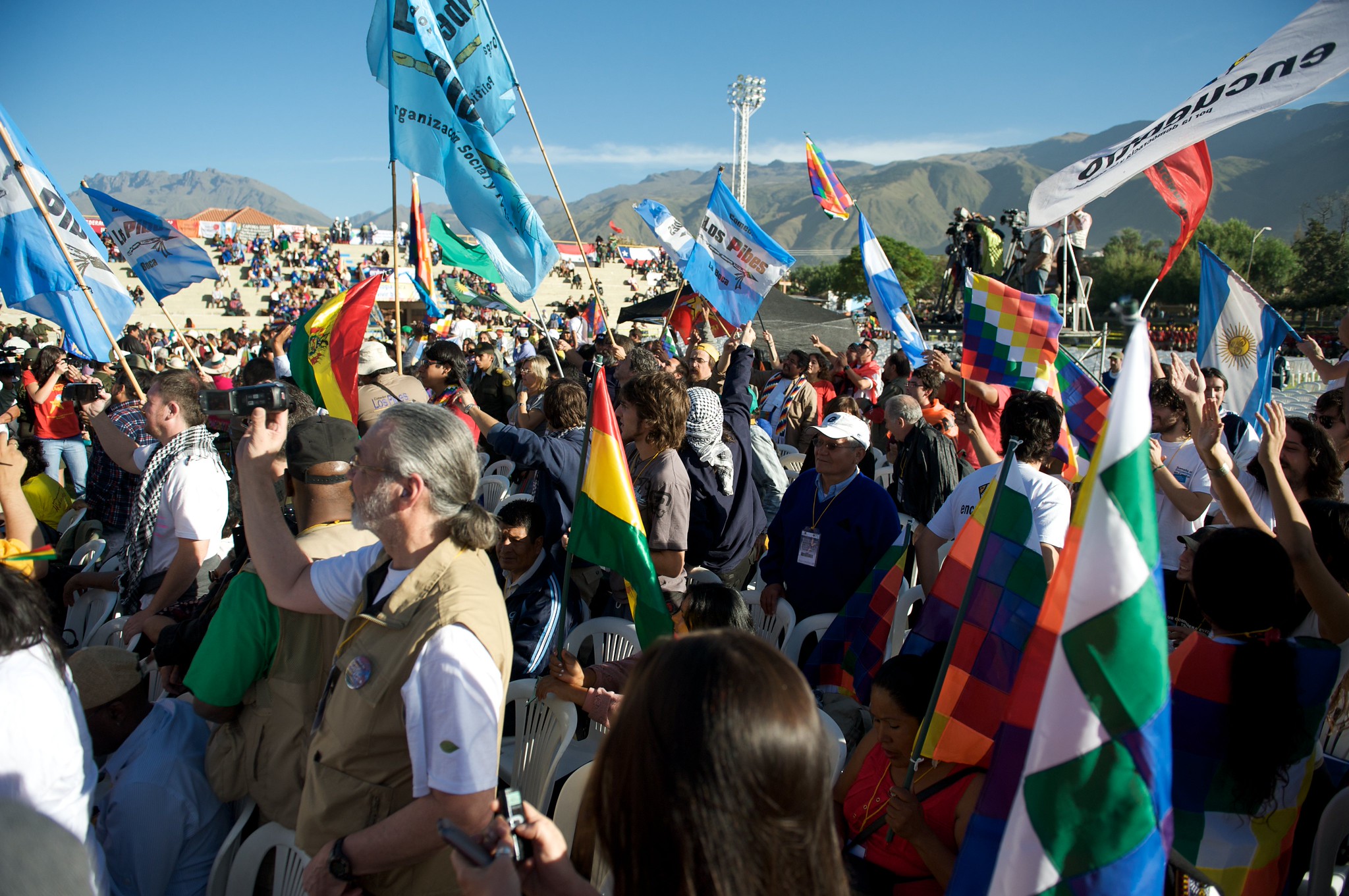
In 2010, Bolivia followed Ecuador’s example, passing a law recognizing the Rights of Mother Earth as a collective subject. That year, Bolivia’s first Indigenous president, Evo Morales, hosted a People’s World Conference on Climate Change and Mother Earth’s Rights, attended by 35,000 people from around the world. The result was a Universal Declaration of the Rights of Mother Earth, which recognizes Earth as an indivisible, living community of interrelated and interdependent beings with inherent rights, and defines fundamental human responsibilities to the community of life.
Meanwhile, the Stop Ecocide movement is rapidly gathering momentum toward making the crime of ecocide—reckless and severe long-term damage to ecosystems—prosecutable under national, regional, and international law. Domestic proposals have been submitted in dozens of countries, with some already adopted (in Belgium, Chile, France, and Ukraine), and the EU has formalized a directive addressing “conduct comparable to ecocide.” For senior executives of transnational corporations, who can currently direct the destruction of ecosystems around the world with impunity, these steps could have enormous ramifications.
A place at the table for nonhumans
At the other end of the scale, juridical activists have disrupted the anthropocentric paradigm by claiming legal personhood for specific animals, with attendant rights to pursue fulfilling lives rather than be used as property for human amusement. The conventional scientific approach to ethology long denied any analog between the subjective lives of animals and humans, even in the face of overwhelming evidence—a particular manifestation of human supremacy that primatologist Frans de Waal termed “anthropodenial.”
Recent advances in ethology reveal the cognitive richness of animal lives, replete with elaborate social relationships, complex emotions, and cultural learning, rendering the basis for anthropodenial ever flimsier.
In 2024, forty leading experts assembled to sign the New York Declaration on Animal Consciousness, affirming “strong scientific support for attributions of conscious experience” to mammals and birds and “a realistic possibility of conscious experience in all vertebrates.” They didn’t shy away from the moral implications. “If there is a realistic possibility that an animal is conscious—for instance, that octopuses can suffer—then this possibility merits consideration in policy contexts,” they stated.
Extending the purview to living systems that allow many beings to flourish, juridical campaigners have achieved success in attributing legal personhood to rivers. The Whanganui River in New Zealand was the first to be granted personhood in 2017 after 150 years of advocacy by the Whanganui iwi tribe, which views it as an ancestor central to its identity. Two guardians—one from the iwi, one from the government—were appointed to act on its behalf, with legal representation by two lawyers. Similar attributions have since occurred in Colombia, Canada, India, and Bangladesh.
Another previously unrepresented group has recently begun to find a place at the policymaking table: future generations. Wales, in 2015, created a Future Generations Commissioner charged with promoting sustainable development and long-term thinking across the nation. In Japan, the Future Design movement has pioneered a uniquely dramatic approach in which imaginary future generations, dressed in distinctive ceremonial costume, engage in policymaking debates asserting the viewpoint from 2060. Studies report that input from “future residents” leads to more radical and progressive municipal plans than otherwise.
Future generations have established legal standing in litigation as well—in a landmark ruling in 2019, the Dutch Supreme Court ordered its government to take more aggressive action to secure “the legal right to a safe climate and healthy atmosphere for all present and future generations.”
Welcomed back into the family of living beings
Are these scattered legal advances enough to constitute a Copernican revolution? Certainly not yet. But they may be its early tremors.
The original Copernican revolution took more than a century to fully propagate—from Copernicus’s cautious 1543 publication, through Galileo’s persecution, to Newton’s synthesis in 1687. It faced fierce resistance precisely because it did not merely revise a set of facts; it unsettled an entire cosmology. So too with the paradigm shift now under way. The idea that rivers can hold rights, that future generations deserve legal standing, that the destruction of an ecosystem is a crime—these are not technical adjustments to existing law. They are harbingers of a different relationship between humanity and the living world.
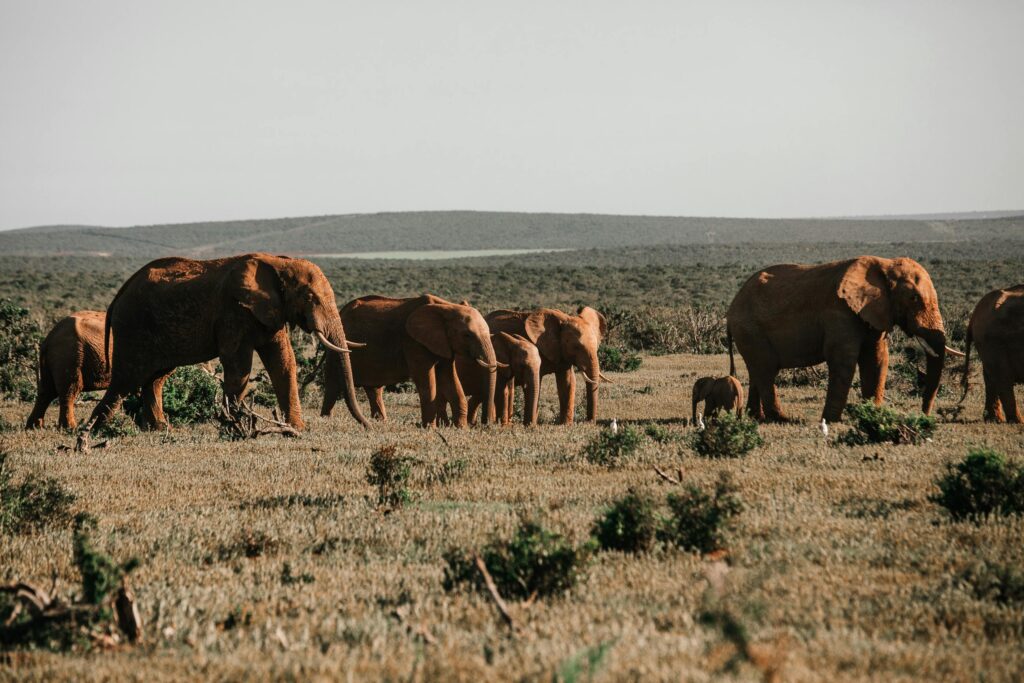
Developments in modern science continue to further corroborate this shift. What began as philosophical challenge has become empirical fact. Ethology continues to reveal the cognitive richness of animal lives — the grief of elephants, the cultural transmission of whales, the name-based social bonds of dolphins. Mycology has uncovered the vast fungal networks through which forests share nutrients and signals across vast distances. The more closely we look, the more clearly we see that there is no moral basis whatsoever for the human dominion upon which this civilization takes its stand.
Once we reorient through this paradigm shift, a fundamentally different world comes into view. A world where our species has shed the fallacy of human supremacy and been welcomed back into the family of living beings, coexisting with our nonhuman relations in a mutually beneficial manner. A world where the mass torture and slaughter of other sentient beings has been banished into the history books, and where the miracle of nature’s abundance, accumulated over billions of years, once again plays a central role in Earth’s flourishing.
The Earth Charter, a foundational statement of this emerging jurisprudence, states in its preamble:
Everyone shares responsibility for the present and future well-being of the human family and the larger living world. The spirit of human solidarity and kinship with all life is strengthened when we live with reverence for the mystery of being, gratitude for the gift of life, and humility regarding the human place in nature.
Copernicus displaced Earth from the center of the universe. The revolution now gathering force would take humanity out of the center of the living world—not to diminish us, but to restore us to our proper place within it.
Whether that revolution unfolds in time is one of the most consequential open questions of our age.




Comments
We changed commenting systems on September 10, 2026 as part of a site-wide functionality and security upgrade. Your past comments have not disappeared, and you can still log in with your old Disqus account credentials if you wish. Contact us with any questions.
Seems to me it's wrong to assert that Copernicus put humans at the center–that was done long since, with Genesis perhaps. And there was another step in dethroning western Man–Darwin's discoveries that we were not some special creation but an evolved being like everything else (although anthropocentrism then imagined evolution as a process toward the glorious Crown of Creation, Man, after which it was presumably finished). Also, the implication that since other animals are sentient, we shouldn't eat them, ignores that plants are also sentient, that those wise indigenous peoples hunt and eat meat, that predation and even parasitism is part of how ecosystems work on this planet. But this doesn't excuse treating animals as economic units, subject to conditions which might not be "torture" but deprive them of the ability to live a decent life. For example chickens are supposed to scratch the dirt and eat bugs. But millions of them live their entire lives in a building.