

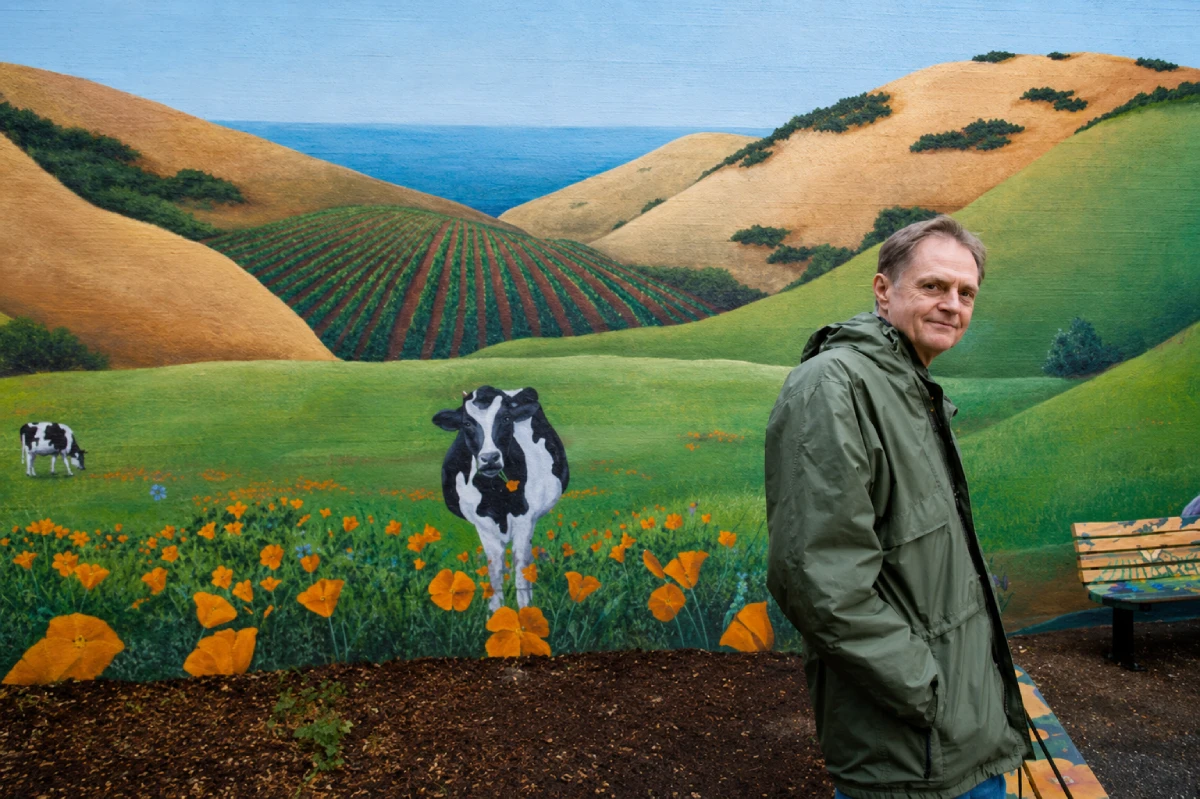
This is the hardest article I’ve ever had to write.
On Sunday July 19th we lost our kind, brilliant friend and colleague, Richard Heinberg.
The world has lost a voice of clear, truth-telling wisdom—a man whose work reached millions of people and fundamentally changed the lives of thousands. Perhaps that includes you. It certainly does me.
Richard died after a short, brutal illness. He was diagnosed with pancreatic cancer just two weeks before his passing. As you can imagine, we’re reeling and gutted.
If Richard’s contributions impacted you in any way, we’d love to hear your reflections. Please visit his memorial site to share your own stories or learn more about Richard.
Countless people came to know Richard only through his books, articles, lectures, and interviews. Yet many felt as though they knew him personally. That was one of his remarkable gifts. He challenged people to face difficult truths without giving up on beauty, community, or the possibility of living well within Earth’s limits.
There’s so much I can and simply cannot say about Richard as a person and as a writer and teacher. Working alongside Richard for the last eighteen years has been one of the biggest gifts in my life. In ways big and small, Richard displayed humility, gentleness, and joy—especially for someone grappling with such complex and difficult subject matter. An inveterate introvert, Richard was often quiet in groups but when he spoke it was additive, given with generosity, kindness, and humor, and always with a focus on the greater good.
When he wrote, on the other hand, it was with such powerful clarity, unflinching truth-telling, and a talent for presenting complex issues in a brilliantly accessible way. He could weave together ecology, thermodynamics, history, anthropology, behavioral psychology, politics, and more into expansive explorations, as he did with his 14th and final book, Power: Limits and Prospects for Human Survival, or into succinct storytelling, as he did when narrating the award-winning animation, “300 Years of Fossil Fuels in 300 Seconds.” He could jump from writing about the collapse of industrial civilization to writing about what he learned from chickens. Perhaps the best example of Richard’s breadth is this recording of him playing the violin and giving a talk on “Post-Carbon Music” at the New England Conservatory of Music.
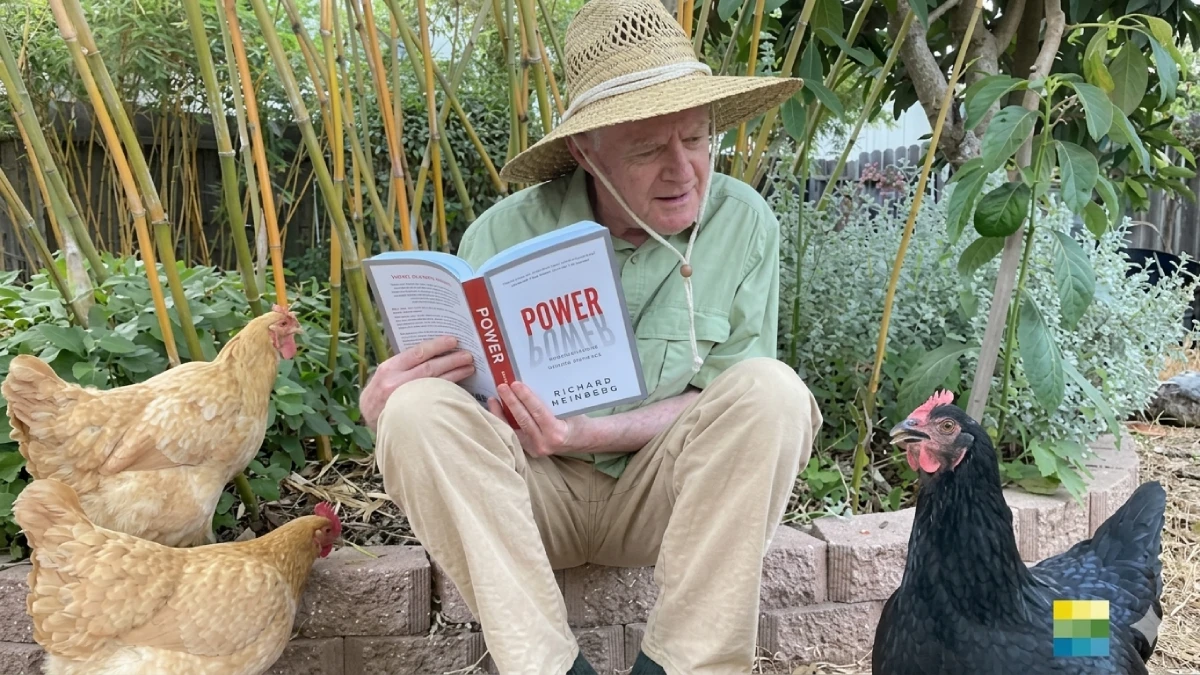
I’ll miss Richard’s smile, his laugh. I’ll miss the few times when I got to see him get mad at the stupidity or cowardice of those in power. I’ll miss hearing him talk about trying to conquer an early jazz tune or the simple joy he got from his afternoon chocolate or shot of espresso. I’ll desperately miss the way he could take my meandering ideas for topics to explore and turn them into brilliantly cogent essays in a matter of hours or days. I simply loved our collaborations.
While grieving and in shock, and frankly a little lost about how Post Carbon Institute will find its voice without him, I think what Richard would want is for each of us to redouble our efforts towards his vision of people and nature thriving within ecological limits. One full of bird song, music, and laughter.
With a heavy heart,
Asher Miller
Executive Director
Post Carbon Institute
Many thanks to Manuel Casal Lodeiro and Instituto Resiliencia for providing these translations:


Comments
We changed commenting systems on September 10, 2026 as part of a site-wide functionality and security upgrade. Your past comments have not disappeared, and you can still log in with your old Disqus account credentials if you wish. Contact us with any questions.
💔
Thanks Asher.
This news came with a genuine shock.
Richard has been one of the ten people (alive or otherwise) who have influenced my life the most, without any exaggeration. And I have hundreds and hundreds of important influencers in my thinking, feeling, sensing and being. Living in this world without him among us is going to take some getting used to, over time. But, as they say, it happens to the best of us, this dying thing.
Much love to you and everyone reading. May we remember him well in our actions and in out thoughts.
Came here hoping to find a new edition of Richard's essays. This is devastating news. Losing a voice so full of wisdom and compassion such as his is tragic. I will miss him.
This makes me very sad. Condolences to everyone, including his fam.
very sad
Richard was an early leader and a clear thinker. I remember him skyping to us (in NZ) back around 2009/10. Those early books still hold and his later articles here were always on point.
One of the great human beings; we owe him heaps.
Resilience is needed now more than ever, Asher. We didn't perhaps realise what Donella Meadows told us decades earlier – but the dominant System (exponential economic growth) dominated as she said dominant systems do. But it is entering the last possible 'doubling. That is, if the last half of the planet counts as a 'doubling'. So it will be a matter of everything, everywhere, all at once. People will be shell-shocked and likely to focus on minutiae. We need a wide lens clearing-house, more than ever.