

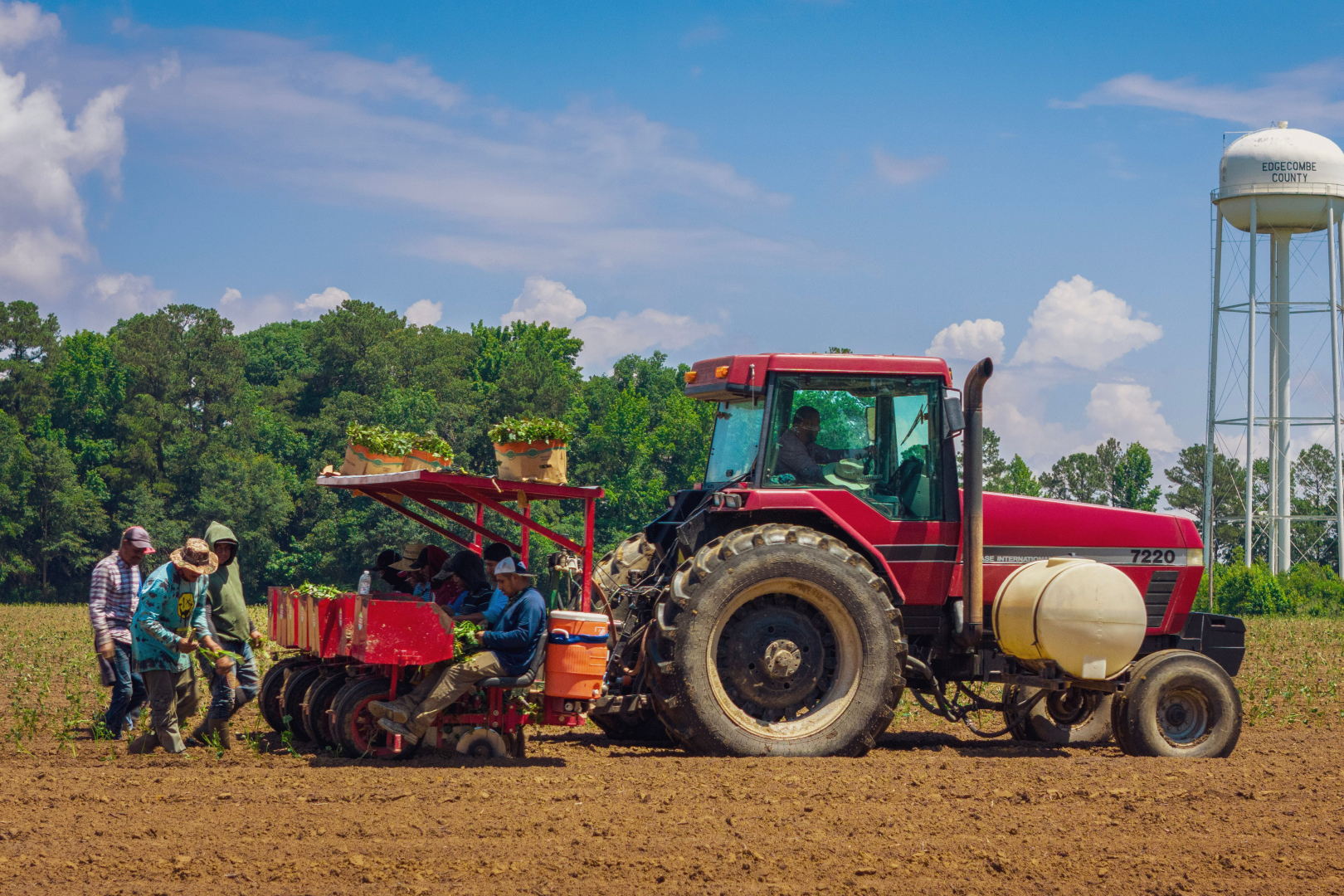
If anything is rotten in the Kingdom of Denmark, it is the pig production. It is not the poor pigs themselves, but how they are managed as an industrial production. This is now about to change, at least to some extent.
Already some years ago, the Government of Denmark, the Danish Agriculture and Food Council, the Danish Society for Nature Conservation, the Confederation of Danish Industry, a trade union and the Danish Local Government Association agreed to a number of environmental measures for the agriculture sector. This was often, on mistaken grounds, presented as a ”climate tax” on agriculture. The emissions that were subject to taxation are methane and nitrous oxide emissions from livestock. Not only are the carbon dioxide emissions exempt but also the considerable nitrous oxide emissions from the use of nitrogen fertilisers.
In this year’s election campaign, two agriculture related issues played a considerable role: a proposal to ban the use of pesticides in areas where drinking water is sourced, and restrictions of the very large pig production. Some named the election “svinevalget”, or the pig election.
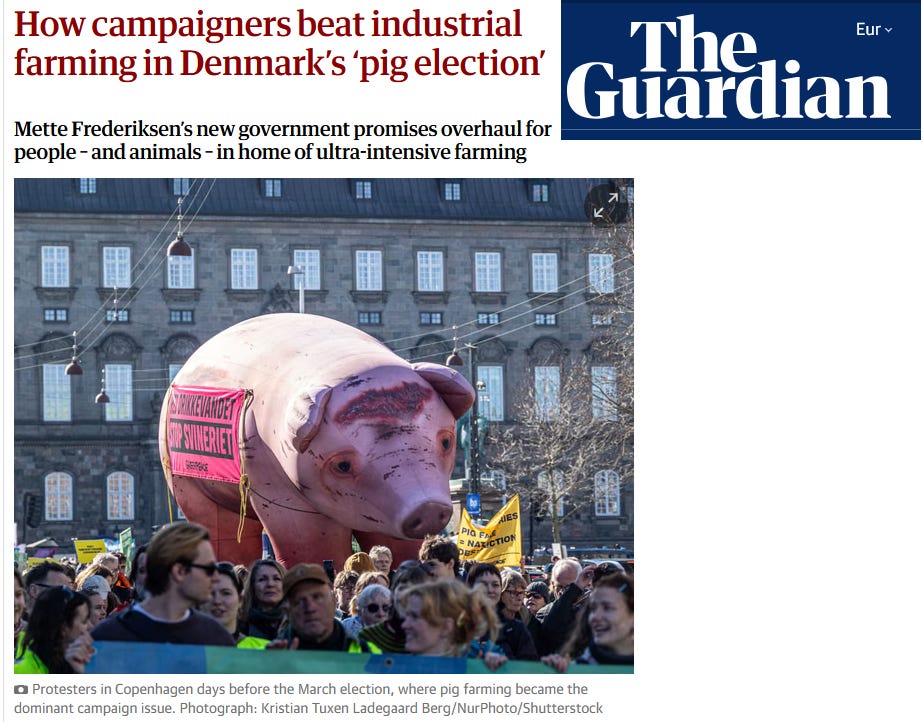
The programme of the new coalition government, expressed in an agreement, includes pledges to end routine tail docking and what is called “extreme breeding”. The latter seems to be vaguely defined as the efforts to increase the number of weaned piglets per sow. On average, sows in Denmark wean more than 37 piglets a year, and those in the top 10% of farms nearly 43. In Sweden, the average rate is 29. There will also be a temporary moratorium on new and expanded conventional pig production, at least until all details in the new pig policies are in place.
“I hardly dare say it, but we got more than we asked for,” said Britta Riis, the head of Animal Protection Denmark, to the Guardian. “We made pig farming a top political issue. And we’ve won immediate, and systemic, change.”
Not only is pig farming affected. Already at the ministerial level, there are big changes, where no minister will have the whole agriculture portfolio. There will be a new ministry for nature and animal welfare under the social democrat Christian Rabjerg Madsen. Maria Reumert Gjerding, who served as the president of the biggest environmental movement, Danmarks Naturfredningsforening, until the appointment, will also deal with many agricultural issues as the minister of the environment representing Socialistisk Folkeparti (Green left). It leaves me wondering how “nature” is not part of the “environment” (or vice versa)?
Some of the other initiatives in the government agreement are:
- The VAT on food will be halved and there will be no VAT on fruit and vegetables.
- There will be a ban on the use of pesticides on 160,000 hectares in areas with drinking water sources.
- A national food strategy will be developed to increase public procurement of Danish, local and organic foods. It will also double the area farmed organically and support the development of plant-based food and local small-scale food production.
- The new government also wants to change the public support to farming, with less money for area support and more for the environment, climate, organic and regenerative farming, as well as small-scale farming. This fits quite well with the proposals from the EU Commission for the reform of the Common Agricultural Policy (CAP).**
While animal welfare groups and environmental groups are happy, the main farmer organization objects and, in addition, they also say that this invalidates the earlier agreement. So it is a rather large upheaval.
An agriculture powerhouse
One has to put this into context. Denmark has the second-highest share of agricultural land in the world, at 59%, after Bangladesh’s 62%. It is also an agricultural net exporter, with exports some 40 percent higher (in value) than imports. Productivity in farming is also very high, expressed as yield per cow, sow, or hectare and measured as labour productivity. Despite this, agriculture accounts for just 0.9 percent of GDP, well below the EU average of 1.6 percent.
Pig farming in Denmark is very intensive. The country, with a population of 6 million, produces 30 million pigs for slaughter every year. Even if Danes eat a lot of pork meat*, most of it is for export. Clearly, Denmark has an oversized and very intensively managed livestock sector, 1.6 livestock units per hectare and it imports a lot of feed so there are good reasons to reduce the numbers. The livestock sector has actually decreased considerably lately.
Perhaps contradictory, despite being an agricultural powerhouse, Denmark has very high food prices, 20 percent above the EU average. This is caused, among others, by high labour costs and a 25 percent VAT on food. Denmark also has the highest market share of organic food in the world, 11.6% in 2024.
Other European countries, such as the Netherlands and Germany, have also restricted the agriculture sector, and in particular the livestock sector. To a large extent, this is the result not so much of the size of the sector as such but of the concentration in ever bigger production units.
Which road ahead for European farming and farmers?
For many farmers in Europe, restrictions like these are seen as a threat to farming and as a result, urban populations, opinion makers and politicians don’t understand where food comes from and that the conditions for farming are already very hard. Often, environmental or animal welfare regulations are seen as a major burden to farmers, especially as imports are not subject to the same rules. Because of agriculture’s small share of the GDP, politicians seem to believe the sector is insignificant. With increasing competition for land and very high land prices (in the Netherlands reaching almost €100,000 per hectare), farmers are squeezed out of the market.
And, for sure, all these perspectives have some validity. But the changes in the agriculture sector itself are also responsible for the changed position of farming in European society. Farms are no longer producing “food for the people” but one or two commodities for the market, often a global market. Modern farmers often don’t know where food comes from or where their “products” end up. And while they often preach the value of buying local, they often buy the same industrial food as everybody else does. Not to talk about where they source their machinery, their fertilizers, their seeds, their working clothes, etc. The importance of local or national food production for food security and resilience is totally undermined by the input-dependency of industrial farming.
Farmers are no longer producing food for the people but one or two commodities for the market.
It is often discussed that farmers quit because it is not profitable to farm. But it is too simplistic to say that the number of farmers is shrinking because it is not profitable to farm. By and large, the number of farmers is shrinking because the productivity per labour unit has increased tremendously and farms have grown bigger and bigger and bigger, so there is no need for all those small farms and farmers. If some farmers get more land and a bigger tractor, or manage more cows, it inevitably means that some other farmers will go out of business.
Farms are also no longer the backbone of the countryside. They have become so big and are managed with so little manpower that the existence of farms is no guarantee for vibrant rural development. Having visited many of the world’s agricultural powerhouses, such as Mato Grosso in Brazil, the US Midwest and California, Ukraine and Russia, I can attest that those landscapes are quite dead, with the exception of Ukraine and Russia, which maintain a large small-scale, backyard farming culture parallel to very large farms. The same goes for some European countries, where huge industrial farms have broken the ties with the local context and landscape. They induce heavy traffic, pollute rivers and air, are noisy and use industrial technologies and even foreign staff. When they are also mainly targeting export markets, locals simply see no value in their existence; this is also expressed in Denmark.
Farm organisations are often talking about farming as culture and identity, while in the agriculture business magazines everything is about productivity, new technologies and machinery. Farming as a lifestyle is considered backward and the modern farmer should be an entrepreneur and business manager, following the world market and buying and selling futures to manage risk. Even when it comes to domestic food supply, most farmers don’t care about domestic markets, they just sell to the highest bidder.
The industrial scale and the loss of individuality of the animals through the combination of the increased scale and the industrial methods employed have made animal abuse into a system and not an exception. The fact that modern stables are clean, well-ventilated and in many other ways optimized for “animal welfare” doesn’t change this.
The increased scale and the industrial methods employed have made animal abuse a system and not an exception.
Because of this development, public support for farming has eroded – and rightly so.
For more than a hundred years, farming, and in particular livestock, was driven out of the cities as the cohabitation was hard. Today, wealthy people build houses in the countryside and urbanites need recreational areas, nature needs to be restored, industry and commerce need logistic hubs and solar power, and the tech sector needs land for data centres. Farming just has to move, and environmental regulations get tighter.
While I welcome many of the reforms of the new Danish government, I see no sign of a radical new agricultural paradigm.
The farm restoration
In the end, both the farm organisations and society at large are wrong.
Food is essential, and the one percent of the GDP is misleading, as agriculture supports a whole food system. Food for people is like energy for the economy (it is, after all, also energy), and they are both totally essential. As long as oil and gas flow, the world markets are working, and there is nice weather, there will be food. But the last years’ experiences have made more people aware of that food security is also about availability, affordability and the robustness and resilience of the food system.
The farmer organisations should, instead of promoting farming as any other industry, go back to farming as a mission, a calling where the focus is on the stewardship of the land, caring for the animals and the environment. Of course, this is easier said than done, as many farmers are stuck with loans, debt and infrastructure investments, tying them to the existing system. Overall, the responsibility for such a transformation rests with society at large.
In Denmark, it makes some sense to reduce agriculture’s share of land, as long as it is in favour of nature restoration rather than data centres or golf courses. But in general, European countries need to protect their farmland as an essential resource. The current food system is characterised by over-production and the subsequent food waste and a wasteful use of food crops as animal feed. It is driven by fossil fuels, fertilisers, pesticides and a whole set of other resource-demanding inputs. Instead, we need a farming system operating on place-based resources, the land itself, healthy soil, a multifunctional landscape and, in particular, people, farmers. We need to restore farms as vibrant ecosystems and farmers as land stewards. Land must also be made available to willing farmers, young or old, in traditional or new constellations.
In order to do that we also need to unchain farms and farmers from the market forces, which ultimately lead to capitalist management of the land and the constant race for more, quicker and cheaper. There is a reverse relationship between the agriculture share of the GDP and number of farms. If you want more people on the land and restore agriculture as something that makes rural areas attractive, you should not promote increasing productivity and making things faster. Instead you should promote small and slow.
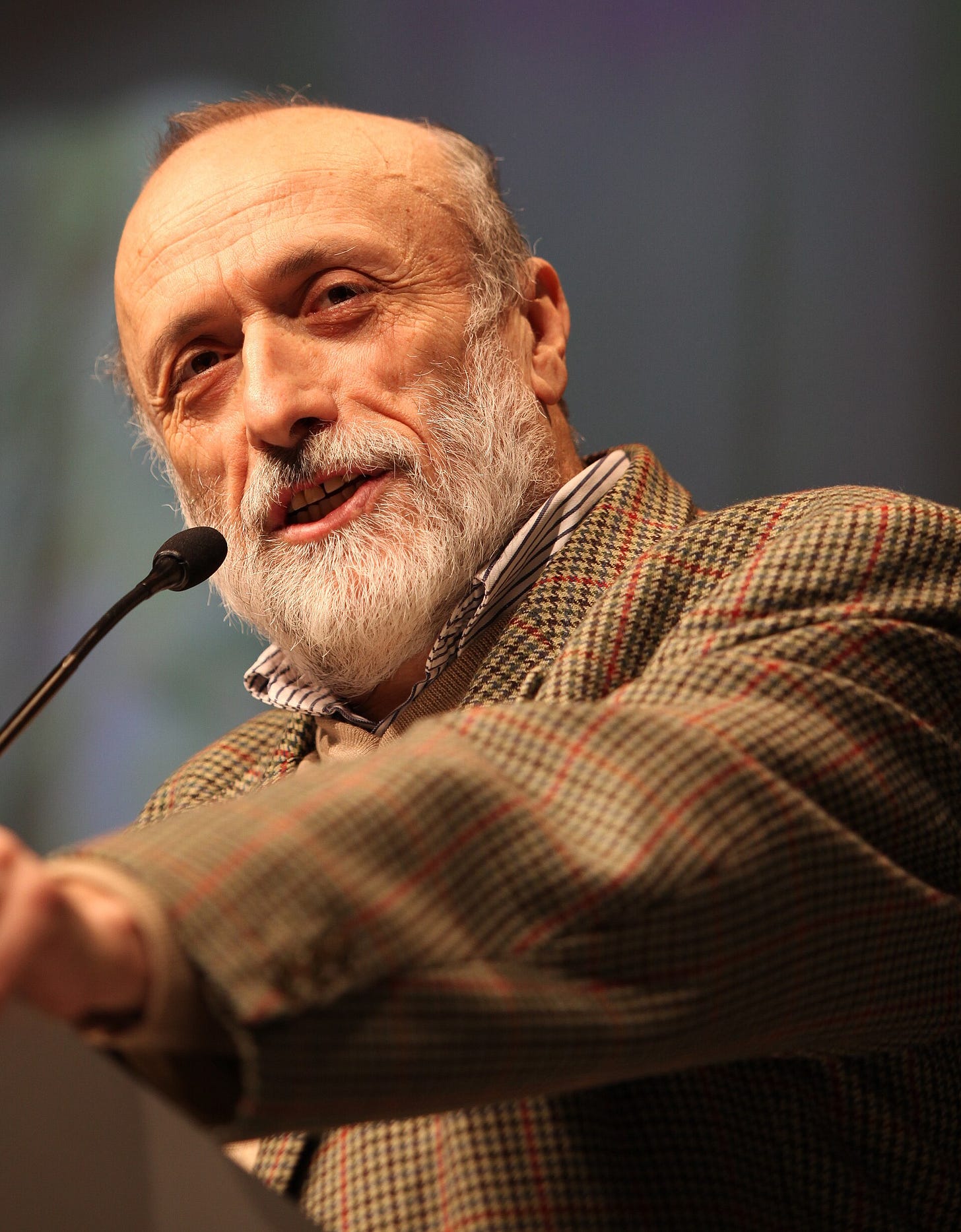
On the last point, let me close by expressing my respect for Carlo Petrini, the founder of the Slow Food movement. He passed away on 21 May.
* It is interesting to search for per capita pork/pig meat consumption on the net and realise that there will be widely differing figures for the countries. For Denmark, it varies between more than 70 kg and less than 30. The variation is to some extent caused by the fact that consumption can be expressed as carcass weight or any other figure between carcass weight and the mouth. For pigs meat, the quantity on the plate will be in the range of 50% of the carcass weight. But there are also other difficulties in arriving at a solid figure, regardless of which definition you will use. You can read a detailed analysis of how to calculate consumption in Germany here. Or my report on Sweden here.
** One might get the impression that Denmark is a very radical green country. While it is fair to acknowledge the steps taken, one should also note things in the government agreement which point in another direction. Those include, but are not limited to, an open window for nuclear power, a radical increase in military expenditure (up to 3.5% of the GDP) and a commitment to further economic growth, despite the fact that Denmark is already one of the richest countries in the world.


Comments
Welcome to the new Resillience commenting system!
We have moved from the former Disqus commenting system to a new system as of September 10, 2026.
We made this change because of privacy concerns regarding Disqus. It's also part of a set of changes to bring more services to the Resilience community under a single login: commenting, (coming September 2026), and online courses (coming 2027). Unfortunately, your old Disqus comments may not reliably link to your account in this new system. Please contact us if you have any questions or concerns.