

Modern conservation in the United States has relied heavily on law. Federal statutes, agency rulemaking, and judicial interpretation have defined wetlands, limited pollutants, and preserved habitats. These frameworks have prevented degradation, restored ecosystems, and protected species that might otherwise have been lost.
Yet regulatory authority is not fixed. The 2023 Supreme Court decision narrowing the scope of federal wetland protections illustrates how jurisdiction can be reinterpreted. Regulatory authority can expand or contract. Judicial interpretation evolves. Environmental priorities of successive administrations may shift.
The durability of environmental protection depends not only on regulation, but on a cultural disposition that might be described as informed reverence. Law may define jurisdiction, but it cannot impose reverence or inspire care.
Regulation governs conduct. It does not shape conviction. It can deter and restrict, but it cannot cultivate the internal dispositions that make environmental protection durable across generations. When statutory reach narrows, responsibility does not disappear — it shifts.
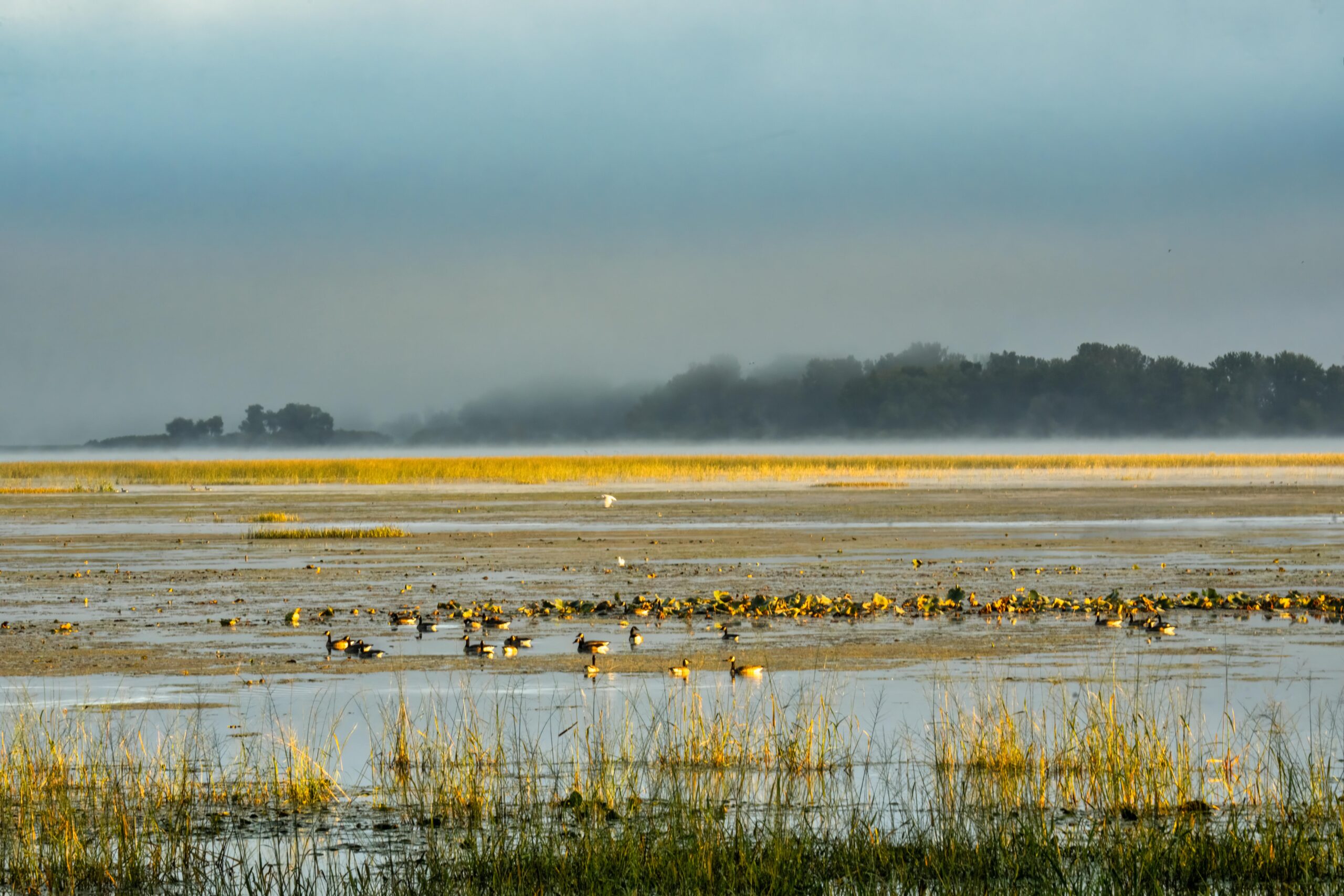
The implications are not abstract. Across parts of the upper Midwest, millions of shallow wetlands known as prairie potholes fill with snowmelt each spring. Many lack the “continuous surface connection” now required for federal protection. Yet they serve as vital breeding grounds for migratory waterfowl, filter agricultural runoff before it reaches rivers, recharge groundwater, and sustain intricate food webs that support both wildlife and rural economies. Their ecological function remains unchanged even as their legal classification evolves.
Whether such places endure increasingly depends on state policy and local governance. But local policy does not arise in isolation. It reflects public orientation. Where ecological understanding is internalized within communities, protection is more likely to persist. Where it is not, degradation can occur gradually — one drainage decision at a time.
If environmental protection depends primarily on enforcement, its stability will fluctuate with institutional authority. If it rests upon cultural orientation, it becomes more enduring.
Historically, societies cultivated reverence toward land and water not because they possessed ecological models, but because survival required attentiveness and restraint. Indigenous cultures across North America embedded respect for wetlands, rivers, forests, and wildlife within narrative, ceremony, and daily practice. These traditions did not rely on statutory enforcement; they shaped behavior by shaping worldview. Ancient civilizations in Egypt, China, and elsewhere linked natural cycles to continuity and moral order. Seasonal rhythms were integrated into cultural consciousness.
Such reverence functioned as psychological infrastructure. It reinforced limits long before limits were quantified. It encouraged restraint not through penalty, but through identity.
Modern society possesses knowledge that earlier cultures did not. We understand hydrological systems, nutrient cycling, atmospheric chemistry, biodiversity decline, and toxin accumulation in ways unimaginable centuries ago. Wetlands are recognized as systems that mitigate floods, store carbon, filter contaminants, and buffer climatic extremes. Their value can be measured and modeled.
Yet knowledge alone does not generate restraint. Scientific literacy does not automatically produce cultural discipline. Data can inform, but it does not necessarily orient.
Informed reverence addresses that gap.
Reverence rarely appears suddenly. It develops gradually. Mindfulness — the simple act of slowing enough to notice — leads to observation. Sustained observation deepens into admiration. Admiration matures into devotion — a desire to protect what one has come to value. But devotion alone can drift into sentiment unless anchored in understanding. When devotion is strengthened by reliable scientific knowledge — by awareness of ecological interdependence, hydrological systems, species decline, and long-term consequences — it becomes disciplined rather than romantic. It becomes informed reverence.
This orientation clarifies a simple but often neglected truth: we are participants in the ecological web, not masters of it, and our survival is inseparable from the attitudes of restraint and responsibility we bring to the natural world.
Unlike unexamined nostalgia, informed reverence does not romanticize premodern belief. Unlike regulatory dependence, it does not rely solely on institutional enforcement. It integrates scientific understanding with moral orientation. It recognizes that ecosystems are not external assets to be managed at convenience, but living systems within which human life is embedded.
How does such orientation manifest? It appears in restraint — in land-use decisions that respect hydrological realities; in agricultural practices that account for runoff; in community planning that values ecological continuity alongside economic growth. It appears in consumption moderated by awareness of extraction and waste. It is reflected in sustained support for conservation institutions and evidence-based policy. It expresses itself in intergenerational responsibility — the recognition that environmental inheritance is not owned outright but held in trust.
Regulatory frameworks remain essential. They establish boundaries and provide mechanisms for accountability. They protect species and landscapes that would otherwise face irreversible harm. But regulation functions most effectively when reinforced by public conviction. Where ecological understanding becomes part of civic culture, enforcement becomes reinforcement rather than imposition.
The narrowing of federal wetland jurisdiction is therefore more than a legal development. It is a reminder that environmental protection cannot depend exclusively on statutory reach or administrative emphasis. Political authority may fluctuate; ecological systems do not. Wetlands continue to filter water. Rivers continue to carry runoff. Species continue to depend on habitats whose value does not shift with legal language.
If protection is to endure, it must rest on something more stable than jurisdiction alone.
Informed reverence provides that stability. It is neither sentimental nor oppositional. It is a mature cultural orientation grounded in science and sustained by restraint. It recognizes that environmental protection is not merely a technical challenge to be regulated, but a psychological and civic posture to be cultivated.
Environmental protection secured only by law remains provisional. Environmental protection grounded in informed reverence becomes generational.




Comments
We changed commenting systems on September 10, 2026 as part of a site-wide functionality and security upgrade. Your past comments have not disappeared, and you can still log in with your old Disqus account credentials if you wish. Contact us with any questions.