

Show Notes
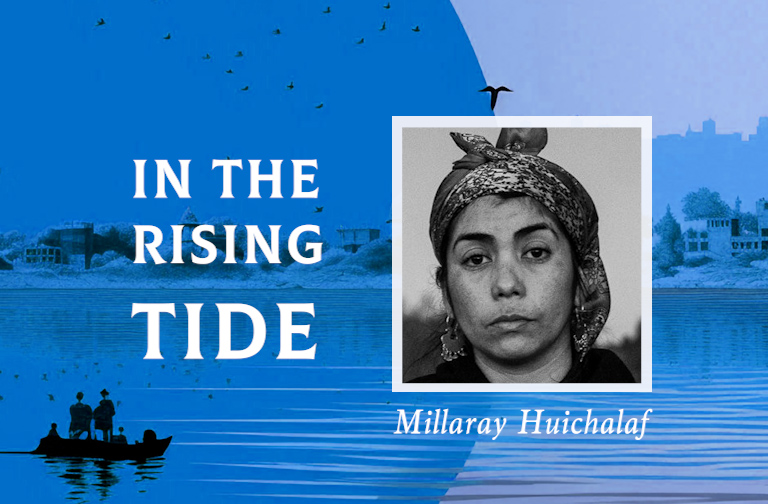
In this episode, we travel to Chile to speak with Mapuche leader, water defender, and spiritual activist, Millaray Huichalaf. Rooted in the traditions and worldview of the Mapuche people, Millaray has been at the forefront of efforts to protect rivers and ancestral lands from extractive development, advocating for the rights of both her community and the ecosystems they depend on.
Millaray’s path is shaped by a deep connection to place and a commitment to future generations. We hear what it means to defend land and water not just as resources, but as living beings—and how Indigenous knowledge and spiritual practice guide her work. Millaray shares her perspective on resistance, resilience, and renewal, offering a powerful vision of how honoring ancestral wisdom can lead toward a more balanced and life-sustaining future.
Thank you so much to our expert translator, Diana Rosenfeld.
You can hear more from Alex at Human Nature Odyssey.
Please subscribe wherever you enjoy your podcasts and leave us a review.
Sources and links
Credits
In The Rising Tide is hosted and produced by Alex Leff, in collaboration with Resilience. This series is made with support from a grant from Omega Resilience Awards, a project of the nonprofit Commonweal. Find out more at ORAwards.org.
Transcript
It’s time we come together, share stories, and meet the unprecedented times we live in. Welcome to In The Rising Tide. I’m Alex Leff. Thank you for being here.

In this episode, we travel to Chile to speak with Mapuche leader, water defender, and spiritual activist Millaray Huichalaf. Rooted in the traditions and worldview of the Mapuche people, Millaray has been at the forefront of efforts to protect rivers and ancestral lands from extractive development, advocating for the rights of both her community and the ecosystems they depend on.

Millaray’s path is shaped by a deep connection to place and a commitment to future generations. Millaray shares what it means to defend land and water not just as resources, but as living beings—and how Indigenous knowledge and spiritual practice inform her work.

Millaray’s perspective on resistance, resilience, and renewal, offers a powerful vision of how honoring ancestral wisdom can guide us toward a more balanced and life-sustaining future.

Thank you so much to our expert translator Diana Rosenfeld.

A quick note: Millaray’s work is ongoing and demanding, and due to both time constraints and
connection issues, our conversation was shorter than planned. We’re deeply grateful she was able to join us.

Alex Leff (00:00.128)
Well, thank you very, very much, Millaray for taking the time to talk with me today and to share your story and your experiences. It's really an honor and privilege to get to talk with you today.


Millaray Huichalaf(translated by Diana Rosenfeld) (00:13.474)
Well, first of all, thank you much, Millaray for being here to share this story and your experiences with us. is a privilege to you here.


Millaray Huichalaf(translated by Diana Rosenfeld) (00:29.314)
Well, thanks to you for the invitation. It's a great honor that you understand and value the fight for the territory. And it's a great opportunity for her to speak up, to reach some other hearts, some other souls that are still going through a dormant stage and are not brave enough to start defending their own territory. It's like to raise awareness, right, through her stories.

And all these stories are very strong because they are related to very strong feelings and emotions. They are related to fighting, resistance and resilience.


Alex Leff (01:10.264)
Well, Millaray, could you please bring us a little into your world, into the river, the forest, the land that raised you? And what would we see if we traveled to the Los Rios region in Southern Chile?


Millaray Huichalaf(translated by Diana Rosenfeld) (01:28.014)
Well, all their stories, the names of the rivers are connected to ancestral history. Actually, this is connected to the land language, which is called Mapudugun. Mi sarayko regime si no es así. And so their ancestors analyzed nature behavior. For example, the name Pilmaikén means nightingale.

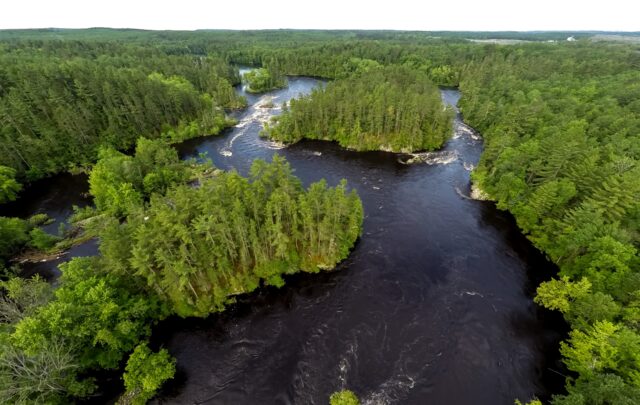
And this river is very rich in biodiversity. There are different types of birds. And the river itself is very rich in some other types of vegetation. Actually, they can get some food while they are sailing along the river. They can have mushrooms and seaweed. And they can even see the deer by the shore, looking at them as they go along.

The thing is that now they have noticed fear in the deer because of the situation that their land is going through. Now the idea is to be against the Mapuche and in favor of power plants.


Alex Leff (02:44.078)
Well, for our listeners, the Mapuche are an indigenous people of South Central Chile and Southwestern Argentina. And the Mapuches make up a tenth of Chile's total population. I'm curious for Mishere, what does being Mapuche mean to you?


Millaray Huichalaf(translated by Diana Rosenfeld) (03:05.27)
When you talked about Mapuche, it is a very comprehensive concept. It is connected to a set of values and principles mainly related to ancestral philosophy. And their understanding of the world is not related to the land. If the world was given to us, it was a kind of gift. But the world contains not only the land, but also the animals, the energy and the

They all become one entity and that's why the meaning of Mapuche is a people from the land. And it is more like the concept of the world that they have, their cosmovision is more of a spiritual kind.


Alex Leff (03:53.846)
So can you help us understand, I've heard you speak beautifully about these in the past, and can you help us understand Nian, the guardian spirits of nature and Nguyen, the life force that flows through all things.


Millaray Huichalaf(translated by Diana Rosenfeld) (04:18.221)
So we have to understand this but not from a Western mainstream perspective. This is more related to their life on a daily basis. This Nyen is not a textbook paradigm. It's related to a tutelary force that has been given to them. It is part of their Cosmovision. They are also stars.

galaxies, there are different kinds of material in their body in the same way that the Earth is made up of different types of material. So they connect with the universe. They talk to the universe and the universe is a guiding force.


Alex Leff (05:08.866)
Hmm.


Millaray Huichalaf(translated by Diana Rosenfeld) (05:13.432)
When she talks about the Nyen, she talks about a very strong and powerful energy. And this is the energy related to peace and balance that is being attacked by the conquerors. And you should know that these areas, the most powerful energy is in the area where the water, the springs,

even the rapids are, that water is the main tutelary force. And in order to picture what these places are all about in physical terms, they are like caves. And these caves were created during the Ice Age. And when you enter these caves, there are tables, rocky tables.

And the very atmosphere there, the energy there is heavy, let's say. So the notion of time, the way we know it outside those places is different. Actually, you lose the notion of time. And this is the place where the ancestors met. And if you are not wise enough and you enter those places, you might get lost because it is a very

powerful energy. And the conquerors do not understand that. They do not understand their beliefs. There is no understanding, therefore there is no respect. Because this is also related to science. It is science that is based on ancestral knowledge. And it's not the Western science that is the one that is being overvalued. And unfortunately,

all these areas and those beliefs and being attacked and their space continues to be invaded. And she said that it's very important what she's sharing with us all because this is a secret, a secret, an ancestral secret from their community that is being exposed to the world.


Alex Leff (07:25.866)
Hmm. Thank you, gracias. What does it mean to be a machi?


Millaray Huichalaf(translated by Diana Rosenfeld) (07:36.802)
The situation was like this. Everything started when she was a baby, a baby girl. She was born and the moment she was born, she was looking up. And that was kind of a surprising thing for her mom. Actually, they talked about this over dinner or over at the table with the rest of the family, how she had been born. The thing is that when her father,

was one told that she was going to have a matri girl. And at the time she didn't understand what she was being told. The thing is that when she was a little girl, they had to leave their land because their land had been deprived. They were suffering from poverty. The father went to the city to study to become a professor and that it was then that he got the news. But the truth is that he didn't understand what they were referring to.

Hmm.


Millaray Huichalaf(translated by Diana Rosenfeld) (08:42.597)
The issue was that there was a very hard attack on the Mati community, maybe when Christianity arrived in their territory. So they were killed. There was like a destruction of the Mati community. So the land was taken, they were taken off the land and a church was built.


Alex Leff (09:08.138)
Hmm.


Millaray Huichalaf(translated by Diana Rosenfeld) (09:15.896)
Well, this is a very complex story to talk about her as a match because she was a very little girl and all the matches need a superior match to train them to lead their way. And so she met her superior match through her dreams. And then in real life, she had the opportunity to meet her and she was the one that trained her.

and guide her. But the thing is that this is what she knows. This is the only thing she can do. There are some other women with some other abilities, such as cooking, for instance, but she has devoted her life to be the match. This is what she knows exactly how to do. She works with herbs. She provides her bowel treatment to different patients.

She has even assisted women during the liberty. But it's very hard to be in that role because you have to carry on your shoulders historical pain, historical knowledge, historical resistance. And nowadays it's more complex than ever because being a Maggi, the situation in the Alliance is being criminalized.

And unfortunately, this is not as different as it was with her ancestors. The thing is that nowadays, everybody talks about this intercultural connection. it's kind of this criminalization of the mattress is kind of in disguise. But it continues to be there because they have been conquered in a violent way.


Alex Leff (11:12.078)
Could you share a memory of the Pomeikin River, perhaps from your childhood, when you first felt a connection to it and developed your own relationship with it?


Millaray Huichalaf(translated by Diana Rosenfeld) (11:34.42)
is like the connection with the river is associated with NWEN. NWEN stands for energy. And energy equates animals. So whenever there is an animal that comes from a river, the animal transmits that energy to the match. Actually, the match energy comes from the animals from the river. In general, doesn't.

talk about these personal issues because she thinks that people might not be interested in them. But she can expand a little bit about the Nguyen and the Pere Montung, is that okay? They have like a very special vision on a specific time and space, but not related to the earth. They can see beyond the material world we live in.


Alex Leff (12:32.682)
I would love to hear more about that if that's something she would want to share in the Pumican significance in Mapuche culture and in the community.


Millaray Huichalaf(translated by Diana Rosenfeld) (12:46.918)
Nowadays, they are going through very, very hard times because of the construction of a hydroelectric power plant. Actually, it is a hydroelectric drum. It is from a Norwegian company called Statcraft. They provide all the financing there. And they decided that they wanted to start their own hydro project, right?

What's the result of that type of invasion? Land, the land, their land spoke. But why did the land speak? Because when they started the project, they found different archaeological elements. There was an archaeological discovery. And they found different elements from basins to any kind of daily tool. There was looting connected to that.

and they decided to carry out an indigenous consultation. That consultation is a difficult thing as well. It has been severely criticized. They don't know what will happen with the result of that internal consultation because when they found this archaeological site, they wanted to classify the different elements, but it was not that easy. So they carried the case to the highest court, the Supreme Court.

They managed to win some aspect of this case because they wanted to judicialize the right they have over the river. And unfortunately, the water is not part of their community. It is part of their community, but they say that they do not have the right to have access to their own water. And she also talks about this unfortunate ring colonization.

because nowadays there are some people that is green in disguise, right? And it's not generally green. And on top of the issue with the river and the power plant, now they have observed some other type of invasion because the green project connected to wind power and they have invaded sacred hills.


Millaray Huichalaf(translated by Diana Rosenfeld) (15:07.968)
So she's kind of hopeless in the sense that people do not understand their cosmovision, the importance of spiritual life because it's like the world has become kind of has lost sensitiveness, let's say. People are more concerned about the material world, money, but not the spiritual.


Alex Leff (15:32.418)
Hmm. How did Mishira decide to take action? Who did she make that decision with and what did that moment feel like when she decided to dedicate herself to doing something about the hydroelectric dam?


Millaray Huichalaf(translated by Diana Rosenfeld) (16:00.13)
Well, everything started when the project had been approved without any previous consultation. And so she decided that she needed to connect with her river, her ancestral land, the place where she had been born. She was 18 at the time. She was about to finish her magis training. And that happens when you have to bury a totem in a specific place and you have to start.

sharing medicine with the community. And it was at that time that Jarien Cuituante asked her to support him. And he was convinced that she had to be his voice. She had to speak up. But then she was very shy at the time, a bit of an introvert, always to herself. She was only connected to the world through the plans.

And then all of a sudden she asked her to speak. She should speak on his behalf. What happened? He sat her down on a stool. He stood behind her and she whispered to her ears all the things that she should tell the world. So at a very young age, she became a spokesperson.

she entered into a political realm. But at the time, politics was not understood the way we understand it. It was mainly families. What happened? At the time, this project had been approved. I'm talking about the Statcraft project. Because they wanted their final approval, they started to bribe other people in the community to get their signature for approval. And they accepted that.

As time passed, those people that had taken the money started to understand what that meant for the community. They started to understand the community's sale, the value of the river, the value of the ancestral land and the plants. And so this was reverted and these people that had accepted the bride started a healing process. And now she can proudly say that there are only six


Millaray Huichalaf(translated by Diana Rosenfeld) (18:25.614)
families related to this bribery and 150 communities are working and fighting against stratocraft.


Alex Leff (18:37.998)
And so this next question, I completely understand if this is too difficult to talk about, but I'm curious what dangers come with protesting this project and what have been some of the hardest sacrifices that she has had to make.


Millaray Huichalaf(translated by Diana Rosenfeld) (19:06.702)
So you are asking about dangers, danger and risk when she's a mom. She has two little girls and a baby boy. And well, she's a spiritual leader. As such, she's a mom to the entire community, even to the elder. She is there to provide medicine, mainly advice for a better life. And it's very hard to...

fight against the armed forces with big weapons, right? What are their weapons? So the voice of their shouting, some huge placards that they might carry. were shot, wounded, some other members of the community lost their eyes, right? And it's not only

physical repression but emotional repression as well. It is very, very dangerous and hard to advocate for nature, even harder in La TAM. So, and it's not only a question of saying we are against that project. We also propose a new project, but projects that are for life, for nature.

But it's very hard for some other people to understand that. And it's very risky because they are the visible face of this fight.

The situation is she's getting harder and harder as time passes. And this question of protecting the thing, they do it naturally. It's for themselves and for the rest of the community. the risk was also related to imprisonment. She was imprisoned for several months. At the time, one of her girls was only four years old.


Millaray Huichalaf(translated by Diana Rosenfeld) (21:10.638)
the police entered through forceful entry in her place. Several times she was a victim of forceful entry. But this is not only what they being accused of. And even before the trial, when she was in prison, she had the media against them because again, of stigmatization. Right? But she's still hopeful. She's full of hope and conviction.

Their work is a kind of a little seed for motivation, not only for them, but for the entire world. Now women are stronger than ever. They can speak up.

They have this energy, they are part of the end of the world, very kind of inside the world, right? And their voice becomes action. So they have to be highly aware of their commitment to nature. Because as time passes, there is very little water, the mountains are being destroyed and depleted, there's very, very little air nowadays. So they have to be open.

to find new possibilities, to generate new knowledge, to defend nature and to foster resilience.

That’s where our conversation with Millaray had to leave off. I would have loved to talk longer but that’s all the time we had.  There are some excellent stories out there about Millaray—including an excellent graphic novel. I’ll link to these stories in our show notes.

Thanks for listening. Stay tuned for our next episode, where we travel to India to speak with Raviraj Shetty—a narrative practitioner, occupational therapist, and co-founder of the Narrative Practices India Collective—about the power of story to shape belonging, heal communities, and reimagine how we live together in a time of deep uncertainty.

This series was made in association with Resilience.org and with support from a grant from Omega Resilience Awards, a project of the nonprofit Commonweal. You can learn more at ORAwards.org. We’ll have a link in our show notes.

Wishing you well and talk with you next time.


Comments
We changed commenting systems on September 10, 2026 as part of a site-wide functionality and security upgrade. Your past comments have not disappeared, and you can still log in with your old Disqus account credentials if you wish. Contact us with any questions.