

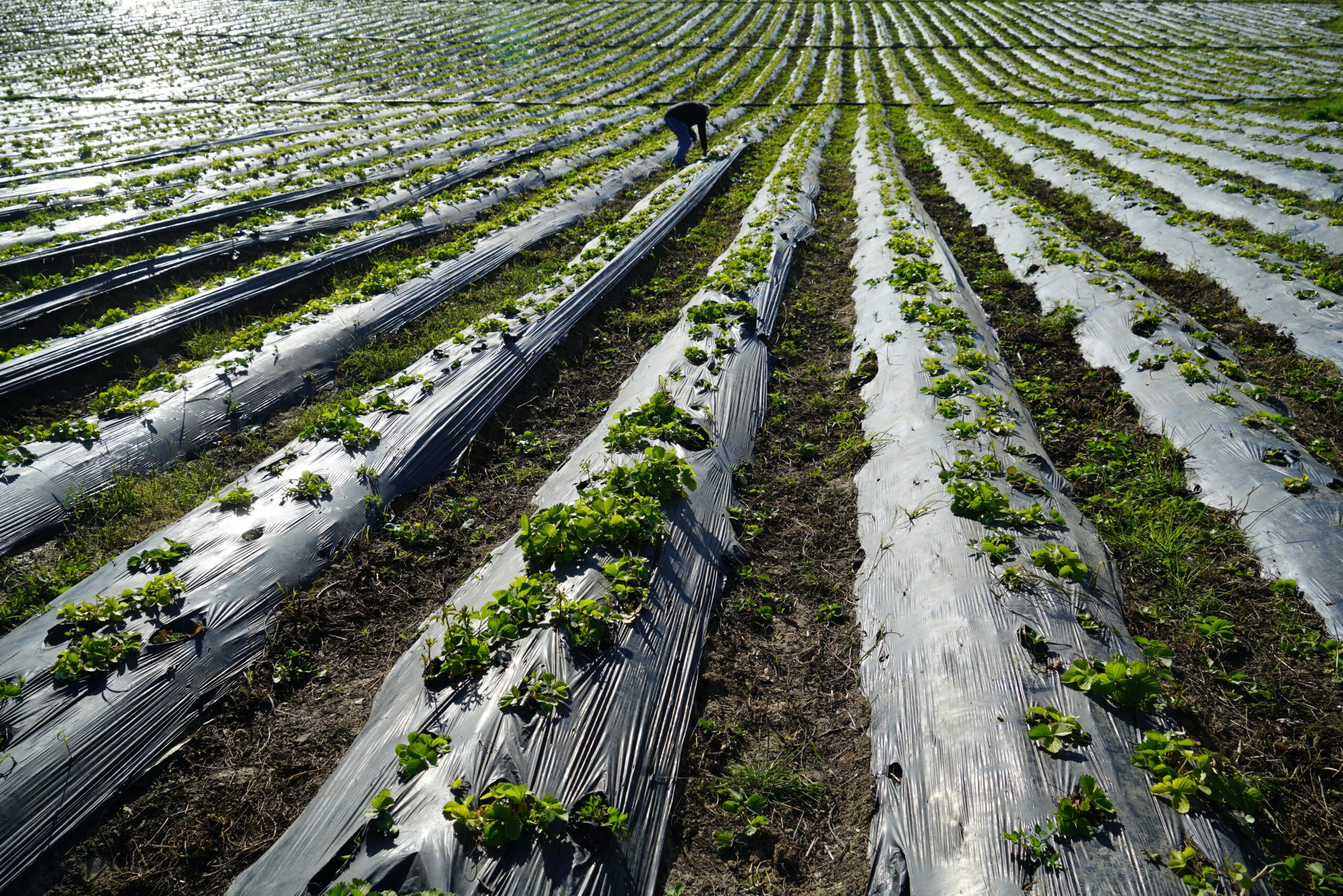
Sustainability has become something of a buzzword over the years. From the clothes we wear and the energy that powers our homes to the way we live our lives, the idea of sustainable production and consumption has become commonplace.
That is also true about the way we grow and consume food. Recently, however, another term has come to the fore: regenerative agriculture. It sounds attractive, somehow better than sustainable, but what does it really mean?
Regenerative agriculture began as a grassroots approach to farming led by farmers. It has been described in many different ways, but a common thread is a set of values.
People might be drawn to the word “regenerative” because it evokes a sense of improvement rather than just maintaining the status quo — for example, efforts to rebuild a system and our values. That last bit — rebuilding not only the system but our values — is really important.
Values often include care for the environment, a responsibility to nature and cultivation of good food. Just like there are many ways to grow food, there are also many languages, voices and histories that express the ways that food can be cultivated in alignment with values.
The need for an agricultural ethic
It is easier to standardize and market a simple list of practices than a philosophically sound ethical framework, but that doesn’t mean ethical frameworks are irrelevant. Ethics is a branch of philosophy that examines concepts of good and bad, right and wrong and our values.
Ethics might be the one thing that agricultural science has been missing, but needs the most. Agriculture has been rudderless when it comes to collectively deciding what is or isn’t good for humans and the environment.
Cornerstone ethical frameworks have provided reasons for taking care of the environment, such as the land ethic and deep ecology.
These laid the foundation for important movements supporting nature preservation and conservation, and the United Nations 30 by 30 goal to set aside 30 percent of the planet for conservation areas by 2030.
These frameworks, however, are easier to apply outside of agriculture rather than to inform agricultural practice within environments. They might often involve protecting land from agricultural use.
Yet agriculture is a part of the environment, not separate from it. We need an environmental ethic that works for agriculture, one that centrally grounds it as part of the environment. This is where regenerative agriculture might help.
A better approach
In my work, I define regenerative agriculture as an ecological approach and ethic for our agricultural system that involves reciprocity with the land, to support ecosystems with the goal of nurturing the environment.
Ecosystem processes and environmental components such as land, soil, water, air, flora and fauna are all viewed as morally worthy of consideration due to their roles in giving life.
A regenerative agriculture ethic would allow for natural shifts in ecological stability due to cultivation, but would draw the line when the ecosystem processes are damaged, degraded or severed. In this approach, regeneration is valued.
Regenerative agriculture can help other movements like agroecology, as opposed to threatening them. Agroecology is a larger science, practice and social movement to build an inclusive food system with political, social, environmental aspects of sustainability. Bringing in an agricultural environmental ethic will help advance this goal.
However, focusing on a “one-size-fits-all” standard for regenerative agriculture and marketing it for profits has left the concept a hollowed version of itself. It has been reduced to a simple list of agricultural practices or outcomes, like ticking off a grocery list.
Generic practices like diversification and soil health management are frequently cited, without specifying the degree of diversification or whether soil health indicators actually improve.
This oversimplification and convenient marketing use by agrifood corporations has caused expert panels and researchers to warn that the concept has been co-opted. In its narrowed version, the underlying values have been left out.
If regenerative agriculture becomes just another marketable list of practices, then its potential for real transformation evaporates. However, if we pause and prioritize a truly regenerative agriculture ethic, it may lead us to a prosperous and healthy environment and society.





Comments
We changed commenting systems on September 10, 2026 as part of a site-wide functionality and security upgrade. Your past comments have not disappeared, and you can still log in with your old Disqus account credentials if you wish. Contact us with any questions.
I disagree. If you don't have concrete lists of practices, then what you have is abstractions, platitudes that anyone can claim to be following. "Absolutely, we work with nature," says the manager of a thousand-acre farm that looks like the above image–huge amounts of plastic, which is there largely so they can spray herbicide, since they don't want to hire enough labor to weed s ch a huge field, which is clearly a monoculture and this subject to major pest problems–which they'll deal with by using more toxic sprays. One problem with "regenerative" agriculture is that often it emphasizes no-plow at the cost or requiring herbicide. I'd rather have occasional tilling. But while the word "regenerative" has been co-opted, the word "organic" has legal restrictions, spelled out by the Organic Standards Board–which has been subject to lobbying by big ag, and thus has watered down its standards.
I agree. If we don't define the practices there will be many who claim they follow "regenerative" agriculture. In many ways I think regenerative agriculture builds from organic practices that eliminate the use of toxic chemicals. In organic farming there is an emphasis on diversity of crops and livestock where manure, crop rotations, and cover crops are used to regenerate soil organic matter and soil microbial diversity. Organic farming relies on soil microbes to decompose organic matter and feed plants. Once a farmer reaches this point nature begins to rebuild itself. Insects, amphibians, and birds return. Plant nutrients are not lost to the system as they continue to recycle through the plant roots, soil, and microbes. The land captures more moisture and recharges groundwater. This is exactly what I have observed happening when I stopped using herbicides and pesticides on my yard and garden. Annual applications of compost and mulch to the gardens built soils and improved plant health. I've made conscious effort to plant herbs that feed insects. There is more food and habitat for local wildlife. Sadly, none of my neighbors have done the same so my land is a small island in a monoculture lawn desert.