

Like many people, I wear many hats. But when asked what I do, I say I am a farmer. It is a way of life and a political statement. Life on a farm, within a vibrant forest, keeps me grounded. Literally. I walk on living earth, not concrete. And I have taken control of my basic needs—I can harvest enough food and rainwater for my family. That, for me, is true freedom. My intent is to bring back the pride of producing our own food in a partnership with the earth and our immediate community.
This is the first article in a series on some initial steps towards simple self-sufficiency.
Guidelines for sustainability? There are no guidelines, no rules, other than do no harm. While many ideas have been suggested, we all have to find the way which works for us. But the time is now. It’s already late. Where do we start—whether we wish to grow some of our food or simply lessen our personal impact on our world? I began by planting a tree. One tree. A fig tree.
Tree planting is not solely about offsetting our carbon footprint. It takes years for a tree to become a significant carbon sink. But planting a tree has many ripple effects—whether it restores a habitat, provides shade and cooling, creates new sources of food, prevents soil erosion, or regulates the soil moisture. Planting a tree is about planting beauty. Planting a tree means restoration. Planting a tree is a gift to future generations. For me, planting a tree is where every one of my gardens begins.
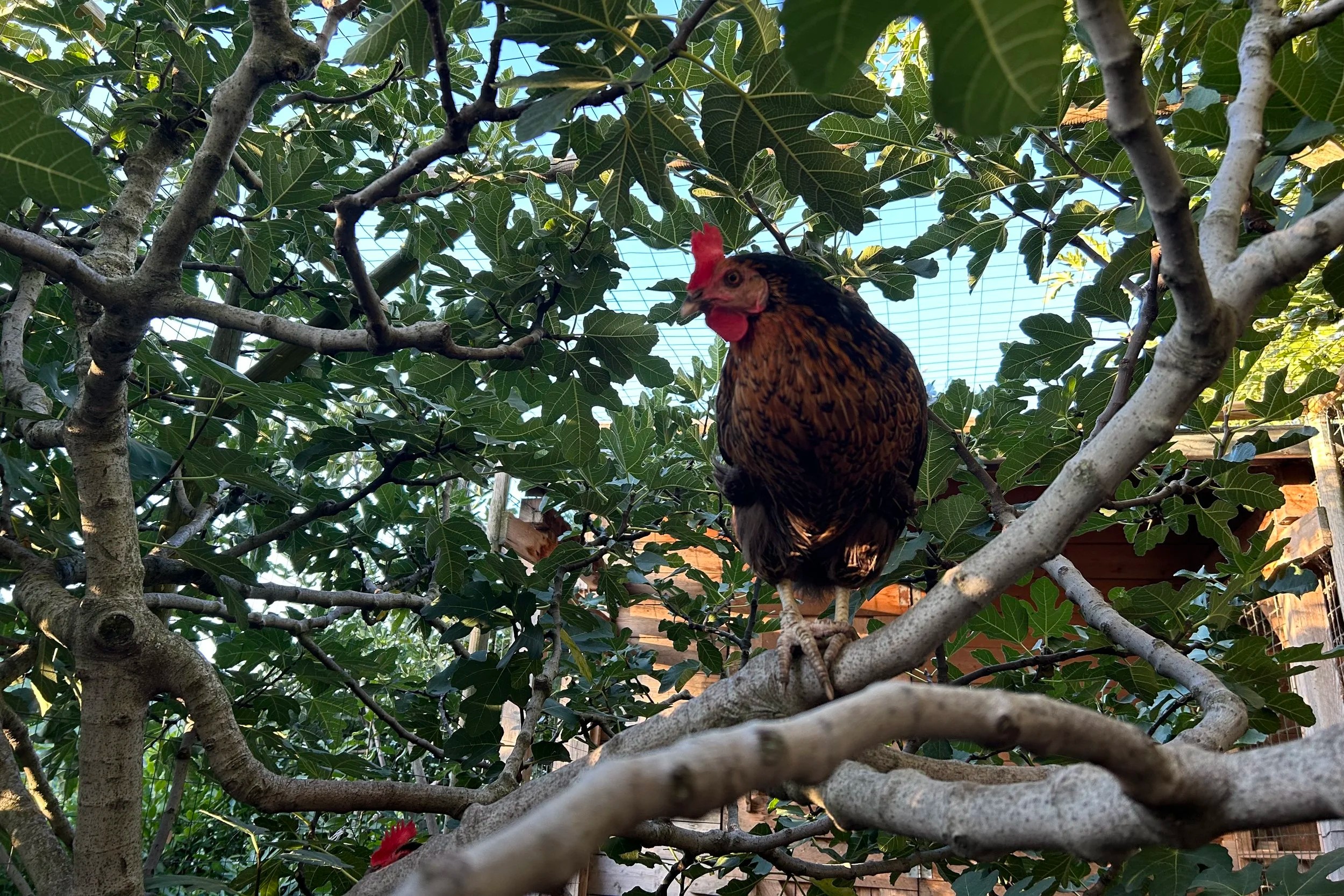
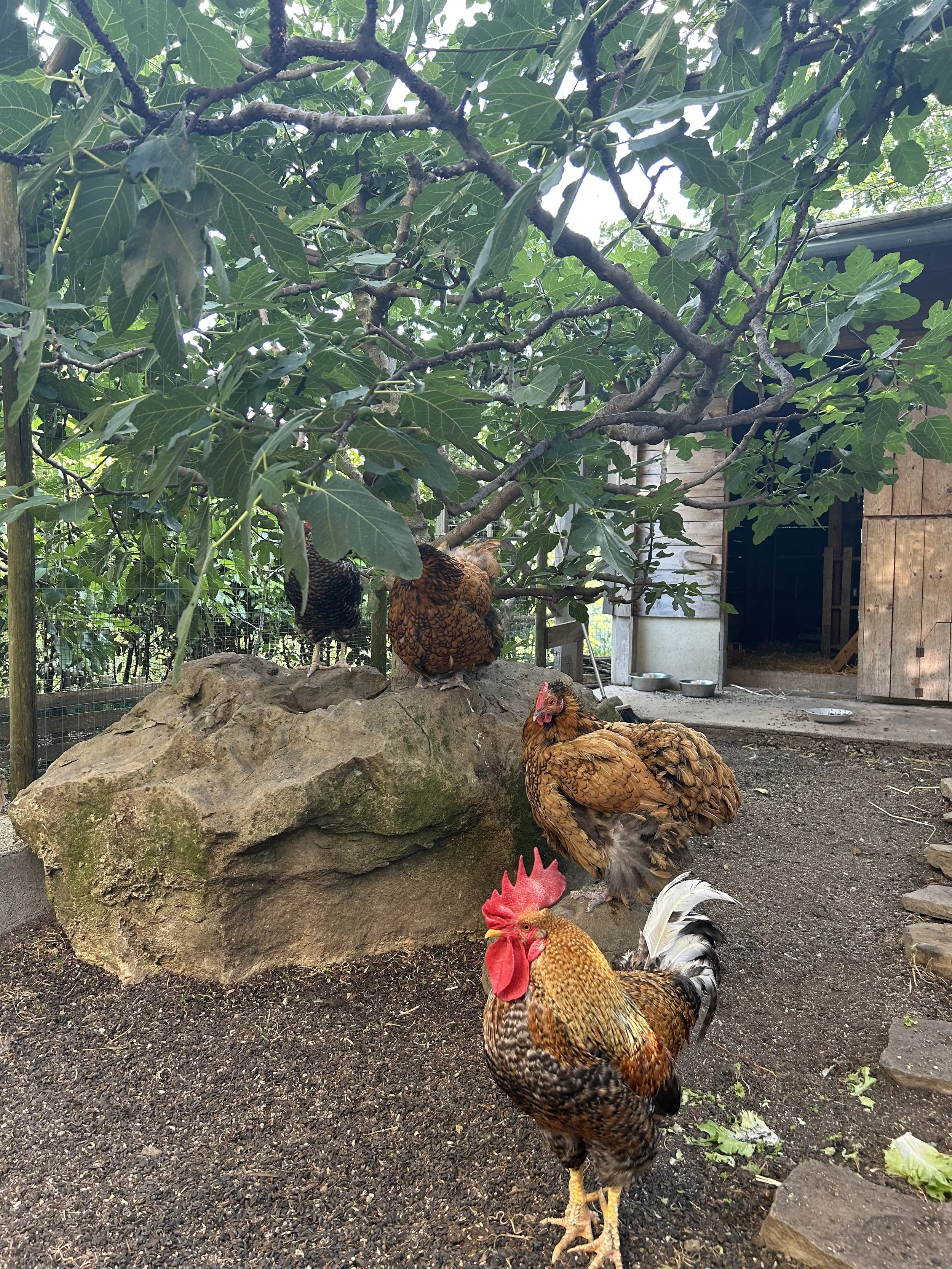
During two months of unusually hot days this summer, I silently congratulated myself for having planted five fig trees in front of the poultry barn. The trees are impressively large and robust ten years later, giving figs in late summer. During the heat, the trees also provide much needed shade for the chickens and the chickens eat the fruit I could not harvest. Because fig trees are deciduous, when they drop their leaves in late fall, the chickens will have a warmed yard in which to sunbathe.
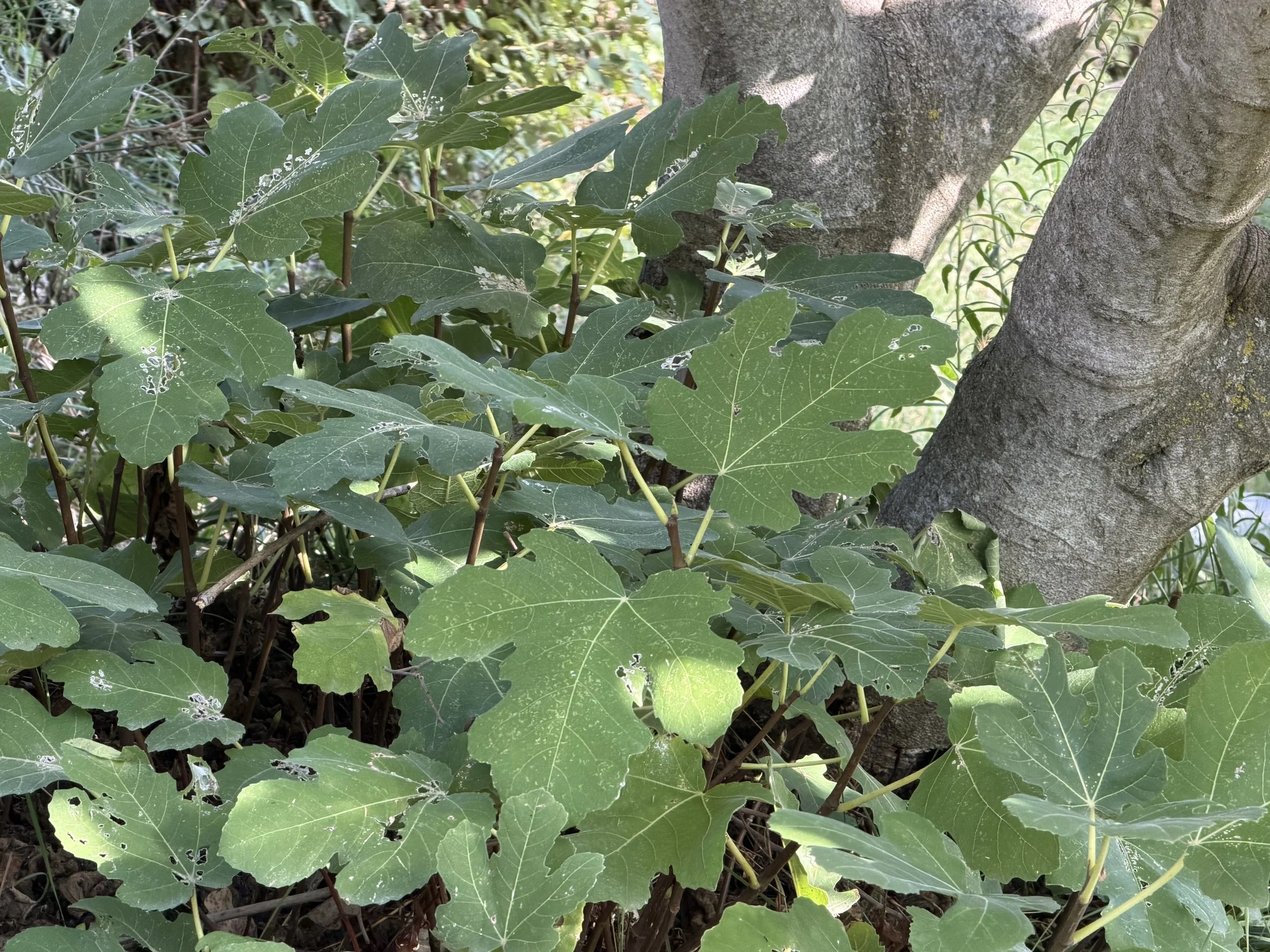
It was only by accident that I planted that first fig tree. A year before I was eating black figs at a friend’s house. The taste was on an entirely new level of food sensuality. Drunk on deliciousness, I asked my friend if I could take a hardwood cutting from his tree. He said, “Even better, take a sapling with roots from the base of our tree.” (Below) I did. I brought it back home and planted it in a pot. By the time we moved to our farm, I had a two meter-high, pot-bound fig tree in need of more growing room.
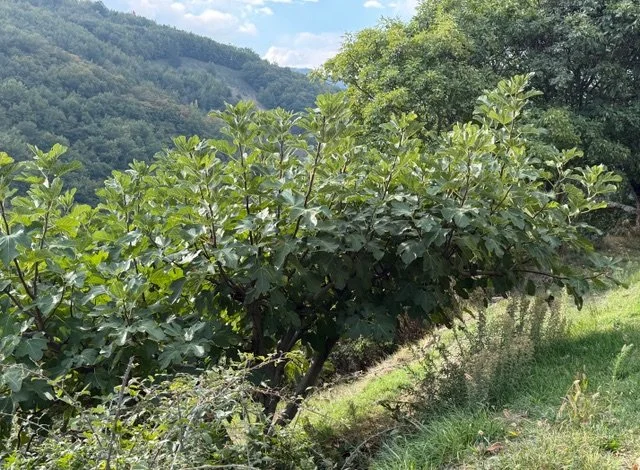
I did not know anything about our soil type but I looked at the neighboring trees. (Below) Wild figs were the most common fruit tree in our valley. So we dug a large hole, added our poultry manure and some compost, and inaugurated what would become a large garden.
A tree will hold the soil during our torrential rains and share its moisture with the surrounding vegetation during drought. And when the tree is cut by copicing, it will regrow while it’s wood heats our home and cooks our food. Inspired by John Russel Smith who wrote Tree Crops, I now grow our food on hilly fields within scattered trees. There are not enough trees to call it a food forest but enough to give needed shade for the crops during our long hot summer days. The trees provide us with nuts, olives, oil, and fruit. Equally important, they also provide food and housing for wildlife, homes for the birds and insects which control crop-damaging insects.
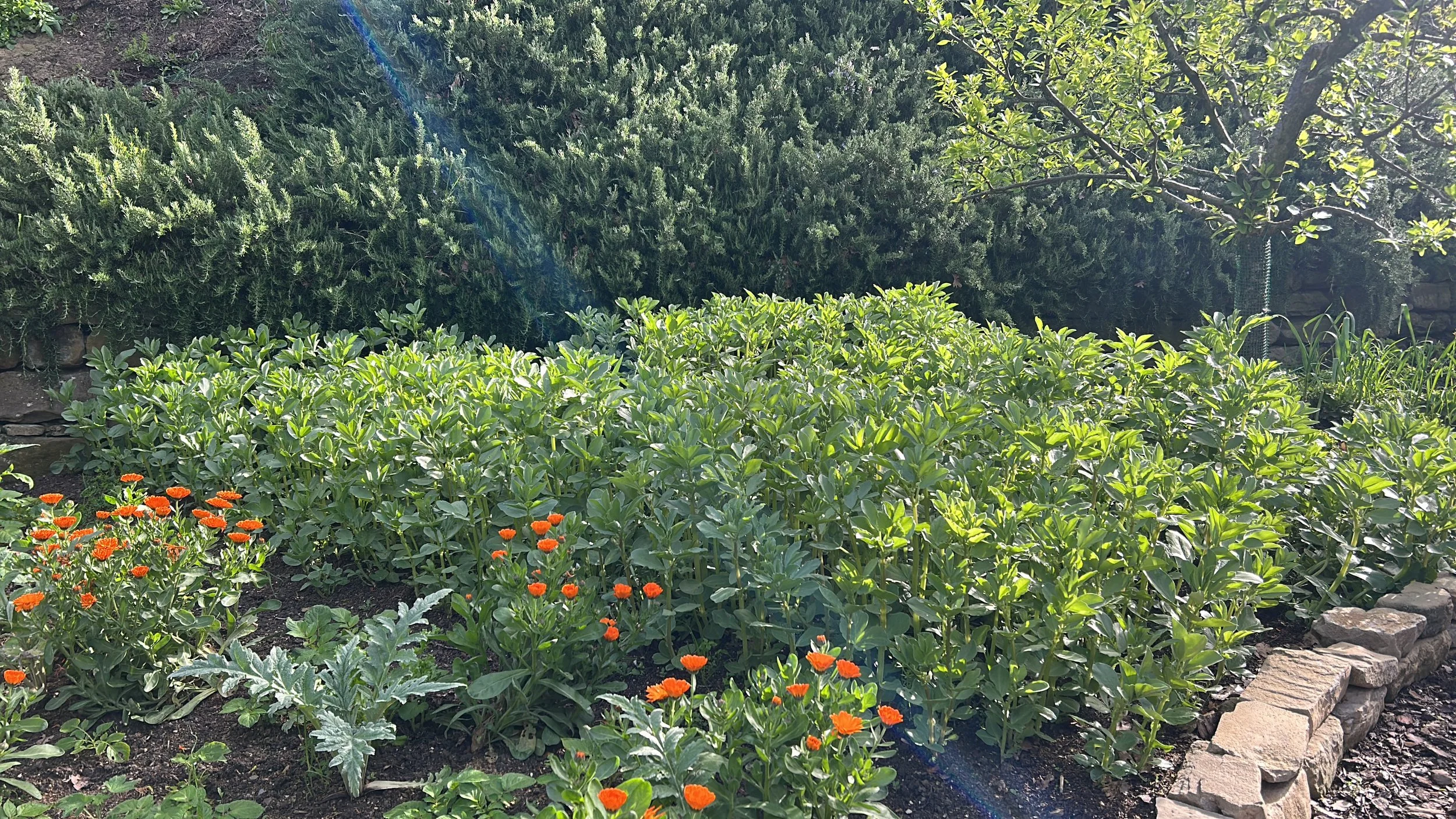
Now, for every new area I cultivate, I begin by planting a tree. But before I touch the soil, I sit with the land for a while. I notice the plant species, the visiting birds and insects, the movement of the sun and the wind. Then I scratch around in the soil to learn its texture. When I am ready to place the sapling in the earth, it will be because it is suited to its new neighborhood and can withstand the shocks of the changing climate. It will be able to establish roots for a new soil community.
What if we all planted one tree? Right now. Fall is the perfect time. In our backyard, in front of our apartment building, at the edge of the woods. A group effort can accomplish much, but there is also work to be done as individuals — work to encourage and build all our living communities.


Comments