

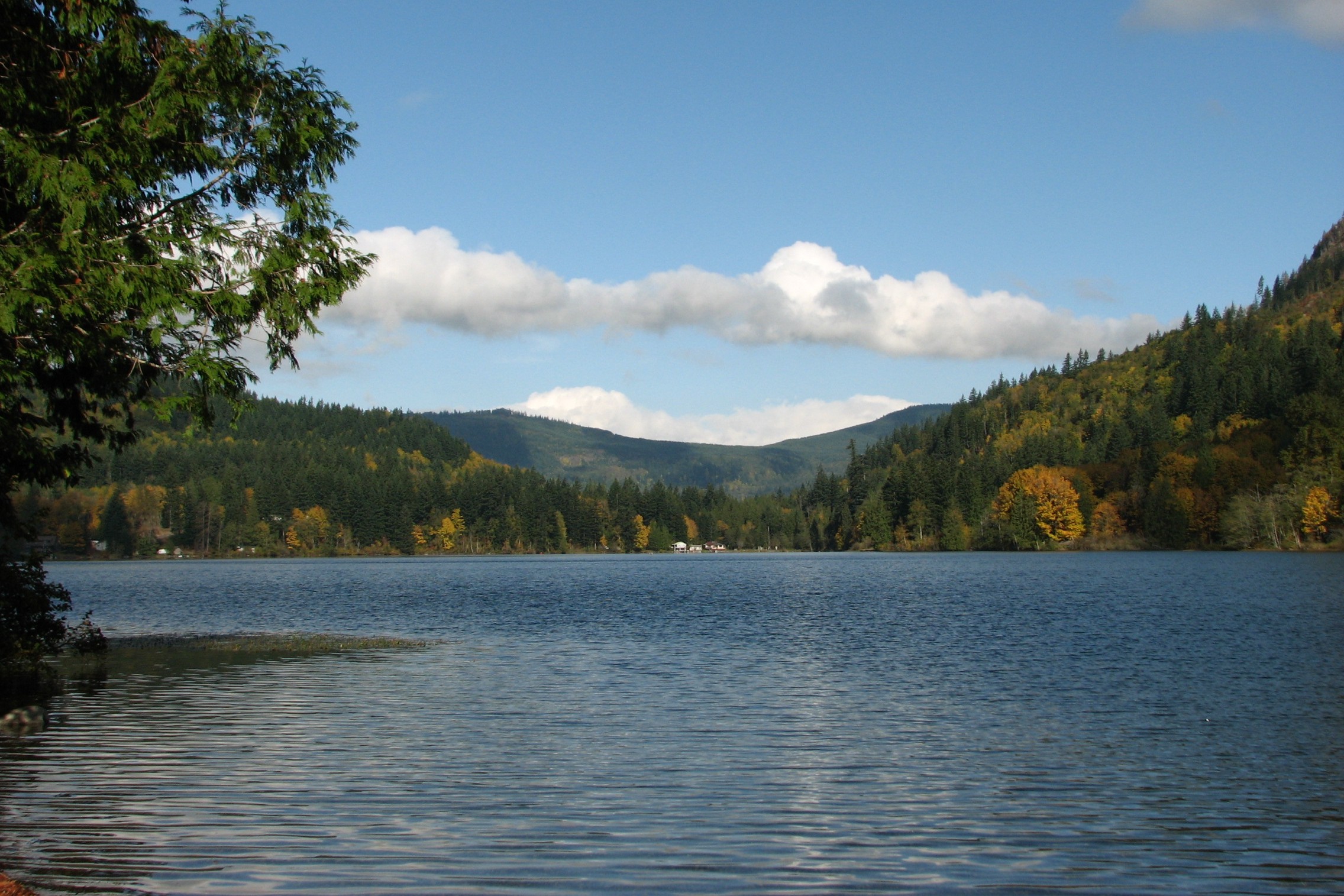
Many counties are locally committed to sustainability. They have plans and policies to meet their commitments. But sustainability issues are not confined within county borders. Counties are human constructs, and although government jurisdiction runs to the county line, ecosystems extend beyond it. And so does the local economy, as people cross borders to work and shop. Like a cell in a body, a county is dependent on the integrity of its host system—the bioregion, and ultimately, the biosphere.
We exist in a living, interconnected web of ecological and social relationships. Local political boundaries are important, as they enable governments to enact codes and ordinances and citizens to affect policy. But, for communities to achieve self-sufficiency and resilience, they must look beyond political boundaries.
A bioregional approach to sustainability is informed by ecological living systems and cultural connections. At the forefront of this growing movement, which can be traced back to the ‘70s, are Regenerate Whatcom and its parent network, Regenerate Cascadia.
Growth Weighs on Whatcom
Whatcom County, located in northwest Washington State, runs along the border with British Columbia, Canada. The county’s seat and largest city, with a population of 99,000, is Bellingham. Whatcom County suffers from past industrial abuse and contamination. Furthermore, expanding populations from Seattle to the south and Vancouver to the north are placing growth pressures on the county. The government is planning for 30 percent more people by mid-century.

Pollution and economic growth are already straining the region’s freshwater supply and public infrastructure. The former depends on glacial melt that is disappearing due to climate change. But certain sectors are viewing the increasingly unsustainable situation as an investment opportunity. And local officials have generally aligned themselves with this mindset.
Meanwhile, residents subsidize the growth boom with their taxes, and few partake of the benefits. The increasingly popular bioregional model offers an offramp from the prevailing growth-centric mindset.
Whatcom’s Bioregionalism Beginnings
David MacLeod has a long history working on sustainability in Whatcom County. He and his collaborators, such as fellow Whatcom County resident Brian Kerkvliet, helped found several organizations. These include Sustainable Bellingham, Transition Whatcom, and Salish Seed Guild. In 2023, MacLeod et al. activated Regenerate Whatcom with the Regenerate Cascadia Activation Tour. After over a year of quiet organizing, they announced the group’s launch in an article for Whatcom Watch.

True to the philosophy of bioregionalism, Regenerate Whatcom and the larger Regenerate Cascadia draw heavily on systems thinking. As MacLeod describes it, changing a system requires finding its leverage points. Instead of treating isolated symptoms—combatting water pollution with chemical filters or addressing food insecurity solely with food banks—these groups seek to redesign the system itself. By weaving together community-led watershed governance, regenerative agricultural practices, and permaculture principles, Regenerate Whatcom and Cascadia aim to create self-healing landscapes and resilient local economies.
As Brian Kerkvliet explained in an interview for the Herald, “In permaculture, it’s not about each element. It’s about the relationships between the elements. And is that a positive relationship or a negative relationship or a so-so relationship? And how do we get more positive relationships going and building a web that is resilient and moves—steers the ship in the right direction.” As an alternative to the typical model of community development, the Whatcom experiment in bioregional permaculture offers a path off the growth conveyor.
Inspired originally by the history of indigenous stewardship in the region, bioregionalism has a long lineage in the Pacific Northwest. Peter Berg and Raymond Dasmann of Planet Drum further developed the philosophy in the 1970s. In 1986, the first Cascadia Bioregional Congress was held at Evergreen State College.
The current manifestation of Regenerate Cascadia was officially founded in 2023 by Brandon Letsinger and Clare Attwell. It emerged from a partnership between the Cascadia Department of Bioregion, the Design School for Regenerating Earth, and the Regenerative Communities Network.
MacLeod and his Whatcom County colleagues found a natural fit within Regenerate Cascadia for their own work on local sustainability. Chief among their concerns are ecological overshoot and limits to growth. MacLeod contends that the way forward involves challenging growth and building an alternative path to meet human needs.
Bioregional Mapping
In an interview for the Herald, Brandon Letsinger, the Executive Director of Regenerate Cascadia, emphasized the importance of using layered mapping to understand the bioregion. Since water is vital to any community, watersheds are a priority for this mapping. Geophysical layers, such as soil type and topography, and biotic layers, such as plant and animal communities, are also useful. But it is the human layers of cultural connections that set the bioregional approach to mapping apart. Brian Kerkvliet refers to these connections as formerly “invisible layers” made visible through mapping exercises.

As part of the mapping process, Regenerate Whatcom welcomes participants from numerous backgrounds and groups to mark up a map of the “water catchment.” That’s Kerkvliet’s preferred alternative to “watershed,” meant to prompt thinking about preserving water, not “shedding” it.
During these community mapping sessions, participants indicate areas that are precious—that need preserving. They also point out areas that have been degraded and need restoring or repairing, as well as places where people are thriving. This community analysis results in a layered map, and the process continues, with invitations extended to those who weren’t present at previous sessions.
Healing Community Fissures
Bioregionalist thinkers emphasize that bioregional mapping facilitates what is missing from many grassroots attempts at change: cultural connections that bind individuals and communities to a common cause. Certain actors—for instance, developers—use government meetings to exert their influence. But they are hardly representative of the community at large; they have narrow interests in converting land and extracting resources for profit. Yet they are adept at using conventional mapping and social organizing to their benefit. And they usually have more money to throw at the task than do grassroots organizations that better represent the community.
As described by Attwell, Letsinger, and Taya Seidler:
Many grassroots efforts operate in isolation, limited by a lack of resources, training, and support. Inadequate governance tools, volunteer burnout, funding scarcity, and a breakdown in trust often prevent collaboration and long-term impact. Without confronting these structural issues, even the most well-intentioned initiatives will struggle to sustain meaningful change.

At a fundamental level, bioregionalism is meant to repair the fragmentation that afflicts modern society. According to its proponents, such fragmentation has left people prone to a consumerist and growth-centric worldview, sold as a replacement for connection with nature and each other. As an ethos designed to heal these fissures and restore connections to place and community, bioregionalism is about “living in place.” It invites people to find connections to place and community and understand that they are nested within layers of relationships.
And when it comes to challenging the growth imperative at the local level, bioregionalism provides a countervailing cultural and civic space with potential to establish a local steady state economy. As an explicit, tangible expression of a community’s human-nature connection, bioregional mapping provides an alternative vision to conventional development plans. This helps citizens operationalize their sustainable development goals.
Funding Regeneration
Regenerate Cascadia’s philanthropic funding base comes from donor-advised funds (DAFs), which are accounts designated for charitable giving. The parent group then funds Regenerate Whatcom and other Landscape Groups through a program called Cascadia BioFi. This program’s mission is to build “the financial ecosystems that resource community-led regeneration.”
Cascadia BioFi’s principal means of providing capital is “flow funding,” by which landscape groups—rather than Regenerate Cascadia—“allocate grants directly to projects and people in their networks.” This trust-based model flips traditional, hierarchical grantmaking on its head, placing decision-making power in the hands of locals who deeply understand the community’s needs. This ensures resources are directed where they will have the greatest impact.

According to Letsinger, the bioregional model “taps into a social fabric that already exists.” “We identified this missing layer of coordination. Then, we were able to flow funds and extend resources to those people in the communities who can help connect things together.”
MacLeod added that flow funding empowers landscape groups without bureaucratic baggage. He described how groups have “acupressure points” that are particularly effective in building community, and how large, outside grantmaking institutions aren’t familiar with those points. But with assistance from the parent group comes responsibility and reciprocation. “We talk about moving at the speed of trust,” MacLeod said.
Gaya Herrington is the finance co-director for Cascadia BioFi. An econometrician by training, she made waves by affirming that we are on the overshoot path predicted in the classic Limits to Growth analysis from the 1970s.
Herrington gave a keynote presentation at the 13th Biennial United States Society for Ecological Economics Conference in June 2026, embracing a limits approach to economic activity. Her address focused on a well-being economy, in which bioregionalism plays a fundamental role. She spoke of transitioning from the insane growth-centric mindset, to one of “human and ecological well-being.” At the conference, Herrington also joined the list of notable signatories to CASSE’s position statement on economic growth.
Holding the Line on Growth
Reliance on local ecosystems, to the greatest extent possible, is a key component of most steady-state visions. Although this is difficult to achieve at the county scale, it is more easily envisioned within a region that can produce a diversity of goods and services. But it’s not enough to produce goods and services to meet physical needs. Strong social networks are a prerequisite to self-reliance and well-being. By centering social networks and ecosystem health, including soil and water quality, as the measure of success, bioregionalism provides an alternative to GDP.
Unfortunately, Whatcom County’s guiding document—their newly finalized comprehensive plan—remains growth-centric. It doesn’t reflect the bioregional movement burgeoning within and around the county. Although the comprehensive plan limits growth to “urban growth areas” on the peripheries of various municipalities, it lists “accommodating growth” as a goal. There is no mention of carrying capacity for the county or the region. Indeed, the Long Range Planning Division for Whatcom County states, on their website:
[The Division] is dedicated to fostering sustainable growth and development by preparing for the county’s future needs. This proactive approach involves analyzing current trends, engaging with community stakeholders, and developing comprehensive plans that reflect the vision and goals of local residents.
As he helps shape Regenerate Whatcom’s work, David MacLeod recognizes the need for directly amending county and regional plans to challenge the growth mindset. Already, area residents have defeated planned expansions of municipalities. For example, the City of Blaine voted to “de-annex” an adjacent 573 acres.

Regenerate Whatcom is making efforts to engage local policymakers. A recent mapping event had a Public Utility District board member, Atul Deshmane, in attendance. The organizers also invited port commissioners, who were unable to attend, and will continue to extend invitations to officials. MacLeod thinks measures of local human impacts, such as ecological footprint—which CASSE is calculating via the Keep Our Counties Great program—will grab policymakers’ attention. Such analyses emphasize the importance of a steady-state county vision.
MacLeod believes that, beyond analyses and mapping, alternative models for living and interacting with and regenerating the landscape are a necessary first step to policy change. In his view, laying the groundwork for a parallel path for living, and building community to shape and begin walking that path, are the means for challenging growth. With their bioregional approach to sustainability, Regenerate Whatcom and Regenerate Cascadia are trailblazing that path.



Comments