

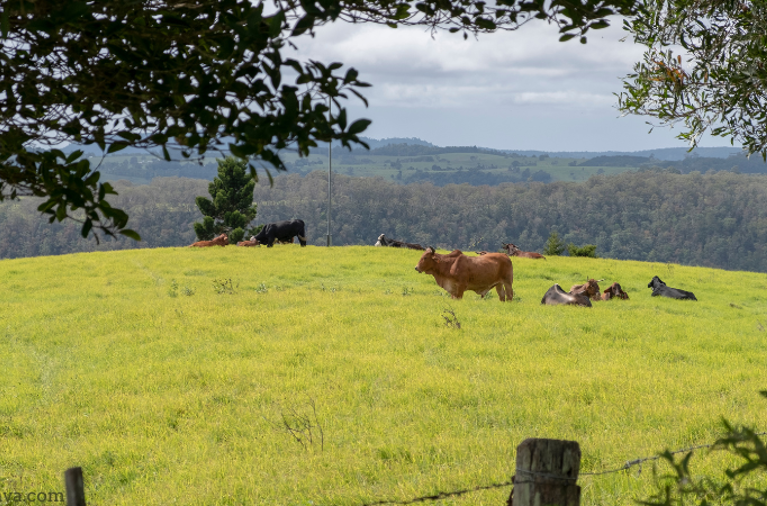
The EU Commission launched a livestock strategy on 7 July. The same day, they also launched an action plan for the EU “protein system”.
Predictably, there have been very different reactions to this. The European Environmental Bureau said that:
”The Commission seems bent on painting a rosy picture of an industry dominated by Big Agri corporations who profit as they pollute. This is not a “Strategy” for farmed animals, the communities suffering from the pollution of industrial rearing, or for the farmers trying to rear animals ethically and sustainably. ”
Copa-Cogeca, the main EU farm lobby was a lot more positive:
”After years in which livestock was too often portrayed as part of the problem, the Commission now recognises its contribution to food security, rural vitality, the circular economy, and the production of high-quality proteins and renewable energy.”
The protein plan was criticised for having a strong focus on protein for feed. I was surprised by how little of the plan was oriented to plant protein for food and how little action it prescribes there. I had thought that the Commission chose to launch these two together in order to placate the predictable critique of the “anti-livestock” lobby. But it seems to me that Big Ag pulled the longest straw here, also.
I will cover the livestock strategy, and to some extent also the protein plan, in two posts. In this first one, I will focus on the status quo of the livestock sector and in the second discuss the policy proposals and their implications.
The Staff Working Document, accompanying the livestock strategy, has a wealth of information. That said, I believe one should realise that the statistics have some weaknesses. The strategy rightly points out that the livestock sector is diverse across species and regions. It is therefore pointless to make broad statements about “the EU livestock sector”.
In 2025, the European Union had 132 million pigs, 72 million bovine animals, 54 million sheep and 10 million goats, and a staggering 1.6 billion poultry birds, mainly chickens. Over the past two decades (2005-2025), bovine animals decreased by 10%, whereas domestic pigs dropped by 15%. The number of sheep and goats fell even more sharply, by 26%. Poultry is the only exception, increasing by 14% in the same period.
There are approximately 4.1 million farms with livestock in the EU. The share of farms with livestock decreased from 55.7% in 2010 to 41% in 2020. 6% of the farms concentrate more than 70% of the EU’s total livestock units (LSU)*, while 60% of the livestock farms have less than 5 LSU. Most animals are thus kept in large units while most livestock farms are very small, a factor that is not often realised but has to be taken into account when policies are developed.
Most animals are kept in large units while most livestock farms are very small.
The number of livestock farms decreases rapidly, while the total LSU are more or less constant. This means that there is considerable consolidation in livestock farms (see chart 3 from the Staff working document).

The average livestock density is 0.75 LSU per hectare, a fairly reasonable density. But when looking into the rates for individual farms, for regions and for countries, a very different picture emerges. Noord-Brabant has 7.41 LSU/ha while Wien has just 0.01 LSU/ha. Netherlands has the highest density of the countries with 3.45 LSU/ha, and Bulgaria the lowest with 0.23. Many farms, particularly poultry farms, buy in almost all their feed, meaning they have very high livestock density, and the trend is toward more feed being bought in to farms. If we focus on the 21,000 largest pig and poultry operations, they are concentrated in a few regions, with Bretagne (FR), Aragon (ES), and Weser-Ems (DE) each having more than 1000 such operations. Noord-Brabant (NL), Cataluña (ES), Lombardia (IT), Castilla y Leòn (ES), Midtjylland (DK), Pays de Loire (FR), Veneto (IT) and Syddanmark (DK) also have many such operations.
In 2025, the EU produced approximately 42.7 million tonnes of meat; this is projected to decrease by 3% over the next decade, with reductions in beef production by 10%, pig meat by 7%, and sheep and goat meat by 7%. Poultry meat is expected to continue its increase by 5%. Ruminant meat constitutes below 17 percent of the production (Graph 7). The EU is a net exporter of all meats save sheep and goat meat. Pig meat is most important, and the EU is the biggest pig meat exporter in the world.

The production of milk is still growing, but slowly, in the EU, despite a decline in the number of dairy cows. 162 million tons of milk were produced in 2025, resulting in, among others, 11 million tons of cheese and 2.3 million tons of butter. Milk is thus a much more important production than beef from the EU herd, both economically and nutritionally. More than half of the EU beef is a “by-product” of dairy production, e.g., originating from dairy calves or heifers and dairy cows. The EU also has a big trade surplus of milk products estimated at EUR 18 billion in 2025, more than all meats taken together. Egg production is also growing and is projected to increase by 5% in the coming ten years.
Four percent of bovines are organically reared, around 10 percent of sheep and goats, while only 1.1 percent of pigs. On the consumption side, the share is much lower because organic production is lower. E.g the Commission estimates that just 0,3% of all pig meat and chicken is organically produced. In general, the share of organic mainly reflects how, relatively, difficult it is to manage livestock production organically compared to conventional. As chicken is the most industrialized livestock species, it is very hard to produce organically, which is also reflected in the price of organic chicken, which keeps demand low.
The statistics on housing systems show huge differences between species and production systems. Larger production units and poultry and pig production in general keep animals indoors. 36 % of the hens are kept in cages (a surprisingly low share; I would have guessed much higher), while most sows are kept in crates during farrowing (birth and thereafter) and gestation. Most bovines are kept in an “outdoor-based system” (how this is defined is not clear to me). In general, the bigger units for all species tend to keep animals indoors.
Despite the great importance of livestock in the farm sector, with approximately 40% of the total farm income (this is the direct income of livestock farms; in addition, farms producing feed for sale could also be seen as part of the livestock sector), the average profitability is low. But also, averages say little here. Smaller, extensive livestock units and production based on grazing and transhumance (“pastoralism”) struggle to survive and many such farms are abandoned. Those surviving are dependent on EU subsidies. Meanwhile, large farms, and in particular pig and poultry farms, are profitable. They are also the farms with the highest capital investments and loans.
Extensive livestock production is highly dependent on subsidies. For non-dairy ruminants, direct payments (area payments and environmental payments) constitute 43% of an already low farm net value added. In pig and poultry (they are called granivores as they mainly eat grains), direct payments contribute just 6% of the farm net value added; for dairy, it is 20%. Note that as pig and poultry operations often buy all or much of their feed, there are subsidies “hidden” in the production of feed on other farms.
One third of the habitats of EU interests are dependent on active agriculture management, primarily extensive grazing, but 84 percent of those habitats are in an unfavourable conservation status, mainly as a result of abandonment. In addition, there is also an increased risk of wildfires as a result of abandonment, as flammable materials accumulate on the ground. Meanwhile, intensive livestock production causes numerous environmental problems, such as foul smell, noise, heavy traffic, nitrate leakage and ammonia emissions. Feed production has also considerable environmental impacts. However, some feed, in particular lays (grass and herb mixes used for silage) and pulses, can improve soils and reduce the use of fertilizers. Animal manure, if handled well and in the right amounts, can also benefit soils.
From the protein plan:
Animal products constitute important sources of several macro and micronutrients and provide around 64% of the protein supply in EU diets, with dairy being the most important source of protein. Notably, the share of protein from seeds, nuts and pulses, which often are fronted as important protein sources, contributes only 4 percent together, while cereals, despite having lower protein contents, supply almost as much protein as dairy: 23 percent.

The EU livestock sector uses 74 million tonnes of protein as feed annually. About 26% is imported, but given that the EU also exports the equivalent of 9% of protein in arable crop products or co-products, net reliance on protein imports is 15% of its total feed use (or about 13 million tonnes of protein). As the EU also export considerable quantities of milk and meat, if one were to include the protein embedded in those (the protein used to produce them), the negative protein trade balance would be much lower (I haven’t done the math, and neither has the Commission).
Imports are mainly high-protein feeds such as soya in various forms, either whole beans processed in the EU or soy meal. Pig and poultry production is proportionally much more dependent on high protein feeds than beef and dairy. Nevertheless, as a result of the huge quantities of feed used by cattle, the dairy sector still consumes considerable quantities (see figure 4 from the protein plan).

Note that one can’t make drastic conclusions regarding the protein efficiency based on these crude figures. First, the theoretically edible protein in grains and high-protein feeds is just theoretical, and not based on real-world consumption patterns. People don’t eat more than a minor fraction of the wheat bran (which has a lot of protein), and they don’t eat rapeseed cake or soya cake either. Second, some feed may not be of a quality level suitable for human consumption. Third, plant proteins are not as valuable as animal proteins, because the latter has better bioavailability and amino acid profiles. Averages are also quite misleading, as the variations are huge.
Under many conditions, animal production is a net contributor of protein to the food system. More intensive production, often portrayed as efficient or climate-smart, is mostly protein-negative, which I have discussed in several articles.



Comments
We changed commenting systems on September 10, 2026 as part of a site-wide functionality and security upgrade. Your past comments have not disappeared, and you can still log in with your old Disqus account credentials if you wish. Contact us with any questions.