

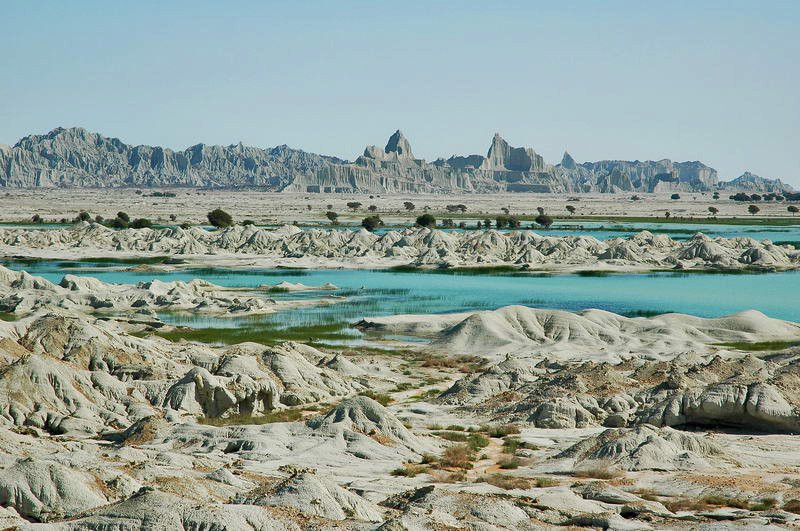
From collapsing rivers to groundwater depletion, Iran’s water crisis is often framed as a failure of governance or infrastructure. But it reflects a broader reality: water stress is emerging wherever human demand pushes beyond ecological limits.
In January, the UN published its Global Water Bankruptcy report, in which water shortage is framed as a form of “bankruptcy” driven by overuse. The report, developed in collaboration with Iranian scientist Kaveh Madani, promotes stronger global governance as key to addressing the issue. This framing can appear more political than practical and risks prioritising policy and technology over deeper structural causes.
Along with Madani, who previously served in Iran’s Department of Environment, other notable voices involved in awareness campaigns around the water crisis emphasize governance and mismanagement. But population growth, rising consumption and individual responsibility receive far less attention in the debate.
Across Iran, these pressures are intensifying. In the country’s arid and semi-arid interior, rainfall is often scarce. The Zayandeh River, once central to life in Isfahan, now runs dry much of the time. Aquifers formed over centuries are being depleted within decades, in some cases causing the ground to sink, a sign of severe ecological strain. Yet public discussion often searches for a single cause, such as policy failure, mismanagement, or climate change alone. Environmental crises rarely have a single cause.
Agriculture accounts for the vast majority of Iran’s water use. Feeding a large population has pushed farming into increasingly arid regions, sustained by irrigation and groundwater extraction. These increasingly structural imbalances reflect growing pressure on water resources, as each additional person adds a substantial lifetime water demand.
NASA’s Gravity Recovery and Climate Experiment (GRACE) satellite data show widespread groundwater depletion across Iran’s major basins. A similar trend is visible in the decline of Lake Urmia in northwestern Iran, with less water flowing into the lake amid heavy agricultural use and prolonged drought.
Iran’s water scarcity reflects a condition often described as ecological overshoot, where human demand exceeds nature’s capacity to replenish resources. Every region has its limits, and those limits are reached through a combination of population growth, resource-intensive production and consumption habits. As Iran’s population now exceeds 90 million, up from 21 million in 1960, individual acts of consumption may seem small, but together they can have outsized consequences.
Owning a swimming pool, for example, which is increasingly marketed in middle-and high-income homes and residential developments, leaving water running, wasting energy and food, or polluting rivers and landscapes, adds to systemic environmental pressure. Despite repeated warnings from government agencies and experts, overconsumption is often overlooked and everyday demand remains largely invisible.
These pressures extend beyond water. When rivers dry, ecosystems begin to collapse. Wetlands disappear. Forests degrade. Wildlife loses access to water and habitat, disrupting migration patterns and increasing human–wildlife conflict. Over time, ecological loss feeds back into human systems, deepening scarcity. A situation that reflects a wider global pattern.
In Spain, despite advanced water management, regulated irrigation, and basin-level planning, water stress continues to rise amid drought, agriculture and growing demand.
Policy and governance shape how water is allocated, monitored, and conserved through decisions on things like dam construction, industrial and state projects, agricultural subsidies, pricing, and enforcement. These factors operate within a broader context of rising demand that no single policy can fully offset. Technological and policy responses may ease pressures, but they cannot fully resolve the imbalance. The deeper problem is overshoot, not a single policy gap.
From more severe wildfires to devastating droughts, environmental disruption is accelerating worldwide. These patterns are linked to land use, biodiversity loss, and rising demand from a global population now exceeding eight billion. No single government can address these challenges alone. They emerge from the cumulative effects of billions of decisions about how to live, consume, and use resources. Over four million Iranians live abroad. Emigration redistributes consumption but does not remove it.
If the question of who to blame remains, the more difficult answer is this: the crisis does not belong to one system alone, but is shaped by the collective pressures of population growth.
To borrow from the late Paul Ehrlich: “When there are eight billion of us, it is easy to change the atmosphere, and we’ve changed it.”




Comments
We changed commenting systems on September 10, 2026 as part of a site-wide functionality and security upgrade. Your past comments have not disappeared, and you can still log in with your old Disqus account credentials if you wish. Contact us with any questions.
Well stated.
There but for a few centuries head start, go all of us.