

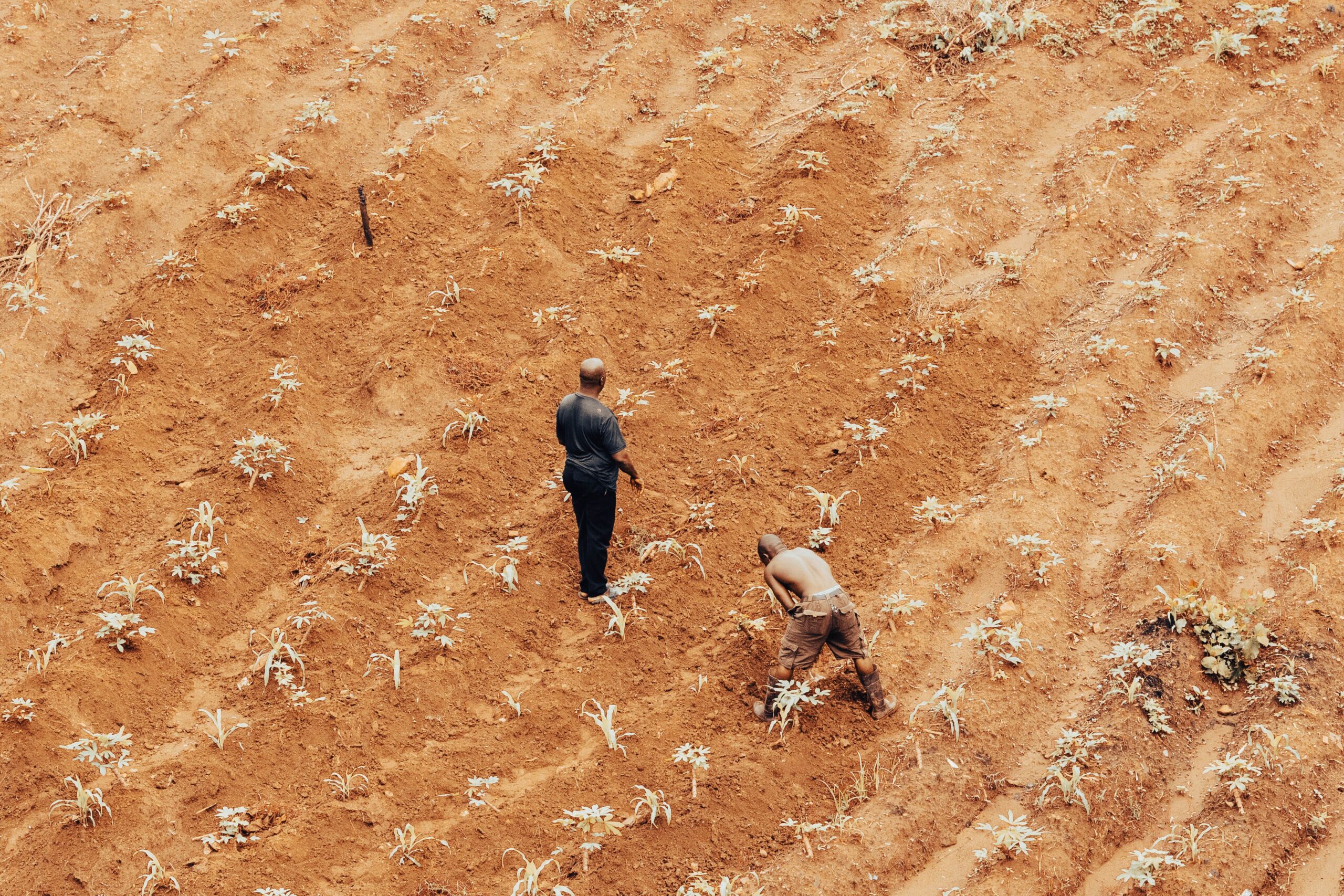
Millions more people could face hunger in the coming months if the conflict in the Middle East is not resolved soon, the UN has warned. The price of energy, which affects the cost of producing and transporting food, has risen sharply due to the closure of the Strait of Hormuz.
The price of fertiliser, much of it made in the Gulf states and exported via the same stretch of water, has also soared. So it seems inevitable that the cost of food around the world will increase, just as it did after Russia’s full scale invasion of Ukraine in 2022 (both countries were big exporters of food and fertiliser).
Back then, some governments responded with expensive taxpayer funded subsidies for producers and consumers. But the situation in the Middle East highlights how consumers everywhere remain vulnerable to such geographically concentrated production of energy and fertiliser.
Here are four ways that the world could attempt to build a food system that would be far more resilient to future shocks.
1. Grow greener
The current situation is surely a sign that the time has now come for agriculture to make the transition to “green ammonia” – ammonia produced using renewable energy sources instead of fossil fuels. (Ammonia is a key ingredient in nitrogen-based fertiliser.)
Instead of depending on certain countries or regions for fertiliser production, it would be possible to produce homegrown fertiliser when the sun shines and the wind blows.
The first green ammonia plants are now being constructed in sunny places such as Chile, Morocco and Australia. It’s an expensive switch, but the declining cost of renewables combined with wildly fluctuating gas prices could soon make it a more competitive and secure alternative.
A successful transition will depend on sustained commitment (and investment) from governments – especially when the Strait of Hormuz eventually opens again.
2. Stock fertiliser and pesticides
Governments should also rethink the way they stock food. Modern logistics and slick supply chains mean that many countries store certain products to last a few days or weeks, with the assumption that those stocks can be swiftly replenished.
Some places (Sweden, China and India, for example) take a longer-term approach, seemingly driven by a stronger sense of the importance of self-sufficiency. Other countries should follow their lead and think beyond stockpiling things like grains to other essential farm supplies like fertiliser and pesticides. But they need to do so gradually to not distort already tight markets in the short term.
This kind of change would also align with broader national security ambitions that are emerging across Europe and elsewhere. Food stocks to cope with periods of uncertainty and disruption would be an essential part of that.
3. Grow more plants
A demand change towards reducing waste and healthier diets – specifically by eating more plant proteins – could swiftly improve food security and resilience.
Animal farming requires large amounts of fertiliser for the crops providing their feed. Plant proteins such as legumes (beans, lentils, peas) require much less fertiliser (they can even “create” their own fertiliser in their roots through nitrogen fixation).
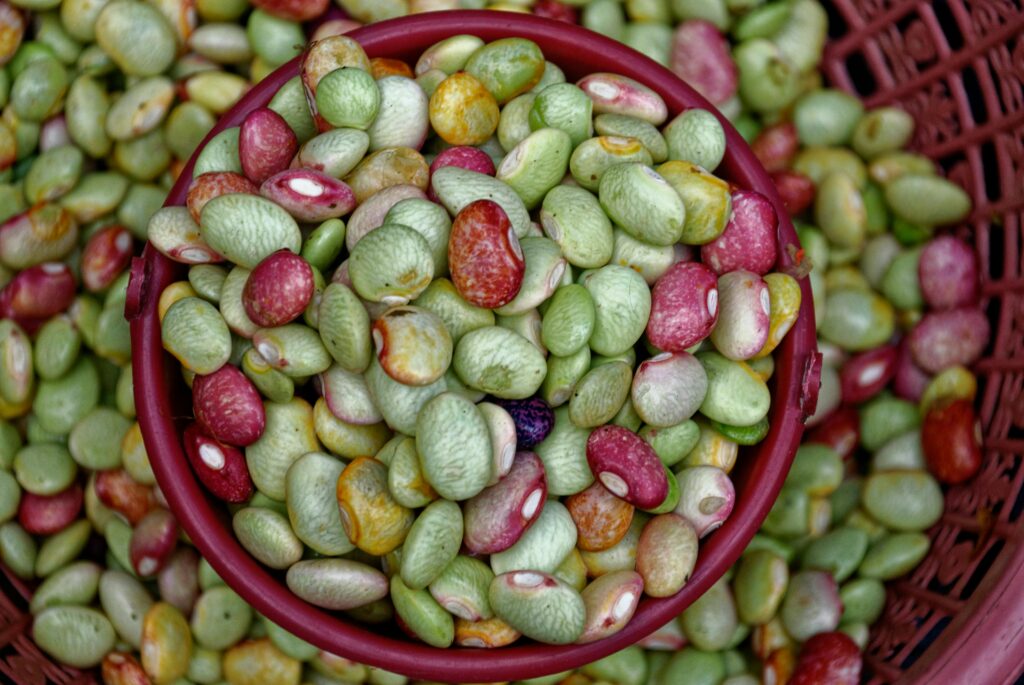
They also have other advantages, including improved nutrition and much reduced carbon emissions.
4. Electrify transport
Biofuels, such as ethanol and biodiesel, are often portrayed as sustainable fuel alternatives. But the crops used to produce these fuels (such as corn and rapeseed) now occupy an area at least the size of Italy.
That’s a lot of land being used to deliver not very much fuel (in the UK, biofuel powers less than 7% of the country’s transport needs).
Instead, building solar or wind farms to power electric vehicles is a much more efficient use of land for fuelling transport needs.
Accelerating the electrification of transport and rapidly phasing out crop-based fuels would free up tens of millions of hectares globally for food production, rewilding, and carbon storage.
Towards resilience
Building a more resilient food system will not happen overnight. Changing diets and switching fuels and fertiliser dependencies takes time. It will involve trade-offs as well as considerable political and commercial will.
None of that is easy to achieve, and previous global spikes in food prices (in 2007, 2010 and 2022) did not lead to significant changes.
Yet the alternative is to remain exposed to repeated shocks. Climate change and geopolitical tensions will continue to disrupt global supply chains.
The current crisis is not only yet another warning about the fragility of today’s food system but also an opportunity to accelerate the transition towards one that is much better able to withstand future disruption.



Comments
We changed commenting systems on September 10, 2026 as part of a site-wide functionality and security upgrade. Your past comments have not disappeared, and you can still log in with your old Disqus account credentials if you wish. Contact us with any questions.
A misleading headline. None of these ideas will allow "the food system" to weather the collapse of civilisation.
I am baffled by the inclusion of this essay in “Resilience”. I wonder if it was chosen by an AI process, and I wonder if it was written by AI. The essay is at odds with the principles I expect in Resilience, and its propositions appear random and hard to defend. Most importantly, it doesn’t do what the title proposes: I don’t view any of the 4 points as building a food system that is able to withstand collapse.
1. The proposal to “grow greener” using “green ammonia”, is reminiscent of propositions to solve global energy problems with small modular nuclear reactors: a technology that doesn’t yet exist in practical scale, can only function in very specific circumstances if it can function at all, and is mostly in view because business interests promote it. No evidence is offered that this is a collapse-withstanding technology. Nitrogen pollution is a serious global environment problem, whether it is “green” or brown. Ammonia use will certainly be reduced by increased energy costs and supply line failures.
2. Stocking fertiliser and pesticides. Sure, we could all be sorry we didn’t stock these, but the same will go for everything: fuel is likely to be the primary limiting factor, but so will parts, seed, and all agricultural inputs.
3. Grow more plants? Agriculture is fundamentally about growing plants. However the blanket claim that “Animal farming requires large amounts of fertiliser” imagines the whole world as under American or European intensive production. Traditional grazing uses animals for land and nutrient management, and simplistic technocratic generalisations puts these valuable strategies at risk.
4. Electrify transport? Is this really in the top 4 ways to grow food in a collapse situation? Bio-fuels appear to be a subsidy-driven money funnel, that barely (if at all) make any energy return on investment, and can be expected to disappear in any economically-constrained circumstance.
My final evidence for the proposition that this essay is AI, is in the 2nd paragraph, where “Russia’s full scale invasion of Ukraine” is described. “Full scale” has been a politically required descriptor in America and Europe, and would be considered by AI to be necessary in any reference to Ukraine. How else it got into this essay I can’t imagine.
Resilience brings us many great writers and thinkers on agriculture in circumstances of constrained energy and industrial inputs. Please keep that up, and please cast a more critical eye on what you print, lest readers conclude that the whole internet has gone down the same, clickbaity, AI-produced, Ensh*tified, drain.
Unfortunately, the on farm green Ammonia production system from FuelPositive can't quite reach a production cost parity with the well established grey Ammonia even in Quebec with a special Time Of Use price of $0.06 for the electricity so the $5 million upfront CAP Cost can never even begin to be paid back.