

Radical societal transformation is inevitable; a plan could make a difference between catastrophe and progress.
Introduction
The transition to renewable energy is inevitable given the current climate crisis and the fact that fossil fuels are a finite resource. To make the shift, a detailed plan is required to indicate the first steps and anticipate challenges in allocating resources and the policies needed to achieve the outcome. Germany has arguably accomplished more toward the transition to renewable energy than any other nation, largely because it has such a plan—the “Energiewende,” which seeks a 60 percent reduction in all fossil fuel use by 2050 and a 50 percent reduction in primary energy use through efficiency in power generation, especially for buildings and the transport sector.
What follows are some components of a basic plan that can be adapted according to each country or state and adjusted for contingencies.
Level One: The ‘Easy’ Stuff
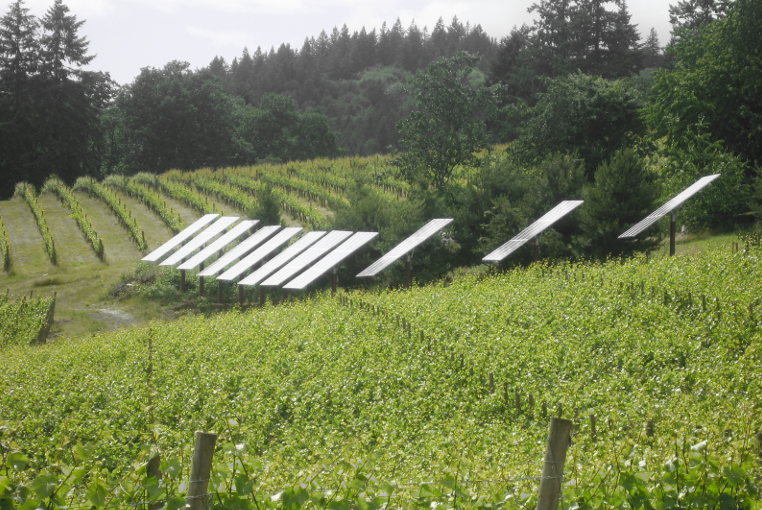
The easiest way to kick-start the transition is to switch to solar and wind power for electricity generation by building lots of panels and turbines, respectively, while phasing out coal. Distributing generation and storage of these energy sources (rooftop solar panels with home- or office-scale battery packs) will help. Replacing natural gas will be harder because gas-fired “peaking” plants are often used to buffer the intermittency of industrial-scale wind and solar inputs to the grid.
Electricity accounted for less than a quarter of all final energy used in the United States in 2022. Since solar, wind, hydro, and geothermal produce electricity, it makes sense to electrify even more of our energy usage—heating and cooling buildings with electric air-source heat pumps and cooking with electric induction stoves, for example.
Transportation represents a large swath of energy consumption, mostly due to the growing number of personal cars. As of 2021, there were 250 million gasoline-fueled automobiles. While we are busy replacing these with electric vehicles, we can easily and cheaply promote walking, bicycling, and public transit.
Substantial retrofitting is needed for energy efficiency. Building codes should be strengthened to mandate net-zero or near-net-zero energy performance for new construction. Zoning codes and development policies should encourage infill development, multifamily buildings, and clustered mixed-use development. Using more energy-efficient appliances will also help.
The food system is a significant energy consumer. Increasing the market share of organic local foods can dramatically lower the amount of fossil fuels used to manufacture fertilizers as well as in food processing, and in transportation. We can also sequester enormous amounts of atmospheric carbon in topsoil by promoting farming and land management practices that build soil rather than deplete it.
By our calculations, these actions could reduce carbon emissions by 40 percent in 10 to 20 years.
Level Two: The Harder Stuff
Solar and wind technologies provide energy intermittently. When they become dominant, we must adapt to this with substantial amounts of grid-level energy storage and a major grid overhaul to get the electricity sector to 80 percent renewables. We’ll also need to time our energy usage to coincide with sunlight and wind energy availability.
The transport sector will require extensive and costly restructuring. Densified cities and suburbs can be reoriented to public transit, bicycling, and walking. All motorized human transport can be electric, with more public transit and intercity passenger rail links. Heavy trucks could run on fuel cells, but it would be better to minimize trucking by expanding freight rail. Sails would increase the fuel efficiency of shipping, but relocalization or deglobalization of manufacturing would be a necessary co-strategy to reduce the need for shipping.
Although much of the manufacturing sector runs on electricity, many raw materials used during the manufacturing processes either are fossil fuels or require fossil fuels for mining or transformation. By replacing fossil fuel-based materials and by increasing the recycling of nonrenewable materials, we can reduce dependency on mining.
If we do all this and build far more solar panels and wind turbines, we could, by our calculations, achieve roughly an 80 percent reduction in emissions.
Level Three: The Really Hard Stuff
Eliminating the last 20 percent of our current fossil fuel consumption will take even more time, research, investment, and behavioral adaptation. One example is that we currently use enormous amounts of cement in construction with concrete. Cement-making needs high heat, which could theoretically be supplied by sunlight, electricity, or hydrogen—but only with a complete redesign of the process.
This is the time to make all food production organic and to ensure that agriculture builds topsoil. Eliminating all fossil fuels will entail redesigning food systems to minimize processing, packaging, and transport.
The communications sector—which uses mining and high-heat processes to produce phones, computers, servers, wires, photo-optic cables, cell towers, and more—presents a challenge. The only good long-term solution here is to make devices that last and then repair, fully recycle, and remanufacture them only when absolutely needed. The internet could be maintained via low-tech, asynchronous networks now being pioneered in poor nations, using relatively little power.
In the transport sector, scrapping petroleum will require costly substitutes (fuel cells or biofuels). Global trade will inevitably shrink. With no ready substitute for aviation fuels, we may have to relegate aviation to a specialty transport mode. Planes running on hydrogen or biofuels are an expensive possibility, as are dirigibles filled with (nonrenewable) helium.
On land, paving and repairing roads without oil-based asphalt is possible, though it will require a complete redesign of processes and equipment.
If we can do all this, we can get beyond zero carbon emissions; with carbon sequestration in soils and forests, we could reduce atmospheric carbon each year.
Scale Is the Biggest Challenge
It is possible to design a renewable energy system that 1) has minimal environmental impacts, 2) is reliable, and 3) is affordable—as long as relatively modest amounts of energy are needed. Once current U.S. scales of energy production and usage are assumed, something has to give.
We sacrifice the environment (due to the vast tracts of land needed for siting wind turbines and solar panels) for the purposes of reliability (because solar and wind are intermittent) and affordability (because of the need for storage or capacity redundancy).
Power is another hurdle: massive ships and airplanes require energy-dense fuels. Renewable energy resources can supply the needed power, but scale is crucial. While building and operating a few hydrogen-powered airplanes for specialized purposes would be technically feasible, operating fleets of thousands of commercial planes with hydrogen fuel is daunting from both a technical and economic perspective.
It’s Not All About Solar and Wind
Solar and wind are the favored energy sources of the future; equipment prices are falling, the rate of installation continues to be high, and there is considerable potential for further growth. However, their inherent intermittency will pose increasing challenges as they become more dominant. Other renewable energy sources—hydropower, geothermal, and biomass—can more readily supply controllable baseload power, but these sources have much less opportunity for growth owing to limits on siting, geology, and supply.
Hopes for high levels of wind and solar energy supply are driven mainly by the assumption that industrial societies can and should maintain very high levels of energy use. The challenge is always scale: If energy usage in the United States could be scaled back significantly (70 to 90 percent), then a reliable all-renewable energy regime would become much easier to envision and cheaper to engineer.
We Must Adapt to Less Energy
Considering the speed and scale of emission reductions required to avert climate catastrophe, people in industrialized countries will have less energy than they are used to consuming.
Despite our understandable wish to maintain current levels of comfort and convenience, it’s worth keeping an ecological footprint analysis in mind.
According to calculations by the Global Footprint Network, the productive land and water available to each person on Earth to live sustainably in 2019 was 1.6 global hectares. Meanwhile, the per capita ecological footprint of the United States was 8.1 global hectares per capita in 2018 (if the entire world population lived at this footprint, it would require five planet Earths).
Clearly, we should aim for a sustainable energy and material consumption level, which, on average, is significantly lower than at present. If we don’t achieve this, we will eventually be caught short, with significant economic and political fallout.
What should we do to prepare for energy reduction? Look to California as a model: Since the 1970s, its economy has grown while its per capita electricity demand has not. The state has encouraged cooperation between research institutions, manufacturers, utilities, and regulators to determine how to keep demand from growing by changing how electricity is used.
Consumerism Is a Problem, Not a Solution
Conservation beats consumption in the dawning post-fossil fuel era. If it becomes more difficult and costly to produce and distribute goods, people will have to use them longer and repurpose, remanufacture, and recycle them wherever possible. The switch from consumerism to conservation will transform America’s culture, economy, and government policy.
The renewable economy will likely be slower and more local. Economic growth may reverse itself as per capita consumption shrinks. If we are to avert a financial crash, we may need a different economic organizing principle. In her 2014 book on climate change, This Changes Everything, Naomi Klein asks whether capitalism can be preserved in the era of climate change. Although it probably can, in the absence of overall growth, profits for a few will have to come at a cost to everyone else, a situation we have seen in the years since the financial crash of 2008.
Population Growth Makes Everything Harder
Population is a climate and energy issue. If energy and materials are likely to dwindle in the decades ahead, population growth will mean even less consumption per capita. On a net basis (births minus deaths), we are gaining 83 million humans each year—according to a 2017 UN report—an unprecedented number, even if the percentage rate of growth is slowing.
Policymakers can help reduce the population by promoting family planning, public persuasion, raising the educational level of poor women, and giving women complete control over their reproductive rights. (For detailed recommendations, consult population organizations such as Population Institute and Population Media Center.)
Fossil Fuels Are Too Valuable to Allocate Solely Based on Market Forces
For non-energy purposes, industrial societies will need fossil fuels for some applications until the final stages of the energy transition—and possibly beyond. Crucially, we need fossil fuels for industrial processes and transportation to build and install renewable energy systems. We also need them for agriculture, manufacturing, and general transportation until robust renewable energy–based technologies are available. This poses several problems.
As the best of our remaining fossil fuels are depleted, we extract and burn ever lower grade and harder to get coal, oil, and natural gas. Virtually all new production prospects involve tight oil, tar sands, ultraheavy oil, deepwater oil, or Arctic oil—all of which entail high production costs and high environmental risk compared to conventional oil found and produced during the 20th century.
Refining heavier, dirtier fuels (in the case of tar sands) creates ever more co-pollutants, with disproportionate health impacts and burden on low-income communities. The fact that the fossil fuel industry will require ever-increasing levels of investment per unit of energy yielded has gloomy implications for the energy transition: the deteriorating fossil fuel sector will need a large chunk of society’s available capital to maintain current services, just as the build-out of renewables will require even more capital.
The danger is that fossil fuels will become so costly we’ll no longer be able to afford the transition project.
But we cannot accelerate the transition too much. Rushing the transition will mean an overall increase in emissions—unless we reduce other current uses of fossil fuels. To fuel the transition without increasing overall greenhouse gas emissions, we may have to deprive some sectors of the economy of fossil fuels before adequate renewable substitutes are available. This would mean reducing overall energy consumption and the economic benefits of energy use while taking care to minimize the impact on already vulnerable and economically disadvantaged communities.
We are entering a period of fossil fuel triage. Rather than allocating fossil fuels simply on a market basis (those who pay for them get them), it would be fairer to find ways to allocate fuels based on the strategic importance of the societal sectors dependent on them and on the relative ease and timeliness of transitioning these sectors to renewable substitutes.
Agriculture, for example, might be deemed the highest priority for continued fossil fuel allocations, with commercial air travel assuming a far lower priority. Perhaps we need not have just one price on carbon but different prices for different uses. Not only do we see scant discussion of this prospect in energy policy literature, but few governments even acknowledge the need for a carbon budget. The political center of gravity, particularly in the United States, will have to shift significantly before decision-makers can acknowledge the need for fossil fuel triage.
As fossil fuels become more costly to extract, there may be an ever greater temptation to use our available energy and investment capital merely to maintain existing consumption patterns, putting off any effort to effect the transition. If we procrastinate too much, we will reap the worst possible outcomes—climate chaos, a gutted economy, and no way to build a bridge to a renewable energy future.
Everything Is Connected
Throughout the energy transition, great attention will have to be given to the interdependent linkages and supply chains connecting various sectors (communications, mining, and transport knit together most of what we do in industrial societies). Some links in supply chains will be hard to substitute, and chains can be brittle: a problem with even one link can imperil the entire chain.
Consider, for example, the materials required to manufacture and operate a wind turbine. The components come from different manufacturing sectors in various places in the world.
Planning will need to take such interdependencies into account. As every ecologist knows, you can’t do just one thing.
This Really Changes Everything
Energy transitions change societies from bottom to top and from inside out. From a public relations standpoint, it may be helpful to give politicians or the public the impression that life will go on as before while we unplug coal power plants and plug-in solar panels. Still, the reality will probably be quite different.
During historic energy transitions, economies and political systems underwent profound metamorphoses. The agricultural revolution and the fossil-fueled industrial revolution constituted societal watersheds. We are on the cusp of a transformation that is every bit as decisive.
If the renewable energy transition is successful, we will achieve savings in ongoing energy expenditures needed for each increment of economic production, and we may be rewarded with a quality of life that is actually preferable to our current one.
We will enjoy a much more stable climate and greatly reduced health and environmental impacts from energy production activities. However, converting to 100 percent renewable energy will not solve other environmental issues such as deforestation, land degradation, and species extinctions.
Possibly, the most challenging aspect of this transition is its implication for economic growth. Whereas the cheap, abundant energy of fossil fuels enabled the development of a consumption-oriented growth economy, renewable energy will likely be unable to sustain such an economy.
Rather than planning for continued, unending expansion, policymakers must begin to imagine what a functional post-growth economy could look like. Among other things, the planned obsolescence of manufactured goods must end in favor of far more durable products that can be reused, repaired, remanufactured, or recycled indefinitely.
It seems wise to channel society’s efforts toward no-regrets strategies—efforts that shift expectations, emphasize quality of life over consumption, and reinforce community resilience. Even though it may be impossible to envision the end result of the renewable energy transition, we must seek to understand its scope and general direction.
Our descendants will inhabit a renewable world that works differently from ours. Whether it will be better or worse depends on our current decisions. The sooner we address the most obvious and pressing decisions (starting with a mandatory global cap on carbon emissions), the earlier we can anticipate the succeeding waves of problems and choices.
“We Need a Plan for the Transition to Renewable Energy” by David Fridley, Richard Heinberg is licensed by the Observatory under a Creative Commons Attribution-NonCommercial-ShareAlike 4.0 International License (CC BY-NC-SA 4.0). For permissions requests beyond the scope of this license, please see Observatory.wiki’s Reuse and Reprint Rights guidance.




Comments
Welcome to the new Resillience commenting system!
We have moved from the former Disqus commenting system to a new system as of September 10, 2026.
We made this change because of privacy concerns regarding Disqus. It's also part of a set of changes to bring more services to the Resilience community under a single login: commenting, (coming September 2026), and online courses (coming 2027). Unfortunately, your old Disqus comments may not reliably link to your account in this new system. Please contact us if you have any questions or concerns.
My comment about magic fairy dust “solutions” wasn’t meant to be personally insulting toward you. And, yes, I did put my dismissal of DAC (https://en.wikipedia.org/wiki/Direct_air_capture ) in colorful language. Here is why: I believe DAC was concocted as a kind of distracting decoy, a public relations misinformation and redirection (redirection similar to that used in sleight of hand magic) maneuver. Buy telling the public that in the future we can and will suck gargantuan amounts of CO2 out of the atmosphere, this softens and weakens the political will to engage in rapid decarbonization of the material culture and economy. This is a win for the fossil fuel industry, who is known to have been using disinformation (lies) to achieve its profit making agenda. Yes, the fossil fuel companies are deep into promoting DAC.
So I take DAC to be a bad faith maneuver through and through, a clever bit of public relations disinformation.
Here’s the problem:
From a 2006 Nova episode–
JAMES HANSEN: Our estimate for the particle forcing is minus-one-and-a-half-watts- per-meter-squared. So that would imply a cooling of more than one degree Celsius.
NARRATOR: In other words, while the human greenhouse effect has produced 2.6 to three watts of extra energy for every square meter of the Earth, global dimming has subtracted about 1.5 watts, so, more than half the warming effect of our greenhouse emissions has been masked by the cooling effect of particle pollution.
From last year–
https://news.climate.columbia.edu/2023/11/03/world-temperatures-will-blow-past-paris-goals-this-decade-asserts-new-study/
Hansen– “…the reduction in aerosols is accelerating global warming.”
Different scientists, same conclusion:
https://www.science.org/content/article/changing-clouds-unforeseen-test-geoengineering-fueling-record-ocean-warmth
Accelerated warming due to slightly reduced pollution has already begun, but at this point it is just barely a preview of how much faster the heating will happen. And with accelerated heating, that will also accelerate feedback amplification effects and the rate at which we pass tipping points. And this faster heating will last for generations and that future is baked into our present circumstances–if all we do is halt all fossil fuel emissions.
There are only two alternatives. 1. decrease the heat from the sun (aka geoengineering or solar radiation management). The fossil fuel companies, of course, would love this.
2. Rapidly decrease atmospheric CO2. Planting some trees would help, changing some agricultural practices would help, maybe a little biochar, but the problem with all the natural, low energy options that we’ve thought of so far is that they are way too slow. Which only leaves the high-energy industrial approaches to CO2 drawdown, and yes, the fossil fuel companies love these too.
But just because evil companies like something, that doesn’t mean it is a decoy, a diversion, or a scam. If the world governments got together and took over all the fossil fuel companies and eliminated corporate greed as a factor, we’d still be in the same situation facing the same three options: faster warming, solar radiation management, or rapid CO2 drawdown. The physics is inescapable. And we’ve hardly begun to study our solar management options. But we do have the beginnings of several forms of CO2 drawdown technology. Irritatingly, because of the development time involved, we are going to need to start building that up as soon as possible–long before we have gotten off fossil fuels. And yes, the fossil fuel companies will try to exploit that. I don’t see how that can be prevented. But if they are going to try to benefit from it, maybe we can at least make them help pay for it.
When I read the numbers on how much materials and energy those high energy DAC systems would require to make any sort of dent in atmospheric concentrations of CO2, how many big plants would be required, I knew it was a non-starter. It’s not economically or energetically feasible.
We make the rules of economics, and we decide what has value. That’s how our conceptual economy (insurance, derivatives, gambling, bitcoin, data, gaming) got to be larger than our physical economy of real-world goods and services. But energy is constrained by physics, so if the energy requirements are not feasible, then that’s the end of the story. But do we know it’s not feasible?
We have developed DAC tech that would need between 1.5 and 2 MWh of heat to capture one tonne of CO2 from the air, so let’s say 1.5 MWh is as good as we’ll ever get, and let’s set the target at removing one trillion tonnes of CO2, for a total of 1.5 trillion MWh of heat energy. Fissioning one tonne of U (or thorium) produces 22,406,000 MWh of heat, So at the most basic level, we’d need to fission 67000 tonnes of fuel to produce enough energy to pull a trillion tonnes of CO2 out of the air. That is actually less than the amount of uranium we have in the U.S. supply of nuclear spent fuel (currently around 86,000 tonnes).
To access that energy, we would need molten salt fast reactors, and most people think it will take a bit longer to get those licensed than the thermal spectrum reactors. So thermal-spectrum will probably be the first Gen 4 reactors to reach production, and these are not nearly as efficient in their use of uranium. But I don’t think that will matter in the long run. Fast reactors should be able to reach production-ready long before we approach any limit on our supply of natural uranium.
So yes, we haven’t worked out how to make CO2 drawdown economically viable within the system we have, but the degrowth alternative is to sweep away the system we have, and my hunch is that we will favor a tweak to the existing system over its wholesale replacement. And even with a new economic system, it would face the same three stark choices we have now: rapid CO2 drawdown, solar radiation management, or accelerated heating.
I agree that we should look carefully at existing nuclear energy facilities and ensure that they are maintained. I haven’t been paying much attention to the issue of nuclear waste, or new developments in nuclear reactors. Have we improved our management of nuclear waste or have we developed newer, safer options? As for constructing new nuclear power plants I would support this idea if doing so is an improvement in technology and waste handling. It does seem that we make a mistake in ignoring the potential of nuclear energy particularly if our reluctance is based on our fear of nuclear energy.
I also agree that most of the plans currently discussed assume more geopolitical unity and common values than exist. If we are going to depend on political policies or corporate leadership we will likely still be waiting long after the challenges of climate change have become irreversible and unlivable.
One point I would like to make is that the viability of hydroelectric energy and nuclear power plants (actually all electricity generating stations) is the availability of water. We are already seeing declines in major rivers and their reservoirs as a result of changes in rainfall patterns. These sources of energy might become unusable under future hotter climates.
“Have we improved our management of nuclear waste or have we developed newer, safer options?”
Nuclear spent fuel is actually already pretty safely managed. We’ve been handling and storing hundreds of thousands of tonnes of the stuff over the past half-century, and the death toll from that has yet to budge from zero. There are very few comparable heavy industries with that kind of safety record. There’s stuff in your house that doesn’t have that kind of safety record. But yes, we are developing more options. Spent fuel in the U.S. consists of 95% uranium (a trivial amount compared to the billions of tonnes of uranium in our seas, and tens of trillions of tonnes on land), about 4% fission products (about 80% stable after 10 years, more than 99.9% stable after 300 years) and 1% heavy actinide transmutation products. That last category contains all the serious long-lived isotopes with their long decay chains. So the volume of waste could be reduced dramatically by pulling out the uranium and the usable fission product isotopes–which is what Curio LV would like to do–but in the U.S. federal law would have to be changed to make that legal. And we are developing molten salt fast reactors which could consume the uranium and the transmutation products, but it will take time before those are NRC certified, and federal law will have to be changed before they could consume the main components of spent fuel. Kairos, X-Energy and others are planning to use Triso fuel, which is a much more robust fuel form than in today’s reactors. So the hazards from fire, or cladding decomposition, or loss of coolant meltdown, or casing rupture from the high internal pressures are essentially eliminated. Triso fuel cannot practically be reprocessed to extract still-usable isotopes, so that’s a downside, but that also means it is worthless for making weapons. And the Deep Isolation team has already demonstrated how oil and gas drilling technology could be adapted to create deep borehole sequesters–both temporary and permanent. This would be much deeper and cheaper than excavation repositories, and would have more layers of containment, but federal law will have to be changed before it is a legal option.
“As for constructing new nuclear power plants I would support this idea if doing so is an improvement in technology and waste handling.”
Waste is a small problem, and not urgent, and we have several promising options already in development there. By far the biggest hazard from nuclear power has always been the possibility of meltdowns. That hazard could essentially be eliminated with molten salt reactors or Triso-fuel reactors. Potential for meltdowns has also been a major driver of cost, with all the complex systems and structures needed to prevent them–or failing that, to contain them. Eliminating meltdown potential from the onset creates many opportunities for simplification.
“the viability of hydroelectric energy and nuclear power plants… [depends on] the availability of water.”
Several designers are developing offshore marine reactors. No shortage of water there. And if they piped up their cooling waters from deeper levels, that could help to reduce CO2 and increase salinity in surface waters, as well as bring up some deepwater mineral nutrients. And with smaller, hotter reactors, forced-air cooling becomes practical. Coupling those with direct air capture systems, a lot of CO2 removal could be powered almost entirely by “waste” energy.
Thank you for the information.
This is the focus of permies.com–spreading and sharing ideas on how we all can be more self-reliant and reduce our footprints.
The trouble with articles like this one is that it answers a hypothetical question: IF the few who run this world were actually trying to transition to a sustainable global economy to avert catastrophic climate change and other ills, how could we do that, what would be the policy levers? A question worth answering, but it IS hypothetical–those in positions of power are not asking this question, they’re asking, “How can we maintain our current lifestyles and positions of dominance as long as possible?” This is a very different question with very different answers. I’m afraid it will take a massive shock, a collapse of some sort, to break their hold on power–after that, many things will become possible but most likely, a transition to a modern, industrial civilization only renewably powered and only a little less rapacious and consumption-obsessed than today’s, will no longer be possible. The global supply chain will have broken, and very high-tech operations may no longer be feasible, including extracting fossil fuels from the high-hanging fruit positions of what fossil fuels remain. There will also likely be plenty of chaos and conflict.
Which is which? Seems to me nuclear everything magnifies the current threats–from nuclear war, nuclear terrorism, nuclear accidents, lack of enough uranium to do such a massive buildout…or is it Richard and David’s vision you think could work “in the world as it actually is”?
Let us not forget that the ten year period in which we must rapidly and radically reduce fossil fuel consumption is the ten year period we’re already in, so that really what matters is what we can do immediately. From the planning stage to completion and running of a nuclear power plant takes more than ten years. So … so what about nuclear. It’s irrelevant even if it were safe and we knew how to safely dispose of its waste products.
Thanks Jody.
It is, indeed, a number for cars in the USA, as I suspected.
Sigh! I wish I had good eyes. I have cataracts, macular degeneration, extropia…already I have trouble reading small print, or in poor light, or for too many hours.
This is good to keep in mind. But I’ve found that one needs to be careful about these embedded carbon figures, in terms of their accuracy.
Your solar panels, if made in China, may have lots of embedded coal emissions in their manufacture. But I challenge you–try to find accurate CO2 emissions in their manufacturing. For Chinese goods, it’s very difficult. It’s possible they have a lot of carbon in them, due to the coal-based electricity system there.
Thanks Jody!
Yes. Good point. The total energy of automobile use is not just that of manufacture and filling the gas tank…. It’s also road repair, road construction, parking (which is an enormous amount of land and paving, since there is need of around six parking spaces for every car, last I heard) bridge and tunnel construction and maintenance … and on and on and on … including auto parts replacements.
It’s obvious to me that we cannot afford automobiles in any ecological and climate context. Nor can we afford mass global tourism, or industrial agriculture.
EVs are broadly imagined as part of the “energy transition” to “renewable energy”. But let us pause and consider what is meant by “renewable”. Web-based articles on “renewable resources” tend to be rather shoddy in quality, but you can use them, if you are patient and thoughtful, to glean the essence of the idea. E.g., https://en.wikipedia.org/wiki/Renewable_resource
The classic concept of renewable resources was rooted into biological systems — ecosystems. So we’re talking about things like forest products and fisheries. With careful study of the concept, we come to understand that there is actually no such thing as a renewable resource, per se, but in reality there are only renewable practices. This is because there is a limited amount of fish we can extract from the sea without damaging the ability of the system to regenerate itself–to replenish. The same is true of forest products like wood. Only forest practices which don’t cause fundamental harm to forest ecosystems enable renewability, which is ultimately sustainability.
Almost no one ever considers, or discusses, EVs in this very same context. We tend, instead, simply to regard these as “green”. But they are only green within the bounds of limits. So what are these limits? How many EVs can we safely manufacture (let alone use!). And the answer is very, very few — probably even none. This is because we don’t really have any more carbon budget to spend — because we’ve exceeded the safe level of atmospheric carbon already. We know this because we’ve very closely approached or exceeded multiple climate tipping points.
A third of the energy a typical EV will use in its lifetime is used in manufacturing alone. So any significant number of EVs manufactured will be EVs which surpass sustainability, or renewability.
Calling all of this machinery “renewable” is dishonest. It is a lie. It is false. It’s an illusion. It’s a fraud, a scam, a hoax. And if we had real journalism and education we’d all know it.
Yes, and so it will requite ten billion tons of rainbow magical fairy dust scattered by a giant army of flying rainbow unicorns to distribute it. That’s a lot of rainbows, ain’t it?
Anyway, I’m weary to my bones of techno-optimist fantasies involving sucking trillions of tons of CO2 out of the atmosphere with giant, energy intensive vacuum cleaners. And all of the rest of the fantasies of the ecomodernists.
I don’t disagree with your ideas. I disagree with who you refer to as “we”. The changes you outline are great….for people who control long term plans for utility companies, grid operators, and perhaps those responsible for government policy. If you are talking to people who visit this blog, you are talking to residents living in homes who work at a job someplace but don’t control how the company plans for future energy use. If you are talking to residents of homes the plan is different…understand how your home uses energy and make changes that enable you to move towards renewable energy.
I described my family’s transition to renewable energy previously. https://www.resilience.org/stories/2017-10-30/a-response-to-a-world-made-by-hand/ We have also installed heat pumps and added solar energy to the new pole barn we built for our business (along with an innovative design for the parking lot that would capture runoff from rainfall and allow greater recharge to groundwater).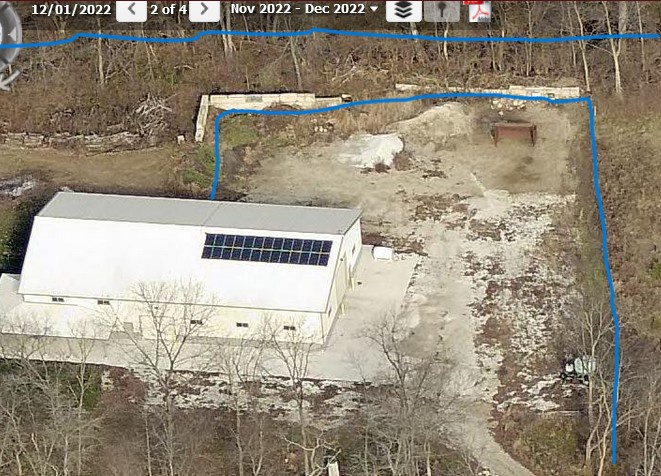
We currently suffer from too much reliance on big government projects and policies to address climate change. We need more information on what individual people can do to make their life more resilient.
“Transportation represents a large swath of energy consumption, mostly due to the growing number of personal cars. As of 2021, there were 250 million gasoline-fueled automobiles.”
I’m guessing this is the number of cars in the USA (?). I’m not a subscriber to the New York Times, so I could not read the linked article. I think it is always best to mention the geographical scope of numbers like this.
Last I checked, there were 1.5 billion operational cars on Earth. That’s just a number, so in order to let its significance sink in, please read this article.
Visualizing all of the cars in the world
https://rword.substack.com/p/visualizing-all-of-the-cars-in-the
And here are some components of a different plan: Nuclear industrial heat. Nuclear electricity. Nuclear heavy ships. Nuclear synfuel production. Nuclear CO2 drawdown.
One of these plans would need an end to warfare and competition between nations, global unity and the formation of a one-world government, an end to corporate power, a new managed economic system, and a new and trusting human nature that values cooperation for the common good over personal benefit and gain. And the other plan could work with the world as it actually is.
I see the climate catastrophe from a different vantage point – the concrete, physical, chemical, factors of overheating reflect much more difficult matters than we assume (beyond the grasp of technicians). Our problems are political and grounded in capitalism and group psychology. There may not be technical fixes at this late date. Bernard Stiegler saw the environment as being subjected to interactions between consumerist culture and the human libido. Stiegler described our culture as being “addictogenic.” Any attempt to implement degrowth will come up against the resistance of the pushers and addicts that currently drive our economy. Whether or not we see degrowth as a form of consolation or a movement of passion remains to be seen.
I believe this article dramatically understates the extent to which it is necessary to reduce energy consumption immediately, on an emergency basis. The result is that there is too much emphasis on a partial replacement of current energy usage with so-called “renewables” — which really aren’t renewable except at relatively tiny scales of energy production.
The result is that this article really doesn’t help us to think about what a low energy future economy would actually look like, thus enabling us to imagine and begin to create such a future economy and material culture.
I think we need to let go of the idea that the future will strongly resembles the present in “developed” nations.
Yes how nice this is but a waste of time considering our poly-crisis. If you want to eat learn to grow food without fossil fuels. It is a wonderful life working with others and learning what really matters in life.
Mary Wildfire asked, “IF the few who run this world were actually trying to transition to a sustainable global economy to avert catastrophic climate change and other ills, how could we do that, what would be the policy levers?”
There are policy levers, but they would necessarily result in genocide. That seems extreme, but a global economy that could keep 8 billion people alive at bare subsistence levels, just barely above mass famine, would still be so big as to cause “catatrophic climate change and other ills”. That’s why we humans are in “overshoot”. The human population is so big that no level of reduced consumption per capita gets total consumption below carrying capacity.
And just solving the energy problem, via nuclear or renewables, doesn’t solve the problems with the water cycle, the nitrogen cycle, or biodiversity loss. As Jody Tismack pointed out, the collective “we” can’t plan for collective salvation, but individuals and communities can and should be preparing for collapse, and the dieoff to come. The first thing to do is make sure you are not in a city.
This is a good big-picture article. Some of these technological claims will need to be proven–hydrogen cells, carbon-free materials manufacturing, batteries.
The other elephant in the room is lifestyles in the rich world. As one podcaster has said, “renewable energy may be able to power society, but not this society.” (Hagens, paraphrased)
And, what political process will decide a global carbon cap?
Also, this article under-reports the need for biological sequestration by rebuilding ecosystems, which can be used to offset the fossil fuels till they can be phased out (or till they deplete more and get very expensive).
There’s a lot here I agree with – and as a New Urbanist can only applaud.
But there are 3 parts that are over-emphasised.
1. Electricity storage is not that hard if you Overbuild the grid. 3/4 of the human race live in the Sunshine Belt between the 35th parallels where from a renewables perspective there’s hardly any winter. North America and Europe can HVDC solar from the Sunshine Belt – as it only loses 1.6% per 1000 km these days.
Becaue renewables are now 1/4 cost of nuclear – we can afford to Overbuild them quite a bit! This article from Scientific American explains more – and it’s from 2015 – so imagine how much cheaper wind and solar are now? https://blogs.scientificamerican.com/plugged-in/renewable-energy-intermittency-explained-challenges-solutions-and-opportunities/
2. Food. Solein Precision Fermantation product is selling in Fazer chocolates in Singapore soon. It’s only 2% of the chocolate – but is rich in protein. It’s the first time this brand of PF has sold commercially – it’s the start of a revolution that could be bigger than farming 10,000 years ago! It bypasses photosynthesis with MUCH more efficient solar cells!
It’s the PF that comes from solar panels and water and a few minerals directly. It divorces arable land from the equation – and when it eventually scales up – means solar panels floating on water reservoirs can generate protein and carbohydrates and fats – not cows munching on grassland that should be forest.
3. Area for renewables? Really? Again?
LAND USE: From Professor Andrew Blakers. Just 0.1% of the world’s land would be all our power!
https://theconversation.com/really-australia-its-not-that-hard-10-reasons-why-renewable-energy-is-the-future-130459
ROOFTOPS: half our rooftops would provide all today’s electricity, but all our rooftops would start to replace transport as well http://theconversation.com/solar-panels-on-half-the-worlds-roofs-could-meet-its-entire-electricity-demand-new-research-169302
NATURE journal reports FLOATING SOLAR on existing hydro power dams (already wired up!) would close global coal.
https://www.nature.com/articles/d41586-022-01525-1
NATURE journal then reports that FLOATING SOLAR on water reservoirs local to cities would make “6,256 communities and/or cities in 124 countries, including 154 metropolises, could be self-sufficient with local FPV plants. Also beneficial to FPV worldwide is that the reduced annual evaporation could conserve 106 ± 1 km3 of water.”
https://www.nature.com/articles/s41893-023-01089-6
CALM SEAS: “up to one million TWh per year. That’s about five times more annual energy than is needed for a fully decarbonised global economy supporting 10 billion affluent people.”
https://theconversation.com/limitless-energy-how-floating-solar-panels-near-the-equator-could-power-future-population-hotspots-210557
“The easiest way to kick-start the transition is to switch to solar and wind power for electricity generation by building lots of panels and turbines”
“While we are busy replacing these with electric vehicles, we can easily and cheaply promote walking, bicycling, and public transit.”
“Using more energy-efficient appliances will also help.”
“We can also sequester enormous amounts of atmospheric carbon in topsoil by promoting farming and land management practices that build soil rather than deplete it.”
“By our calculations, these actions could reduce carbon emissions by 40 percent in 10 to 20 years.”
“we must adapt to this with substantial amounts of grid-level energy storage and a major grid overhaul to get the electricity sector to 80 percent renewables.”
“By replacing fossil fuel-based materials and by increasing the recycling of nonrenewable materials, we can reduce dependency on mining.”
“If we do all this and build far more solar panels and wind turbines, we could, by our calculations, achieve roughly an 80 percent reduction in emissions.”
“Cement-making needs high heat, which could theoretically be supplied by sunlight, electricity, or hydrogen”
“The internet could be maintained via low-tech, asynchronous networks now being pioneered in poor nations, using relatively little power.”
“Planes running on hydrogen or biofuels are an expensive possibility, as are dirigibles filled with (nonrenewable) helium.”
“On land, paving and repairing roads without oil-based asphalt is possible, though it will require a complete redesign of processes and equipment.”
“If we can do all this, we can get beyond zero carbon emissions; with carbon sequestration in soils and forests, we could reduce atmospheric carbon each year.”
“If energy usage in the United States could be scaled back significantly (70 to 90 percent), then a reliable all-renewable energy regime would become much easier to envision and cheaper to engineer.”
With all due respect sir, you make a lot of unsupported claims. I agree with one or two but for the most part, I don’t buy it.
You wait until your beyond the “really tough stuff” before you admit the need for far, far less energy throughput. You ignore exported emissions and energy use via importation of goods. You ignore Jevons paradox (aka the backfire effect) which explains why increases in energy efficiency lead to more energy consumption, not less. You assume convenient and equivalent substitutes for various materials. You assume plenty of land for overbuilding solar and wind in order to charge utility scale energy devices. You assume that installation of that much solar – all black, energy-absorbing landscaping – will not harm the climate by reducing total world albedo. You assume that the internet as it exists and is used could be scaled to look like that of poor nations, despite the cloud using more energy than the airline industry and without requiring the elimination of streaming video advertisements or perpetual spying. You ignore the growing energy consumption requirements of crypto and AI. You ignore the energy required to destroy Ukraine and Palestinian Gaza, and the energy required to rebuild. You ignore the energy required to adapt, mitigate, and rebuild from increasing climate disasters. In your prioritization of energy allocation, you ignore the energy needs of superfund clean-up and other environmental detoxification. You fantasize about densified cities without consideration of how to restore agriculture in the surrounding suburban sprawl, how to get enough food into the cities, and how to remove enough waste, and the energy required too demolish the suburbs and build the new infrastructure to support those cities.
This is the first time I’ve read something published on resilience.org that sounds so wrong I want to run away to Crazy Town, screaming and tearing out my hair.
I may not agree with Jag but I think he is sincere. Paid trolls act differently.
We need to be careful about accusations.
We need to be more careful about nuclear for two reasons.
1. The contamination: Just look at he melted corium nightmare a drone at Fukushima showed this week.
2. The concentration of finance and resources necessary to build radioactive generation.
It’s a more costly source of power than almost anything else and it is tied to both perpetual war
and to our nightmare oligarch economy of unpayable debt.
In every discussion @Resilience about probable societal collapse or war we should bear in mind that someone must mind the store
at existing plants to keep them from going critical or being looted/sabotaged. Nuclear is like the nightmare fairy tale of the salt mill and will always be a millstone around humanity’s neck. The issue here is not etiquette, decorum or hurt feelings. We have to consider not that advocates of nuclear power are innocent and clueless, but that they have a genuine disregard for the rest of us.
Of course, we live at a time when it seems OK for some to promote genocide, so maybe logic is discarded.
Re: 1. The very serious consequences of meltdowns are in no way an argument against developing forms of nuclear power which cannot have meltdowns.
Re: 2. If we develop hotter nuclear reactors, we could use them for a lot more things than just electricity generation. Just the byproduct heat could power millions of tonnes of CO2 removal from the air.
Also, when nuclear reactors go “critical”, that just means they are operating.
And I would agree the main issue is not about etiquette, decorum or hurt feelings. The main issue in a forum should be about reasoned argumentation. When you propose that people who disagree with you do so because they are being financially rewarded for doing so, that has nothing to do with the substance of their position, it mostly highlights the weakness of your position, and it is a classic sign of bubble-reality thinking, where views and evidence coming from the outside is dismissed simply because it comes from the outside–and is therefore evil.
“We have to consider not that advocates of nuclear power are innocent and clueless, but that they have a genuine disregard for the rest of us.”
If you seriously think that James Hansen, Zion Lights, the IPCC and the Nature Conservancy are advocates for nuclear power because they have no regard for humanity, I have to consider the possibility that you have simply become untethered from sense, reason, and reality.
Nuclear ‘waste’ is not a problem, but could be another solution to climate change! Sure – nuclear is more expensive than renewables and I think Australia should be 95% renewable. But if we build just ONE nuclear power park with breeder reactors that eat nuclear waste:-
* We could be compensated for taking a bunch of the world’s nuclear waste (in safe dry-cask storage),
* feed it into breeder reactors and get 90 TIMES the energy out of it,
* get important medical isotopes out of it,
* melt the last of it down into ceramic tablets and bury them in a bunker on site,
* in 500 years it’s safe!
See this Argonne Labs video – 4 minutes.
https://youtu.be/MlMDDhQ9-pE
We barely have a chance as a species.
There is no time to experiment with long shots and let the market sort i out. Nuclear had its chance for 80 years and proved a menace.
1. It hasn’t been that long. 2. Many of us are advocating for the development of better forms of nuclear specifically because we recognize that old-tech nuclear is doomed by the problems it has. And 3. Even for all it’s problems, old-tech nuclear saved many hundreds of thousands of lives, prevented millions of health crisis events, and saved many hundreds of billions of dollars in health-care expenses. It has killed a fraction of the number of people that hydropower has, displaced far fewer people, and has done a very small fraction of the environmental damage. It also gave us the ability to consume and destroy the pit fuel from 20,000 atomic bombs. I would count that as a very significant reduction in menace–especially since a large portion of those bombs came from satellite countries in the breakup of the USSR, and a lot of military hardware from those countries wound up in the hands of black-market arms dealers. Imagine the hazard potential if they had managed to grab just 1000 of those nuclear warheads.
I tend to agree with you.
At this point I am a proponent of developing and demonstrating new kinds of nuclear. I am not an advocate for doing any more builds of old-tech nuclear, though I would like to see the development of accident-tolerant fuels for old nuclear. I also think some of the new designs have more potential than others. I’m skeptical of sodium-coolant fast reactors, and I really hope Bill Gates’ TerraPower will be quickly outcompeted by better designs and better companies before he has a chance to do to nuclear what he did to personal computers. I did investigate buying some Kairos stock, but it is privately held.
SEE: https://beyondnuclearinternational.org/2024/03/17/a-magic-reactor-killed-by-environmentalists/
I’m guessing you posted that link in support of my stated skepticism of sodium-cooled fast reactors. I would just note, his arguments are shot through with misinformation and profound ignorance of nuclear reactor principles and physics, and he also missed the stronger arguments against liquid sodium fast reactors (arguments which would not apply to molten salt fast reactors-, which I think we should develop and demonstrate–but again, preferably by someone other than Bill Gates).
Informing the general public doesn’t work, and has never worked. The general public wants to deny our dire reality so they have an excuse to continue their unsustainable comfortable lifestyles without having to think to much or spend time on making changes. You can’t make them listen to you.
Sub communities of dissenters need to band together and make changes, and somehow make it attractive to others. Throw a party in your food garden with homebrew beer. Lure people. Seduce them. Don’t try to inform them. Also offer direct assistance. I offered to change my neighbor’s dunks every time I change ours, and that’s what it took to get them to quit spraying for mosquitoes (and in the process spreading death and destruction among insects).
Moreover, we have limited time to make local change, not just due to the ecology, energy, and economy crumbling around us, but due to the threat of authoritarianism. Just wait until certain parties outlaw raising your own food, and shut down your right of assembly.
source?
https://www.eupedia.com/ecology/carbon_footprint_consumer_products.shtml