

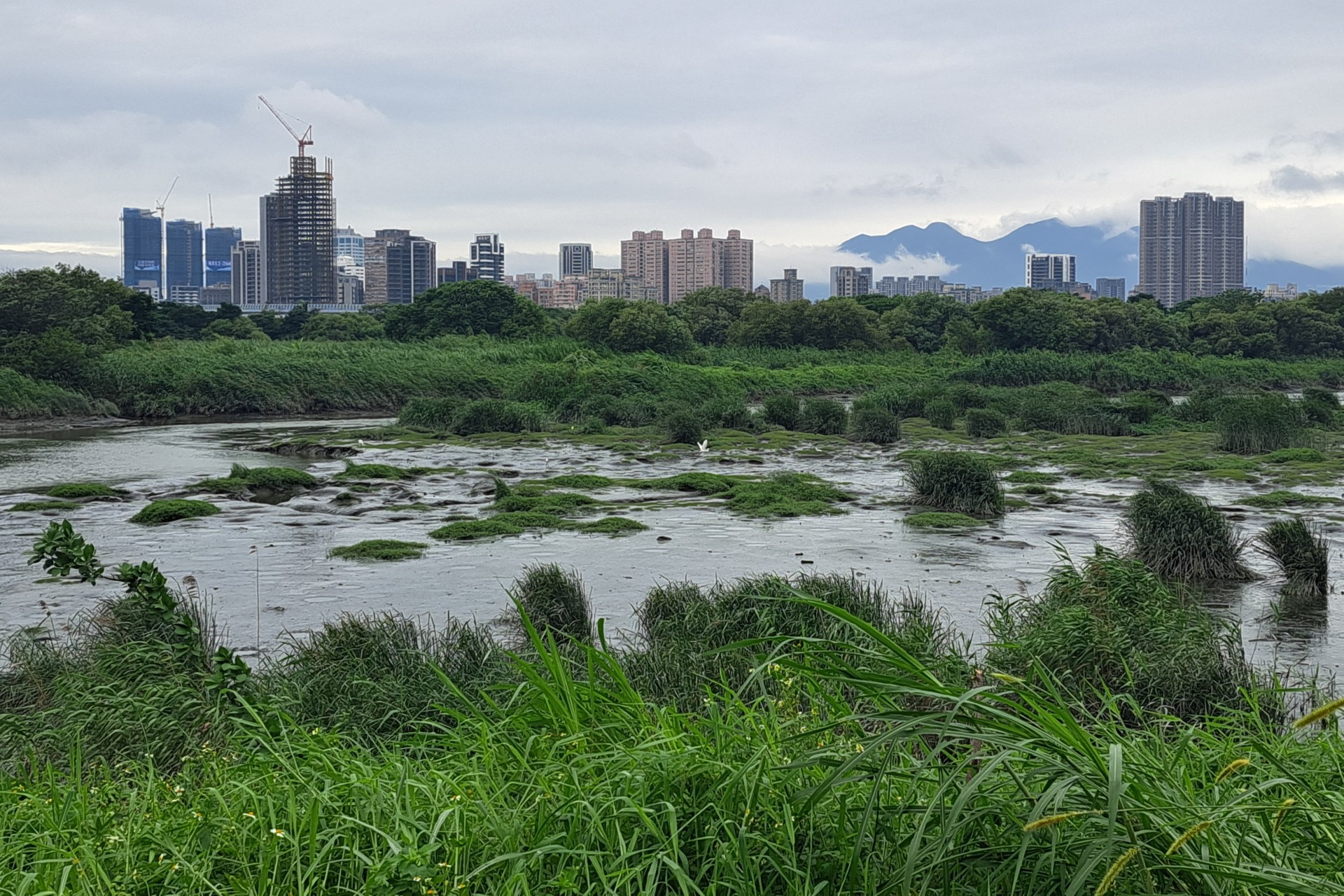
I live in an area not yet entirely trampled by modernity. Wildness still has a waning foothold, here. In late spring, fawns get “the zoomies” in the open space around our house. Newts hunt worms on the driveway when it’s wet out. Douglas squirrels are busy in the trees. Raccoons, possums, and coyotes make reliable nocturnal appearances. A cougar once traipsed through the wooded area between our house and the street. Bears are periodically spotted in the neighborhood. A chorus of frogs provides a soundtrack for summer nights—complemented by the occasional owl. A variety of other birds abound, including bald eagles nesting year after year in trees behind our house. Bats, various pollinators, dragonflies, and garter snakes add to the variety. It’s a real treat and privilege to be at least a witness in this Community of Life.
One downside is that roadkill is not uncommon in this interface region, and wildlife loses the contest every time. Deer, possums, and newts are the most visible to us. Every time I move a smashed newt off our street, I am close to tears and apologize to the departed critter: this should never have happened; you did nothing wrong; you didn’t deserve this end. It’s particularly painful when the flattened newt is on the very driveway that I try to keep clear of visually-confusing leaves and other material—and exercise hyper-vigilance when driving through. Even if it was not me whose tires did the deed, I know that I failed in my watch, and feel it deeply. The core fault lies in operating a vehicle across newt habitat: an alien novelty in ecological terms.
Frequent exposure to roadkill prompts my wife to say that this is why we should all live in cities. Leave the hinterlands to wild creatures. It’s selfish to want to live amongst the wildlife. Confine us all to what I might term designated hell-holes, or feed lots.
A clear logic accompanies this argument, and it’s hard for me to efficiently articulate why I am diametrically divergent. It just seems viscerally clear that cities are not “the answer” for dialing back the host of threats perpetrating a sixth mass extinction. In this post, I will attempt to make the case.
End State
Part of what guides my instinct that cities are “not it” is that authentic living—lifestyles of plants and animals (including humans) that have stood the test of deep time—are far more integrated into natural rhythms than anything us modernites experience. A brief excursion into modernity that is rapidly leading toward a sixth mass extinction is a fantastic indicator of what clearly doesn’t work! If humans are to be around for hundreds of thousands of years longer, by definition it can only be in a sustainable mode. And we have loads of clues as to what that looks like—even if those templates are being actively squashed just like the unlucky newts. As is the case for the newts, hunter-gatherers are doing nothing wrong at all, but have the unfortunate fate of being in the path of modernity’s maw.
If the far future can’t be urban, the “solution” of everyone moving to cities at best represents the acceleration of a failure mode. And maybe that’s okay—if the plan is a retreat to cities to wither, leaving Earth in peace (which, to be clear, is not the proposal). In this sense, cities become concentration camps, but this time for those truly guilty of crimes against life.
No Way to Be
That’s not the fantasy version, however. I believe the driving idea is to confine human impact to a few small areas and let “nature” have the rest. The appeal is obvious enough. But as part and parcel of doubling down on a false sense of separation from nature, it ignores the enormous tangle of dependencies that support a city. Already, over 80% of Americans live in cities (and adjoining suburbs). How’s that working out? Is the countryside largely left to the critters, who are breathing a sigh of relief? Is the open space re-wilding? Of course not! The resource footprint does not shrink as a function of how tightly packed the people happen to be. Logging; mining; clearing land for agriculture; pesticides, herbicides, and fertilizer runoff; manufacture and associated pollution; groundwater depletion…all proceed apace no matter where the individuals happen to live.
In fact, one could argue that urban affluence tends to drive up the net effect, as trends would appear to validate. Otherwise, extinction rates would be dropping as the world becomes more urban—which is assuredly not how this is all playing out. Besides, greater affluence demands greater resource exploitation; presumably, transportation—and its associated material investment as well as roadkill—increases to distribute all those goods from remote areas to the cities.
The situation is similar to that for anarchy: modernity thrives on urbanization—just as it requires the opposite of anarchy (hierarchy). And like anarchy, de-urbanization is no way to run modernity. But the flaw is that modernity is no way to comport ourselves sustainably on this planet. Who cares if cities are the “right” or “best” way to organize modernity? Modernity is an ecocidal monster! Why strive to make the Human Reich operate in its most efficiently destructive manner?
The Clumsy Version
The best I could usually manage on the spot when my wife brought up the idea that we should all live in cities (always while driving, having just passed roadkill)—and without rehashing the larger “modernity is wrong” diatribe, whose welcome has worn—was to point out that the land would still be “utilized” to serve the demands of urban people, and that I don’t trust non-resident corporations operating out of sight to do a better job avoiding atrocities like mowing down deer.
But in truth, our brains simply aren’t up to the task of imagining a counterfactual this extensive and wrestling with all the nuances that add up to some net effect. Would the situation be better due to reduced traffic, or worse because of the impunity that accompanies an out-of-sight-out-of-mind liberty?
If “nature” is wholly relegated to a resource base, commodified by corporations, does it retain as much value? True enough—the previous sentence already captures present reality pretty well, but perhaps the fact that it’s not total is the silver lining.
One other argument I might sometimes use: no movie I’ve ever seen has people swarming into cities in the face of some disaster. The impulse is to flee, and maybe that tells us something fundamental about where we really think we ought to be.
The NIMBY Argument
NIMBY (Not In My Backyard) attitudes serve to make some activities harder—acting as a drag-force on modernity’s ambitions; fettering “progress.” Nuclear waste facilities, sewage treatment plants, clear-cut forests, and lately data centers have difficulty overcoming local opposition from residents. Imagine if such residents had long since cleared out to the cities, releasing this “brake.” The fact that people harbor some residual care for their immediate environment—even if a faint shadow of the love and intimacy characteristic of foraging bands—translates to at least a modicum of restraint.
Thus, the effectiveness of NIMBY provides an effective argument for why the wild world would likely suffer greater losses if humans abandoned rural areas for cities.
The baseline instinct, here, is that being closer to the wild world offers better protection than making our sense of separation even more extreme by sequestering ourselves to cities. If we’ve made most of that journey already, incurring catastrophic harm in the process, the “answer” isn’t to push toward more complete concentration of even more humans into cities.
But if one is artificially constrained to imagine the goal being preservation of 8 billion humans in a modern lifestyle, I’m afraid the barks are aimed up the wrong tree. Neither urban nor rural distributions will get that job done. As a thought experiment, what would happen to the “city impulse” in the case of a few million humans on the planet? Is it still preferable for those few million to live in one large city, or can Earth now tolerate wide, ecologically-integrated distribution? We actually know the answer from hundreds of thousands of years of precedent. If cities are imagined to “solve” a problem, but that problem is only problematic in the context of enormous numbers of humans, then perhaps the “solution” is better focused on the question of “how many” instead of “where.”
Until the human population subsides (as I believe it will soon), let NIMBY continue to offer some protection by having people present and attached to the land.


Comments
We changed commenting systems on September 10, 2026 as part of a site-wide functionality and security upgrade. Your past comments have not disappeared, and you can still log in with your old Disqus account credentials if you wish. Contact us with any questions.
Tom says he thinks our numbers will soon be going down, and I think he makes a credible case. But the numbers are not going to go down fast enough to rescue biodiversity, absent a collapse of some sort. I do like his defense of NIMBYism. People often talk sneeringly about someone’s objection to some polluting project in their neighborhood as “mere” NIMBYism. But the urge to defend one’s neighborhood is honorable and healthy. Quite often, NIMBYs mature into NIABYs.and many would never have paid any attention if some atrocity didn’t happen to be proposed for their own backyard.