

Originally published on February 13, 2026.
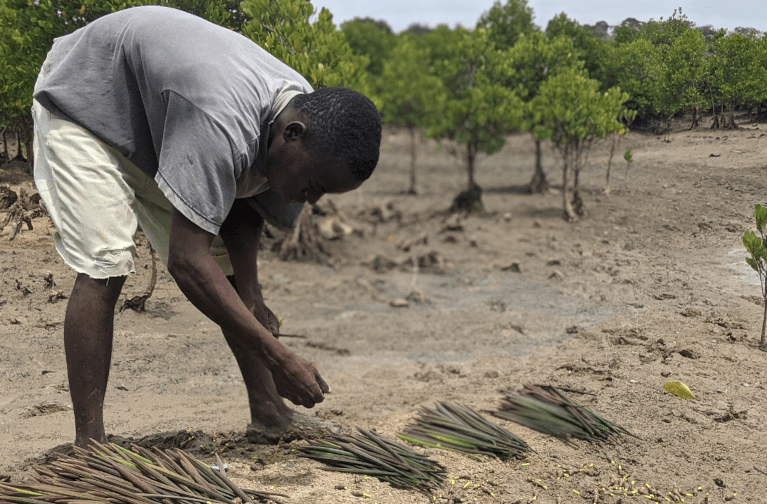
Eight years ago, the Ecosystem Restoration Communities (ERC) movement began with a simple but powerful belief: that everyday people everywhere could restore the land beneath their feet and, in doing so, restore hope for our shared future.
Today, that belief has grown into a living, global network of 86 restoration initiatives across 39 countries, collectively stewarding more than 103,000 hectares of recovering land. Together, these communities are proving that regeneration is not only possible – it’s scalable, measurable, and deeply human.
“Restoring our planetary home back to life and abundance is The Great Work of our Time.” –John D. Liu, Founder of the Ecosystem Restoration Communities Movement
The Big Fix: Lessons from Two Large-Scale Restoration Projects
What happens when bold regenerative ideas meet human-caused environmental destruction? In this event with Sammy Gensaw (Yurok leader) and Andrew Millison (permaculture practitioner), explored how a deep-rooted sense of place, strong leadership, and thinking big can spark profoundly positive changes on the landscape and in our communities.

From the Ground Up: A Growing Movement
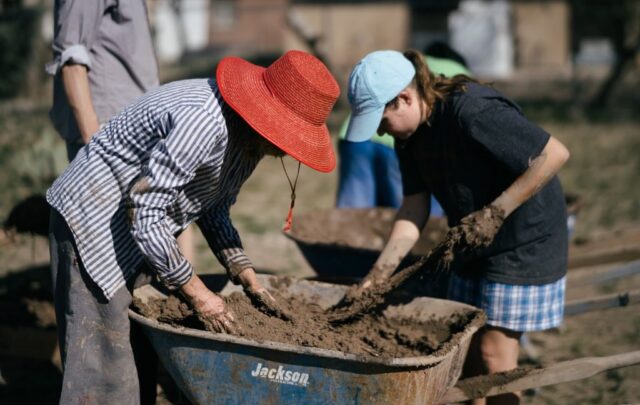
The ERC model works by empowering local people to lead restoration themselves. Instead of massive, top-down projects, ERC’s approach scales out, not up, connecting communities through shared learning, training, and inspiration.
This grassroots model is transforming landscapes and livelihoods: 10.9 million trees and plants have been planted, with an average 77% survival rate – far higher than in most large-scale projects. Furthermore, over 42,000 people received hands-on training in earth restoration in 2024 alone.
And beyond the global numbers, the local impact tells an even more powerful story:
- 25,000 farmers across Guatemala’s Caribbean coast are now restoring soils, rebuilding forests, and transforming degraded farmland into productive, regenerative systems.
- In Egypt’s Sinai Desert, Bedouin farmers are turning arid sand into fertile ground.
- In The Philippines, one ERC initiative inspired the creation of the country’s first officially designated “Regenerative Island.”
These are just some of the many positive impact stories emerging from the movement – tangible proof that when communities lead, restoration thrives.
Each community acts as a spark, a lighthouse of possibility, igniting transformation across regions and inspiring others to begin.
Restoration that Restores Lives
Healthy ecosystems are the foundation of thriving societies. They provide food, water, shelter, and stability – and when they are lost, so too are livelihoods. The ERC movement shows that restoration can reverse this spiral.
Across the network, farmers are reporting soil organic matter increases of up to 740%, while biodiversity rebounds are visible from space. At ERC Henbant in Wales, a training programme in regenerative farming has helped graduates launch new enterprises and careers, building resilience for both people and planet.
Meanwhile, community-led projects like ERC Mainsprings in Tanzania and ERC Quinta Vale da Lama in Portugal demonstrate how restored landscapes become living classrooms – teaching others how to regenerate land, livelihoods, and local economies.
ERC’s donors, funders, and partners play an integral supporting role. Their contributions amplify local efforts and contribute to lasting outcomes: healthier soils, abundant harvests, restored water systems, and self-sustaining communities.
The Great Work of Our Time
In just eight years, the ERC movement has grown from an idea into a global force for restoration. Yet this is only the beginning. Every new site, every new learner, and every hectare restored brings us closer to a planet where people and nature thrive together.
Together, we are proving that regeneration works – and that when communities lead, the Earth heals.
Read the 2020 – 2025 Impact Report and join us in scaling out the great work of our time.



Comments
We changed commenting systems on September 10, 2026 as part of a site-wide functionality and security upgrade. Your past comments have not disappeared, and you can still log in with your old Disqus account credentials if you wish. Contact us with any questions.
I volunteer with a group that expanded out of providing doula services and training as a Mutual Aid. What started as “Healing the World, One Birth at a Time” in 1987 has evolved to “Healing Communities, One Transition…One Relationship….One Heel at a Time”
So I was delighted when I was facilitating a workshop on generating novel solutions via transformational relationships and this article was sent to me by an attendee. It’s easy for people to fall into “complying in advance” when we are bombarded daily with everything going wrong in the world. We will be sharing this story, and the Resilience website, with clients to find inspiration and hope.
Thank you so much for compiling Good News, and your apparent dedication to responsible stewardship.
I look forward to learning more about ERC!