

Following another summer of record heat waves, droughts, floods, and wildfires across vast swaths of the planet, the injuries done to the planet by the Industrial Growth Society have never been so conclusive. Earth has a severe fever, and the global, industrial society built on growth, extraction, and colonialism is the cause. It deeply troubles me to consider the fact that all of the climate perturbations we have witnessed to date are from having raised the temperature of the atmosphere 1.25 degrees Celsius; while some projections show us reaching as high as 6 degrees Celsius in less than 80 years.
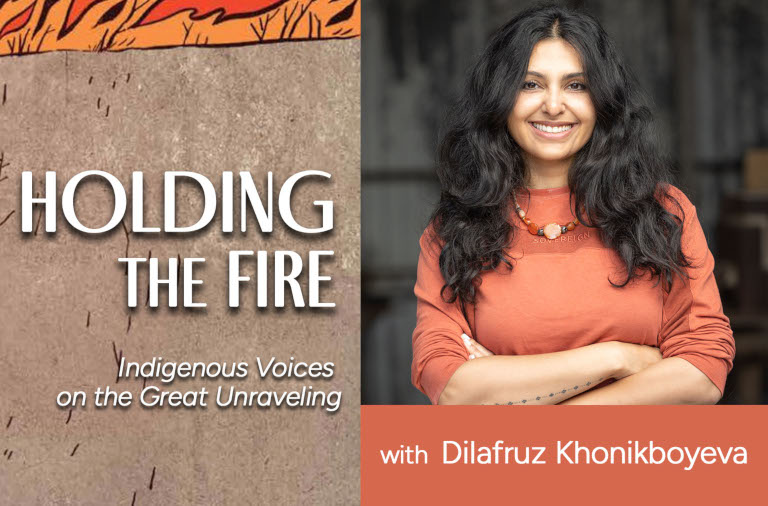
As I grapple with collapse, I wanted to speak with Dilafruz Khonikboyeva, an Indigenous Pamiri from Tajikistan, who has lived through it and come out the other side.
Dilafruz:
It’s not the end of the world. Again, we’ve all seen the end of the world in different capacities, but it is an opportunity for us to right-size and figure out, “How are humans part of nature?” How do we get back to a closer equilibrium, to humans being a part of nature and not antagonizing it, and also not feeling antagonized as it responds to our overtaking?
In our conversation, she discusses how people can live through collapse while maintaining their core identities and values, by grieving, but then drying their tears and carrying on. She reminds us how Indigenous people have always had a symbiotic relationship with Earth, living as one with and being in love with Earth.
I found the time with Dilafruz enlightening, and inspirational, and learned a lot from her about how to best comport myself during these times of collapse and great change. I trust you will have a similar experience.
About Dilafruz
Dilafruz Khonikboyeva, an Indigenous Pamiri from Tajikistan, is a transformational conflict expert, who has focused her work on civil wars, climate and resource conflicts, and storytelling. She is the inaugural Executive Director of the Home Planet Fund, the latest tool in the Patagonia philanthropic ecosystem.


Comments
We changed commenting systems on September 10, 2026 as part of a site-wide functionality and security upgrade. Your past comments have not disappeared, and you can still log in with your old Disqus account credentials if you wish. Contact us with any questions.
“Back to nature” means giving up consumerism, pollution, wars and over-population of the planet. Thanks for this enlightening interview. But is the real outlook as rosy as some see it now. As catastrophes increase we will need to rely more on our local communities, crafts and gardens and less on stuff from China.