


Reactions to the now frequently predicted decline in worldwide human population range from mild celebration to panic. The mild celebration comes from those concerned about the huge environmental impacts a growing human population continues to have on the planet. The panic comes from government officials and economists who wonder how societies will support the huge number of old people (who generally work less and therefore contribute less to the economy) without a substantial influx of new, young workers. Economic growth is expected to take a large hit as population growth slows and then actual population decline sets in.
One writer ticks off the environmental benefits of a gradual population decline and actually embraces a degrowth path for the economy. The editorial board of The Deseret News in Salt Lake City tells us that “big troubles await” for a world with declining population. A staff writer for The Atlantic magazine notes the precipitously declining population growth in the United States and trots out several sources who tell readers how bad this is for economic growth and innovation.
All of these writers assume that population decline, however troubling or salutary, will be gradual. They attribute it to a series of factors such as rising education (especially of women), increasing urbanization, changing cultural attitudes and the costs of bringing of children. These scenarios of gradual, seemingly manageable decline are called into question by the work of fertility researchers who discovered that fertility rates are dropping like a stone and on present trends expect the worldwide fertility rate to reach zero by 2045. That’s not a typo.
Herman Daly, the dean of the steady-state economists, was a steady-stater with good reason. Daly noted the no economy can grow forever and that therefore perpetual growth would lead to collapse as resources give out and pollution and climate change take their toll. But Daly also understood that a perpetually shrinking economy would simply lead to the end of human civilization. Only a steady-state economy could be sustained in the long run. (Daly did suggest that current rates of consumption were too high to achieve a steady-state economy and that a gradual lowering of consumption to a sustainable level would have to be effected.)
Now if the fertility researchers cited above are right—and they are simply working from empirical observations—then the plummeting fertility rate will lead not just to a destabilizing shrinking in the world economy in the coming decades, but a wipe-out for the human race.
The fertility researchers don’t deny the factors cited above, but believe that the list is woefully incomplete. Let me quote from my previous coverage of the topic:
But some scientists have been pointing to other factors associated with industrialization, namely, the widespread dispersion of toxic chemicals in the environment that can adversely affect fertility; the increasing use of pharmaceuticals; the ubiquitous presence of plastics in the environment and human bodies; smoking; poor diet; and obesity (which itself may be a product of endocrine disruption caused by environmental toxins).
I am particularly focused on endocrine disruption. More than 25 years after the publication of Our Stolen Future which detailed the deleterious role of endocrine-disrupting chemicals on human reproduction, childhood development, obesity and chronic disease, the situation is now worse as we continue to introduce more and more novel chemicals into the environment.
It will be a supreme irony if the industry that brought us “better living through chemistry” ends up being a major driver toward the extinction of humankind. The debate over economic growth versus environmental protection may indeed end in the coming century if the civilization in which that debate is taking place collapses because of the exceptional “ingenuity” of its scientists.
Image:
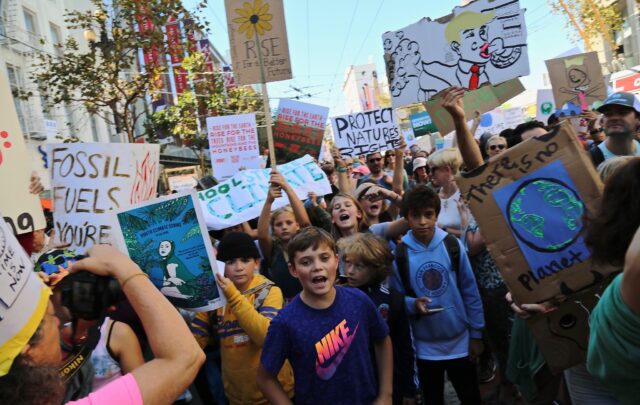
Bauhaus Figuratives The Crowd by David S. Soriano (2023). Via Wikimedia Commons https://commons.wikimedia.org/wiki/File:Bauhaus_Figuratives_The_Crowd_by_David_S._Soriano.jpg




Comments
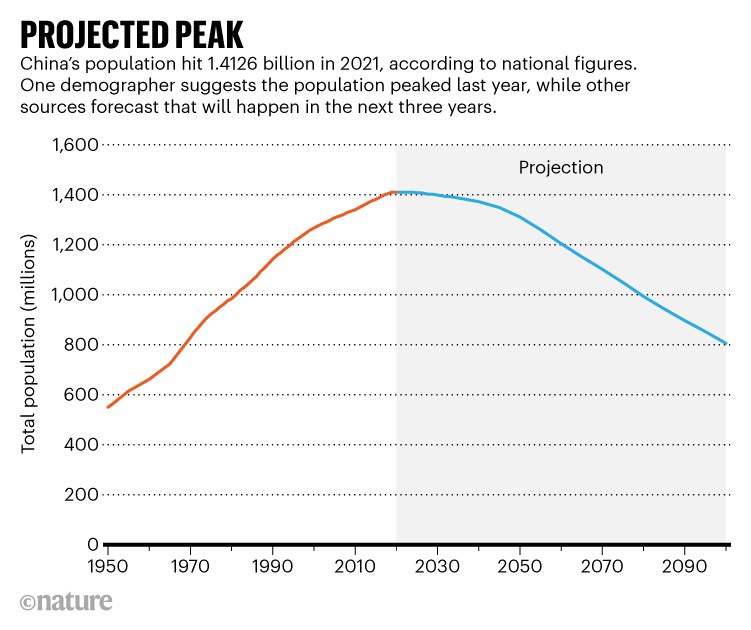
“according to current projections, China’s population is likely to drop below 1 billion by 2080 and below 800 million by 2100.” As per chart from Nature.
Let’s say that’s true.
(1) GHG emissions drop drastically
(2) so does resource use – water, minerals, oil etc
(3) enormous amount of land is freed up
(4) enormous numbers of dwellings are freed up
(5) there is room to migrate inland if you’re worried about sea level rising
(6) there is room for migration from other countries – assuming their population doesn’t collapse too
Very good points. Regarding declining fertility,: implying it is forever chemicals that are responsible for reduced fertility is pure conjecture. It is obvious that it is choice that was never available before that is responsible for declining growth rates. Take away the pill and abortions and we will be right back where we were in the fifties. Modern medicine created the population boom and then the pill quickly quelled that explosion in the first world but not in the third world.
You are right.
Anyway I’m afraid I can’t see this as a serious environmental or sustainability web site any
more. It was nice as Energy Bulletin, but it’s just cancel happy clappy
political partisanship now, gone the same dopey way as much American media and NGOs. Part of the general death of the left.
Yeah one wonders. I think there’s a study going on with dogs – they share the same homes so they should share the issues.
Get a load of this. There’s a section of the intelligensia that thinks it’s a good thing, and only fascists get upset about EDCs. That’s not pollution, that’s cis-het patriarchy smashing freedom elixir.
https://discardstudies.com/2019/04/15/queering-edcs-a-bibliography/
Wow. Thanks for that link. I was wondering if this was being discussed anywhere. And yea, that is an odd slant. I am ok with whatever people are, but that doesn’t mean we should just embrace these pollutants and not see them as harmful! Sheesh.
And less of those women are choosing to be faithful wives, where the statistics show the highest divorce rates among those women with the highest amount of education.
There are a lot of reasons, like the ones you mentioned, as well as societal ones, where marriage with to death due us part has diminished, therefore less pair bonding is occurring, because people are fearful their future partner is going to divorce them, and ruin their lives, and their future children’s lives. Additionally statistics show that marriages where the man earns more than the women have the highest chance of the marriage lasting, and society is still pushing the narrative that women should be the bread winners, so population collapse is going to happen for a lot of stupid reasons.
At this point I wouldn’t be all that sad if the human race ends from declining fertility, although i really truly doubt that that will be the case.
All creatures, not just humans, are getting bathed in the chemicals disrupting endrocrine systems. Must be reproductive troubles in many species.
The supporters of growth, both population and consumption, are the primary drivers polluting the environment with the chemicals disrupting endocrine systems, reducing sperm counts, and leading to population decline.
I have/would never use a fabric softener or dryer sheet but encounter the endocrine disrupting chemicals in these products when I take a walk in my neighborhood.
“The panic comes from government officials and economists who wonder how societies will support the huge number of old people (who generally work less and therefore contribute less to the economy)”
Old people also tend to consume less–except for healthcare, which 1) is not heavily dependent on resource extraction or energy inputs, and 2) represents a smaller contribution to rising healthcare costs than rampant profiteering–which would be the major cost-inflation driver in any population scenario anyway. And when it comes to funding deadweight non-contributors, we have a huge overabundance of financial institutions which can magic-up derivatives and speculative instruments at a rate that far outstrips any real-world production, which are then exchanged for real wealth in the trading of those gimmicks, and when it all goes south and crashes, we have no problem magicking trillions of dollars out of nothing to bail those institutions out. We also have the deadweight load of vast military and intelligence sectors, millions of non-producing government jobs, and a burgeoning police / prison state. But I don’t see government officials panicking about any of those.
“fertility rates are dropping like a stone and on present trends expect the worldwide fertility rate to reach zero by 2045. That’s not a typo.”
Maybe not a typo, but also not very plausible. The fertility rate is typically given as the number of total births that would be born to the average woman by the end of her child-bearing years at a given birth rate. A world average fertility rate of zero could only be attained if we reach at least a year of zero human births worldwide. A projection that we will reach that point by 2045 is not a realistic extrapolation from current trends.
World zero population growth by 2045 is certainly attainable, but even that is very uncertain from current trends alone. So I remain hopeful for advances in the living standards and healthcare for the world poor, and for increased female empowerment for independence and being able to make life-choices for themselves–not only because I see all those as good in and of themselves, but also because of their tendency to reduce fertility rates. I also hope that Australian contraceptive pill for men works as well for humans as it has in animal trials.
No we are not missing anything in particular as women in more educated societies are choosing to have fewer children.
While there are some older articles that discuss the decline in sperm quality and counts, this more recent article says that the issue is still very complicated to measure. https://www.scientificamerican.com/article/are-sperm-counts-really-declining/
“Most people in the field agree that the issue needs further study. Both Levine and Marion Boulicault, director of interdisciplinary research and community at Harvard University’s GenderSci Lab, point out that male fertility research has long been neglected. Levine says worldwide, systematic studies would not only inform whether there is continued or future decline but would also help scientists better understand whether the changes are caused by factors such as obesity, alcohol consumption or chemical exposure.
“It’s shameful that for such an important problem, 30 years later, we haven’t got the answer that we all agree on,” Pacey says.”
The article also mentions that higher temperatures cause a reduction in sperm quality and count. Another reason to be concerned about global warming.
Ultimately humanity needs to adjust to a decline in complexity. We will have fewer civil and political institutions as energy use and resource consumption decline. Just because we do more things by hand doesn’t mean life becomes drudgery. With fewer elders being kept alive with medication in nursing homes, we may see more people dying naturally at a younger age, but there will still be some people who live into their 90’s, and they will be living with family, as used to be the custom. I have a photo of my mother holding me as a toddler standing next to my 96 year old great-grandmother, grandmother, and two older sisters.
For most of of the time since homo sapiens first evolved, human populatin has been thought to be somewhere between 1 and 10 million, with 3 million perhaps the most frequently cited estimate. I agree that a number of physical environmental factors, and quite recently (beginning 6000 years ago with the widespread practice of agriculture, accelerating dramatically in the last 2 centuries with the invention and widespread use of synthetic chemicals/molecules, and the diffusion of heavy metals from sequestration into biological systems) likely are a signficant factor in declining fertility rates. However, I am skeptical that these environmental factors would cause the extinction of homo sapiens. We simply do not have enough information about a steep linear drop in fertility, in light of multiple contributors, to conclude it is likely to continue to extinction of the species. I suspect that previously inactive genetic and epigenetic mechanisms might mitigate some effects, and all the mechanisms might not combine to continue fertility rates to zero – we don’t know if there are resilience mechanisms already , that would protect several million, a number that sustained the species for 10s of thousands of years. It may be that the rapid decline in birth rates might prevent us from engaging in other actions that could be a near-lethal species threat, such as a nuclear world war, insofar as the competition for food, water, energy etc, will drop dramatically, if population begins to fall at unprecedented rates, with very low fertility being one of many contributing factors. I remain much more concerned about overpopulation than extinction. Even if we went extinct, hominids in Africa, if past is prologue, would once again evolve the next verion of homo sapiens.
Yes, pretty much we’re missing something! …who’s going to bury several billion humans?! And don’t forget one of the most import reasons for burial – to limit sourcing and spread of bad human pathogens. I realize this comment is as painting in extremely broad strokes, but it’s clear that Climate (Holocene) Breakdown/End will cut food supplies sharply – on the order of 50% – an ad hoc estimation based on the food supply work of Brown:
and the related, recent Climate Breakdown work of Anderson:
and Englander:
As well as the (poorly modeled so far) loss of the Arctic ice maintenance of global Westerly winds. (i.e., so-called waveguide-mode “Blocking” of Rhamstorf)
https://par.nsf.gov/servlets/purl/10252286
https://web.archive.org/web/20210715234713id_/https://www.repository.cam.ac.uk/bitstream/handle/1810/317898/10584_2021_Article_2957.pdf?sequence=3&isAllowed=y
https://wires.onlinelibrary.wiley.com/doi/pdf/10.1002/wcc.586
https://ikee.lib.auth.gr/record/335025/files/Misiou_Climate%20change.pdf
https://vanguardrenewables.com/wp-content/uploads/2020/12/Global-Food-System-Emissions-Science-Magazine-110620.pdf
Population limits induced by endocrine disruptors is part of the Hyperthreat that is much easier to see since disruption is already happening. When people can actually see/perceive things, they react – like the smoke on the US East Coast from Canada caused many to don their N95’s because its effects can not be easily denied (unlike covid). Once obvious food shortages start, then action will occur… and this, ultimately, is the importance of socializing the Hyperthreat concept ASAP; to limit, insofar as possible, increasing denial and enact suitable opposition/triage.
https://youtu.be/hJeO1w0tdgI
https://www.youtube.com/watch?v=PkAYnkpYADs
…and… all of the above science pretty much ignores unknown tipping points – since we have no way to predict when these will happen – so it’s going to be worse than this, likely much worse, and sooner than currently understood. For instance, the “relatively” small amounts of soon-to-be-realized sea level rise will not soon destroy many coastal cities, but is already destroying swathes of the main rice growing river deltas in S-E Asia – hence the imminent concern over food (as voiced a decade ago by Lester Brown), yet few discuss it openly. Thankfully, Rahmstorf is finally speaking out, but he doesn’t seem to appreciate the food aspect (as stated by Brown/Anderson), focusing instead on coastal Affluent infrastructure.