

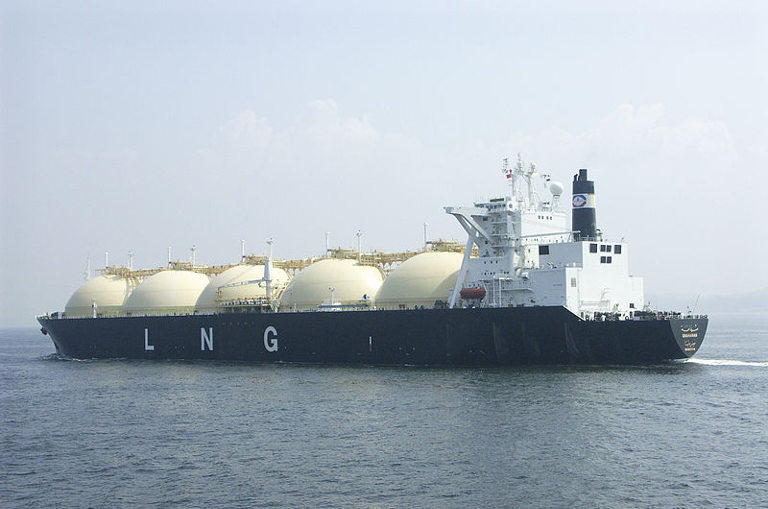
Few people noticed when energy reporters wrote in early January that the United States had become the world’s largest exporter of liquefied natural gas (LNG). Now, a group of U.S. senators has noticed and say those exports may be driving up heating and electricity costs for their constituents. In a letter to the secretary of energy, they are asking the secretary “to conduct a review of LNG exports and their impact on domestic prices and the public interest, and develop a plan to ensure natural gas remains affordable for American households.”
Who knew that exporting natural gas from American gas fields would raise natural gas prices at home? Well, the natural gas industry certainly knew. In the last decade, the industry was smarting under persistent low prices as it continually overproduced gas into a flooded domestic market.
It pushed for and succeeded in relaxing rules for exports in general and for expedited approvals of new export cargoes and facilities. The U.S. Department of Energy still has de facto control over most natural gas exports. But policy in the last five years has been to assist and encourage expansion of those exports.
The industry has always contended that there would be plenty of gas to go around because of the extraordinary growth in gas production from deep shale deposits that new technology can now extract. The so-called shale gas revolution, which arrived in the early part of the last decade, foretold an era of plentiful and cheap supplies—so much supply, in fact, that America would become a major exporter.
But the revolution seems to have stalled as marketed U.S. natural gas production has hit a plateau around 3 trillion cubic feet per month since late 2018. Prices have not been favorable until recently, and investors have fled the industry as they realized that negative free cash flows for practically the entire previous decade were not likely to turn around. That has meant less money for drilling with a predictable result: stagnant production.
So, stagnant production has now collided with growing LNG exports. The latest numbers available from November 2021 show that LNG exports now constitute 9.7 percent of all U.S. marketed production. As recently as November 2015 those exports constituted a tiny 13/100ths of a percent of total domestic production. The raw numbers show an increase from a little under 3 billion cubic feet of LNG exports for November 2015 to 306 billion for November 2021.
The industry makes the point that practically everything else America produces can be exported freely and so is priced based on world prices. Why then should natural gas be singled out? Shouldn’t natural gas producers have the same opportunity to sell their product to whomever they choose as practically every other American business does?
But the senators mentioned above and a trade group representing natural gas users, the Industrial Energy Consumers of America, beg to differ. They say that energy is unique and keeping it affordable is critical to the business competitiveness and vitality of the U.S. economy.
The natural gas industry notes that recent tensions between NATO allies and Russia have occurred during a period of unprecedented natural gas prices in Europe, a continent heavily dependent on Russian gas supplies. U.S. cargoes of LNG sent to Europe have had a role in providing some relief to America’s allies. Yes, the industry says, U.S. natural gas is special, but in this case, as a tool for helping allies with badly needed energy supplies.
One group that should benefit from higher natural gas prices will be the renewable energy industries such as wind and solar. These sources become more competitive when the prices of natural gas and other fossil fuels rise. But it’s understandable that the renewable energy industries want to stay clear of the fray even though high fossil fuel prices help them. Nobody scores points with the public by celebrating higher energy prices.
[slide-anything id=’3472166′]
If U.S. natural gas prices continue upward, look for this battle between consumers and producers of natural gas to escalate. The U.S. Congress has the power to intervene and rein in exports if it chooses. That fact may become relevant later in the year when voters who heat their homes with natural gas and buy electricity from gas-fired utilities decide who should represent them in Washington.
Photo: The LNG carrier Shahamah in Uraga Channel, Japan (2007). Photo by: 青空白帆 via Wikimedia Commons https://commons.wikimedia.org/wiki/File:Shahamah_LNG_carrier.jpg





Comments