

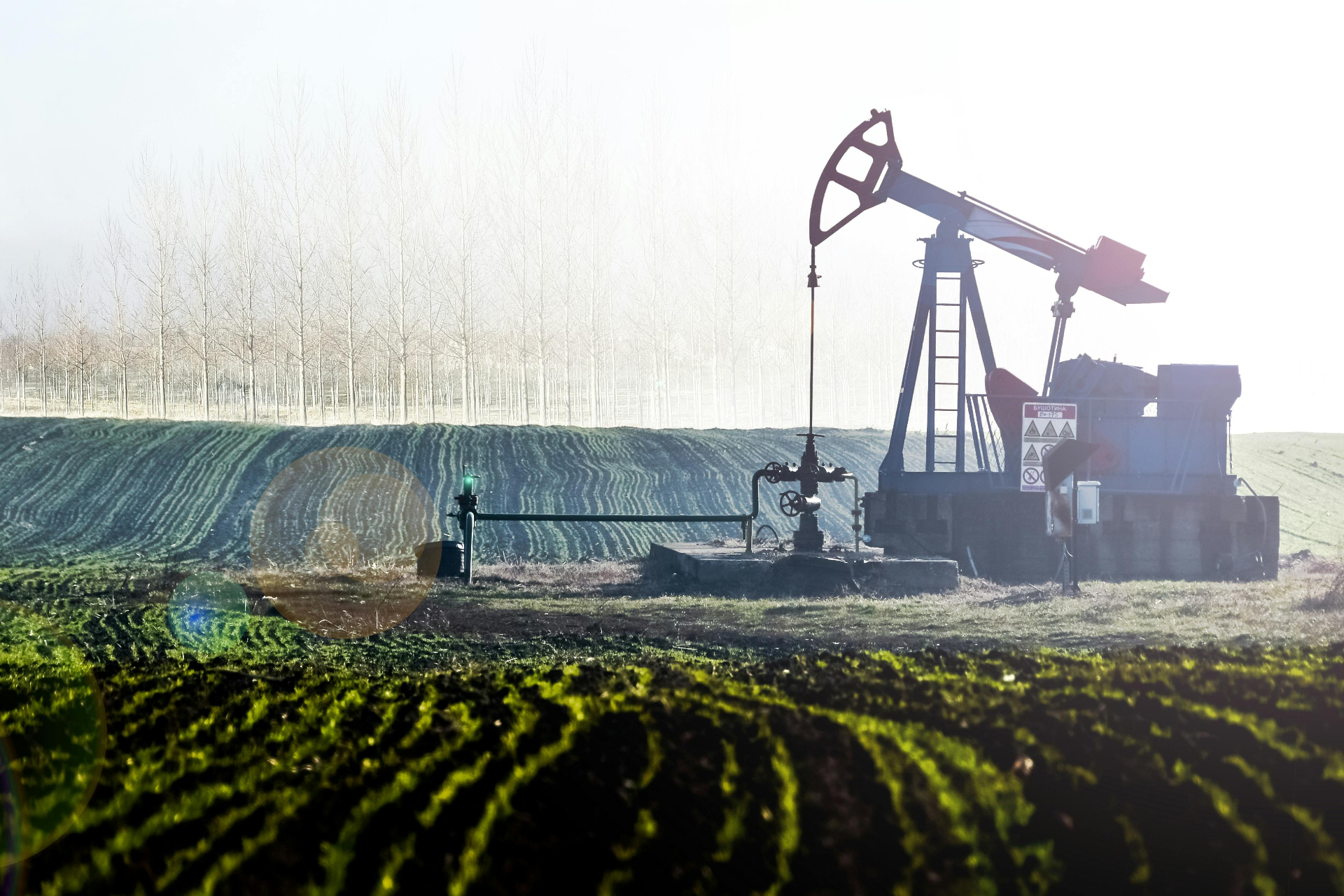
The supply chain problems arising from the unprovoked USA/Israeli attack on Iran are becoming clear. They are multiple, affecting not just oil and natural gas, 20% of which passes through Hormuz, but also the many things dependent on petroleum. The impacts have yet to be fully felt, but what the world will experience is going to be just a practice performance for a longer term and more permanent change, a slowdown that will mean a collapse in the multiple systems on which we all rely.
Systemic impacts of the Hormuz blockades
Just as the people of Vietnam fought the USA to a standstill (which led to ultimate defeat), Iran’s authoritarian government has enforced a stalemate against the bigger power, in this case by preventing ships from transiting through the Gulf of Hormuz bottleneck. The USA has compounded the problem by blockading Iran’s ports. While this impasse might end with a peace agreement, it has already, in early May 2026, led to price rises for petroleum products and multiple items, large and small, dependent on them. These rises are baked into the system for the near to medium-term future.
Petroleum
The way of life of the vast majority of humanity is now wholly dependent on petroleum: in effect, we eat it, wear it, get carried around by it, communicate through it, sit on it and medicate ourselves with it. Oil has the virtue of being a dense and transportable energy source. It is not so difficult to substitute for oil in applications such as electricity generation, although the renewable energy capture systems themselves are made and maintained by burning oil. It is far more difficult to do so in areas such as agriculture, shipping, aviation and heavy freight. There will still be oil available, but it will be more expensive if the blockades continue, since the global stockpiles will get depleted. This will increase the cost of many things, and for a country like the UK, which imports half of its food and most manufactured products, the impacts are obvious.
Oil is also vital for the manufacture of a huge variety of products. As it increases in cost, those products increase in cost. The Hormuz constriction already directly affects several critical petrochemical products, listed below:
- Inorganic fertiliser: In addition to rising oil prices, the supply shock to fertiliser will put pressure on agricultural production, with big implications for food security. Around 30% of fertilizer products go through the Strait of Hormuz. Qatar is the world’s biggest producer of urea, a key input to fertiliser manufacture. The region also produces around 35% of the urea and 23% of the ammonia, another feedstock for nitrogenous fertiliser, which is exported globally. Sulphur, another component of fertiliser manufacture, is also produced in the region as a by-product of oil production.
- Sulphur products, notably sulphuric acid, are used in a host of industrial processes, including copper and cobalt extraction. Some 49% of the global sulphur trade passes through Hormuz.
- Plastics are made almost exclusively from petroleum fractions. To name but two types, polyester is used in clothing, and polypropylene has a huge variety of applications, from automotive plastics to rope to medical disposables.
- Pharmaceuticals: some 85% of NHS prescriptions could be affected, paracetamol and aspirin being particularly vulnerable. Life-critical cancer and stroke medications will also be affected. NHS sources predict shortages from June 2026.
Depending on the duration of the blockades, the restriction of oil and its products will lead to a recession across the world, simply as a result of price escalation. Some areas will be affected more than others, depending on the degree of their reliance on petroleum products from the Persian Gulf.
Commentators are unified in calling this a perfect storm for the UK and world economy, and hence for livelihoods and well-being.
Peak resources, limits to growth and system collapse
The Hormuz constriction gives us an insight into a far bigger problem, the constrained nature of the resources we rely on in rich and poor countries alike.
Back in 1973, systems scientists at MIT carried out a computer simulation using a methodology called systems dynamics. They modelled several scenarios, using then current trends to identify likely patterns of key variables (population and industrialisation, pollution, resource depletion and land availability for food) over the coming decades. The modeling produced has been uncannily prescient, in that what actually happened has followed the projections with relatively minor deviations, a record superior to that of any economic forecasting. The ‘standard run’ scenario (what would happen if trends then continued) indicated a civilisational collapse, starting about now. What underpins this grim diagnosis?
As more and more people achieve higher and higher levels of affluence, they consume more and more of the world’s resources. Consumption increases each year and population growth, industrialisation, pollution, food production and resource depletion all follow an exponential growth curve. Material growth cannot continue indefinitely because the Earth is physically limited. Eventually, the scale of human activity exceeds the carrying capacity of the environment, resulting in a sudden contraction. This is ecological overshoot, and we are well into that. “This means that several of Earth’s life-supporting systems risk crossing critical thresholds, with severe consequences for both ecosystems and societies”.
Globally, we are using the equivalent of one and a half planets’ worth of the Earth’s ability to renew its resources and absorb human-generated matter, e.g. carbon emissions, every year. Indeed, 2.8 times in the case of the UK. That requires at least a 60% reduction in the size of the UK’s production and consumption footprint, and more than an 85% reduction in the case of the Nitrogen, phosphorus and Carbon Dioxide emission boundaries. What this means is that, firstly, the resources supporting humanity – food, minerals, industrial output – will begin to decline. This would be followed by a collapse in population.
It is important to understand that contraction or collapse happens, not because physical resources disappear entirely, but because the quality of some resources declines as more and more of them are extracted. Easy to extract oil reserves, for example, are succeeded by those that require more sophisticated and costly techniques for drilling, pumping and refining. Mineral deposits become successively less densely concentrated, requiring more energy to extract and producing prodigious mountains of spoil. It therefore requires more and more energy and investment to extract usable high-quality resources from raw materials. The same goes for energy: the key concept here is diminishing Energy Return on Investment (EROI). This diverts resources away from productive industry and agriculture, and eventually the process, and hence the system, becomes unsustainable. The resulting economic collapse is likely to precede the overall collapse of the Earth’s life systems.
Are not renewables the answer? Yes, in part, but they cannot substitute for either the scale of use or all the multiple uses of oil and other hydrocarbons.
- Firstly, obviously, you cannot make petrochemicals out of sunlight or wind.
- Secondly, industrial-scale renewables provide electricity. Despite advances in battery storage, large-scale deployment of battery storage is not feasible for heavy freight and similar uses.
- Thirdly, the increasing scarcity of critical minerals (copper, rare earths, for example) will constrain the scale of renewable energy capture systems, so they will not be able to substitute for the scale of energy currently used.
- Fourthly, the manufacture, deployment and maintenance of wind turbines, solar panels and energy storage systems are all dependent on fossil fuels.
- Fifthly, the true EROI of electricity generation by renewable energy capture systems is low. All this means that our future will be far more energy constrained than today, possibly a tenfold decrease overall.
We have been warned
Hormuz is a warning, a preview, or a dry run for what lies in store. Already, the warnings are emerging into the mainstream. In the last few months, two previously suppressed government reports have emerged. One is a national security assessment titled Global biodiversity loss, ecosystem collapse and national security, the other considers major issues in food security. The first report listed a number of startling headlines, each with a rating of the government’s confidence in the analysis given (not of the likelihood of these dire events occurring).
- Global ecosystem degradation and collapse threaten UK national security and prosperity. High
- Cascading risks of ecosystem degradation are likely to include geopolitical instability, economic insecurity, conflict, migration and increased inter-state competition for resources. Moderate
- Critical ecosystems that support major global food production areas and impact global climate, water and weather cycles are the most important for UK national security. High
- Ecosystem degradation is occurring across all regions. Every critical ecosystem is on a pathway to collapse. High
- There is a realistic possibility that some ecosystems (such as coral reefs in Southeast Asia and forests in the very far North) will start to collapse from 2030, and others (rainforests and mangroves) will start to collapse from 2050. Low
- All countries are exposed to the risks of ecosystem collapse within and beyond their borders. Moderate
- Without significant increases in the UK food system and supply chain resilience, it is unlikely the UK would be able to maintain food security if ecosystem collapse drives geopolitical competition for food. Moderate
Note again that this is not from some eco-activists but from the UK government itself.
The second report (from 2024 but which only surfaced in a Times article this year, 2026) expands on this last point. The Times article summarised the findings:
“…an expert group of civil servants, concluded that not only Britain’s food supply but also its water supply, and international trade networks, were “almost certain” to be “on a decline and collapse trajectory”, meaning there was “a realistic possibility that by 2030 (increasing to 2050) our food, water and natural ecosystems (etc.) are at strategic risk of catastrophic failure”.
Yet, despite impending crisis and collapse, the political discussion is only ever about relative trivia or the early symptoms of this ‘closing circle’. Even the Green Party leadership, in its new populist guise, backpedals on the severity of ecological overshoot and the unsustainability of economic growth.
To confront this reality means establishing several priorities, in public debate and in government action.
- A public education campaign, explaining the risks and the need for serious and rather drastic measures (just as is done in other national emergencies). The public needs to know, firstly, that the situation is critical, we are all at risk, but secondly, that we will be taken care of, and take care of one another.
- A reset of expectations: no more replacing cars every few years, jetting off on holiday, eating exotic foods out of season, buying new clothes before the others wear out. Those are examples of the changes to lifestyles of reckless yet trivial consumption that are coming and which we might as well start practising. A programme to reduce the demand for energy, meaning the insulation of all housing stock on a street-by-street basis, mass employment of efficient heat sources (heat pumps and district heating, for example), rationing of fuel and prioritisation of necessary industrial uses.
- A food security programme with a shift in agriculture from fodder crops to direct food production, entailing a much more plant-based national diet, and the stockpiling of staples on a rolling basis. The managed replacement of chemical inputs with proven organic, regenerative methods for soil fertility and pest management.
- Because measures of this sort will threaten some livelihoods, the design of social welfare programmes that are adequate to the challenge, yet affordable in the light of the very likely recession.
- Education for sufficiency: cultivation, making and repairing, and care of the earth.
- And above all, the dumping of the mantra of economic growth: growth will not be possible, and meanwhile its pursuit, because it magnifies material and energy flows, worsens the already grim situation.
- A reset of national security to focus on these real threats, emphasising civil defence, and rejecting the warmongering that is being pursued in a vain attempt to boost the economy.
Which academics, NGOs, media outlets and politicians will actually stand up to say these things? Or are we going to go on, metaphorically blinkered and blindfolded?



Comments
We changed commenting systems on September 10, 2026 as part of a site-wide functionality and security upgrade. Your past comments have not disappeared, and you can still log in with your old Disqus account credentials if you wish. Contact us with any questions.