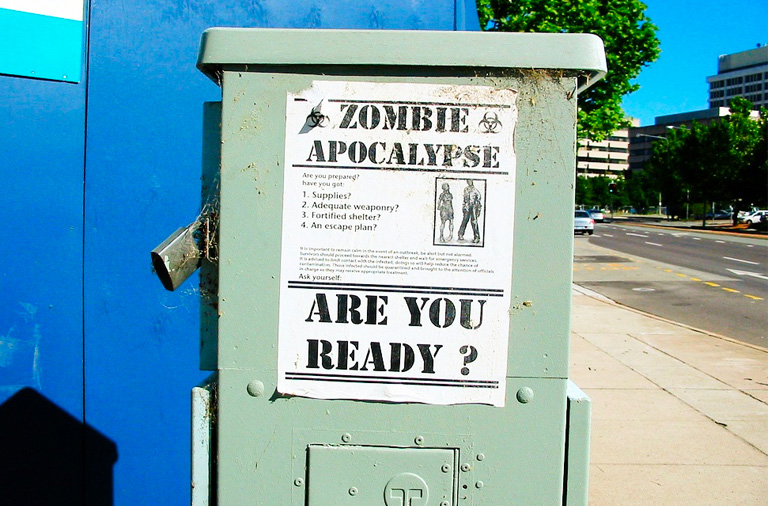
Apocalypse is upon us, at least in movies, television shows, books, and even podcasts. Teen characters in youth literature are more likely to solve their differences by bow-hunting one another rather than hugging it out in the school hallways. In this episode, Asher, Rob, and Jason search for reasons why the movie theater is so obsessed with Armageddon and the political theater offers empty promises of infinite progress, when the reality is likely to be somewhere in the messy middle. For listeners interested in culinary topics, this is your chance to explore cannibalism-lite cuisine.
Asher became the Executive Director of Post Carbon Institute in October 2008, after having served as the manager of our former Relocalization Network program. He’s worked in the nonprofit sector since 1996 in various capacities. Prior to joining Post Carbon Institute, Asher founded Climate Changers, an organization that inspires people to reduce their impact on the climate by focusing on simple and achievable actions anyone can take.
Tags: Crazy Town, cultural stories, popular culture
Related Articles
'SELECT SQL_CALC_FOUND_ROWS wp_posts.ID
FROM wp_posts LEFT JOIN wp_term_relationships ON (wp_posts.ID = wp_term_relationships.object_id)
WHERE 1=1 AND wp_posts.ID NOT IN (3476587) AND (
wp_term_relationships.term_taxonomy_id IN (5,46432,47210,47212,47214,47441,47503,47544)
) AND wp_posts.post_type = \'post\' AND ((wp_posts.post_status = \'publish\'))
GROUP BY wp_posts.ID
ORDER BY wp_posts.post_date DESC
LIMIT 0, 3'
By Vicki Robin, Coming of Aging
A thriving village is a collective creation. People, place, participation, creativity, and inclusion are the ingredients.
October 9, 2026
By Andy Bichlbaum, Waging Nonviolence
An Arizona community’s plan to reuse an invasive weed to construct low-income housing shows that when we can’t pressure the top, we can rebuild from the bottom.
October 7, 2026
By Asher Miller, Jason Bradford, Rob Dietz, Alex Leff, Resilience.org
What would it actually mean to live with less? Can we preserve the things we value most—health, human rights, cultural diversity, individual freedom—without preserving the system that created them?
October 7, 2026







Comments
We changed commenting systems on September 10, 2026 as part of a site-wide functionality and security upgrade. Your past comments have not disappeared, and you can still log in with your old Disqus account credentials if you wish. Contact us with any questions.