

How prepared are we to design and anchor a regenerative political economy on the other side of this surreal authoritarian nightmare? What’s already in place? Coherence that’s structurally baked in at the time of engineering will be the critical success factor. That said, how sustainable and scalable are the alternative models?
Further, how much and what kind of authentic agency do “we the people” have?
Do the American people have the collective courage to activate and use whatever agency we do have to vision, anchor, stabilize, and sustain a post-capitalist economic order? Or will we simply build back another “reformed” iteration of what we know is outworn but fear to release? Will we look for quick fixes that don’t drag us too far out of our comfort zones?
The Redesign: With what familiar materials are we working?
Elections focus attention and collective direction. American elections shape legislative parameters and put faces on targets for citizen ire. Yet, as has become obvious over the past 15 years, once our votes are cast, “the people’s representatives” seem to demonstrate zero accountability to the public and, at times, actively ignore the needs of their constituents. When the priorities of the average American differ from those of wealthy individuals or corporate campaign donors, the needs and interests of average citizens have “near-zero” impact on public policy.
Sustaining personal and partisan power, inertia once entrenched, corporate and wealthy donor interests, not the public interest, drive many elected officials.
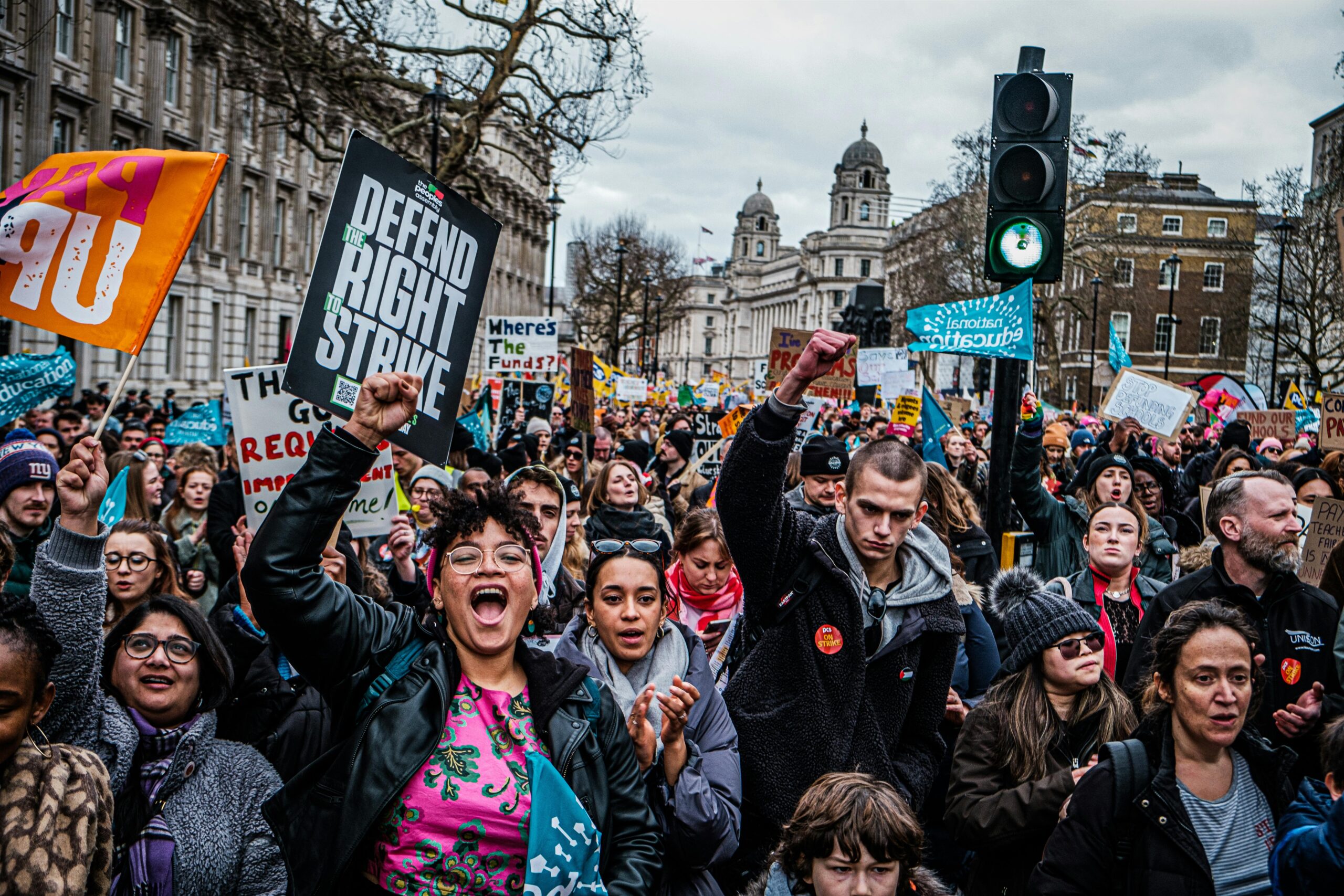
Disruptive civil disobedience does shift the Overton window for a time. It does eke out concessions from begrudging power brokers. At the very least, petitions, protests, demonstrations, and marches facilitate cathartic self-expression. They lighten the weight of despair and let some steam out of the pressure cooker of pent-up public frustration. They temporarily give us a sense of purpose and make us feel better and more useful. That’s an extremely valuable function in and of itself.
Yet, grassroots movements, even when influential and scalable, require sustainable containers anchored more deeply than conceptual change models, or they risk co-optation by corporate funders or dissipation.
What does the playing field look like? And, what is possible?
Let’s cut to the chase. Our quality of life boils down to who owns and controls economic activity. The structure, strength, and social determinants of the economy condition whether we thrive… or not. In sum, we’re bearing witness at the present moment to the impact of: financial deregulation, hideous income and taxation disparity, draconian social safety-net spending cuts, personal and national debt, feckless political representation, corporate and oligarchic domination, erosion of purchasing power and workers’ rights, etc. etc., etc.….. topped off by unhinged leadership.
What we’re dealing with now has been laid bare.
We know that the current political economy only works for a small portion of the population. In what direction will control and ownership of the US economy go in the years to come — corporations, the owning elites, workers, oligarchs, or community members?
Lean into emergent economic fractal design
Economies are people, not statistics and algorithmic predictions. That is, myriad interconnected subsystems of people with beliefs and expectations who go about meeting their needs, working, producing, and consuming. The economy we’re subject to isn’t an external entity that toys with our lives. The economic order is a direct reflection of how collectively aware we are of our total interdependence, or not. The core beliefs of both its architects and subjects bring it into being.
That’s a tremendous amount of creative responsibility we have in our hands, whether we’re conscious of it or not! As per Mandelbrot’s fractal principle of self-similar patterns repeating across scales in nature (and Indra’s Net, 2,500 years earlier), the consciousness of the individuals who comprise an economy is reflected in the economic framework they either create or enable — consciously or unconsciously.
Fractal patterning composes the entire organic fabric of the natural world. The same fractal patterning is interwoven, for better or for worse, in economies, interconnected subgroups of people (integral parts of nature) engaged in economic activity. Every part at every scale contains the whole. The structure of the macro-level framework is reflected in all of its micro-level parts. Separation is an artificial construct.
Our individual beliefs, household choices, and repeated economic behavior patterns reverberate throughout the aggregate and shape the framing of the economic system. As individual consciousness shifts at the micro level, so does the macroeconomic environment in which we live. As current systems crumble, those of us who prioritize human and planetary wellbeing would be wise to seize and actively shape the economic reconfiguration opportunity that’s poised to emerge.
At the micro level, a positive shift begins with conscious choices: how we spend, what we expect from our workplaces, how we treat one another, how we allow power brokers to treat us, and how much exploitation we are willing to tolerate or enable. This pattern — small groups working cooperatively, preserving their local coherence while remaining in constant communication with the larger system —repeats at every level. When we, the people who animate the economy, choose to share resources, collaborate, and care for our communities, we lay the groundwork for a regenerative economy that elevates the collective good and enhances quality of life.
Conversely, when corporations and much of the population are hyper-competitive, driven by greed and a need to dominate, this manifests as an exploitative, extractive system.
Broader sweeping forces – a radically new chapter
Amidst the noise and chaos, millions of people have already gotten the “we’re all interconnected ” memo and are finding the divisive “us vs. them, right vs. wrong” paradigm hollow. This new chapter opens to experientially reveal that interconnectedness necessarily means that if I hurt you, I also hurt myself in the process. We’re learning this the hard way as ICE agents continue to haul off our neighbors.
Granted, the expansion of human consciousness comes at the price of the uncomfortable, often tragic, shredding of reality as we’ve known it, taking a tremendous human toll. That’s happening now. We’re completely surrounded by the disintegrating rubble of our old institutional anchors. Feeling so untethered can be deeply unsettling.
Yet, when crises crescendo, rigid structures that haven’t served us for a long time crack and fall away. The most disruptive upheaval is inevitably the prelude to needed transformation.
For example, we’ve historically been enculturated to look outside of ourselves for the all-wise or charismatic leaders who have the answers and will show us the way. We’ve typically handed over our power to “representatives” of all stripes and hoped for the best. That’s changing.
The new chapter invites us to look within ourselves to find the leaders. We do have the wherewithal to dispense with rigid, hierarchical, top-down systems of power. We must design systems that authentically decentralize the distribution of authority and resources. Social, economic, and technological progress in the emergent chapter should serve the whole.
The timing bodes well, particularly for a radical rethinking of hierarchical economic structures. Americans now know firsthand where centralizing power in the hands of a few takes us! A door is opening, preferably not for reformist bandaids, stopgap measures, or tweaking around the edges, but for bold new configurations to emerge.
A new economic order cast in the role of the proverbial phoenix rising presupposes that the entire house of cards as we know it has been burnt to cinders and ash.
The solidarity economy
The global solidarity economy, an alternative operating system with ancient origins and emerging future capacity, is waiting in the wings. That evolving network of post-capitalist worker-driven coalitions has been in gestation — steadily simmering. Best case aspirational scenario, barring the inevitable virulent opposition, ushering in a solidarity economy would take time.
This is a crucible moment for new systems to be born. Do Americans have the courage to allow and facilitate the birth? For the majority of us, this means stepping into the unknown and living with uncertainty until new systems stabilize.
However, we collectively think a certain way, hold a set of beliefs for ages… until we don’t.
The Solidarity Economy will need to build much greater cross-movement coordination capacity. And yes, “People’s Movements” are classically threatened by corporate co-optation, funding dilution of purpose, burnout, etc. The temptation to “fix” the current system will also be seductive.
However, the greatest need of the hour is for the cultivation of our inner landscape, the canvas on which we design this new opus. This is the work that holds space for an enduring solidarity economy infrastructure to take root and expand.
Consider internal landscapes at two levels of the fractal pattern:
- A Cultural Perception Shift in how Americans view work, competition, collaboration, community, ownership, profit, and collective wellbeing, even as a Herculean/Amazonian restructuring of production gains traction and momentum.
- Changemaker Teams’ Internal Work: Scaling, stabilizing and sustaining a currently underfunded solidarity economy will require changemaker teams to go beyond cerebral “relational” organizational development work and do deep, authentic inner work. The new framework, grounded in cooperation, will require anchoring and coherence-building at an entirely different bandwidth. It will require those who collectively pick up the mantle to commit to deep personal transformation, which reverberates at every level of our fractal connectedness.
We are invited to align with the emerging vision and rise to the occasion.
A version of this was published on Pamela Boyce Simms’s Substack. Read the full piece here.





Comments
We changed commenting systems on September 10, 2026 as part of a site-wide functionality and security upgrade. Your past comments have not disappeared, and you can still log in with your old Disqus account credentials if you wish. Contact us with any questions.