


Click on the headline (link) for the full text.
Many more articles are available through the Energy Bulletin homepage
Wake Up, America. We’re Driving Toward Disaster
James Howard Kunstler, Washington Post
Everywhere I go these days, talking about the global energy predicament on the college lecture circuit or at environmental conferences, I hear an increasingly shrill cry for “solutions.” This is just another symptom of the delusional thinking that now grips the nation, especially among the educated and well-intentioned.
I say this because I detect in this strident plea the desperate wish to keep our “Happy Motoring” utopia running by means other than oil and its byproducts. But the truth is that no combination of solar, wind and nuclear power, ethanol, biodiesel, tar sands and used French-fry oil will allow us to power Wal-Mart, Disney World and the interstate highway system — or even a fraction of these things — in the future. We have to make other arrangements.
The public, and especially the mainstream media, misunderstands the “peak oil” story. It’s not about running out of oil. It’s about the instabilities that will shake the complex systems of daily life as soon as the global demand for oil exceeds the global supply.
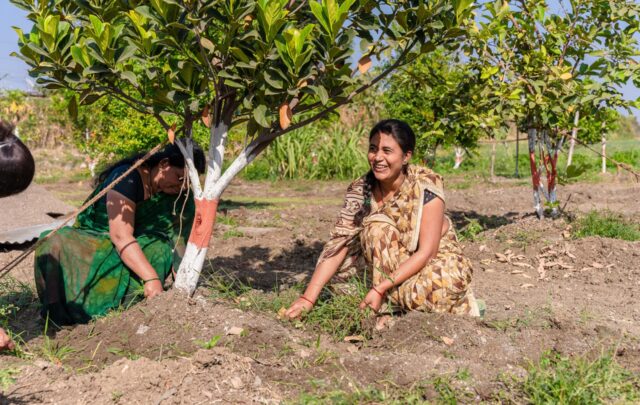
… So what are intelligent responses to our predicament? First, we’ll have to dramatically reorganize the everyday activities of American life. We’ll have to grow our food closer to home, in a manner that will require more human attention. In fact, agriculture needs to return to the center of economic life. We’ll have to restore local economic networks — the very networks that the big-box stores systematically destroyed — made of fine-grained layers of wholesalers, middlemen and retailers.
We’ll also have to occupy the landscape differently, in traditional towns, villages and small cities. Our giant metroplexes are not going to make it, and the successful places will be ones that encourage local farming.
(25 May 2008)
Running Out of Fuel, but Not Out of Ideas
Ben Stein, New York Times
… Gasoline is unimaginably important in our lives in the United States. Without gas in virtually limitless supply, and at prices we could afford, American life would change. We could no longer afford to live so far from one another and from our jobs. We could no longer afford to cruise in cars incomparably larger than those of our counterparts in Europe and Asia. In a way, we would stop being America as we know it.
Maybe this would be a good thing. After all, do we really need to have a 6,000-pound S.U.V. take a 100-pound high school student across town to buy a Diet Coke? Do we really need cars so big that they have flat-screen televisions for the children in the back? Do we really need to pour so much carbon dioxide into the atmosphere? And it’s certainly not great to belch out immense quanta of carbon monoxide, a deadly poison.
But we have become addicted to gasoline. (I, of course, include my own bad self.) Even if we all bought smaller cars, we would need gasoline and lots of it – although a great deal less than what we use now. And while I have previously said, and I believe, that we are in a temporary price bubble, the prognosis for gasoline is grim in the long run.
Long ago, when I was a thin 29-year-old, as the Arab oil embargo was creating gasoline lines in the United States, we imported a bit more than one-third of the oil we needed. As a junior speech writer for President Richard M. Nixon, I wrote what I think was the first comprehensive message to Congress about a national energy policy. My superb bosses, Dave Gergen and Ray Price, edited it. But as a nation, we did almost nothing to enact the many plans we had to make ourselves energy independent.
… what if we are close to peak oil – that point at which we have pumped out more than half the oil on the planet? What if supply slips and demand continues to skyrocket, as they are already doing, and these trends continue indefinitely? What if the world has a bitter fight over its remaining oil? Even if this battle is fought with money and not guns, we are at a disadvantage with our pitiful currency and our budget and trade deficits.
In my humble view, we are now in a short-term oil bubble. It will pass and correct, as bubbles do. And speculators will make millions, whichever way it goes. But the long run is terrifying. If we are at or past peak oil, if oil states stop or even hesitate to send us the juice, if Canada decides not to fill our needs, we are in overwhelming trouble.
… BUT most of all, we [need to] treat this as a true crisis. As my pal Glenn Beck, the conservative commentator, says, we need a new moon-shot mentality here. We need to turn coal into oil into gasoline, to use nuclear power wherever we can, and to brush aside the concerns of the beautiful people who live on coastal pastures (like me). And we need to drill on the continental shelf, even near where movie stars live. This must be done, on an emergency basis. If we keep acting as if the landscape were more important than human life, we will make ourselves the serfs of the oil producers and eventually reduce our country to poverty and anarchy.
Ben Stein is a lawyer, writer, actor and economist.
(25 May 2008)
Wikipedia says:
Benjamin Jeremy Stein (born November 25, 1944) is an American attorney, political figure, and entertainment personality who in his early career served as speechwriter for U.S. presidents Richard Nixon and Gerald Ford.
Welcome to another U.S. conservative who has come out of the closet on the peak oil. However, I think Stein’s fellow conservative Rep. Roscoe Bartlett has an approach that is better thought out.
Stein’s thinking is dominated by the desire to do whatever is possible to keep the party going, rather than prudently planning (as a conservative should) for a low-energy future. Without cheap fossil fuels, we will be more dependent than ever on ecosystems for food, water and materials. They are not just “landscapes” for movie starts and liberals.
-BA
Energy fears looming, new survivalists prepare
Samantha Gross, Associated Press
… Convinced the planet’s oil supply is dwindling and the world’s economies are heading for a crash, some people around the country are moving onto homesteads, learning to live off their land, conserving fuel and, in some cases, stocking up on guns they expect to use to defend themselves and their supplies from desperate crowds of people who didn’t prepare.
The exact number of people taking such steps is impossible to determine, but anecdotal evidence suggests that the movement has been gaining momentum in the last few years.
These energy survivalists are not leading some sort of green revolution meant to save the planet. Many of them believe it is too late for that, seeing signs in soaring fuel and food prices and a faltering U.S. economy, and are largely focused on saving themselves.
(24 May 2008)
Reporters new to the subject seem to latch on to the survivalist strain in peak oil. While numbers are hard to come by, the community-oriented approaches such as Transition Towns and Post Carbon Institute have numerous adherents and are better organized. They don’t make such dramatic newspaper copy though! -BA



Comments