


Click on the headline (link) for the full text.
Many more articles are available through the Energy Bulletin homepage
The Democrats Lag on Warming
Editorial, NY Times
When Americans elected a Democratic Congress last November, they were voting to end politics as usual and special interest legislation. On the vital issues of energy independence and global warming they are not only in danger of getting more of the same but also, unless Nancy Pelosi and other Democratic leaders step forward, winding up in worse shape than they were under the Republicans.
Exhibit A is a regressive bill drafted by John Dingell, chairman of the House Energy and Commerce Committee, and Rick Boucher, a Virginia Democrat. For starters, the bill would override the recent Supreme Court decision giving the Environmental Protection Agency authority to regulate greenhouse gas emissions from automobiles, a decision that even President Bush has reluctantly embraced. It would also effectively block efforts by California and 11 other states to regulate and reduce greenhouse gases from vehicles at a time when the states are far ahead of the federal government in dealing with climate change.
The bill’s fuel economy standards for cars and light trucks are weaker than the president’s proposals and weaker still than standards the National Academy of Sciences says can be met using off-the-shelf technology. And the bill would open the door to a new generation of coal-to-liquid fuel plants favored by the coal lobby that could double the global warming gases of conventional gasoline.
(10 June 2007)
Mexico taking a lead role in global warming fight
Oscar Avila, Chicago Tribune
As it does with other developing nations, the Kyoto Protocol leaves Mexico off the hook to curb greenhouse gases that contribute to global warming.
But Mexican leaders are starting to concede that they can no longer overlook that their nation contributes to the causes and suffers the pain of climate change.
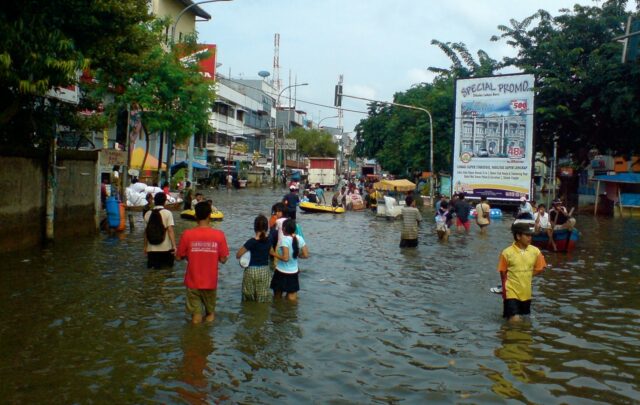
The belching factories and sea of auto traffic generate carbon emissions visible in the brown haze blanketing Mexico City. Meanwhile, officials worry that warmer temperatures have left Mexico vulnerable to natural disasters, such as landslides, droughts and more potent hurricanes.
Mexican President Felipe Calderon won international praise when he rolled out the country’s first national blueprint for reducing carbon emissions last month. For now, Mexico is avoiding tough tasks, such as confronting the powerful state-run energy sector, in favor of ideas such as planting trees in deforested areas.



Comments
We changed commenting systems on September 10, 2026 as part of a site-wide functionality and security upgrade. Your past comments have not disappeared, and you can still log in with your old Disqus account credentials if you wish. Contact us with any questions.