

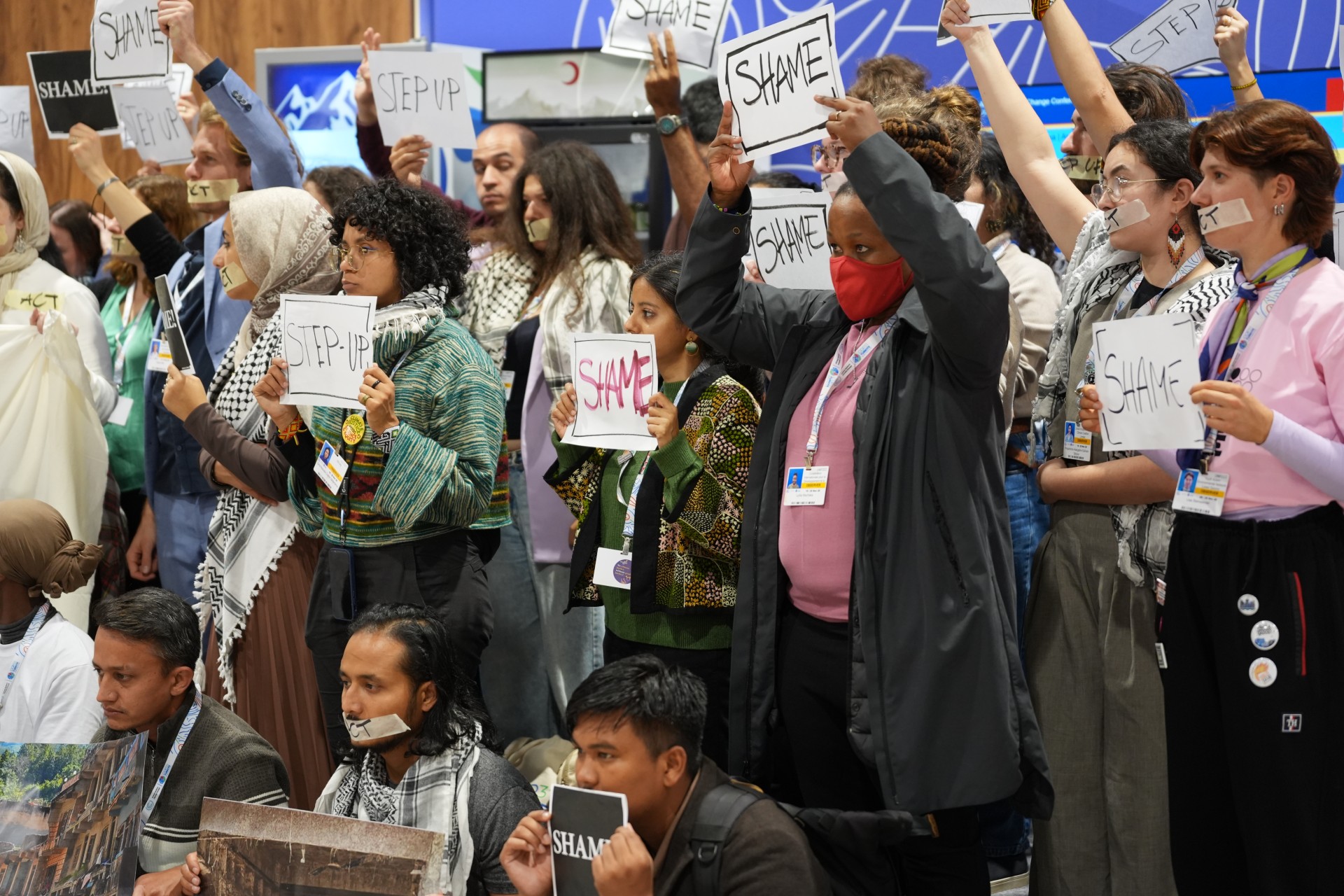
In a historic failure, the annual UN climate talks collapsed in Turkey, concluding without a joint statement. Yet, the real failure has been to dignify the ritual of UN COP summits with so much attention for so long.
Here in Britain, while media coverage focused on COP31, a climate development vastly more encouraging than any recent COP statement went largely underreported. In a parliamentary debate, MPs from across party lines reached a consensus that the BBC should televise a National Emergency Briefing, in which leading scientists detail how our livelihoods are threatened by the ongoing deterioration of climate and nature. A final decision may take months, but a concrete breakthrough seems possible. It would be more possible if the media were reporting on the debate.
Britain’s government would be the first to officially level with the public – sharing its understanding of the threat’s scale and actively seeking public support for doing more. This would reverse a policy of suppressing its own intelligence agencies’ disturbing findings. The best part: the parliamentary debate was forced because thousands of free screenings of a prototype film are being organised, resulting in hundreds of thousands of calls on MPs to back a national screening. It’s just one example of how, increasingly, climate-concerned citizens are forcing governments into action.
COP summits have always functioned chiefly as a symbol of hopes that governments will take climate action on their own. COP’s full name, Conference of the Parties, is accurate. It is more like a conference than it is like a government body with power to make world climate rules or enforce them. Some would dispute this characterisation because, if every country at COP agrees, it can set meaningful processes in motion. But imagine what type of government Britain would have if Parliament required unanimity and had no enforcement powers. Its record of action would resemble COP’s.
COP’s rules were set, essentially, in the 1992 Rio Earth Summit and in COP1 in 1995. The unanimity rule, unusual among UN bodies, was pushed for by oil producers, advised by fossil-fuel lobbyists, while George Bush the elder, an oilman turned politician, stipulated that its powers would not include binding targets – that it could not create penalties for breaking promises. You can judge whether they did a similar imagination exercise to the one we just did.
Political scientists have a term for institutions that have, rhetorically, a grand purpose but not, concretely, means of achieving it: ‘Symbolic policy’. This is common when great challenges meet broken politics. COP was engineered to be a symbol of humanity’s power, not a means to it. To make the world feel as though powerful people are handling the matter. While it occupies the centre of the climate calendar, it dominates the world majority’s impression of its own power to tackle a mounting catastrophe. Dignifying COP as the chief vehicle for humanity’s collective action has been a failure all along, because our sense of collective efficacy is all-important.
Concern has deepened quietly grown among worldwide majorities as governments have not acted, with 79 percent believing more of the same will lead to disaster. As our report argued last year, this breadth of opinion is hard to believe because it is not expressed – but people don’t like talking about problems they can do nothing about, and this silence feeds the impression that we can do nothing. COP is basically a symbol of majority impotence, based not on our levels of concern but on what we see and hear. It is a symbol of the power of vested interests to derail collective action, of the same dynamic that underlies inequality, forever wars, and unregulated AI. This week’s parliamentary debate, like growing electoral dissatisfaction, was a symbol of what happens when the majority speaks for itself.
Crowd reactions and local film screenings across Britain show how this majority will mobilise. People talk about food and water security, energy, and emergency preparedness issues. Here in Hastings, a follow-up to our local screening was devoted to these issues, and discussion buzzed around ten tables in a church basement for hours, with follow-ups scheduled. It ended with a reminder to implore our MP to support the national screening. That is what an emergency response looks like – after decades of COPs, climate chaos is here and increasing. The Climate Majority Project are working with Emergency Briefing organisers to help more such follow-ups happen across Britain after screenings. They will happen nationally if Parliamentary debate leads a national screening.
As another of our recent reports shows, local adaptation is not a distraction from worldwide carbon mitigation. It is a huge part of how a majority will organise itself into an engaged force that can force government action. Rather than watch hopefully as COP fails, we can drive new agreements.
The world’s most encouraging international climate story this year was an effort to do just that by 57 nations. A coalition of the willing has formed, which can create its own plan for replacing fossil fuels, pooling research efforts, and tying international trade status to environmental behaviour. Economists and political scientists have said for over a decade that such a structure would yield greater results. Many of the world’s poorest countries have joined because these discussions include realism about the need for different rules for countries based on the amount of damage they’ve done.
COP is a symbol of majority impotence, not power. Humanity’s attention should focus on the most credible ways to use our collective power to tackle climate chaos. Democratically driven efforts to tell the truth, increasing local organisation for adaptation, and thereby building organised support for newer more potent international climate agreements should be at the centre of climate news.
This piece has been edited for clarity. It previously appeared on the Climate Majority Project’s Substack.



Comments