

Jeremy Lent’s “Toward an Ecocivilization” is a thoughtful and timely contribution to one of the defining questions of our time: how humanity might cultivate a civilization capable of flourishing within the living systems of the Earth. Few would disagree with the need for societies grounded in ecological integrity, reciprocity, justice, democracy, and care. Rather than debating this compelling vision, I would like to ask what I believe is a prior question.
Every generation inherits assumptions that appear self-evident until the world itself changes.
How do we know when the context has changed sufficiently that inherited priorities—and the strategies derived from them—require fundamental reconsideration?
Every theory of societal transformation rests upon an implicit understanding of both context and human agency. It also rests upon an implicit hierarchy of priorities. As long as that understanding remains broadly adequate, inherited priorities retain their coherence and the strategies built upon them remain relevant. But when the operating conditions within which civilization exists change fundamentally, our first responsibility is not to defend inherited strategies. It is to reconsider the priorities from which those strategies emerge.
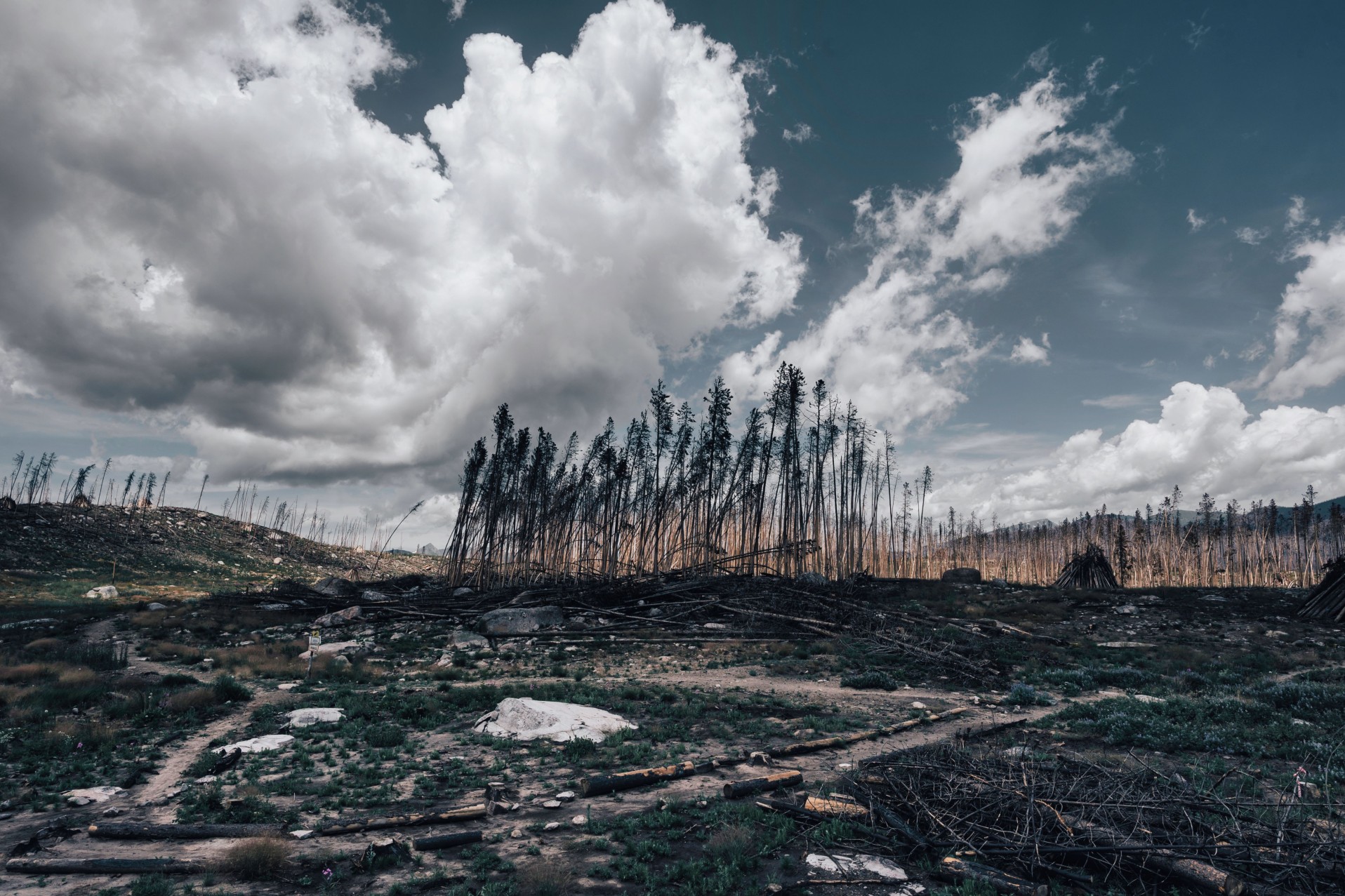
My argument is straightforward. The transgression of seven of the nine planetary boundaries that sustain life fundamentally changes the context within which all theories of societal transformation must now be evaluated. This is not simply another environmental indicator. It signals that humanity has moved beyond the relatively stable biophysical conditions that enabled civilization to emerge and flourish throughout the Holocene. The operating conditions that made civilization possible are progressively unravelling.
For more than two centuries, it was reasonable to assume that the principal constraints on human flourishing were political, economic, technological, and cultural. Human ingenuity repeatedly demonstrated an extraordinary capacity to solve problems through science, technological innovation, institutional reform, and democratic struggle. That confidence was not misplaced. It reflected a remarkable period in human history.
It did not, however, emerge in a vacuum. Beginning with coal, and accelerated dramatically by the discovery of oil in 1859, humanity gained access to unprecedented concentrations of fossil energy. The Industrial Revolution, and the extraordinary expansion of production, mobility, technological innovation, and economic growth that followed, appeared to confirm that human ingenuity could progressively overcome natural constraints. For two centuries, that assumption seemed increasingly justified.
Today, however, the context is fundamentally different. The same fossil-fuel civilization that dramatically expanded human agency has also driven the transgression of seven of the nine planetary boundaries that define humanity’s safe operating space. This is not simply an environmental consequence of industrial development. It challenges one of modernity’s deepest assumptions: that increasing knowledge, technology, and organization will always enable humanity to remain ahead of the consequences of its own success.
This observation also has implications for the energy transition itself. Renewable technologies are indispensable, yet they remain deeply embedded within fossil-fuel-intensive systems of extraction, manufacturing, transport, construction, and maintenance. The International Energy Agency continues to report that, despite remarkable growth in renewable capacity, humanity’s overall dependence on fossil fuels has changed far less than public discourse often assumes. The challenge before us is therefore not simply one of technological substitution. It is the reorganization of civilization within the biophysical limits of the living Earth.
This is why I increasingly describe our situation as a planetary predicament rather than a collection of problems. Problems invite solutions. Predicaments require adaptation, navigation, and continual learning. To describe our situation as a planetary predicament is neither an expression of fatalism nor a denial of human agency. It is a recognition that no timely macro-solution presently exists that is commensurate with the scale, speed, and interconnectedness of the disruptions now unfolding. Human agency has not disappeared. It has been fundamentally recontextualized.
The implications are profound. Much contemporary transition thinking, including some of my own earlier work, continues to assume that sufficient collective agency remains available to intentionally redirect civilization through political will, institutional innovation, and cultural change. The question I wish to raise is whether the transgression of planetary boundaries now requires us to reconsider that assumption.
Thinkers such as Vanessa Machado de Oliveira have challenged many of the epistemological assumptions inherited from modernity, particularly the expectation that uncertainty can ultimately be mastered through greater knowledge, better planning, or more sophisticated institutional design. Earth system science reinforces that invitation to humility from another direction. Together, they suggest that the defining challenge before us is no longer how to redesign civilization according to an idealized future, but how to cultivate the adaptive capacities required to navigate a planetary predicament whose outcomes remain profoundly uncertain.
The conversation therefore shifts. The defining question is no longer simply, What future do we wish to create? Rather, it becomes, What priorities are most likely to strengthen humanity’s capacity to navigate a planetary predicament without timely macro-solutions?
Strategies do not arise directly from changing conditions. They emerge from the priorities we establish in response to those conditions. When context changes fundamentally, priorities require reconsideration. Only then can strategy be recalibrated.
If our understanding of human agency changes, then our priorities necessarily change. If our priorities change, political economy must also change. A political economy organized primarily around the expansion of economic growth gives way to one organized around the enduring provisioning of basic human needs within the regenerative capacity of living systems.
This inevitably shifts the centre of gravity of governance. National governments and international cooperation remain indispensable, but their increasingly important role becomes enabling communities and their bioregions to strengthen adaptive capacity. The strategic task is to cultivate federated networks of communities capable of meeting basic needs while restoring and protecting the ecological systems upon which those needs ultimately depend.
The ecological foundations of this perspective deserve emphasis. The idea of “islands of coherence” did not emerge from organizational theory. It emerged from observing how life itself persists. Forests, watersheds, and mycelial networks create coherence not through centralized control but through countless relationships of reciprocity, diversity, and adaptation.
We are Nature. For me, this is not a metaphor. It is the deepest reality from which every other argument in this paper has been rooted. The deeper transition before us is not simply political or economic. It is civilizational. It requires loosening the grip of modernity’s assumptions upon our imagination and rediscovering how to participate within the web of life rather than imagining ourselves capable of standing outside it.
From this perspective, “islands of coherence” are not a blueprint for transforming civilization, nor another competing strategy for systemic change. They are a strategic frame for organizing priorities appropriate to a planetary predicament. Rooted in place, grounded in the ecological realities of bioregions, and connected through wider federations of learning, cooperation, and mutual support, they seek to strengthen humanity’s capacity to navigate profound uncertainty while protecting and regenerating the living systems upon which all future possibilities ultimately depend.
Jeremy Lent has invited us to imagine an ecocivilization. I welcome that invitation. My suggestion is simply that before debating the strategies capable of realizing such a future, we first reconsider the changing context within which those strategies must operate. The transgression of planetary boundaries requires us to rethink not only our strategies, but also our assumptions about human agency, our political economy, and the priorities from which our responses emerge.
Whether or not an ecological civilization ultimately emerges, our first responsibility is clear: to discern honestly the changing conditions within which civilization now exists and to align our priorities with the enduring requirements of the living Earth. From that work, whatever futures remain possible may emerge.
This piece was originally published by the Great Transition Initiative.



Comments