


Show notes
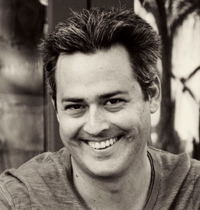
On July 19, 2026 the world lost a 5’11”, 150 pound giant of intellect and compassion… Richard Heinberg. Richard was a prolific writer, speaker, educator, musician, and a gentle soul – none of which applies to your Crazy Town hosts. Jason, Rob, and Asher gather in the studio for the first time since Richard’s passing to commiserate, reflect on his legacy, and talk about how to keep his work and ethos alive. There’s no way to replace Richard, but we can all aspire to be a little more like him and steer things toward kindness, intelligence, justice, and simple living.
Originally recorded on 10/1/26 with archival episodes.
Sources and links
- RichardHeinberg.com
- Asher’s post announcing the news
- Legacy page, with info on how to add live Celebration of Life to calendar
- EverLoved website, where listeners can read tributes and share their own
- Richard’s widow, Janet’s, GoFundMe
- Richard’s articles on what he learned from chickens, why the blues should be our national anthem; and fountain pen as bellweathers
- 300 Years of Fossil Fuels in 300 Seconds
- Richard’s free online course, Think Resilience
- Post-Carbon Music, Richard’s speech and musical performance at the New England Conservatory of Music
Credits
Production and editing by Alex Leff. Editorial assistance and transcripts by Taylor Antal.
Theme music is “Way Huge” and “Don’t Give Up” by Midnight Shipwrecks, used with permission.
Thanks to all the Crazy Townies, our listeners who are trying to understand humanity’s overshoot predicament and do something about it.
Transcript
Rob Dietz:
I'm Rob Dietz.


Jason Bradford:
I'm Jason Bradford.


Asher Miller:
And I'm Asher Miller. Welcome to Crazy Town where the people who should live forever are the ones who would never pursue it.


Rob Dietz:
On July 19th, 2026, the world lost a 5 foot, 11 inch, 150 pound giant of intellect and compassion, Richard Heinberg. Richard was a prolific writer, speaker, educator, musician, and a gentle soul, none of which applies to your Crazy Town hosts. Today we gather in the studio for the first time since Richard's passing to commiserate, reflect on his legacy, and talk about how to keep his work and ethos alive. There's no way to replace Richard, but we can all aspire to be a little more like him and steer things toward kindness, intelligence, justice, and simple living. Hey, Jason. Hey, Asher. Welcome back to the studio.


Asher Miller:
It's been a while.


Rob Dietz:
Yeah, we're reconvening after kind of a summer off.


Asher Miller:
Yeah. All of our failed extracurricular activities that we were doing.


Jason Bradford:
I know. It's rough. Although you had a good summer, Rob.


Rob Dietz:
I did have a good summer. And this should be a celebratory reunion, but it just isn't because we're here to talk about something really tough, really sad, somber. This is our first time being back together since our friend and colleague and kind of a leading light in our lives, Richard Heinberg passed away.


Asher Miller:
Yeah. Yeah. I appreciate that we're taking a little bit of time to talk about it in process together, even though it's been a couple months already, which feels kind of surreal, I've got to say. So for those who don't know, Richard passed away on July 19th. It was kind of a whirlwind, honestly. He complained of feeling sick a few weeks before. Two weeks before his passing, he actually got a diagnosis of pancreatic cancer. I learned about it a couple days after he was in the ER and got the diagnosis. And then within two weeks he was gone. So I know Rob, you were away at the time, but the rest of us were kind of... We went from hearing that Richard was sick to all of a sudden he was gone and it felt like a blink of an eye.


Rob Dietz:
Oh, it was absolutely nuts for me. I was out on the Pacific Crest Trail doing a long distance hike and it was our second day out and we happened to be on this ridge top camping and I could see Mount Shasta across the valley and the sun was setting. And for whatever reason, because we were up high, I had cell phone coverage and I got a note from you, Jason, saying Richard had passed away. I just crumpled. I couldn't believe it. I knew that he had been sick, like you said, Asher. I had learned about a week or so before setting out and figured I'd come back from the trip and see how his treatment plan was working out and instead just quick and done.


Asher Miller:
For those who don't know, and this was a new experience for me, I have to say, with pancreatic cancer, my understanding is it is one of the more brutal and rapid forms of cancer and the prognosis for people is usually not that great, unfortunately. So I think when I heard from Richard that he had cancer, he had pancreatic cancer, I tried to move pretty quickly to make plans to see him. We actually had planned as an organization to take a two week break starting in the beginning of August. And so I really want to make sure I got down to California to see Richard. I didn't want to take anything for granted. So I booked a flight. It was going to be a week after, or something like that, after we let the staff know. And then he was gone even before I got there. Which it was...


Jason Bradford:
You think you have at least time to go say goodbye and that was really, really kind of amazing about it too. That while we're just trying to process and then gather ourselves and have a way to say goodbye to him, there's not even time for that.


Rob Dietz:
Yeah. Yeah. I think our listeners probably understand Richard's worldview because the three of us all kind of restated and we're right there. But I wonder, Asher, for the people that didn't know him, if you could just share something about his bio and the things that he did professionally.


Asher Miller:
Yeah. So just so folks know, Richard was 75 when he passed away. He was born in the Midwest and I think he still had sort of, even though he left that world behind, I think he didn't enjoy going back to Missouri or any of that stuff. He still had that sort of gentility, I guess, if I would generalize kind of what people are like from the Midwest. He definitely, I think grew up kind of in the counterculture movement. He picked up the violin as a kid and it was a dedicated violinist his whole life. It was the other half of him. I think we all had experiences with Richard bringing his violin. Whenever we gathered, his violin would be there and when we would have breaks, Richard would go up to his room and play the violin and practice it or whatever. But when Richard left school, he went to college for a while, joined the counterculture scene, became a musician.
His wife Janet actually played some recordings that he made back from St. Joe in Missouri and played electric violin and guitar. He had long hair. Richard and I both enjoy the Grateful Dead. I would send him recordings, like anniversary recordings every once in a while. And then I think when he was like 21 or 22, he read the "Limits of Growth." So that was the year I was born. I was born in 1972. Richard was in his early 20s, read that when it came out and it really did change his worldview. I think from that moment on, he was kind of dedicated on this quest of how to live more sustainably himself and how to model living more sustainably. So he actually tried to start some kind of commune stuff when he was in Toronto. He wound up being involved in an intentional community. He later called it a benevolent cult and was very steeped in that world, got really into studying anthropology and spirituality.

The first books he ever published were on those topics. That's where he met his wife, Janet. He started when they left the emissaries, he actually started... He took on the role of being a writer. He was like a self-taught guy, became a writer, started speaking about things, and started his own newsletter around the first book that he published. People signed up for it. They would send him, I can't even remember what it was, 10 bucks a year. I can't remember. And he would print out this newsletter every month and send it to people. He started building mailing lists and getting a little bit of support that way.


Jason Bradford:
This is pre-email everybody, so this is actually folding stuff and putting in envelopes.


Asher Miller:
We're talking 1992 - ish or actually maybe even late 80s he started that.


Rob Dietz:
I don't know this, but if I had to guess, I would say he probably enjoyed that process and enjoyed hand writing these envelopes more so than all the automated stuff today.


Asher Miller:
Well, and he designed it. Richard was also an illustrator. He's a very creative guy. I don't know that people know that much about that side of him, but he was an illustrator. He did designs for lots of things, his books and such. Anyways, fast forward in the late '90s, I think he was at the airport of all places and he picked up a copy of Scientific American and in there was this article by Colin Campbell and Jean La Herrera, and it was basically about the end of cheap oil.


Jason Bradford:
That was the title, I think, of that article.


Asher Miller:
And it blew his mind. So Richard, like I said, Richard wrote... He read "Limits to Growth." He was steeped in that and it changed his life and imbibed a lot of the things that he was focused on for a long time. But I think that experience was the first time he really understood deeply how dependent we were on oil and other fossil fuels for the modern world. And if we were actually going to run into an issue of this depleting finite resource hitting the wall on some level, what were the implications of that? And in his way, Richard continued to be this person through the rest of his life, was sort of like - loved to learn. And then he loved to take what he learned and communicate that to people. So he just dove super deep into studying energy, studying fossil fuels, looking at depletion curves, got really into M. King Hubbard. And then he wrote his first book on the topic, "The Party's Over," which is probably his best known book. And that came out in 2003 and put him in this community that Post Carbon Institute actually came out of as well. And that's how the paths crossed, was Post Carbon Institute was started actually by husband and wife who were living in Canada. They came across Richard. I think Richard was one of the first board members, if not on the initial board of Post Carbon Institute. But then Richard went, he was writing these books, he would give talks, his newsletter, which he had started before he was focused on this topic, became sort of oriented and focused on this. And then he became an actual educator. He joined New College.


Jason Bradford:
Yeah. I'm always curious about how that came about. And I don't know much about it. I just knew he was there.


Asher Miller:
Well, New College opened a campus in Santa Rosa and Richard and Janet had moved there. I don't know the whole backstory of how he got involved, but he co-designed this entire curriculum that was really focused on teaching about sustainable communities. Again, this goes back to Richard's original focus throughout his professional life was that topic. And he was a real systems thinker, and though he became very known most for his work on peak oil, and then he wrote a book. He wrote "Power Down" and then he wrote "Peak Everything." He is known mostly for that stuff, but he really was a limits of growth guy. So he was at New College for a while, New College shut down, and then he joined Post Carbon Institute as a full-time fellow. We could talk about how we all crossed paths with Richard, but he was with PCI for the rest of his life.
So he joined at, I think, the end of 2007, early 2008, and he was our full-time fellow ever since. Wound up publishing 14 different books. He created an online course that we published that tens of thousands of people took. He was so adept at not only writing these very dense... I mean, probably the densest book was the last book he ever published, "Power," which was almost his theory of everything, I guess. Put all of these different threads together. And again, he was quite a polymath in the sense of studying anthropology and history and energy and human behavior, evolutionary biology, all this stuff. He put all that together, but he could write those books and then he could also narrate a script for a short animation and was really talented in that way.


Rob Dietz:
Well, you know how a lot of young people, if you ask them about their experiences in school, they can tell you their favorite teacher. They'll have this really fond, "That was my favorite." We still get a lot of that with Richard, people contacting us and even people who are like, "I was a student of his at New School and blah, blah, blah, and now I" . . . "changed my life and now I do this and that." I think he really fits that mold of a favorite teacher.


Jason Bradford:
I think because, it's like you're saying, when I read "The Party's Over," I was blown away because I was reading that at the same time I was reading other books. I was reading "Limits to Growth."I was reading Herman Daly books. I was reading Bill Reese books. I was reading William Catton. I was reading all these, but Richard was my favorite because just like you say, he was the best at pulling these things together, and that was what's so fascinating. And then the quality of his writing was up there, it was just as good as anybody. He had this breadth that was incredible and he had this clarity that got him audiences at the highest levels of power. I don't remember all these, but there's these stories about the presidents at Dog Tech, the books - These sort of things, European parliament people that... He was pulled into rooms of people that theoretically should be able to do something.


Rob Dietz:
And even in the popular media would gain headway. They'd call him in as an interviewee on, whatever, ABC as opposed to us in Jason's house from microphones that we set up for ourselves.


Jason Bradford:
But that was fascinating is that you both have this guy that you're realizing is inspiring you and is inspiring a whole bunch of grassroot activism and these young students, and he's writing in the Wall Street Journal and he's getting a lot of this other attention. Of course, not enough. And that was really frustrating, right?


Rob Dietz:
It is frustrating, but I want to stick for a minute on one of the things that amazes me about his ability to get those audiences. And it's him as a person. I don't know if I've ever met somebody who was so quiet, but also held so much gravitas. I mean, he would say to himself, "I'm a huge introvert." He didn't really ever want to... He wouldn't go that puff out his chest, speak louder than everyone else in the room because I got something to say and let me tell you something, even though he did have so much to say and wanted to share it like you were saying, Asher. And I felt like just personally, I always wanted to listen to this man. He could be talking in one breath about some synthesis of ideas that was like an "aha" for you, kind of what you're saying, Jason.
He did this better than everybody, pulling on these different threads. And then in the next sentence, he could be talking about music, he could be talking about the garden, he could be talking about chocolate or espresso, and I wanted to hear those. It was like you could tell from his being almost that he's got opinions that I'm going to value and he's got the intellect to pull together the facts in a way that I had never thought of before.


Asher Miller:
I think that Richard, his greatest qualities were also the things that probably limited his reach on some level because Richard wasn't driven by his ego and I don't think he was clamoring to be a figurehead, a public figure of any kind. So in situations like in gatherings and meetings with peers or whatever, he was often the quietest person in the room. He didn't feel like a need to command the space. I think he could have, if he was so inclined, could have married his ability to communicate complex topics in such clear ways with an ego presence, you know what I mean? But that's not who he was. And so I think that that limited a little bit his sort of broad reach.
I really saw this in the comments we received from people when we shared the news, and we did put up a website where people could share some of their memories and reflections of Richard, which we'll drop in the show notes if folks want to check it out. And something that seemed like really came across from people, even people who never met Richard, was they got his care. They got that gentility about him, even though a lot of what he wrote about was pretty dark and he would not pull his punches when he wrote it. Somehow that communicated. And so the people that did really come across Richard and get to know Richard, really loved him. They really got that sense of who he was and appreciated him for that humility. I'll give a couple of examples of that. One is, just in terms of the humility piece, Richard traveled around. I would say peak oil had its heyday in terms of public consciousness in 2006, 2007, 2008 timeframe.


Rob Dietz:
And this was the idea that it's not that oil's going to run out, it's that we're going to hit the time where we're extracting the peak of it. And from that point on, the economic volatility associated with extracting using burning oil is just going to throw things into kind of chaos until you do get to the actual depletion.


Asher Miller:
And that it would basically be the limit to growth and to the industrial system that we've created. We can have lots of conversations. We've done previous episodes on peak oil and we could have a conversation about lessons about how the peak oil community communicated and thought about the reality of peak oil, sometimes too alarmist. But my point is that Richard, in those years, Richard was in high demand and was traveling around and he did a tour of New Zealand and Australia and everywhere he went, because he dropped into this town in Ireland, Kinsale, where he met this young guy, Rob Hopkins, who was working with a community there to look at... Rob had been exposed to peak oil and climate change concerns and was trying to work with a group of students on how do we actually think about creating a plan for our community to basically wean ourselves off of fossil fuels?
And then he took that to Tatnes in England and that's what started the Transition Town movement. Richard came there, met Rob when he was just doing this stuff and he just loved what Rob was doing. And so Richard just spread the seeds of transition town ethos and thinking everywhere he went. It wasn't about pushing his own ideas, his own things. It was about, this is an amazing thing, I'm going to shine a light on it. The other thing is that when PCI made a pivot in the end of 2008, 2009 from being primarily a peak oil organization to being a limits to growth organization, we did that partly because Richard in his bones was a limits to growth guy and he knew so many people that had been working for so long. You talked about Bill Reese earlier, Jason, Stephanie Mills, Bill McKibben, David Orr.
I mean, I could go on and on and list names of people, Wes Jackson. It was his credibility with that group of people that allowed us to reach out to folks and invite them to be part of this new fellowship program that we're starting. We wound up having eventually like 30 different fellows, and our whole approach was getting people who were deeply steeped in one particular aspect of -


Jason Bradford:
Right, water.


Asher Miller:
Yeah, water issues, infrastructure, climate change or whatever. And we were only able to do that because Richard... It wasn't that Richard had this amazing, huge public presence. It was that Richard had been in a room with a lot of these people and they knew him for being the genuine guy that he was. And it was that that allowed us to... We didn't have to twist arms to get people to say, "Yeah, sure. I'll be a fellow with you guys."


Jason Bradford:
But what if Richard had had hair like a Stephen Pink or a Malcolm Gladwell?


Asher Miller:
That would've been incredible.


Rob Dietz:
I want to -


Asher Miller:
Would've helped me fundraise better.


Jason Bradford:
Yeah.


Rob Dietz:
I want to tag onto what you just said and share with you guys the first time I met Richard, because it's totally in line with what you're saying. The timeline you were talking about when PCI changed around 2008, that's when I met him. I met him actually October 6th, 2008. And the reason I know that is because it was at a conference and it was put together by the International Forum on Globalization.


Asher Miller:
Yeah, Jerry Mander.


Rob Dietz:
You guys know what that is. It sounds like a group that wants to take over the world. They were actually the anti-globalists. They were like, "We need to re-localize." And so the conference had a stunning array of people at it, and the timing was unbelievable. It was seriously two weeks -


Asher Miller:
Yeah, October 2008.


Rob Dietz:
It was two weeks after Lehman Brothers, the banking giant shut down. I'm sitting there at this conference and Richard Heinberg gets up to speak, and I'm kind of in awe of the guy. He's written all these books, and I though of Post Carbon Institute as a big brother to me that I really looked up to because I was running at the time the Center for the Advancement of the Steady State Economy, this tiny little nonprofit. And you guys were like, "Wow, look at all the people affiliated with them. Look, they got Richard Heinberg. He's written all this stuff." I seriously was aspiring to be a Post-Carbon institute. So he gives this talk about economic growth, of course, like you've been saying, Asher. More like the limits to economic growth. It was probably the start of him researching his book, "The End of Growth," which came out a few years later. I'm sitting in this room right next to Lisi Crawl, who she's one of the only chairs of an economics department in the entire United States who believes in ecological economics, right? She actually ended up being on the board of my organization, and Richard finishes his talk and asks if there are any questions. Lisi leans into me and quietly says, "Richard Heinberg is my favorite nerd in the entire world." I laughed and I thought, "Yeah, he is..." And she said this kind of like with reverence and I agree. I mean, he's a nerd. We're all nerds. And just the way he could synthesize the information, I think for her, it blew her away just like it does us.


Jason Bradford:
Yeah. Well, I'm going to try to top your story. I don't think I can. I can only top it by date. I think I first met Richard in 2005, but it wasn't as cool as that nerd commentary. But anyhow, I was pretty inspired by him to actually relocate to this rural town called Willits, California. I started essentially channeling him and giving some public talks. And like you said, there was these young people who will say, "Oh, Richard was my teacher at New College." So there were graduates at New College that would show up to these public talks, and it eventually turned into this organization called Willits Economic Localization. And in early 2005, we invited him to come to Willits and give a public talk at our city community center. And there were hundreds of people there. I mean, it filled the place. That was a real catalyst because you could see in one room in this small town, there were hundreds of people that essentially were like, "Yes, we understand what this guy is talking about. We care about this." So soon after that, I became this PCI fellow, and I've been in contact with him off and on ever since, eventually as a board member.


Asher Miller:
My first impression of Richard was actually at a distance. I remember I was living in Santa Rosa too, Santa Rosa, California, and I was running basically a youth leadership program at the volunteer center there. So I was working with a bunch of high school students. I remember just walking downtown. I think I may have just seen "An Inconvenient Truth," so this was 2006, and there were flyers pasted on all these posts around downtown with a picture of Richard on it. He was giving a talk locally. I didn't go to the talk. I just remember this impression that I got because for some reason, the way that Richard was cast... First of all, Richard was skinny his entire, I'm guessing, his entire life, but he was really skinny at that point. And the way that they kind of lit this poster up, it was really dark. I was looking at this guy give this catastrophic message. So I had this picture in my head before I ever met him.


Jason Bradford:
Emaciation or something?


Asher Miller:
No, I just had this picture in my head of Richard as being this really dark dude.


Jason Bradford:
Oh, interesting.


Asher Miller:
Just the way that they put this poster together. It was very ominous.


Rob Dietz:
Here comes the specter to tell you about the end of the world.


Asher Miller:
Yeah, right. Exactly. Long story short, I wound up quitting my job working on climate change issues. This was right after my first son Avi was born. I came across Post Carbon Institute, not because they were local, it was actually online, wound up applying for a job there later. So I joined PCI in March of 2008, and in taking on the job, I was not steeped in the peak oil kind of reality very much. I was coming much more from a climate perspective, and I was really drawn to the idea of re-localization. I wanted to be convinced about peak oil before I joined this organization. Julian and Celine, who were the founders who hired me, set up a call for me with Richard. I was just asking him, peppering him with questions. I was playing sort of devil's advocate stuff, and he was just the kindest, calmest, measured dude. I think on some level that was what convinced me to join PCI. The contrast of him as a person was that public persona in a sense was pretty stark.


Jason Bradford:
Yeah. Like Rob said earlier, he was never dramatic or holding court, and that demeanor was such an interesting contrast to the contents of his writing, which could really kind of rile you up a bit. Oh my gosh, these implications.


Asher Miller:
Yeah, but he didn't pull punches on those.


Jason Bradford:
Yeah. So maybe it's better he wasn't a Malcolm Gladwell with the hair and stuff or personality.


Rob Dietz:
The delivery -


Asher Miller:
If he was, he'd be president of the United States right now.


Rob Dietz:
The delivery was actually quite perfect for the severity of the messages he was delivering.


Jason Bradford:
We should try to actually calm our emotions down when dealing with this and be a little more rational and not think the end is nigh as much, but react sensibly, which is hard to do.


Asher Miller:
I think some of that was just Richard's disposition. He called himself a cheerful pessimist. He was generally happy in his life. He felt like... I know I had conversations with him about this. I've talked to Janet, his wife about this. He would've worked for no pay for the rest of his life. He thought he was the luckiest man on earth to be able to do the work that he did. He found joy in playing the violin, then later the piano when he couldn't play the violin anymore. I guess another story I'll just share about him really briefly, and this blew me away. It still blows me away. Richard was probably a violinist first and a writer second on some level. It was such a huge part of his identity and what he cared about and what he was passionate about, and it kept him, I think, really regulated. And then he got nerve damage. He got nerve damage in one finger, then he got nerve damage in the second finger, and that forced him to put down the violin. I was so worried when he shared that with me because I was like, "Oh my God, Richard's going to spin out. The violin is his way of staying sane. We need Richard sane. What are we going to do?"
Literally within a week, Richard was like, "I'm just learning the piano."


Jason Bradford:
It'd be like me transitioning to pickleball.


Asher Miller:
Right. Exactly. But he made that transition so smoothly. It honestly blew me away. It's a form of resilience. I think I would've gone into depression. I would've railed. I would've been pissed. And Richard just made that pivot.


Rob Dietz:
It's not like transitioning to another racket sport. It's like you transitioning to fishing or something.


Jason Bradford:
What do you mean? It's a musical instrument. We can argue about this. I think it'd be an easier transition to pickleball.


Rob Dietz:
I want to talk a little bit about my professional relationship with him and something that revealed some of his personality in that. Just before I get into how I worked with him at PCI, I did want to say with the writing, he loved writing. It was amazing. I wrote one book. It was probably the hardest thing I ever did.


Jason Bradford:
You were so wiped out.


Rob Dietz:
I remember coming to a talk. I came to a talk in 2013 that he was giving in Corvallis and it was serious. It was the day I had turned in my manuscript. It was like the final and I was like -


Jason Bradford:
He could barely walk.


Rob Dietz:
I got there and Richard, it was before - You were hosting the event, Jason. It was before it started and Richard was sitting there in the audience waiting for it to be introduced and the crowd is still coming in. I said, "Hey Richard, how do you do it, man? How do you write these books? I just turned in a manuscript. I am wiped out. I've got colitis. I can't digest food anymore." And he's like, "Oh, I love the writing process. I love the craft of it. I love researching the topics." I was like, "Okay. Okay. You're just a different species. Just do your thing."


Jason Bradford:
It's easier after your 14th book, Rob.


Rob Dietz:
So at PCI, I used to have the privilege of editing his articles and it was really a pretty easy duty because as you two know, it's not like he's going to turn something in that's in poor condition. Send it back. But one of the reasons I liked it is because we had such good rapport. I think we each respected what we were bringing to the table, even though I didn't have to do much with my editing. But for me, the main thing is I got to keep up with his knowledge on all these topics. It's like the perfect way to get paid for the learning. And his takes on issues like energy, environment, politics, and humanities, worsening overshoot crisis, and the synthesis of all that, that's what made him influential in the world. But my favorite articles by far were his more down to earth topics. So he had an article on his backyard chickens and the relationship that he had with those birds. He had another article on the blues and proposing the blues as that's what should be replacing the star spangled banner as the national anthem. That's a truly American music. And then the most unfamiliar subject, and maybe my favorite article of his, just from a get to know Richard standpoint, was his article on fountain pens.


Asher Miller:
Right. I love fountain pens.


Rob Dietz:
Pens. He was a collector of fountain pens. I think I might have accidentally given him the idea for writing the article because I don't know, who knows with his systems brain. But in one of our staff meetings, I complained about how my journals, my notebooks were just getting sloppy and they were just a mess and my handwriting was getting worse. And then he said, "Oh, you should try a fountain pen because of X, Y, Z, reusable and an old technology that still works. It's like bombproof." So I asked him, "Hey, what would you recommend I purchase as a fountain pen?" And he said some stuff in an email and he's like, "Now wait, let me look in my collection." And he finds a Parker 51, which is referenced in his article and just says, "Oh, I got an extra one," and sends it to me. And I still have that. It's right here in my backpack. I use Richard's fountain pen. I can't say it's helped my journaling much because I'm no Richard, but really just a funny, quirky thing. And of course it's a durable good that's reusable, matches his economic ethos.


Jason Bradford:
Yeah. That's great. Well, somebody needs to transcribe Wikipedia in fountain pens and scrolls on acid free, maybe flex and hemp fiber.


Asher Miller:
We keep them in cellars and bunkers around the world for when the internet fails us.


Jason Bradford:
Yes.


Asher Miller:
It's a good idea. Maybe I'll give a glimpse into the behind the scenes of PCI a little bit and working with Richard. And in keeping with humility, I'm going to talk about some of Richard's quirks and maybe limitations. And so talking about my relationship with him, one of the things I appreciated and do still appreciate about Richard the most was his openness to hearing from anybody. You talked about how he respected you, Rob. I'm sure he did respect you, but he never showed disrespect to anybody that I ever saw. And so if somebody had good feedback, he would take it. He was really open to it. And he showed that in a pretty remarkable way with me in the sense that we had a lot of back and forth behind the scenes where I'd throw ideas at him of articles to write. And I learned early on, I mean, I got a degree in creative writing.
I wanted to be a writer. My dream was to be a novelist. I went and the only thing I ever actually wrote was an autobiography of someone. It wasn't fiction. I learned pretty early on in my life that I did not have the disposition to be a writer.


Jason Bradford:
How did you write an autobiography of someone else? You were a ghostwriter?


Asher Miller:
Sorry. I ghost wrote it.


Jason Bradford:
Okay, got it.


Asher Miller:
Thank you for asking. I should have clarified that.


Jason Bradford:
Yeah..


Asher Miller:
I should have clarified that. I ghost wrote a book for a Holocaust survivor. In any case, I just learned and I had to come to accept that I was not. So I've occasionally written things for us, but it's hard work for me. I'm slow. I'm too in my head about it. And so I would often turn to Richard and be like, "Richard, what about doing something about this and this and this?" And I would be like, "Look, if you're not interested, don't do it." But he was always open to it. And then he would turn around and write something that was better than I could have ever written. And his willingness to do that, take ideas from other people. In fact, what he wrote were things that he was amplifying the ideas of others. He wrote "The Oil Depletion Protocol." It was not his idea, but he wrote a whole book around it to get a good idea out there.


Jason Bradford:
Can you imagine if you have a good idea and Richard Heinberg likes it and then he writes a book about it? You know how thrilled I would be?


Asher Miller:
Sure. He gave this talk at Schumacher Center on the need for 50 million farmers. And I know that that was conversations that he had with Sharon Astec, for example. And he's really great at that and willing to do it. And in our back and forth, I often found that I would try to kind of redirect him sometimes too, because Richard would get enthusiastic about his own things sometimes. Richard would sometimes jump to being too predictive about the future. And so I would often be like, change will to may in his articles.


Jason Bradford:
Those are the kind of edits you had to do.


Asher Miller:
Do you know what I mean?


Jason Bradford:
Yeah.


Asher Miller:
And I came to learn that it wasn't so much that Richard was just a doomer. I think, and I never had this conversation with him, but I think in his heart of hearts, he was actually kind of hoping for the music to stop. And that's where the energy came from saying, "This is going to happen. The end of growth is here." Do you know what I mean? And I think that part of the reason that he was convinced by that in terms of the immediacy of it is that he wanted, not that he wanted the end of growth and people to suffer economically, but because the more we continue with our foot on the pedal, the more biodiversity loss we have, the more people will eventually suffer, the further over the overhang will be - overshoot. So that was not a battle that we had, but a push and pull between us.


Jason Bradford:
Exactly. I have the same exact feelings and problems and it's such a conundrum to feel that way.


Asher Miller:
Yeah. And then the other thing is a funny story of - We had a colleague, Todd Brilliant, that we worked with doing creative communication stuff. And as a group, Richard narrated an animation that Todd led the production of called "300 Years of Fossil Fuels in 300 Seconds."


Jason Bradford:
A classic.


Asher Miller:
It's got two million views, whatever it is. Richard had this incredible way of, it wasn't exactly 300 seconds, a little bit more than that. And sometimes we get stupid commentaries.


Rob Dietz:
Oh, it's 304 seconds.


Asher Miller:
So stupid.


Rob Dietz:
Can you guys count?


Asher Miller:
But watch that animation. It's just an incredible historical arc that Richard was able to do and put in such succinct form. But we collaborated as a group on different things. We tried to work on a project, Todd, and Richard and I, basically when the economy was in a tailspin, the great recession was happening, and we wanted to do a satirical self-help book. And we were going to call it, "How to Be a Billionaire Without Even Trying." And what Richard ended up writing was basically the introductory chapter where he talked about the different chapters in the book. And one chapter - So the whole concept of how to be a billionaire was basically about hyperinflation.


Jason Bradford:
Right. Zimbabwe the economy.


Asher Miller:
Yeah. The money becomes worthless so you become a billionaire. Then he had another chapter that was going to be about deflation. He had one about famine, which was about a weight loss program. It's pretty dark humor. And then one was going to actually be about peak oil. It was going to be about maybe shortages of fossil fuels. And for me and Todd, the idea, the chapter was going to be, it was about how to pick up women with three simple words, "I've got gas." And Richard couldn't do it. That was too crass for Richard. So he wrote, "I've got fuel." And it was like, no, Richard. So Richard had a great sense of humor, but there's some limits. He just couldn't go. He couldn't be that juvenile like us. He could never be on Crazy Town with us.


Rob Dietz:
I mean, he would come here and be interviewed and he actually liked the show. He told us.


Jason Bradford:
He was actually a huge fan of the show.


Rob Dietz:
But he's not going to be telling poop jokes the way we are.


Jason Bradford:
No


Asher Miller:
Exactly.


Jason Bradford:
I know that in the past two months that one of the things that you really miss about him, Asher, is that ability to say, "Oh, I just read this article and can you please connect it to this, which is so obvious you make it easy." And like you say, you've got a little idea and you know that if he runs with it, it's going to be something great. And he was often like, "Oh yeah, thank you. That's a good idea Asher." He'd run with it. Wonderful.


Asher Miller:
I am going to so miss that collaboration with him. I'm going to so miss his smile, just his positive energy. We would get on staff calls all together and his little box in the Zoom, he had a smile on his face.


Jason Bradford:
Yeah. His glasses, his wire rim glasses.


Asher Miller:
Yeah. His warmth, I'm going to miss him so much. And it is one of those things where it's like you don't realize what you've lost in one big realization. It's in all of these little ways. And it's sad because I feel like the world needs benevolent truth tellers. That combination of truth telling, but not saber rattling and look at me, whatever energy.


Jason Bradford:
Not seeking power and status.


Asher Miller:
That's what we need more than anything right now. And Richard was so unique in that.


Rob Dietz:
That's a wonderful three word description of him, benevolent truth teller.


Asher Miller:
Yeah. We'll miss you, Richard.


Rob Dietz:
We're going to be right back with a few words about honoring Richard's legacy, keeping his life's work alive, and inviting you to join in a celebration of his life. But first we want to have a brief musical interlude. This is a recording of Richard performing Paganini's Sonata Concertada for guitar and violin at the New England Conservatory of Music in 2017.


Asher Miller:
Before we talk about how people can honor Richard's legacy, I just want to say that, so we played that music from that performance, Richard also gave a talk as part of that, and we'll drop the link in the show notes about Post-Carbon Music. And it's a wonderful illustration of all the breadth of what Richard brought in, weaving in music and the arts. This is at the New England Conservatory of Music. He's speaking to students who are looking to have careers playing music, and he weaves together all of these different threads and gives some really amazing life advice. I really encourage people to read the transcript.


Jason Bradford:
Let me guess, 80s synth does not make it.


Asher Miller:
It did not make it in there. No. But yeah, I guess I want to put out maybe three invitations to listeners. The first is there is a website that we have put up, a website called "Ever Loved," that we will link to in the show notes where we've invited people to leave reflections, memories of interactions with Richard. It's a really wonderful place to go to read the way that Richard touched a lot of lives and to share your own if you're so inclined. So that's one thing. The other thing I wanted to mention is that there will be a celebration of life for Richard coming up in just a few weeks. Interestingly, this recording is coming out on Richard's birthday, October 21st. On November 15th, there's going to be a celebration of life in Santa Rosa where Richard lived for a long time, but we will also be live streaming it.
And so at resilience.org, and again, we'll drop the link in the show notes, there's a place that you can go and add it to your calendar with a link to the live stream. It's going to be live streamed on YouTube if you want to be able to sit in and participate in that virtually. And then the last one I think is really just an invitation to, maybe you already had a sense of who Richard was or we've given you a glimpse of who he was, an invitation to try to think about what lessons you could bring with you, both from what Richard wrote about and talked about, but also I think the way that Richard lived. And so maybe we, the three of us could just share a little bit of what we would carry on in our own lives or we'll try to carry on in our own lives in honor of Richard and in his memory and as a continuation of everything that he believed in. But I'd like to encourage our listeners to do the same.


Rob Dietz:
Yeah. Yeah. I would love to do that. And I'd also like to add that on resilience.org, if you go straight to that landing page and you scroll to the bottom, one of the featured topics is Richard Heinberg's legacy. And there's a series of articles there that I still haven't gotten through all of them. This is kind of a sad process for me. I mean, it's bittersweet obviously because people are writing about the incredible things, but I just have to do it in chunks I think to deal. But for me, I have this weird life strategy. When I meet people that I have esteem for them, I sort of just try to copy them in a sense. So Jason, you seriously had a big impact on me of not being embarrassed to joke and tell the things that I've done that are embarrassing.


Asher Miller:
Is that why you walk around with your zipper down all the time?


Rob Dietz:
And Asher, you've gotten me to really be willing to look at the harder truths that we have to face. And I think you guys might not know this, I don't tell you these things all the time, but with Richard, I have this desire to act more like him in, just what I talked about, that quiet gravitas. I think it's funny being in this podcast space and being a person who's not embarrassed to reveal all the crap about myself, it makes me kind of more of like a ha ha clown loud mouth or something. And I think I'd prefer to kind of shift back more towards Richard's style. I mean, maybe this podcast isn't the space to do it, but that listening and really taking in before I have to give some hot take or say something that's, oh, people will remember that I said that. No, just trust in what you know, be humble about it, present it from a place of care. I want to deliver information because I care about the people I'm delivering it to.


Jason Bradford:
That's sort of what I am thinking about too. I've actually been giving some more public talks recently and I would say that my demeanor has shifted over time where when I know I'm talking to some general audience that may or may not be familiar with this, I'm very different than I am on Crazy Town. I think Crazy Town, I feel like this is the choir and we can joke about things and we can be a little outlandish and it's like we understand each other. We're a family and we've got these inside jokes or whatever. And that helps us process because we're further along in sort of maybe the grief. But I remember when I was first getting this information and how hard it was and how much I appreciated the style of Richard. So that is kind of what I try to emulate a bit when I'm talking to people for the first time is that calmness. is sort of taking it slow, not trying to overwhelm.
Obviously having people see me as someone who's just really normal and caring. I'm not coming at this anywhere, but from a place of love and caring. So how do you do this? How do you provide this perspective, this worldview to people in a way that doesn't completely shatter them if they're coming to it for the first time? And I feel that I think Richard was one of the best people at doing that even though because of how hard it is, you can't help but hurt people along the way.


Asher Miller:
I think he'd be really touched hearing that from both of you guys. I know he respected both of you a lot. For me, probably the hardest thing and the one I will try to keep in front of me very consciously is the way that Richard was able... We talk a lot about compartmentalization in a really negative way because we suffer from that I think individually and certainly collectively as a society to our detriment. We compartmentalize stuff. But Richard practiced, I don't know if I would call it compartmentalization, but self-care in a way. And he gave himself permission to do that. And I've struggled with that a lot in my life where I feel like I need to be dedicating myself more, push harder, work more because these issues are so important. And God, I remember when I was younger and I worked at the Show Foundation, I worked seven days a week. I probably worked, I don't know, 80 hours a week. And I never felt like I could stop because here I was trying to help document the stories of Holocaust survivors whose days were numbered. And I was like, "How could I complain? How could I take time off? How could do this, how could I do that?" And the issues that we work on are urgent and the consequences could not be any higher than they are. And so it's easy when you know what we know, the things that Richard has communicated to us and we have that fierce urgency to feel like we have to just constantly burn it at both ends to try to either wake people up or to prepare, to do whatever we do. And that is not the way to be sustainable. So Richard really practiced sustainability. The joy that he found in collecting fountain pens, a pretty innocuous hobby or habit. He did a little in the form of consumption, but he's buying used pens. Do you know what I mean?


Rob Dietz:
He did in his article mention kind of feeling a little guilty about having this collection.


Jason Bradford:
Yeah.


Asher Miller:
But pretty benign. Yeah.


Rob Dietz:
So Richard.


Asher Miller:
I mean, he took hours out every day to practice the violin. Later it was practicing the piano. He would give himself a little treat. He and Janet would walk downtown to get a little espresso in the afternoon. He really took some time out to enjoy life. And I want to do more of that and not feel guilty about it when I do it and know that what that's actually doing is sustaining me and bringing back that perspective of what we do this for. It's for life. It's for beauty.


Rob Dietz:
He's not here to say it, but I know he would say that he would be very happy if you would do that.


Asher Miller:
Yeah, I know. He cared about me.


Jason Bradford:
You can always come out here and weed, right?


Asher Miller:
I love weeding.


Jason Bradford:
Exactly.


Asher Miller:
Alright people, so that's the lesson for you. Go out and weed.


Rob Dietz:
Yeah. We miss you, Richard. Thank you for your life.


Melody Travers:
That's our show. Thanks for listening. If you like what you heard and you want others to consider these issues, then please share Crazy Town with your friends. Hit that share button in your podcast app or just tell them face to face. Maybe you can start some much needed conversations and do some things together to get us out of Crazy Town. Thanks again for listening and sharing.




Comments
We changed commenting systems on September 10, 2026 as part of a site-wide functionality and security upgrade. Your past comments have not disappeared, and you can still log in with your old Disqus account credentials if you wish. Contact us with any questions.