

Earlier this month, UK Prime Minister Keir Starmer wrote a full-length op-ed on national “resilience” for The Guardian. In it, he failed to name our number one resilience challenge: climate impacts. It is almost as if the Prime Minister is trying to send a message about the climate emergency without using the actual words. The climate crisis is, of course, a threat multiplier: it exacerbates existing threats, fuels global instability and strains systems and institutions to the point of potential overload, even raising the possibility of state collapse.
You probably already know this: things are very bad, and we don’t even know just how bad they are. 2024, for example, was the hottest year on record and will likely go down in history as the year the 1.5°C “safe zone” target for maximum human-caused global heating was exceeded. The previous year was almost as detrimental, and at the time of writing, experts warn that a super El Niño may develop this year. A growing number of climate scientists now expect the world to surpass even 2.5°C of overheating, or even 3°C, this century. Add to this the sudden onset of war (around the Persian Gulf) that has produced (as wars generally do) a new carbon pulse, while threatening to cut off oil and gas supplies to much of the world and, more severely, fertiliser supplies.
So, must we argue for a radical solution? Such as the rapid implementation of degrowth? Our argument is that we are past the point of needing to make this case. It is clear that conditions are already bad enough that, at a minimum, we must put a serious contingency plan in place. While we argue over the merits of green growth versus degrowth, or whether technological wildcards like AI or nuclear fusion (or geoengineering) really might be able to slingshot (or kill!) our decarbonisation efforts, the clock is running out.
The stark reality is that we are desperately underprepared for what is likely coming next. In our recent report, we argue that this new climate reality demands we rethink how we approach mass climate action.
A suppressed national security assessment carried out by the UK government confirms that the impacts of biodiversity collapse on security would be dire, driving widespread instability through mass migration, global competition for food and increasing the risk of conflict and war.
This assessment identifies the first of two key features of the present moment of crisis: that we must worry not just about worsening first-order shocks such as fires or floods, but also about how they will cascade through our social, political and economic systems to create even greater systemic disruption. The second feature is the looming presence of climate tipping points. Take the Atlantic Meridional Overturning Circulation (AMOC) or its sub-system, the Sub-Polar Gyre (SPG). If either were to collapse, the UK would paradoxically face significant cooling and probably a significantly drier climate too. Worryingly, some estimates put the chance of an SPG collapse this century at nearly 50/50, and each new tranche of research into AMOC weakening similarly finds that its collapse has likely been dangerously underestimated so far.
Under conditions like these, a strategy for mass climate action that focuses on “winning the debate” over sweeping systems change effectively leaves the future of our country and the planet to chance and dangerously kicks the can further down the road. As we detail in our report, We Need a Plan B: Engaging With the Realities of Catastrophic Climate Risk, a theory of change predicated on first convincing the population of the need for radical transformations, such as the abandonment of growth quickly enough to avoid catastrophe, is simply too much of a risk.
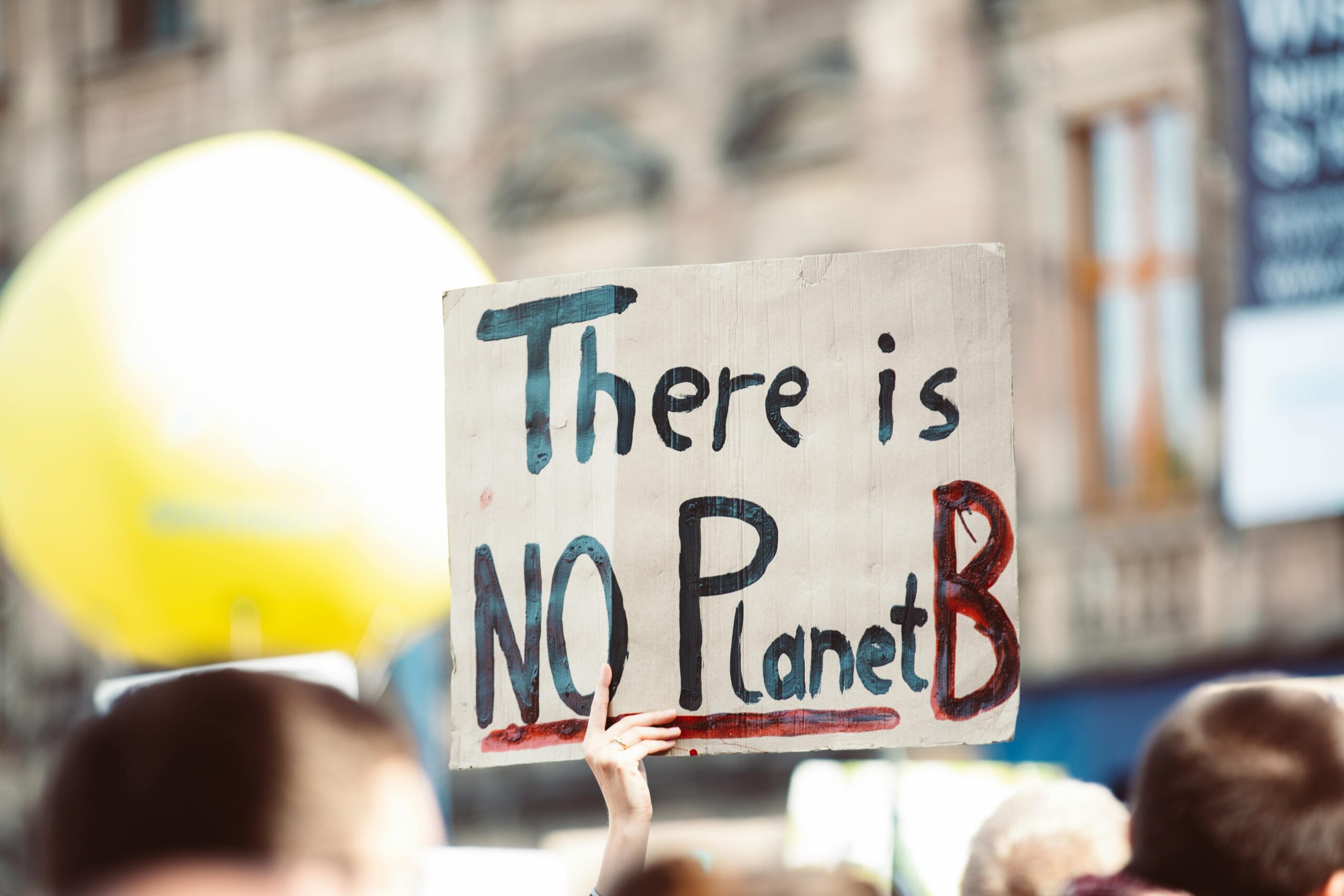
Instead, we need to consider a ‘Plan B’. This means moving away from endless intellectual debate toward, what the Climate Majority Project argue, is a strategy that centers on “reframing adaptation as a legitimate and foundational form of climate action.” In the report, we outline how shifting the focus to prudential preparation for worst-case scenarios, for example, can be a far less polarising framing that bridges ideological divides in ways other forms of climate action cannot.
Triggering highly motivating feelings of loss aversion and, in the face of a vast and uncertain systemic crisis, creating tangible pathways for practical action in the here and now can foster collective agency. Even better, evidence shows that a focus on action can itself spark and deepen beliefs and commitments, even if these weren’t strongly present at the outset.
A serious Plan B must encompass both broadly attractive actions, such as mass home insulation that will benefit us, however the future turns out (which we term ‘no regret’ actions) and those such as strategic stockpiling which specifically target avoidance of the very worst outcomes (which we term ‘precautionary actions’).
At the grassroots level, communities can begin building shared material and psychological foundations of resilience through activities such as collective risk auditing and mutual aid planning. However, given the scale of the risks we face, this must urgently be coupled with action from the central government. We need a comprehensive national resilience plan, which rigorously integrates scenario planning for worst-case outcomes and cascading global risks. This should encompass, among other things, a food and wider supply-chain security strategy that accounts for tipping points and geopolitical risks and prepares contingency measures. It should also ensure that essential national infrastructure, from the energy grid to transport, is stress-tested for resilience to both extreme heat and the underappreciated risk of extreme cold. National preparedness also demands that the government support public campaigns and a citizens’ adaptation toolkit to build practical and psychological resilience at the community level.
At a time like this, we cannot wait for a perfect global consensus on the complex and value-laden issues of systems change. However, and luckily, finding common ground in preparing for uncertain futures may well prove more unifying than continued argument about which future is most likely. Whatever one’s political affiliation, there is a shared interest in protecting ourselves should the worst occur.
We do not need to win the debate. We need to prepare.
You can read the full report here.
Dr. Rupert Read is Co-Director of the Climate Majority Project, co-editor of Deep Adaptation, and co-author of Transformative Adaptation.
Liam Kavanagh is a Cognitive & Social Scientist devoted to using his understanding of human motivation, ideology, and economics to aid more effective responses to the climate crisis. He has worked on three continents over the course of 20 years doing applied social research, co-founded Life Itself, a community for responding to the poly-crisis, and written a book on how Western ideology contributes to climate change inaction.




Comments
We changed commenting systems on September 10, 2026 as part of a site-wide functionality and security upgrade. Your past comments have not disappeared, and you can still log in with your old Disqus account credentials if you wish. Contact us with any questions.