

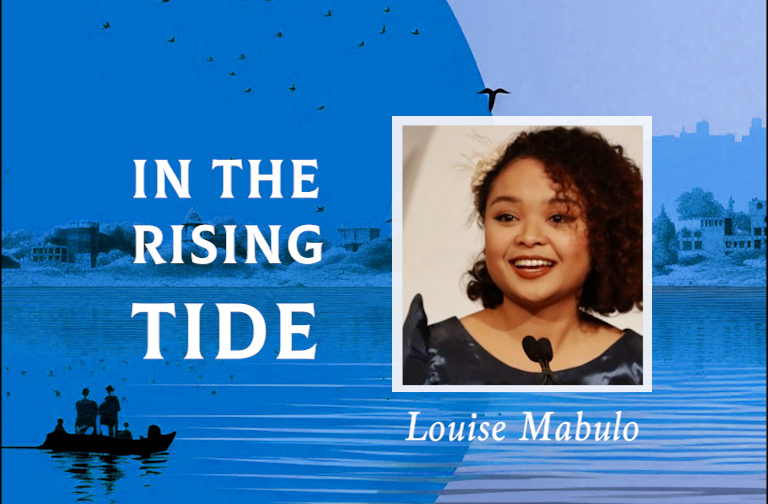
Show Notes
Our journey begins in the Philippines with farmer, chef, entrepreneur, and environmentalist Louise Mabulo. From her early start on MasterChef Junior to founding The Culinary Lounge and The Cacao Project, building regenerative food systems and supporting over 200 Filipino farmers in the wake of devastating typhoons. Louise works to reconnect people with the land—and the food they grow and eat.
Named a Young Champion of the Earth by the United Nations Environment Programme and one of the BBC’s 100 Most Inspiring Women of 2023, Louise embodies a powerful blend of tradition and innovation. In this conversation, we explore how she’s forging her own path—honoring her roots while creating new possibilities for her community and the future.
This series was made with support from a grant from Omega Resilience Awards, a project of the nonprofit Commonweal. Find out more at ORAwards.org
You can learn more from Louise here.
You can hear more from Alex at Human Nature Odyssey.
Please subscribe wherever you enjoy your podcasts and leave us a review.
Citations
In The Rising Tide is hosted and produced by Alex Leff, in collaboration with Resilience. This series is made with support from a grant from Omega Resilience Awards, a project of the nonprofit Commonweal. Find out more at ORAwards.org.
Transcript
Alex Leff (00:03.032)
This is quite the time to be alive. It's hard to hear about everything going on in the world and know what to do. The floods and fires, social, political, economic upheaval, a mental health crisis, and so much more. It's completely overwhelming and impossible for one person to which

can be a very isolating feeling. But ironically, feeling alone and overwhelmed by the world may be one of the most common human experiences on planet Earth right now. Because the interconnected unfolding crises of our time are happening everywhere. So we're in good company. It's time we come together, share stories,

and meet the unprecedented times we live in. Welcome to In the Rising Tide. I'm Alex Leff. Thank you for being here.

Alex Leff (01:14.86)
In this five part mini series from Resilience, in collaboration with the Omega Resilience Awards, we meet five individuals from Morocco, the Philippines, India, Chile, and Uganda. Each has responded to the challenges in their community in deeply creative and unique ways, from empowering local farmers and building resilient food systems, to using storytelling and narrative therapy.

to heal individuals and strengthen community bonds. These stories reveal different faces of what we can think of as a polycrisis, a meta crisis, whatever you want to call it. The interconnected unfolding crisis of our time that are the consequences of a system that's led us out of balance with each other, as well as the places we live. Together, these stories show that meaningful action takes place in the lands we live in.

how the best way to engage with the world begins at home and consider the ways we might bring our own gifts to our communities. Since this is our first episode, I'll tell you a little bit about myself. My name is Alex. I live by the Connecticut River in the Northeast United States with good friends and their children. We have a few backyard chickens.

and my friends like to make a delicious fermented pickle out of the invasive Japanese knotweed growing along the riverbanks. I'm a documentary filmmaker, immersive theater creator, and host of the podcast, Human Nature Odyssey. And as I came of age learning the trouble our world was in, I felt alone, like I was the only one who cared. But when I got older and left home, I found there were many of us who cared.

And I've been trying to spend more time with those people ever since. Which brings us to in the rising tide. Our journey today begins in the Philippines with farmer, chef, entrepreneur, and environmentalist, Mabua. She started her career at age 12 on Master Chef Junior and went on to found the culinary lounge, a farm to table kitchen studio, as well as the cacao project, an agroforestry business,

Alex Leff (03:35.246)
that works with 200 Filipino farmers to grow regenerative food landscapes and make a fair living after a devastating typhoon. The United Nations Environment Program named Luis a young champions of the earth. And the BBC chose her as one of the 100 most inspiring and influential women of the year 2023. What I most appreciate about Luis is how she's navigating the journey of her life, following her passions,

not afraid to go the unexpected route, honoring the traditions and wisdom her family raised her with and wedding them to innovative solutions and adaptations to a changing world. But you'll hear all about that soon. If you enjoy In the Rising Tide, make sure to follow us wherever you go for podcasts so you'll catch our other four episodes as well. This series was made with support from a grant from Omega Resilience Awards, a project of the nonprofit Commonweal.

and in association with resilience.org. Each episode will come out a week apart. Okay, here is the conversation between me, Luis, and you.

Alex Leff (04:53.708)
Well, I'm really excited to have this conversation with you and I've been really enjoying learning about your work and advocacy and the journey that you've been on ever since you were a little kid and the different twists and turns that it's taken you. I imagine where you are now isn't where you necessarily expected to be. I'm curious, like when you were a kid growing up, even before the MasterChef, which we'll get into, and you thought about your future, did you have a vision for

who you imagined yourself to be as an adult, what you'd be doing.

Louise Mabulo (05:25.974)
I definitely didn't expect to be working in this industry where I'm at now, or even on MasterChef. That was like an unexpected plot twist, but hey, I love food. And, you know, as a young kid, it was a dream to be able to play around in a kitchen and make as much of a mess and make experiments and have adults validate that for you.

Alex Leff (05:47.278)
Hmm. Also, I'm curious if you could take us back to a moment in your childhood that shaped your connection to the land and to nature. seems, I'm curious if it was food in the kitchen that first drew you in or if it was out on the farm with your family.

Louise Mabulo (06:05.568)
absolutely. think looking back, there was a lot of connection to nature with my family. I was homeschooled a lot as a child, so my teachers were my parents. And their idea of education is being hands-on. So if I was studying botany or any scientific fields, it didn't involve reading all of a textbook. It meant going outside, looking at plants, identifying them with this big textbook in my hand and seeing them and comparing those notes or...

getting a huge telescope and looking out at the stars. So I feel like a lot of my connection with nature was through that learning experience, that it was fundamental for me to understand the environment around me as a part of my education and as a part of growing up.

Alex Leff (06:51.576)
So you were born in the Philippines, but then you grew up in South Wales, right? And then you moved back to the Philippines at some point. How old were you when you moved back?

Louise Mabulo (07:02.136)
I would say around 10 years old when I moved back to the Philippines. So I was born here, grew up back and forth in the UK for most of my toddler years, and then stayed in South Wales for most of like primary school, and then moved back to the Philippines permanently.

Alex Leff (07:17.966)
Interesting, so when you were 10 moving to the Philippines, what did you notice from the 10 year old perspective? Like what differences stood out to you the most or similarities as well?

Louise Mabulo (07:28.962)
gosh, that's a really interesting story. when I first moved back to the Philippines, it was my first exposure to kind of the reality of the world, the disparity of, you know, living in the UK versus coming home to a rural place in the Philippines. At the time I moved to this town, there were no malls, there were no, like those types of infrastructure that you would think of a system of convenience. Everyone had agricultural livelihoods. Everyone was very well connected. Basically the community was like one big family.

And it was also my first exposure to what I would call true poverty, where I would watch kids walking up mountains to get to a school barefoot, and they'd have tattered clothes and everything. Whereas in the UK, I had school materials provided to me. had convenience all around me. Everything was just from a grocery store. I didn't have to worry about very basic things like transportation or where my food would come from. And so it gave me a

really grounded reality of the world and like that vision of it. But also my first exposure to what inequality was like, and also just generally it was a process of falling back in love with my own country. So a lot of these might have been perceived as negatives, but because I was 10 years old and I didn't really have a perception of what that was, being in the Philippines meant falling back in love with the culture, relearning what it meant to be Filipino, relearning that.

you know, to these communities. Well, to me at the time, it might've been perceived as poverty, but these communities, they don't see that. They find that they're actually very wealthy. They're very happy with their situation. so my perception of what was well-off and what was not so well-off, what was good and decent and convenient versus what was not convenient started shifting. And I feel like that was a very fundamental part to how I understood the world and society and

how those inequalities and those dynamics of global north, global south come to play as early as 10 years old out in the mountains in the Philippines, which I don't think is a lesson that many people get to learn just like that.

Alex Leff (09:37.728)
Well, it's interesting that your parents and your grandparents spent a lot of time on the farm and you were with them. What role did agriculture play in your childhood?

Louise Mabulo (09:48.926)
So my grandparents on my dad's side, which is part of the province where I live, they are farmers. They have been farming for years. They've played roles in community leadership and then most of their lives they were farming. So they were rice farmers, coconut farmers. They basically grew anything. My dad, was, he, he considers himself a lifetime farmer. His entire career revolved around peace and security. And he knew that fundamentally had a lot of

relation to justice. And that had a lot of relation to land and your relationship to how you grow food, how you interact with the communities who grow these ingredients and the farmers here. So even if he did different career paths, he still wants to farm. And even to this day, he just planted like, I think a thousand cocoa seedlings this morning. So he would always take me out. This morning. Oh my goodness. And it's incredible. He would take me out to fields.

Alex Leff (10:42.71)
That's not a suit line.

Louise Mabulo (10:47.074)
He would teach me very basic things. know, he would open fruits up and be like, this is where it's grown. This is what it smells like. This is what it tastes like. This is how it's processed. He would take me to my grandmother's house and show me how different foods are processed out of, for example, the rice that she grew herself or how cocoa tablets were made from the beans that she had on the tree. And he said, you things you're used to buying things off of a shelf in a grocery store, but here things take time. They take months and process.

They take care and love. So you need to understand that all of this is like effort, it's labor, it's love. It's not necessarily kind of that sense of convenience and then you have an item and then you waste it that you grew up with. And so that was a very big role and all of them, I mean, the fact that they were all in agriculture in the first place and understood that as a basic truth was necessary. And I'm grateful they passed it down to me because I feel like that's an aspect of

our food, our connection to the land that we tend to lose.

Alex Leff (11:48.258)
What do you feel like is gained by that more direct engagement?

Louise Mabulo (11:56.386)
I think it teaches you lessons that are difficult to say, are difficult to read off of a book or a textbook. I like to say that a lot of the problems in our world now is that we no longer snap beans with our grandmothers on our porch because it teaches you that, hey, know, not everything is as convenient. All of these things around us come with stored value, whether that's months of sunlight, air and water and soil, cultivation from someone's hands.

processing from someone who took the time to like braid these banana leaves together or coconut leaves to make something that's really valuable. And all of this is an alchemy. It's basically magic of turning items out of what is sunlight, air and water. And we tend to lose that value. And that experience in that story is something that you must feel yourself, going out in the field, feeling the breeze, feeling that wind rustling through the leaves and the trees, being able to pick a fruit off of a tree yourself and taste it.

and process it, it's a very hands-on experience. And we've separated ourselves from it. Our food systems now are so, they're like the disparity between consumers and producers are huge that we don't even know what some food looks like outside of packaging anymore. Like chocolate, we don't know what it looks like outside of packaging, but it's actually this bean. It's like a really like weird looking tropical fruit that tastes nothing like chocolate when you pick it up off of a tree.

Alex Leff (13:10.773)
Right.

Louise Mabulo (13:24.886)
So that gap exists just because we do not connect with the nature where it comes from. And our entire food system and a lot of the things from the clothes on our back to the food that we eat to even like the technology in our palms, we don't see the source. We don't know where it comes from. It's shipped to us from somewhere else. It's processed elsewhere. And so we lose the care and the value behind the materials that go into it.

Alex Leff (13:50.838)
Right, there's this connection to the land and it sounds like what helped instill that in you was also this intergenerational connection to the fact that your grandparents had been doing this, your father had been doing this, and they were able to directly facilitate that connection. I'm curious, I've heard you talk about this before, I'd love to hear about some of the lessons that they taught you about farming.

and agriculture itself and some of the ones that maybe struck you at first as a bit odd or unexpected.

Louise Mabulo (14:23.414)
for sure. A lot of the agriculture and farming practices here are fundamentally intuitive. It's just people know things for a fact because it's passed down to them by their grandparents or their uncles. And you know, the older you get, for some reason, your stories, no matter how much sense they make, they just become, it's your crazy uncle stories or your grandmother's myths and wild assumptions and beliefs are about the land. So one of them is

whistling for wind. My grandfather, when he would... Yes, so my grandfather, would... This is so funny. If you go to the Philippines, people, all of us think this is totally normal. But then when I was overseas and then came home, I thought, huh, that's like wind bending. My grandfather would get rice and he would sift through it. And if it's a dry day, he would whistle a certain tone. And I wish I could whistle for you right now, but I never learned how to.

Alex Leff (14:56.376)
Sailing for wind.

Louise Mabulo (15:21.722)
And it's a very specific tone where when like a light breeze always seemed to come and it was like magic. There should be a sunny day on a dry field on a rice farm. And then out of nowhere, he would just whistle and through that tone, suddenly a breeze would come and this is consistent. And then there is also my grandmother, she believes in lunar planting.

So she says, if you plant during a full moon or when the moon is going towards that full moon, you're likely to have more harvests versus going towards a new moon. And I thought, that's kind of weird. Like how would the lunar cycles impact fruits? my grandfather, he would always come to my house with these giant purple yams. And I'd be like, how do you get them to that size? And he would say, you plant a rock underneath it. And I said, huh.

a rock, does it function like fertilizer? Is there some mineralization process there? And he said, I don't know, but I just know that whenever you plant a rock under these yams, they turn out this huge size. So those were some of the weird like myths that they told me. I mean, obviously there's the ones that we know more, like are more mainstream, like talk to your plants, sing to them, tend to them, or your footsteps are fertilizer. But all of these turned out to have some scientific backing.

So the rock under the yams, because of that kind cool rock structure it preserved more moisture underneath the yams and so worms would be attracted to that cool rock and then they would have vermicast and that would fertilize it well. And then there is the lunar cycles, which turned out to be tied to insect pollination cycle. So I guess the reason why they're noticing more fruits coming out during a full moon is because insect activity is much higher.

For cocoa alone, for example, one of the pollinators for cocoa are mosquitoes. And mosquitoes' activities are much higher during full moon. And this doesn't have any scientific articles around it online unless it's for healthcare. So when they talk about malaria and dengue, they say during full moon it's the most high risk because those mosquitoes are more active at that point in time. And I was like, so all of the research does back it. It's just all in healthcare.

Louise Mabulo (17:44.278)
and other journals that talk about them as disease rather than pollinators. And then the whistling for wind, I still do not know. People tell me it might be sound waves or something or some ancient magic in our bloodline. But if I figure out the answer, I will finally tell you.

Alex Leff (18:02.114)
Please do. Well, it's so interesting because I imagine that these traditions that your family was passing down, you know, extend far into the past and were developed through trial and error to the point where people didn't need to know the exact scientific reason, the steps of why they worked, but they were tried and tested and knew that they worked. And for you, having grown up in a different place and then coming back into that community, you were able to kind of see it.

from this outsider's perspective. And so you were able to kind of question this stood out to you as something that was a bit odd. And did you find yourself at that age interested in the farming side of things or was it first what really drew you to this was the being in the kitchen and cooking and that aspect of things? What was your first passion with that?

Louise Mabulo (18:59.096)
know, Alex, it's like the chicken and the egg story. could not tell. I just love being out in the field with my grandparents, but I also love cooking everything that they brought me. So if there was purple yams, I would turn them into desserts. And then I would start asking questions. I'd be like, why are these yams so huge? Why is it that this is what you're giving me this season? Or why are you planting this? When can I get that favorite dish of mine that I really love of yours? When does it grow well so that I could know when to request it from your house?

so I think a little bit of it came all together and you know, the weird thing is the love of all of these aspects was just thanks to that intergenerational kind of storytelling. I put more value in the food that I cooked because they told me the story of how it was grown and what was going on behind it. And all these crazy stories played a role in it. So my outsider's perspective made me question it because otherwise everyone here would just say, that's normal. We don't even talk about it. We won't even mention.

that that's a thing because we just pass that on to our kids and take that as baseline. So I don't know. think that value and love that I had for it was just how eccentric and quirky it was from my point of view. I grew up with like a Western education. So hearing these things, I'm like, it makes no scientific sense, but I will trust you grandma. I'm guessing it's just, you know, generations of your peer review and how, who am I to say no to grandmother who's always right.

Alex Leff (20:26.432)
Yeah, there you go. And I imagine that for lots of chefs, but I'm curious, you've met far more chefs than I have. It seems like many people don't have that same kind of like from farm to table, from farm to kitchen connection. There's so many people that receive the food and cook these incredible concoctions, but it seems rare that for you to actually be there in the field, watch it growing and have that very food that you.

held as seeds in your hand then turn into something that's in the kitchen. What's your experience with that and did you feel like that was unique to yourself becoming a young chef?

Louise Mabulo (21:04.718)
I feel like at first it was when I first joined the culinary movement almost, oh my goodness, 15 years ago today. Wow. Well, some almost around this time.

Alex Leff (21:15.31)
Okay, okay, okay. thought this was an exciting anniversary. We accidentally stumbled.

Louise Mabulo (21:21.154)
Very close to actually, it was around summer that I started doing culinary. Very close to the actual date, but we'll say it's 15 years ago today. But when I first joined the movement, farm to table wasn't a very big deal. It was a whole new concept. And slowly as I grew up in culinary, I was doing my trainings and discipleships. Slowly people were doing farm to table.

Alex Leff (21:28.472)
We'll pretend, we'll

Louise Mabulo (21:48.584)
And it was initially sourcing it from a nearby local farm and then making it farm to table. And then people were starting to do like a farm to table where there was a garden near the restaurant or an urban farm where they sourced everything from. So when I first did MasterChef, I loved to do fusion cuisine because I wanted to find a way to integrate a lot of local ingredients and highlight it on television and say, these are the ingredients from my region. And I think that's really special.

And I was 12 years old coming up with this. But as I got into the professional culinary industry, I was training with chefs that were three, four times my age. And all of these guys were sourcing ingredients from different places. And I'm like, hey, how about we try to source from these new farmers that have these interesting ingredients that wouldn't be on a typical menu that you would find in the city. So we started doing that. And then I started noticing patterns in how

know, producers and suppliers were giving things. Sometimes there would be less supply of something. Sometimes the weather would impact like the continuity and consistency of our supply of food. So I thought, let me get more involved in the growing aspect. I want to talk to these suppliers more, get to know the aunties, the grandmas, the uncles who are behind these ingredients. And so I felt like that was my edge because then I could have a personal connection with where those ingredients came from. And that allowed me to curate dinners that

told the story behind people's plates.

Alex Leff (23:16.558)
Yeah, okay, well so I'm very curious. How the heck did you get onto MasterChef Jr.?

Louise Mabulo (23:23.246)
That's so funny. It is a crazy story looking back. I was like a little kid in the UK watching Nigella on television thinking I could absolutely do that. So I went to the, when I moved to the Philippines, my mom would post pictures on Facebook of all of the dishes that I would recreate from television. And she's just a proud mom and I was just a kid. So it's like, look at her little hobby. That's adorable. And then one day she gets a call from

a friend of a friend of a friend. And they said, by the way, we saw that your daughter like posts food on Facebook, like Facebook, we saw your post about her food. Would she be interested in auditioning for something? The auditions end today, by the way, at 3 p.m. And it was like, I don't know, two o'clock and the city is like a 30 minute drive away from where I lived. And they're like, would you be willing to just show up? And I said, yeah, yeah, like why not? You know, what are the chances?

show up, I do an interview and an audition and I make pancakes on the spot to prove that I can actually cook and handle an open fire at the age of 12. And that was MasterChef Junior and I didn't realize it until I was finally shortlisted.

Alex Leff (24:37.351)
No way, what what who was more excited you as your mom?

Louise Mabulo (24:41.546)
me, definitely. My mom was probably like, no, what did she get into? And I was like, let's go for this. What a dream. I've been, two weeks before that audition, I was watching MasterChef and I said to my mom, mark my words. I will be on that show. And it happened.

Alex Leff (24:58.232)
Wow, wow. So what was that like? This was a year of your life that you were involved in that and what did you learn from that experience? How do you think that that kind of changed your sense of self and expectations for what you could do in the world?

Louise Mabulo (25:16.782)
mean, that show was fundamental. It was a big stepping stone into my culinary career initially. Yeah. Like I knew it would be televised, but it didn't occur to me that this would be a whole production. I just thought, oh, it's going to be fun and games in a kitchen cooking. And so that taught me the challenges of, well, a reality show competition, all those challenges that come with it and the lessons that you learn. Also navigating being on television, in media as a teenager. And then,

making something out of it that was meaningful because I thought, okay, now I'm a reality show kid on TV. How do I move forward with that? How do I transform that into something else? I thought at the time, a career, like a culinary career, let's go for that. I'm gonna become a Michelin-starred chef. Amazing. So at 12, I began a discipleship. I worked under some of the best chefs in the industry that would take me in. And then I realized, you know, I don't want to just

be a chef, I don't want to just be a person in the back and cooking all the time and hosting these dinners. I wanted to have a mission that is far more meaningful because I have a platform. How do I use it and how do I transform it into something that helps more people beyond me? So all these lessons that I learned, I think by 16 years old already, was so useful and it helped me shape my career trajectory.

Alex Leff (26:39.534)
Interesting. So by the time you're a teenager, you've already developed this connection to the land through your family, as well as this incredible expertise as a chef. I'm curious, you know, I think something a lot of us share. I certainly have my own moment of this caring about nature and the land as a kid. At a certain point, you first become aware that the world is in trouble.

Things are actually not going so well and that our relationship with the natural world is out of balance. Was there a moment for you where that first hit you that you first experienced that the crises that the world, the natural world, the human world was facing was actually quite serious.

Louise Mabulo (27:28.696)
for sure, it was a mounting realization. So first, when I was working in kitchens, it was wondering why is the food supply shifting and changing? Why are we running out of suppliers for ingredients, which is very weird. And I started growing my own food and it made me come to realize just how huge of a risk farming is and growing food is in general. And then over time, once I was farming and growing these ingredients and living in the communities that grew it, I realized

a lot of young people don't want to farm because it's not a lucrative industry and it's a very risky industry. Why is it a risky industry? And then I realized it the hard way. was December of 2016 on Christmas day. My town was hit by a super typhoon. And at that time I was running a by reservation restaurant lounge situation where I was sourcing all of my food from local farmers. I was, you know, hosting pop-up dinners.

And that typhoon meant in a single overnight disaster, 80 % of agricultural land was destroyed, which meant that farmers who were growing these ingredients for months would lose their livelihood. They lost most of their earnings for that part of the year. But it also meant that we had no food unless it was just the stock ply of supply we had before, but it wasn't enough. so.

I sat down with the farmers and I said, so what happens now? And they said, well, it's going to be a really rocky next six months. It could even last up to five years for some of the coconut farmers because for coconuts to regenerate takes much longer. And I said, what does this mean for you? They said, well, it means that, you know, we wouldn't have an income. We would have to find alternative sources of income. It will be really hard to send our kids to school because of this. And maybe we'll just have to cut down all of the...

coconut trees on our land and sell that as lumber that would give them some money for a little while. But then it would also mean they're destroying their livelihood of coconut farming. For the rice farmers, they're like, we're going to have to replant everything, but we can't do it now because the weather is unstable. It's going to be another few months before we can actually get earnings from the rice. And so it was these mounting conversations around the risks of that they would have to take on because of this.

Louise Mabulo (29:53.544)
one super typhoon. And I don't know, that was like a slap in the face. I realized that some of the people we rely on the most for food, for well-being, even for just nature services, like keeping these forests up in place, are the most vulnerable people to climate disasters. And that changed everything for me.

Alex Leff (30:13.696)
Hmm. I'm curious too, if you could take us to the night of the typhoon and what your personal experience with it was. Like what impacts did you see? What stories did you hear about the immediate people around you? What was it like to be so close to that devastation firsthand?

Louise Mabulo (30:31.222)
It was terrifying. It was my first experience as well with a super typhoon. We'd experienced typhoons now and again, but not to that scale. And frankly, that typhoon was just the beginning. Ever since then, we've experienced countless typhoons of worse intensity. But that first one, you can hear, I used to say it sounded like dementors. You could hear the sound of like a high screaming, whistling noise. And that is the wind. And my doors in the house would be...

like almost threatening to blow themselves in just because of the intensity of those winds. It's like almost 200 kilometer per hour winds that are going through and the rain is terrible. So it would seep through the windows or any crevice or crack in any door through the house. And that water would also seep through the ceiling and it would leak onto your second floor. So your second floor would be flooded before the first floor because of the velocity of how

fast and how strong the water is coming. It's basically waves of water splashing against your house. And it's just like, it feels like an eternal darkness. You don't know when the sun will come out again. And when you think it's calm, it just calms down out of nowhere. It all stops. And then it resumes again in the other direction and hours of that onslaught. And once it's over,

I don't know, we usually lose electricity, we lose access to a lot of things like signal. So you're in the dark, you don't have access to news, you're not able to inform anyone if you're okay. And the next morning when the sun lights up, that's when things kind of ease, but then you see the devastation and the damage. If you're used to seeing green forest in front of your house, expect that to be gone. It's going to be brown landscapes, floods as far as the eye can see, and just people walking around the street confused because...

What do we do now? A lot of people, their houses were damaged. And even now, like I look back to it, I'm at a loss for words because you just don't know how to feel about it. You become emotionally blanked. So people, would forage, we would try to get together what fruits and vegetables we'd have, we'd cook for the community. We'd use it as an opportunity to reconnect with the community and build back together and clean out the roads as a community activity. the experience of it all is traumatizing.

Louise Mabulo (32:52.394)
All of us experience this as a collective. Different scales, of course. Some people had worse experiences than others. But you don't really have time to process it because now you have to survive. have to build back.

Alex Leff (33:06.156)
And so you were also directly impacted with the work you were doing as a chef with the restaurant, with the lounge. And so you were having these conversations with the farmers wanting to do some kind of relief program. At what point did you figure out like what, needed to be done, not just to remedy the immediate rebuilding, but to shift.

how we were going to adapt to these ongoing storms in the situation.

Louise Mabulo (33:38.796)
Right. After the storms, we'd kind of gotten together and our immediate plan was rebuilding. Honestly, it was a typical relief programs where you give people rice, you give people canned goods, you find a way to help them and support them in any way you can. But then that was just kind of a bandaid remedy. It doesn't really strike at the root cause of the problem. And they're telling you all of these traumatizing stories about how they don't even know how they're going to survive the next months.

And so it ended up with me thinking, hey, we need a conversation around how we're going to rebuild. So we thought, you know, a practical way forward is to call friends and collect seeds and to regrow whatever we can that is in the short term. That meant planting on the ground that was still muddy from the storms and using all of the waste from the fallen leaves as mulch. And we started working with farmers to do that. We gave away

rebuilding packages, know, like seedlings, fertilizers, mulch seedling bags, things to build nurseries. And we did that for a couple months and it worked out. We grew short-term crops, essentially things that would grow in the next months to three months. So people would have food after some time. They'd have an immediate source of income. And it was amazing because months after the swarm, we were like a food basket. We had so much bok choy and eggplants and all sorts of things that we were growing.

and tomatoes and whatever else we could possibly get our hands on. But these conversations with farmers transform because I'm like, okay, but this is a longer term problem because we're going to expect more storms in the future. How do we move past survival into rebuilding meaningful livelihoods? So we were talking to farmers like, why do you grow rice? Why do you grow coconut? What are the things do you know how to grow? And they're like, we've been growing rice and coconut because that's all we know how to do right now.

but here's all the other things that we grow. And one of them was cocoa, a couple other plants as well. And we're like, why don't we diversify? Why don't we grow all sorts of things that are high value crops and see which one works out, which ones have a market? The reason why my work now is called The Cacao Project was at the time, know, cacao was the tree that regenerated the fastest. I noticed that it had leaves sprouting back up. It was super resilient to the storms. It wouldn't get flooded out. And chocolate has a huge market.

Louise Mabulo (36:00.706)
And I asked the farmers, why aren't you cultivating your cacao trees more? And they said, well, number one, we just don't know how. Number two, we don't know how to process it properly. And we've had it for a long time. It's just there. Like we don't really think about cultivating it because we do rice and coconut. So I said, well, why don't we cultivate it more and also build like a system that prevents you from just surviving and losing your crops every year into something that's more resilient. So you have diversity after these storms.

And that's how we built the Kakao Project. was basically the foundation. was just these informal conversations with farmers.

Alex Leff (36:35.938)
And so how old were you when you started the Kakao Project?

Louise Mabulo (36:39.0)
think I was around 18 years old when I started.

Alex Leff (36:41.87)
Wow, so and you're talking to these farmers who have been doing this for their whole lives. I imagine it's probably been passed down. Did you have any challenges with being so young and trying to encourage different practices? How did farmers respond to you?

Louise Mabulo (36:57.622)
absolutely. It was not an easy ride to begin an agricultural initiative with farmers who are so much older than me. I mean, there was definitely skepticism. We were in a place where everyone was a little bit more open because again, we were recovering from storms. So people were a little bit more open-minded to work on other things because they knew that their initial livelihoods were gone. We worked with, think, initially 40 farmers. And one of the things that we noticed when we began was that crime had increased.

as an externality of these storms all across the province. There were a lot of instances of cattle rustling, of illegal logging, because people were in a desperate place to make money or put food on the table. With our farmers, and once we did the seed exchanges and started growing short-term crops, there was a 0 % rate of crime in my town because everyone just had something to eat.

There were basic commodities and that was just like a very simple need that was addressed and prevented larger problems. So these farmers were making income and we started planting a cow seeding. So it's like, let's just do a training. Let's teach you all how to do this and let's start planting and let's find a way to begin this process and initiate it somewhere. So these 40 farmers went through the trainings and it wasn't perfect, but it was a good start.

Once they were making income from this, like the more diversified agroforestry methods, from learning how to plant properly, from transforming pieces of their land into other more diverse crops, other farmers were like, oh, hang on, the girl is on to something. Like they're making money, so why don't we just try? So I said, yeah, you know, just give me the benefit of the doubt. Let's give it a try. And slowly we started growing our base of farmers and eventually

We were working all across the town with different farmers in different capacities and scales. Some of them just wanted to put up a nursery. Some of them wanted to put up an agro forest. Some of them wanted to do more or less, but it was an incredible community initiative that was just, you know, show them a case study because farmers, learn best by looking across the fence at the other farms. And if they see something that's better, then they'll do it.

Alex Leff (39:11.992)
that sense and did you notice as unfortunately more storms were impacting your communities that imagined those trees were more resilient? What was it like to experience those real tests of the resiliency?

Louise Mabulo (39:28.87)
it was very painful because it's so difficult to look at every storm and see brown landscapes and degraded landscapes everywhere, constantly every year after a storm. And, you just trust and have faith that nature will regenerate and that if we cultivate it well, that it could, but it was so difficult. There were times when some storms were so bad. Like in 2020, we experienced three super typhoons within the span of two weeks. So the first one got rid of all the leaves.

Everything was gone. The second one was worse because it brought in a lot of wind and mud and rain and all of the forest protections and wind barriers that we'd set up were kind of already damaged at that point. And then the third one was just a joke. It was just like, just give me a break, please. And then I felt sad. I couldn't even go to the farm. I couldn't look at it because I said, my goodness, I know it will regenerate. It's just hard to see it this way. Because this is, at that point, it was already a couple of years worth of our work.

After some time, I get to see them regenerate. I see the forest canopy stitching back together. I see the trees getting stronger and more deeply rooted. And I see them surviving nonetheless. And now that the trees are much older, they are very productive and they're much stronger and they're much more resilient just because they've stood those tests of time. And it's been many years worth of constant onslaught of storms and it's still there. And we're producing chocolate now, which I'm so happy about.

but it was a very difficult experience. And even with the farms themselves, it's something that you worked on with your hands. So to see them kind of dug up or damaged by wind is difficult, but it also has like very physical manifestations in your body because when the weather's impact how you grow and harvest your food, it also impacts your personal nutrition over time. So a lot of us were getting nutritional deficiencies as an after-effect of storms.

just because certain things that we would normally be eating that time of year, since we eat seasonally, weren't available. And that also impacts your wellbeing, your mental health, your ability to work well, just because of the manifestation of how these storms impacted you months after those storms are done. So it was really interesting journey and it taught us a lot. It's like looking at a stock portfolio, except it's

Louise Mabulo (41:52.414)
livestocks and actual plants and leaves and then seeing them crash every typhoon and being like, no, I've lost everything and then seeing them go back up afterwards and say, it was actually, it was all for the better eventually.

Alex Leff (42:05.26)
Hmm. Well, and the effects of the climate crisis, the poly crisis, these storms are so immediate that there's these obvious ways of seeing the physical devastation of the fields. But just as you're saying how it would impact your own nutrition and mental health, because it's so interconnected that you're talking about the cultures of convenience. So many people are so insulated from where their food comes from. They like to think that we're protected from, well, if

If there's a storm somewhere and we can't get our food somewhere, we'll just get our food from somewhere else. There's a real loss to that that we're talking about with that immediacy. I imagine you still feel like that kind of eating from farm to table with the ecosystem you're a part of is still important, but how do you balance that with the downsides associated with that immediacy as well?

Louise Mabulo (42:56.172)
You know, I'm still trying to navigate that balance because again, I think we're always drawn and tempted by that immediacy and convenience. Sometimes I would think, you know, this life is so, sometimes it's really difficult to be honest. to choose the immediacy and convenience would be the easier option. And sometimes we do revert to it now and again, but I feel like it is more than just the convenience of here and now. It is.

tied to culture, it is tied to identity that we have to continue it on. I feel like it's my responsibility to be tied to this land because my grandparents were tied to this land. It is me carrying that torch as the next generation. It's beyond me. It's a mission. It's also the community itself because, you know, a lot of these cultures, these ideas and these value and belief systems are dying off. And a lot of young people are just tempted to move overseas.

get their jobs and you see the land conversion and that ties to land justice and land rights where people are just buying off land or selling off ancestral land to be turned into malls or subdivisions. And it's just because no one's left there to cultivate it. So it's the protection and preservation of my culture, of my heritage, and so it's much more than that. But also being able to eat seasonally and grow things on the ground and have your hands in them.

It connects you so much more to nature and there is almost like a responsibility or a sunk cost that you'd put into it. So you're not gonna let it go so easily because this is something that I'd fought for and therefore I won't let it go. And I still feel that way now. I feel like there's a lot of temptations to go out into the world and do all sorts of things that are much more easy and convenient. But.

Being able to stay in the land and have that connection is so valuable. And I feel like it's my role as a young person to show that this is actually the convenient option because there are other costs to the immediacy and convenience that we don't realize.

Alex Leff (45:04.16)
Right? The culture of convenience is ironically, you know, if we're thinking long-term, exacerbating the crises that are then wreaking havoc on the local communities as well. So it's like this short-term desire to insulate ourselves from having to really be reliant on the local communities and the ecosystems we're a part of, but by not engaging with them, the problems that wreak havoc on them are only worsened.

Louise Mabulo (45:33.998)
And it catches up to us eventually. We think, you know, that doesn't impact me. But then at some point it really will. It will impact the most vulnerable first, unfortunately. But it will reach all of us. And I think us in the position of privilege, we do have a responsibility and a role to protect the most vulnerable and to look back in these communities and say, actually, if we safeguard these systems and these communities first, that also protects us.

Alex Leff (46:03.606)
Hmm. And so with the Kakao project, you know, you were able to talk with farmers and teach these new practices, you know, when you were going in with your organization to teach, I'm curious about what you learned as well.

Louise Mabulo (46:17.674)
Yeah, that's funny story. I came into this thinking, let me bring in all the best new technology and, you know, all the greatest things that the world could provide and then show that to farmers and train them and teach them. Only to realize that was so impractical and also possibly impossible because yes, the farmers are open to learning, but is this really the best solution for them? Is bringing in all this technology, all the best practices that

people know about agriculture and farming the best solution. And as we were doing our farmer field schools, we had to make a lot of changes on the ground for their curriculum because we realized the farmers were asking very practical questions like, which way do you plant a seed? How does the seed know that it's growing up the right way? And so they would have those arguments. So like, you know, let's field test it, let's do this. Or the farmers would say, actually, I have this practice similar to my grandmother's old crazy practices. And it sounds like what you're telling me.

And then I realized as I think several weeks in, you know, a lot of modern agricultural practice and research around farming is just catching up to what we already fundamentally knew prior to this. 50 to 60 years ago, was just farming and agriculture was just agriculture. didn't have any cost. And maybe because we didn't have data or understand the extraction from the planet, but also there was a time when we had an equilibrium of how we balanced growing things and that.

agriculture and growing things was also nature stewardship. And then came in this whole revolution of monocultures, of growing things fast, easy and cheap. And that changed our practices. It also has a colonial aspect where it taught us that the way we used to grow things weren't good enough because it didn't produce enough. It didn't produce a lot. It didn't produce things for cheaper.

Alex Leff (48:10.412)
It didn't produce a surplus that could be sold on the global market. I imagine that was part of what the emphasis was as well.

Louise Mabulo (48:18.082)
Precisely, our entire food system is geared towards trade. And that is like a colonial externality that we still live with to this day. And our farmers, they were taught this practice. And so over the years, you know, through agricultural programs, through the textbooks that they read, this is the correct quote unquote way of farming and growing things. But then when I was talking about climate, when I was talking about environment and sustainability,

and much more environmentally friendly practices. Our farmers would say, but we've been doing this way before. We make our own fertilizers out of garlic and chili. We plant certain things to get rid of insects. And now you're telling us that, you know, using these chemical insecticides and using these chemical things from these companies are no longer good. And I said, well, yeah. And they'll be like, but we've already done that. Sometimes we do it to like save on costs. And I'm like,

actually tell me what you do. And then we'd end up making this a peer learning situation. And then as those weeks went by, I'm like, my goodness, regenerative agriculture and all of our Western words for more sustainable practices are just basically research and science finally catching up to what my ancestors fundamentally knew. And so maybe we can find a way to formalize this and teach each other.

and make this a dialogue rather than just me bringing in technology and teaching farmers. And so that's how we've been structuring our farmer field schools. So it's really interesting because people already knew a lot of these things that we are just now learning or science is just now discovering. And integrating it, I was thinking, how do we reach back and get all this knowledge and bring it into the modern age and make that the normal?

Alex Leff (50:05.286)
Mm-hmm. So with the Culinary Lounge, that's an organization that you founded in addition to the Kakao Project. At what point in your journey did you found that and where did that fit in with the work that you're talking about with us?

Louise Mabulo (50:20.846)
So I founded that during when I was still more of a chef than a farmer and entrepreneur. And I did it because I wanted to have a space to tell the stories behind our plates and the foods that came from it. And it was a no pressure dining experience where people could make a reservation ahead, show up. We talked to them about what kind of menu they'd want, but there would be a menu that's curated from the ingredients that were sourced from the farmers. It would tell their stories.

this eggs came from this auntie who lives down the road, these tomatoes, this is where it's grown, you can come see it and pick up tomato off of the farm and taste it yourself. And I wanted to do that to connect people more to the food that was on their plates and also to show them the farms where it's grown and make that dining experience more holistic. And I'd set that up before the pandemic and I'd also did culinary classes in it to have more.

connection and to also raise young kids to understand that food connection too.

Alex Leff (51:16.952)
Do you find yourself more involved with the farms now or more involved with the culinary side of things?

Louise Mabulo (51:23.502)
I'm definitely more involved with the farms now. I feel like I did my journey from Z to A. I did it all backwards and just ended up back on the farms. I still have the chef hat. I could be a chef at any point. I still am. And I do the culinary side of things, but I enjoyed the laid back aspect of being an entrepreneur and being on the farms and being connected to nature a lot more, especially when the pandemic came. I had to put a pause on all of the culinary things.

And I thought, let me put a lot more time and effort into nature. And I realized I loved it.

Alex Leff (51:58.86)
You're talking about how other young people are moving away or not interested in farming. How do you convey this passion that you have, this understanding with you have? What role do you have as someone from a younger generation that is part of this transition with these farmers as well as passing along the knowledge that they've been sharing with you? And how do you convey that to your peers?

Louise Mabulo (52:20.974)
So I tell them that here in the Philippines, for context of how we're all raised to believe things, is that a lot of young people are believed to go through their education, get their college degree, and then move overseas as what we call OFW, so Overseas Filipino Workers. Labor is the largest Filipino export. For good reason, I mean, as a culture, we're very hospitable, we're hospitality culture. But it also means that young people no longer feel connected to their land and their country.

they're raised up to believe that, you know, I'm going to leave this place and that vests their responsibility to their country. And I want to move away from that. So I did that whole journey in reverse as well. I grew up in the UK and then I went home and I had to fall in love with my country. And I realized that it is a country worth falling in love with.

Alex Leff (53:09.986)
From Z to A again with that too.

Louise Mabulo (53:12.226)
Precisely, I think learning everything backwards has been just really helpful for me. And it taught me things that, you know, prevented me from doing the conventional path that everyone wanted, because I just started from the wrong way around. But it's one thing to live overseas. It's another thing to live in your own country and be part of this. And I frame it to them as a whole movement. So it's a responsibility to your land. It's a responsibility of preserving a culture that your parents had worked very hard for.

And I also have, unfortunately, things still fall back down to economics. know, I have to show young people that it is lucrative to stay at home, that they can still earn money from growing food, from stewarding nature, and that being at home is a noble pathway. There are a lot of stigmas about agriculture in the Philippines. People think that to become a farmer is basically equivalent to poverty. It's long, hard days working in the field.

And I have to tell them being a farmer isn't just that, it's business, it is design, it is marketing. There's a lot of aspects of this that are just the gap. The reason why agriculture hasn't taken off domestically is because there is no gap to, there are no people to address the gap between the growth of these things to the trade of it, to bringing it onto people's shelves in a way that's meaningful and isn't just exploitative of the communities where they came from.

So can we stay at home and close that gap? Can you involve yourself in maybe the design of packaging? Could you help your parents in the post-harvest processing aspect of this? That is the larger aspect of food systems. There's even logistics if you prefer that. So there's so many more ways that young people can contribute and stay at home and also make a decent living. And I realize that part of it is also language. So there's no local word for sustainability.

And I tell this to their parents because their parents are usually the people I initially am exposed to and work to. And I tell them, since there's no local word for sustainability, let's use a different word. And those words, it's basically a phrase and it roughly translates to for the better of your future and the better of your children's future. You're setting this up now because your children will inherit it and they're going to get so much more out of it. So that's kind of...

Louise Mabulo (55:35.83)
the framing, it's working across the generations as well to influence the young people to stay here and be involved in care.

Alex Leff (55:43.874)
Yeah. And I think you, you represent to me, such a good balance of the value of travel, which you experienced and it allowed you to have this kind of outsider mindset, which brought you a lot of curiosity. It sounds like in terms of, wait, why is this the practice? Why does this work? And then to bring that home and really be rooted in a place, I imagine that's been important to your journey to be able to balance the travel and the staying where you are.

aspects of it as well.

Louise Mabulo (56:15.818)
sure. I think if I hadn't traveled the way that I did, I would not have seen the value of the work that I do now. I like to tell farmers, like if you were overseas, if you were in the UK, we saw farmers as really well off because it meant they had a lot of land, they had properties, they had sheep. And so that was a high value thing to have. And even if you go to your Napa valleys or your Hunter valleys or your Italian vineyards, know, agriculture was seen as an art form that

people put so much value into and also just, you know, really looked up to. They'd established it as something that's incredibly important, that is a very high class thing to be. So why is it that here in the Philippines, we don't have that same mindset around growing things, around cultivating land, around agriculture in our local products? How do we bring that mindset here? And obviously there's a lot of factors that go into that, but at least we can create our own version

of meaning around our agroforests. And maybe I wouldn't want to replicate it exactly, but at least make people realize that there is a sense of dignity to growing your own food, that there is an art form to doing it, and that these stigmas exist domestically because of a lot of the colonization and the global north global south dynamics that have existed in the past that we've basically normalized and institutionalized. And we can move away from it now.

Alex Leff (57:44.686)
And so going from Z to A, as you're talking about, tracing back from the branches in the leaves of the tree down to the seed, I'm curious if you could leave people listening with this with a sort of seed, like an idea or a story or a practice that they could plant in their own lives. What would it be?

Louise Mabulo (58:10.774)
Hmm. that's a good thought. I hadn't thought of it too much.

would just say, try growing something and reconnect with nature in a way that has value and stories and meaning to you. If there's a way that you can connect with other people through nature. The reason why I love the environment so much is because I get to see the farmers, the community, the deeper meaning to it. It's not just, you know, gardening a plant and putting it on a windowsill. It provides some kind of meaning and value to me. So I feel like the seed that I want

to leave people with is try stewarding something and transforming it into something much more meaningful than what you think it is. Like look beyond the leaves and the trees and the roots and the seeds and look at what this entails in your life. And that could entail preserving your culture, preserving a story, or that could entail just inviting the environment into your home and into your life as a more meaningful aspect of your living and your lifestyle.

Alex Leff (59:16.706)
That's beautiful. really appreciate getting to hear how you have connected all the different dots in your life and you truly feel like you've been on quite the hero's journey in terms of following what you were passionate about, being open to unexpected twists and turns, that they've always been, seems funny that you've gone in all these different directions, but they've kind of always been bringing you.

closer to home in some sense and reconnecting with your origins and what originally just from those first moments with your grandparents and parents out on the farm. It's interesting that you've gone so far yet you've continued to really honor that route.

Louise Mabulo (01:00:07.214)
I would hope that's where I'm going. I love the idea of combining the old with the new and understanding, you know, where is the root of things? Where do they come from? Like why is it that we don't even know what a chocolate bar looks like? And asking those questions. think it's just fundamental to everything that has led me to a chaotic, but also still very grounded path.

Alex Leff (01:00:30.03)
Definitely. I know, I was thinking about when you were talking about kids not knowing what food is. I'm living with my good friends right now and they have these two little kids who are the best, they're nine and four. And they had friends over, we have a little outdoor fire by the chicken coop and we were roasting marshmallows. And one of their friends was asking, where do marshmallows come from? And another kid was like, you get them from the store. there's just no conception of like...

as if there's just growing on the shelves. don't know what they were imagining, but yeah, there's this disconnect even for people in a more rural area where I'm living now. So yeah, connecting those dots for people is really, really powerful thing to do.

Louise Mabulo (01:01:12.878)
Absolutely. It's a journey. It's not easy. Like I think when you try to connect those dots sometimes people are just there's resistance because it's like why do I need to know and then eventually it's wow it does contribute a lot to how I change my lifestyle when I do know.

Alex Leff (01:01:31.394)
Yeah, absolutely.

Louise Mabulo (01:01:32.878)
And I'm curious to hear the other interviews now and how they play in because I see the pattern across many people doing this kind of work that there was something that dragged them into it, usually a huge conflict or a problem or an issue. And then they go into what you essentially called the hero's journey. I wish I couldn't say mine was, but it does feel like it sounds like it. And then eventually they do this. I keep asking people if you weren't working in restoration or climate or anything.

What would you have done otherwise? Because usually people have lives, they would have done something else entirely if it wasn't for the fact that, you know, we are seeing a poly crisis and they just were called to action.

Alex Leff (01:02:14.248)
Mm-hmm. I do think of it like, you know, if we're thinking of it mythically, it is this this call to adventure with you It sounds like the typhoon is part of it is just this moment of there's no choice You have to respond to it and things have changed so drastically that there's no going back to how things were and obviously there's a loss with it, but It seems it often comes with a lot of meaning

Louise Mabulo (01:02:37.644)
Right. think, yeah, you say it best, we don't have a choice because not choosing that pathway is just pure ignorance and none of us are called that way or built that way. And so there's really no regret going down this path.

Alex Leff (01:02:52.398)
Totally, and I think that like you're saying, like what would you do if you weren't doing this kind of thing? Maybe the trick, because we all have our own skills and passions, and I think the way we can be most helpful in the world is to still utilize those. It's like how can our individual skills and passions, what we would have wanted to do anyway, how can we apply that to this crazy global mess that we all find ourselves in? It seems like you're certainly doing that. I mean, you've connected the dots with...

your passion for culinary and farming. So that's pretty cool.

Louise Mabulo (01:03:26.446)
Yeah, manifests. Our passions really manifest whether we like it or not.

Alex Leff (01:03:31.628)
Yes, that's true. That's true. Thanks for listening. Stay tuned for episode two, where we travel to Morocco and talk with Hajar Tazi about the great unraveling, ecosystem weaving, and finding our way back home. This series was made with support from a grant from Omega Resilience Awards, a project of the nonprofit Commonweal, and an association with resilience.org. You can find a link to both in our show notes.

Louise Mabulo (01:04:00.94)
Thanks

Alex Leff (01:04:01.582)
Alright, wishing you well and talk to you next time.


Comments
We changed commenting systems on September 10, 2026 as part of a site-wide functionality and security upgrade. Your past comments have not disappeared, and you can still log in with your old Disqus account credentials if you wish. Contact us with any questions.