

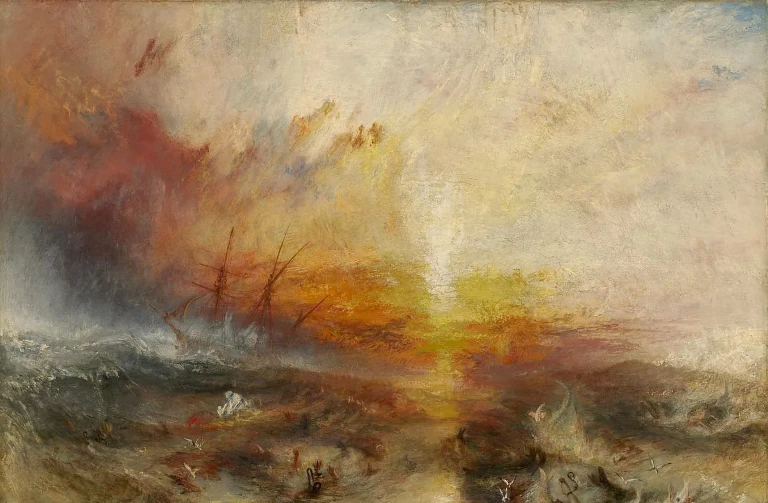
For apocalyptic predictions, it’s been an unusually fruitful start to the year. The UK government—after some delay and weak attempts at obscurantism—released its National Security Assessment on global biodiversity loss and ecosystem collapse, a terrifying though truncated document outlining how global ecological collapse could drive everything from an economic crash to nuclear war. Thence followed Parasol Lost, a paper by the IFoA and Exeter uni showing the planet has just lost its ‘hidden sunshade’, and now faces accelerated warming (ironically due to air pollution reduction) and subsequent economic contraction; somewhere around a 50% drop in GDP by end’o century. It also had the fantastically understated line:
“catastrophic or extreme impacts are eminently plausible”
On its heels came Recalibrating Climate Risk by Carbon Tracker and, again, Exeter Uni. This report also followed the economic vein, pointing out that because current economic models based on GDP are not well calibrated to social and ecological systems, they not only poorly represent actual well-being, but might even show positive readings as you hurtle down the drainpipe of climate catastrophe. Something Bloomberg catchily dubbed the ‘disaster-industrial complex’. If you needed any further indication, the investor market for ‘catastrophe bonds’ is booming without much in the way of benefit for the people actually experiencing said catastrophes.
Then there was the less publicised but no less important (and apocalyptic) WWF report Tackling the Insurance Protection Gap, a summary of the awkward situation wherein the economic bedrock of functional households, businesses and governments, Insurance, is becoming an unviable luxury in increasing swathes of the world—driven by the one-two punch of climate change and localised ecosystem degradation.
Pile onto these the Nordic councils’ acknowledgement of AMOC collapse as a national security threat, and 2026’s early outlook could be fairly characterised as dire. And that’s before we got to the ‘is it WW3’ stage of international relations discourse. Each report lands hard. But together, they reveal a gap in how we talk about climate risk.
But what does it all mean?
All these reports represent good, necessary research, paired with the natural ability to capture superlative-lusting headlines. ‘50% GDP loss’ and “societal and economic collapse” will always get the blood pumping. But I’m increasingly worried that these reports seem to be running out of narrative road or, at least, retracing it. What does 50% GDP loss from climate impacts even look like? That’s roughly the economic impact Ukraine has suffered through 5 years of its economically crippling conflict with Russia. And, as bad as it sounds, I don’t think we really conceive of significant climate losses on the same register as trenches, missile strikes, and unrestricted drone warfare. Shocking numbers can help get attention, but: A) How necessary is that, and B) What if it actually confuses the picture?
The widely peddled trope that climate concern is disappearing (it’s not) would, even were it true, miss the point. Knowledge of climate is pretty common parlance. Most people know the weather’s weirder now, and it’s only a hop and a mental skip from seeing perennially flooded farmland to associating that with a 15% bump in bread prices. We take it for granted that the public understood the impact of the Ukraine war on their energy bills (even if they didn’t let politicians off the hook for it, a la PM Sunak). But awareness does not a concern make. The headlines don’t necessarily risk numbing people to the risks, but throwing off our sense of scale. Climatic changes that could, according to the recent national security report by the UK, kick off nuclear war and the next migration period, risk being seen as just ‘current thing but worse’. You only bend so far before you break, but how obvious is that from the emerging data?
Take the IFoA report’s headline concept, Planetary Insolvency:“ Planetary Insolvency, [is] defined as ‘significant societal disruption driven by climate and nature risks’. Like, no offence to my actuarial friends, but this is a pretty vague definition. Would we define war as ‘a significant societal disruption driven by bombs and bullets’? Maybe wars are a bad example, as I hear that thing in the Strait of Hormuz is still somehow not technically a war. Though even with these, we differentiate between generalised violence and certain qualitative factors which push it into the realm of ‘war’.
But if wars are not a great example, what about financial crashes? I suppose the Great Depression was just ‘a significant societal disruption driven by bankers and bonds’ when you thunk about it. Obviously, such a description kind of underplays and overgeneralises its impacts.
My point is that we don’t really have the climate language to point out how, after a certain quantitative threshold, the qualitative impacts no longer remain on the same logarithmic scale—without just resorting to the quasi-eschatological, that is. Even I have found myself referring to extreme/society-toppling disruptions as ‘unmanageable’, an unduly limp term for the things I’m actually speaking about. 5 children having a food fight is unmanageable. An SPG collapse, wiping out a state’s ability to grow food, surely deserves a better term.
I’m reminded of a great presentation by PhD candidate Tabitha Watson that I saw at the Exeter Tipping Points conference. In it, she created a data model of the impact of worsening climate conditions on climate migration. Things get steadily worse until, suddenly, everyone (but that small fraction physically incapable) leaves. This is the kind of thing we need to be establishing in cascading climate science—when does gradual change become a sudden cliff edge?
Ironically, hard climate science is already somewhat ahead of the game on this with tipping points; as these manage to succinctly convey that climate systems don’t just weaken—with enough stress, they break, leading to wholly new (and rarely positive for human society) states. But it’s the cascading impacts which lack the language to explain the substantive difference between ‘things are getting worse’ and ‘things are now broken’. You could technically draw an impact spectrum of climate-driven food inflation from ‘chocolate getting more expensive’ to ‘food riots’, but I think it’s fair to say these two outcomes represent something qualitatively different, enough at least to matter how much energy and effort we put into mitigating them.
What do we do next?
So what’s my solution to this muddled ramble? First, I’m not actually against the aforementioned apocalyptic reports; they are generally robust beneath the headlines and (despite their drawbacks) important influencing tools. But we need to work to define where a certain level of impact forces a phase change, and how we narrativise that.
We need to find what the ‘war threshold’ of climate disruption is (see how weak ‘disruption’ is in this context? It’s like we’re speaking about a delayed train). Even though defining thresholds is a slightly arcane, procrustean exercise, it is important to define risks we can deal with under current conditions, ones that will require emergency measures, and ones that go beyond adaptability at all. This art is already being developed by the insurance industry, with catastrophe bonds in particular defining, though rarely fairly, what is ‘normal’ extreme weather and what constitutes a payout-worthy catastrophe. And small island-nation states are already grappling with this question directly, because there is a point where the climate disruptions to their islands’ habitability—storms, heatwaves, saltwater intrusion— suddenly becomes 100%: the point at which they sink beneath the waves.
I worked on something like this in my research with SCRI on ‘derailment risks’, the impacts of climate change becoming so severe that they undermine our ability to respond to them; thus locking us into far worse warming trajectories than current strategies seem to promise. There’s something there, but it’s not everything. I also like the stability framework of Paul Gambill, which sort of comes to similar conclusions from the opposite direction: that we need to emphasise climate responses that aim to bring us to stable conditions—where we have the bandwidth to do long-term work—rather than just focus on carbon or temperature benchmarks alone, as short-term, unstable conditions are likely to make these goals impossible. But I still think there’s another step, the step that defines the ‘war threshold’ of climate disruption. The one that creates the narrative threshold where, to paraphrase a misattributed Stalin quote, quantitative increases in impact take on a quality of their own.
This should be, in my humble opinion, the next frontier of climate communication. How do we define, and how do we storytell when a quantitative increase in chaos becomes qualitatively different? Otherwise, we risk lapsing into the frame of a steady downward decline in habitability, trudging on with a resigned sense of complacency when we know there are plenty of cliff-edges lurking in our climate future.




Comments
We changed commenting systems on September 10, 2026 as part of a site-wide functionality and security upgrade. Your past comments have not disappeared, and you can still log in with your old Disqus account credentials if you wish. Contact us with any questions.