

Show Notes
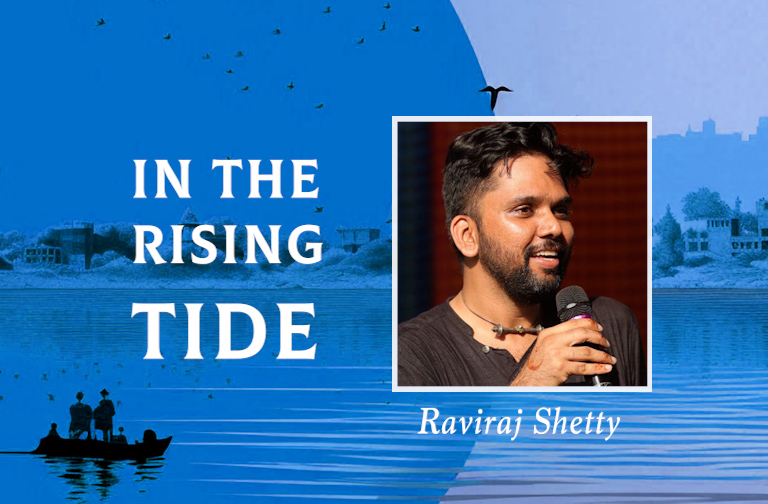
In this episode, we travel to India to speak with narrative practitioner, occupational therapist, and educator Raviraj Shetty. He is the co-founder of Narrative Practices India Collective and works with children, families, and communities to explore how stories shape our sense of self, belonging, and possibility—especially in contexts shaped by inequality, ecological change, and social fragmentation.
Raviraj’s path is guided by a deep commitment to people and place. We hear about his work using narrative practice as a community-centered approach to mental health and healing, and what it means to understand story not just as something we tell, but as something we live.
Raviraj shares his perspective on care, imagination, and what he calls “relentless hope,” offering a powerful example of how reimagining our stories can help communities reclaim dignity, rebuild connection, and create new pathways forward.
You can hear more from Alex at Human Nature Odyssey.
Please subscribe wherever you enjoy your podcasts and leave us a review.
Sources and links
Credits
In The Rising Tide is hosted and produced by Alex Leff, in collaboration with Resilience. This series is made with support from a grant from Omega Resilience Awards, a project of the nonprofit Commonweal. Find out more at ORAwards.org.
Transcript
Alex Leff (00:02.958)
It's time we come together, share stories, and meet the unprecedented times we live in. Welcome to In the Rising Tide. I'm Alex Leff. Thank you for being here. In this episode, we travel to India to speak with Ravi Raj Shetty, a narrative practitioner, occupational therapist, and co-founder of Narrative Practices India Collective. Through his work, Ravi Raj collaborates with children,

families and their communities to explore how stories shape our sense of self, belonging, and possibility, especially in contexts shaped by inequality, ecological destruction, and social fragmentation. In this episode, we reconsider the concept of story, not just as something we tell, but as something we do, and how reimagining the stories we live by can open new ways of relating to ourselves, each other,

the world around us. Ravi Raj shares his perspective on care, imagination, and what he calls relentless hope. He offers a grounded and expansive vision of how communities can navigate crises, reclaim dignity, and begin to remember themselves into belong.

Alex Leff (01:24.27)
To start, wanted to ask you if you could tell us a little about where you grew up and how that shaped your relationship to stories.

Raviraj Shetty (01:35.01)
I was born in Bombay, which is now called Mumbai in India. It's what people call the city of dreams, which it truly is. My father ran away from his village down south of India when he was 12 in search of a better life, a life that he could give to his parents who were stuck in a cycle of poverty.

And so, him, many young people run from their homes in different parts of India to come to Bombay and hope for a better life. Same way, my mom's parents came to Bombay when the Britishers were leaving in search of a better life. Yeah, I grew up with a mom who is like a lover of Bollywood music and Bollywood films. So, I grew up.

listening to lot of songs and love stories and films. Television was my source of hope, safety that there will be a better life someday.

Alex Leff (02:36.27)
Hmm.

Alex Leff (02:45.07)
What made you first see stories as something that can shape lives and not just describe them? Was there a story in your own life that helped you recognize this power that made you feel like storytelling was something that you wanted to focus on or that draw you in particular? Or did that come later in life?

Raviraj Shetty (03:04.876)
I think that it was always there. I think my community and my ancestors could only survive everything that we have survived or where I am today is because of the stories they told about hope. And one significant story that I often talk about of my journey of becoming who I became, a therapist, a mental health caregiver.

It's because both my parents couldn't complete school. They couldn't complete school because of many reasons. The idea basically was that we finish our basic schooling and get into a job to earn money and to survive. But life had a different thing because television had this TV series called Sanjeevani, which is basically like an Indian version of Grey's Anatomy.

And I would watch it while growing up. So that's the first time I also saw that there's something called as a medical school, where people go to study to become doctors. And that when doctors are around, that people are getting saved, things are happier. And so that sort of sparked of a dream that I want to be that, which was unheard of, unimagined of from the family I come from. Like it was not thought about that you have to study.

for 8 years and that's after your 12th grade. But that changed me forever because it gave me a hope. Yeah, it sparked aspiration for me to become who I became today.

Alex Leff (04:39.702)
Hmm. It's amazing how stories can kind of like shed light on potential trails that we're navigating or that we can navigate that. love that seeing this show presented you with a path that you may not have realized you could go down beforehand. Yeah. And so I was listening to you talk about that when people disagree, they're often already agreeing with a story that needs rescuing. I wanted to ask you about that. Could you say more?

about that.

Raviraj Shetty (05:11.298)
I think one of the things that in the mental health work, it is often seen very dominantly that people don't know, that communities don't know. In the not-for-profit world or in the developmental sector, it is assumed that those who are living on the margins do not know what they want. They don't have an idea about life. They just know what the problem is.

but they don't have the solutions to the problems. So, which is the dominant way how these systems work. And that's why somebody at the center, somebody with more privilege and power gets to decide what should happen to those living on the margins. But it is the way we listen to people and communities, because when people are saying things like, I do not want to live this life,

or they say that I'm feeling hopeless or I don't know what to do anymore. These statements sound like very problem saturated. It's a problem saturated story. They don't look like they have solutions in them. But when you carefully listen to them, when you, what we call in narrative practices, double witnessing, that under every story of disagreement, there is a story of

something that people agree, something that people value. So, when I say something like, I do not want to live this life anymore, I cannot have that expression until I know or have some ideas of what is the kind of life I want. Only if I have some ideas, I will disagree with the life I'm being forced to live in. I need to have some reference points to say,

feeling hopeful to say I'm feeling hopeless. But in the background, there is always a story of hopefulness that people know about, but I might not have the language to speak about it yet or to tell the story yet. But I can only say this doesn't feel okay because I know what okay looks like. But I might need more time, more scaffolding.

Raviraj Shetty (07:37.858)
to tell that story.

Alex Leff (07:41.292)
Yeah. So part of your work is listening as well as how do you help them find that story that needs rescuing? How do you maybe not lead them to that, but accompany them on the journeys so they can find it in themselves?

Raviraj Shetty (08:00.802)
I think that one of the things that we think about is the metaphor of mushrooms and how mushrooms grow in the forest. There's this beautiful book that inspired a lot of my work, was mushrooms at the end of the world, navigating a world that is ruined by capitalism, in which the author is trying to trace

the journey of this particular mushroom that grows in ruins. They grow in unpredictable, undetermined ways, but they are always there underneath the ground. And only the foragers who are very familiar with those landscapes can literally move through those landscapes and find them as if they knew where it was. And in my work with communities and people,

It's almost like we're walking alongside in the landscapes of their own stories, in which I'm not assuming that they're unfamiliar to their own landscapes of stories, in which I'm assuming that they know this landscape, in which I assume that they are the expert navigators and foragers in their own landscape of stories.

And in this, we walking alongside where my role is more of being influential, but not centering myself in their story lands, in which I'm saying, hey, let's pause here for a while and look what you were telling me can be loiter a little bit more in this part of the story. When you say hopelessness, can you tell me a little bit more about what does hope look like for you?

We're really interested in this practice, a political practice that we use called loitering. I studied in a school where loitering was deemed as a bad thing, like teachers would yell at us because we are loitering too much. If we think about loitering as a political stance in these landscapes, where we are not rushing through story lands, we're spending time at these things that look like ruins.

Raviraj Shetty (10:17.752)
But in those ruins are growing these tiny mushrooms. And as you notice a mushroom, we discuss a little bit more about that tiny response in people's stories. And as you engage in those tiny response in what looks like a ruined story, mushrooms have this thing, the mycelium network under it. It's dense, it's wise, it's...

been there for centuries in the similar way that tiny response in response to a violence has a very rich history underneath in people's story. So we're really interested in loitering through these landscapes as if we are foraging for these tiny things that have very rich histories but often can be missed if you're walking through a forest really fast.

Alex Leff (11:13.294)
I love thinking of loitering as remembering that loitering can be a radical act and how we're often told to just rush through things and be goal-oriented. But the fact that you're encouraging them to really stop and stare and be in a place is very powerful. So I was curious about where narrative practices came in is something that you latched onto.

Raviraj Shetty (11:39.534)
2014, when I was working with an organization where I worked with children with disabilities or children at risk of violence is where I met narrative practices.

Alex Leff (11:52.91)
And did it immediately stand out to you and you latched on to it? Did it take some time of loitering and noticing that it was drawing you in? How did you first feel called to it?

Raviraj Shetty (12:05.406)
It was an immediate connection. It was like I was waiting for it kind of a thing. was what I feel was my homecoming. It felt like as back home in the way, back to my body, back to my wisdom, back to my people's ways of doing things. It was not because I was trained in a med school in an institution that geared me to think about

people as body parts and not as people with stories and people with histories. And when I first started getting trained in narrative practices, it was, yeah, just a homecoming to think about dignity, respect, listening to people, sitting alongside them. Yeah, all of that felt like my mother.

mother's way of doing things and caring for people. it just was, I latched on to it.

Alex Leff (13:09.774)
And so what is narrative practice for someone who hasn't heard of it before?

Raviraj Shetty (13:14.926)
Narrative Practices is a school of thought that was being developed in the 1980s in Australia by Michael White. He was a social worker who was working in a context where people with chronic mental illnesses or little children with enuresis or encorporuses where they were passing stool or urine without any control were being sent back from the hospital saying,

Nothing can be done, you know, we don't know what to do and there's no treatment for this. And so, what Michael started doing was, he started thinking that what if people were not failing, that their bodies were not failing, but what if the system of psychiatry and psychology was failing them? And that question really led him to think about looking outside of psychiatry and psychology to look for other ways of engaging.

with people and problems. And so, he looked towards literature, towards people's movements, towards social justice histories, and he discovered the metaphor of what if people were stories? What stories shape us? Who gets to decide? The volume of what stories becomes louder and what volume becomes softer? Do we have agency on it or do systems have agency on it?

And he was really interested in this idea that what if people and our bodies were not the problem, but the problem was the problem? And that really shook psychiatry and psychology at its core because both of them function with the idea that our bodies are site of the problem. But most historical social justice movements have fought with the idea that bodies are always the site of liberation, protest.

resistance and wisdom. And so he really took off that idea and developed this whole practices on how do you navigate in landscapes of stories. And he developed what he calls the maps of narrative practices. And there are different kinds of maps.

Alex Leff (15:32.13)
Curious for you as a student who is hearing about this and where it meets you on your journey. I think it's so fascinating how, you you went down this path. First, the goal was to be able to make a living and help support your family. And somewhere along the way, you were also following your passions and your passions were leading you to realizing that

You know, you could have just opened up a practice and done it in a standard way, but you were drawn to essentially more of an organizing change-making role. I'm curious if that's how you view your journey and at what point did you find yourself thinking more about overall systems and not just about how to make a living and support your family, but also how to make larger changes. When did that come to you?

Raviraj Shetty (16:28.278)
It was always there. If you ever meet my mother, you will know why it was always there. My mother is a fighter, an organizer. She'll stand for the rights of anybody who's being oppressed in any ways. And I have seen that while I was growing up. She will care for those who are being systematically within places that we live in, are being oppressed, violated in ways.

that are quite subtle and she will fight. I used to be very scared because if anybody bullies me, then my mother is up in arms, comes to fight it out. And if somebody else gets bullied, my mother will be still there. So, I really grew up watching my mother fight for systemic change in her own ways. And so,

when I got the language to talk about it through narrative practices, it was not that it was new to me. It was not that what Michael was talking was something that I was learning in an institution. It was like I was remembering my mother's ways of doing things. And that seemed, yeah, just the right way to do things. we can only, that me and a child or me at

and a client who are working in a therapy room cannot think of solving problems because the problems are systemic. If we set up ourselves to solve the problem, then we are both going to fail and the effects of that can be quite violent. So, what we're really trying to do is how do we navigate these problems? How do we understand the effects of them? And how do we see our own expertise or know-hows on how to

navigate the move through them.

Alex Leff (18:28.984)
And I wanted to ask you about your work with children. I was really moved by the story you told in the Ted talk about a niche. And I was wondering if you could share a little bit about that story and what your experience with him was, or if there was another client that you feel like is an example of the power of narrative practices.

Raviraj Shetty (18:54.028)
I think about this little kid I met when he was 4, now he is 16. And at some point in his life, he stopped going to school because he one day just woke up crying. He was, I think, 8 then. And he started crying saying, I do not want to go to school. School is not a nice place. Children are...

Alex Leff (19:02.094)
Wow

Raviraj Shetty (19:23.704)
constantly saying things that I don't like. Teachers were being mean to him and he knew about his autism. We had told him when he was five that he is autistic and what that means to be in this world. And so when this started happening, he had this thing when he would feel that children and teachers and people were being mean to him or bullying him.

Alex Leff (19:38.349)
Hmm.

Raviraj Shetty (19:51.906)
He would start sort of becoming quieter in a way that was scary sometimes. He would not sleep, he would almost like fold himself like a little ball and he would sleep like that all day. And so, his mom called me saying what to do and I visited his home and we were talking about what's going on and he said, I'm lonely.

and broke my heart, it breaks my heart every time when a child feels that way at the age of 6, 7, to feel that way is quite, can have very traumatic effects. And so, as he started speaking about feeling lonely, I started asking him about maybe one or two people who he thinks loves him and he loves them back. And he loves to draw, so he got up,

There was a white board in front of him and he drew himself and then he drew his mother and then made a little heart to her side and made a little heart to him and then connected the two hearts and said that my heart is connected to my mother. And I said, can you tell me a story of why that is? And then he told me a story of how his mother makes his favorite breakfast when sad days,

are around Him and that tells Him that He loves Him. And I said, I asked Him, are there other people, you know, whose hearts might be connected to your hearts? And we spent like four hours together in His house, drawing these people, characters from films, cartoon characters, characters from books, His neighbour, and made like a little circle of these sort of

people whose hearts were connected to His heart. And when I asked Him, what stories would they tell about why they love you, He quite didn't have the answer. So, what we did was, we wrote letters to each one of them, asking them, can you tell us a story of why you love Ryan? Wow! And a month later, we had 20 letters telling stories about why they love Ryan.

Raviraj Shetty (22:16.214)
And so what began as a story, this dominant narrative that he does not deserve a place, a friendship, of being a student, of dignity within school, was breached by these other stories that always existed in his landscape, right, of people who loved him because of who is, was suddenly visible, you out there. Yeah, and that shifted Ryan's sense of self, of who he

is who he can become and how can he navigate school systems.

Alex Leff (22:51.276)
Hmm. That's so beautiful. And I'm curious. You talk about the relationship we have with problems. The problem is the problem and that your work with a client is not to solve the problems, but how to navigate them. I was reading you were also talking about the phrase, relentless hope. And I wanted to ask you what that means to you and what the hope is for is there.

What role does problem solving have? And do you see your work as transformative beyond the individual or is it really about helping them navigate the problems that just will exist in life?

Raviraj Shetty (23:37.176)
I think that when Ryan is able to see himself as a full human, that his autism is not the problem, but the system of school is the problem, where he can see that autism is his identity. Because there are 20 witnesses to his story who tell something else rather than what a powerful system like school is trying to tell about.

you know, a disabled child, that is transforming the system itself. That with Ryan seeing autism as an identity, he shifts the narrative for everyone. And so, when each one of us can tell our stories in the ways where we have full authorship of it,

in ways in which we can see ourselves as not the site of the problem. We are also shifting these larger, powerful, oppressive systems little by little, tiny. I love this metaphor. If you ever come to India, I don't know whether in the US it is there or not, but India and Nepal has it, where there are old buildings in which

on the walls, little tiny plants or trees are growing out of these walls. And sometimes they grow so big that the wall comes apart and falls down. And I think about these stories in individual narratives as these tiny little things that are growing in these walls that look indestructible. But as Ryan learns to tell his story, those roots get deeper and deeper within the wall, weakening them.

every day and that one day this whole idea that disability is a problem will fall apart as more disabled children know that being disabled is an identity and there's nothing wrong with their body. What is wrong is with the ablest ways of doing the systems around us.

Alex Leff (25:53.984)
And so, I wanted to ask you about relentless hope and what that means to you. And how do we live with the feelings of hopelessness and burnout without becoming numb and cynical? And if that's something that came to you naturally or that's something that you struggle with as you try to make changes, other moments where you're feeling like this isn't working or do you find something that that belief comes naturally to you?

Raviraj Shetty (26:24.61)
I think both, both happens. It is the part of living in this world and about being a therapist or being a community worker is hopelessness is always waiting next doors. It shows up all the time. It always keeps me on my toes that this is not enough, that there's a sense of urgency in this world and that

Urgency is a calling and that I have to respond to it. And I think that to never let go of that hopelessness, that kind of hopelessness calls us for the urgency that this kind of work needs. So, I don't think about hopelessness as a bad thing at all. I think that when I feel hopeless, it's telling me, it's an invitation to look for new ways to navigate life.

Alex Leff (27:23.054)
Hmm.

Raviraj Shetty (27:24.874)
And I think about the politics of language, Like numbness, burnout is often seen as bad things. They're seen as failures. But if we really engage with the history of the word burnout, it comes from a time when there was industrialization of the societies going on and machines were the first thing that were burning out. And suddenly some psychologists, some philosopher,

What if humans were like machines and, you know, what if we are burning out? And so that language got applied to human experience that we were somehow burning out like we are machines. And in the States in the West, there's this whole idea that when somebody burns out, you need to provide, you know, they need to do self-care, which most people again fail.

And then there's a whole cycle, a vicious cycle of burnout and failure that we are stuck in. And so, we're really interested in thinking about what if this is not burnout at all? What if that language itself is oppressive and restrictive? And so, we think about other ways too. And there's this amazing person called Vicky Reynolds who

was thinking what if this is not burnout but ethical pain? That what we are feeling is not that we burning out, that what I'm feeling is pain in my heart, that when I see injustices in front of me happening every day, I am going to feel this pain. And so, in India or in Nepal, when we feel pain, what do you do? You you cry, you talk.

to a friend, somebody cooks for you, somebody says, let's go and complain about the world together and for hours I'll sit with my friends and complain and complain about the world. And that is helpful. That might sound hopeless to somebody else, but it is quite hopeful for us because there's somebody else. So burnout says that you need to rest and do self care, but ethical pain says you need friends.

Raviraj Shetty (29:46.668)
You need witnesses. You need solidarity. And so, when we think about numbness, what if numbness was a response and not a bad thing? And so, I think about numbness as a way to protect ourselves. If I feel anything more, it will just break me into ways that I wouldn't understand. So, I go numb or I go quiet.

to safeguard myself. And so we talk about namnesh as a know-how of the body, as a wisdom of the body, rather than as a symptom of the body. So really, link engaging with the politics of how do we make meaning of these experiences and what stories are informing this meaning-making.

Alex Leff (30:43.278)
This is very, very powerful distinction.

Raviraj Shetty (30:46.54)
No, the question we are really interested in, you know, who benefits out of calling people as machines and that we are burning out and that we need self-care. It is a capitalist system that benefits because then, you know, in the name of self-care, you have to do these things that only and only needs money and if you burn out. So, yeah, we often ask who benefits.

If numbness is seen as a bad thing, as a symptom, then the whole psychiatric medical industry benefits out of feeding people, trying to make them not numb somehow.

Alex Leff (31:32.768)
Yeah, I really am glad that you bring up this reframing and this way of re-understanding it for us. And I'm curious, when did you decide to co-found Narrative Practices in India and what was your vision of the organization when you were first starting out versus how it's evolved to be now?

Raviraj Shetty (31:59.726)
We started the organization in the pandemic, during the pandemic. The four of us quit the organization we were working in because we really wanted to explore narrative practices as a way to think about accountability because we were seeing so much of these practices of accountability that were similar to punishing and shaming people and we didn't agree with that.

We thought that accountability has to be done with love and that it is not the same as shaming and guilting people. We were also really angry and upset with how systems that were designed to care for people were using becoming tools of social control, of forcing children.

with disabled bodies to become able-bodied, right? Or to almost prepare them for a capitalist industry rather than fighting the system itself. And so we began it with the hope that we think about collective accountability as the work of doing justice and love. And how do we think about communities and people as experts and not as problems?

The vision remains the same. We continue to do that work. Yeah.

Alex Leff (33:33.976)
And in terms of working with the Omega Resilience, I'm curious what you hope to do with the program and how you see that as dovetailing with your work with narrative practices.

Raviraj Shetty (33:50.082)
With the Aura Fellowship, one of the things that has been helpful for me is to support my work in the North East of India. I started a fellowship called the Fellowship of Community Well-being and Ecological Belonging. We're thinking around how do we understand identity, human identity in relational ways, that how does the forest, the land, the river and me are one and the same thing.

Alex Leff (34:05.624)
Hmm.

Alex Leff (34:18.83)
Hmm.

Raviraj Shetty (34:19.022)
and how if one of them gets affected, everything gets affected. That mental health is not an issue of the brain or just a simple issue of the body. It is an issue of the ecology that we live in. And so, the fellowship has really allowed me the space to… We have 10 fellows to spend time with them, to think with them together.

around these ideas to develop your literature around this in a year's time.

Alex Leff (34:56.802)
Yeah, that's wonderful. So I wanted to also ask, you talking about coming along with people as they loiter through the landscapes of their stories and experiences. If someone listening feels unmoored or senses that old stories no longer hold for them, but not knowing what comes next, what would you want to leave them with?

Raviraj Shetty (35:26.254)
I had to Google the word unmodded, it's new for my dictionary.

Alex Leff (35:32.962)
an un- un- ungrounded or a little lost.

Raviraj Shetty (35:36.166)
I love the word unmoored. I think it's a beautiful expression. I think about that in times when hopelessness arrives, it feels like a storm or like a cyclone or some sort of a wind and that is very powerful, is shaking everything underneath me. And so, we're really not looking for big stories.

in points that we are really looking for what Michael White would call safety islands, like really tiny stories in which people can sit for a while, in which something about that life is predictable. I might not look for that bank of the river to go to climb on to, but I might look for a little stone or a little raft that I can hold on

And that little raft can be as small as me waking up and making tea in the morning. And I would say, can you tell me a little bit more about this thing that you do in the morning about making tea? What looks like a very tiny little thing has a very rich history and a story to it of why this person wakes up and does make tea in the morning. Because it is predictable.

They know how it's going to go and bring some sense of warmth and comfort. And so, we're not looking to go to the riverbank quickly. We're trying to look for these little stones that are in that, or little safety islands, so that we can make a little collection of islands and then slowly, steadily build these landscapes by little things people are doing.

But to do that, I have to really believe that we are never passive in face of any kind of violence. We're always actively responding and those responses can look like many things. I'm really interested if I had to assume, I would leave people with this idea that if I had to assume that we're never ever passive in face of anything, then what can response look like?

Raviraj Shetty (38:01.162)
If there was never ever a bad coping mechanism, that there was only something called as coping mechanisms, then how would I engage with them? know, like psychiatry and psychology and medical institutions have historically participated in creating this narrative about good and bad coping mechanisms. And in that narrative is the creation of a clinic or a clinician.

which is almost like a prison where somebody else gets to determine whether I'm doing good coping mechanisms or bad coping mechanisms. And so, I work with a lot of young people who cut themselves and cutting is often seen as a bad coping mechanism. And the word that is often used is self-harm, which is quite a violent term.

to use for young people who are struggling to say that they're failing so much that they're harming themselves. And so, we're really interested in what if it was a coping mechanism and not a bad coping mechanism. And so, when I see it that way, then I'm really curious to ask, can you tell me a little bit more about this cutting instead of saying stop cutting?

And as I engage in this conversation, I have heard stories about how when this certain kind of panic attack comes, it almost feels I cannot feel my body, I don't know who I am. It gets really scary and the only way to help myself to come back to this body is to cut, is to create pain for myself. And then it makes sense that the person is not

trying to harm themselves, are actually trying to protect themselves by bringing themselves back to this body against this panic that takes over. And so, then I am interested in, can you tell me more about how did you learn it? How might you have, how do you take care of yourself while cutting? And all young persons have told me stories of how they take care. They're not harming themselves, that they're only and only

Alex Leff (40:07.096)
Hmm.

Raviraj Shetty (40:26.104)
protecting themselves. And as we discuss this story, what starts happening is that other knowledges start to up. Can you tell me other things that you do when this kind of panic attack comes? So then, cutting becomes one of the knowledges of many other ways to work with this kind of panic attack. But I can only discover those knowledges if I don't assume that cutting is a bad

coping mechanism, but that it is a coping mechanism that young people who are really struggling in violent situations are doing to protect themselves of something. Did I make sense?

Alex Leff (41:09.44)
Yeah, absolutely. And it's very, that's a very powerful concept. And it seems that it's helping them see a variety of the ways that they can feel and they can navigate what they're feeling, but not steering them to one particular one. It seems like it would require trusting them as a person that can choose from the menu of ways to cope.

to find ones that really are what's best for them.

Raviraj Shetty (41:43.342)
Yeah. And to really this, this, this.

to really detach the story of shame and guilt with cutting. But attach it to the story of protecting myself. And all young people who cut know that it might be dangerous. Most people, most practitioners assume that they don't know. And it's like, you know, really thinking that young people don't know that they're cutting themselves and it is not a great idea. Obviously, they know.

they know that it's not a great idea and to be told like they don't know already puts shame and guilt in them. So we are really assuming how are they, did they know and that I'm having a conversation with them as experts, not as somebody who cannot produce this knowledge. And more often than actually most always is when they see that there are many other ways

to navigate this panic attack. Cutting starts becoming slowly less because now I have other things. It's almost like you're sitting on the top of the mountain from which you can see many other mountains rather than being on the base of the mountain from where you can only see a wall. And so, in narrative practices, we are really interested in doing that hike up to this particular peak from where suddenly

all the other stories of my life become visible to me and that I have more choice and more agency rather than what I had at the base of the mountain.

Alex Leff (43:29.73)
Hmm, it's beautiful. Thank you Ravi Raj for sharing all this. Is there anything that we glossed over you want to return to?

Raviraj Shetty (43:39.202)
No, I think that just that in the context of South Asia, one of the things that we speak about a lot or we think about stories is caste and how caste influences India particularly and Nepal. that because there was a question around what stories are we trapped in. yeah, within Indian system, we're trapped in...

a story of caste, not quite trapped in, though the story of caste wants to assume that we are trapped in, but no story, however powerful it can be, can trap communities and people ever. So, yeah, in response to that, one of the things that we have been doing is developing a diploma in anti-caste mental health practices on thinking about how does caste become, how do we engage with caste in

therapeutic rooms, within mental health spaces, within community spaces, that it is the air we breathe and that how do you engage with those stories of caste.

Alex Leff (44:51.468)
I am very curious, so then how do you engage with stories of cast with people? I imagine it's very different for every individual, but what are some common things that come up as you're navigating that?

Raviraj Shetty (45:08.086)
I think that the first thing that we do is we follow the lead of one of our leaders, Dr. Babasaheb Ambedkar, who fought for the anti-caste movement, who wrote the Constitution of India, who was the greatest person alive in the world at that changing histories for us. And he began, he left these three words for us, educate, agitate and organize.

And so, the first step is to educate. And we begin our education in the classrooms by telling people what violence has been done. And to know what violence has been done, we invite historians who tell us stories about the 3000-year-old story of caste. We go back to literature, particularly written by what is called the Hindu

you know, the Hindu way of living life. And there's a book called The Manusmriti, which Dr. Babasar Bambirgarh burned, because it is a book of oppression, book that dictates how a Hindu should be, but it's a book that tells how the caste system should be followed. And so, we start by looking at that book, like at its text, and how ridiculous it is, but how true.

It justifies slavery, it justifies why some people should be treated like dirt or worse than dirt and how some people's knowledges come from God and the others cannot produce knowledges. And then we look at data, we look at data around us in present world who is holding most positions of power.

who is dictating or writing or doing research on whom. And then we start observing everyday life. We ask questions around who are your friends. And so, caste has this very endogamous way of functioning in everyday life. Like, your friends will be upper caste people if you're an upper caste person. And you might not know that, you might never notice it because caste is so invisible, but that's true. And so, we start

Raviraj Shetty (47:30.966)
making it, observing it in everyday lives of people. And then we start looking at historical movements of how people have fought for the rights that we stand on today. So we really don't do new practices because we believe that we're not the first ones to think about this. People have left us maps on how to do this work. So we look at then anti-caste activists.

and how they have done this work. And then we develop in the third module, organizing practices, inquiries on how to listen for caste in everyday conversations. So we follow the three words as parts of three modules of the diploma.

Alex Leff (48:18.496)
Hmm, and is the idea that by becoming more aware of the stories of cast, there is more mobility or openness to how we engage with each other in that way?

Raviraj Shetty (48:33.076)
Absolutely. Absolutely. I think the intention of the diploma is not that you become an amazing anti-caste mental health practitioner, but the intention is to raise our political consciousness around caste, that we start noticing its presence in our lives and around us. And we're really, you know, one of the things that both my colleague Divya and I

is that caste is a structure that does not benefit anyone. It does not benefit even an upper caste woman because Brahminical patriarchy also oppresses an upper caste woman. It only and only benefits a cis-heterosexual Brahmin man and so it does not benefit anyone else and so, annihilation of caste will

is in favor of all of us. So we really engage with the idea that people are not the problem, problem is the problem, even when we don't want to say that upper caste people are the problem. We want to say that it does not benefit them too, in the ways that they live their life.

Alex Leff (49:52.814)
Yeah. Thank you so much for taking the time to talk today. And I'm really grateful for the insights that you're sharing. I think the way you, the metaphors and the stories you use to elucidate on the work that you do is very powerful. And I know we'll stay with me and I'm excited for other people to hear it as well.

Raviraj Shetty (50:14.318)
Thank you, Alex.

Alex Leff (50:18.286)
Thanks for listening. Over the course of this series, we've traveled to the Philippines, Morocco, Uganda, Chile, and India. We've met chefs, farmers, poets, weavers, organizers, water defenders, and narrative practitioners. Each of these courageous young people are following their own path while doing meaningful work with the people they meet right where they live.

Evidence of the unfolding interconnected crises of our time can be found in every corner of the globe. But in all those same places, you'll also find brave people meeting the moment in unique and meaningful ways. Thank you so much to Ulysses, Azhar, Gerald, Mishirai, and Ravi Raj for bringing us along on these journeys. Your stories remind us that there are new possibilities still ahead. And thank you to you, our listeners. I really appreciate you being here for it all. If you enjoyed In the Rising Tide, please leave a friendly review and share it with a friend. This series was made with support from a grant from Omega Resilience Awards, a project of the nonprofit Common Wheel. You can learn more at auraawards.org. And this series was made in association with resilience.org. We'll have a link in our show notes. And if you'd like to hear more from me, you're invited to check out the Human Nature Odyssey podcast. Wishing you well.



Comments
We changed commenting systems on September 10, 2026 as part of a site-wide functionality and security upgrade. Your past comments have not disappeared, and you can still log in with your old Disqus account credentials if you wish. Contact us with any questions.