

Humanity has missed the mark. Humanity has failed.
As COP30 got underway, this was the media’s take on the UN Secretary-General’s announcement that 1.5 degrees of global warming has now been locked in. We should be rolling our eyes at such proclamations. Once again, humanity takes the blame for the impotence of corporate-led summits.
The truth is that humanity includes billions of land-based people who have not yet been pushed into resource-intensive cities and consumer lifestyles. Humanity includes hundreds of thousands of people who – like you, perhaps – have been taking active steps to reduce their ecological footprint, while lobbying for meaningful government policy change. Why should humanity take the blame for the blind, top-down policy frameworks that, above all, treat ecocide and climate breakdown as a ‘carbon market’ – as an opportunity to grow corporate bottom lines?
Ever since Al Gore stood up on his soapbox, we’ve had the finger pointed at our individual behavior. Meanwhile, global corporations were needlessly transporting goods across the world, contributing to massive increases in emissions and mountains of plastic waste.
‘Free trade’ treaties were giving them the right to direct whole societies down the consumerist path; the right to target children with the message: ‘if you want to be loved and respected, you’ve got to have the latest smartphone, the coolest shoes’.
Humanity was never the issue. Corporate rule was.
And there’s no two ways about it – COP is ruled by global corporations. Funding comes from chemical giants like Bayer, tech giants like IBM, and mining corporations like Anglo American. As such, there is no talk of real, commonsense solutions like decentralizing economies, limiting the barrage of consumer messaging, preventing built-in obsolescence, or regulating the most polluting industries. Emissions from redundant trade – at the very heart of the resource-guzzling global economy – has never been so much as mentioned during the negotiations.
The COPs have consistently ensured that billions of dollars get sunk into false but lucrative solutions. Ostensibly to monitor carbon, technologies like A.I. and Internet of Things are being rolled out, with enormous demand for rare earth minerals and severe implications for freedom and surveillance. Carbon markets are commodifying land and water and biodiversity and turning them into financial assets to be traded.
As our colleague, Dr. Camila Moreno, who has attended all the COPs, has summarized:
“This is not a meeting about climate. This is where you can see, most clearly, where the future of capitalism is going.”
Watch this short video featuring Dr. Camila Moreno: ‘COP, Carbon, and the financialization of Nature’:
Do you speak ‘carbonese’?
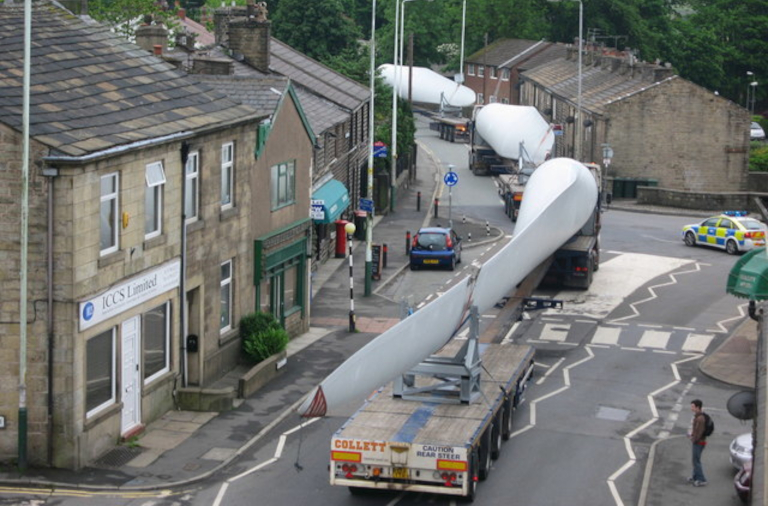
Under the vague framing of ‘net-zero’, giant carbon capture plants have been built to supposedly combine air carbon with plastic trash under enormous temperatures and inject it into bedrock. And, perhaps even worse, the much-hyped ‘green transition’ has plastered what should be productive, biodiverse land and coastlines with solar panels, wind turbines, and biomass monocultures.
In the face of all this, humanity is not about to declare failure and give up. Things might be getting bad already – fires, floods, storms – but around the world at the grassroots, people are taking action.
And, come what may, what action makes most sense? Local food. Hands-on ecosystem regeneration. Strengthening community and the local economy.
And raising awareness about the fact that governments don’t have our back.
So, where the UN, the COPs and global corporations have failed, humanity is the solution. Let’s make visible the quiet revolution that’s occurring from the bottom up as communities express their care for others and the living world.
Renewables – saviour or curse?
We must look squarely at the call for a renewable energy. It’s not an easy topic to address. For decades, Local Futures has been part of the call for a small-scale, decentralized renewable energy installations to meet real human needs. Back in the 70s, the environmental movement had clarity about this.
But over the last 3 decades, the global ‘green transition’ has emerged. In rhetoric, it’s about plugging the global economy into a different, greener power source. In reality, it’s about growing the global economy’s already outrageous and wasteful energy demands by throwing more mega-industrial technologies into the mix.
How can environmentalists support the plastering of land with solar panels made from silica mined by consuming entire Indonesian islands? How can they support the conversion of ever more mountains and valleys to vast landscapes of towering pylons built in concrete, plastic, steel and balsa wood from the Amazon – turbines with a life span of less than 20 years destined to pile up in landfills?
How can they support the scouring of the seabed for manganese, and the mining of copper, nickel, rare earths, lithium and cobalt – all of which the International Energy Agency says will require extraction increases of around 400% by 2040 in order to keep up with A.I., digital and renewable infrastructure demands?
We do need some renewables. But the ‘transition’ must be radically reframed. We must not start by asking “how do we transition the current global economy to renewable energy” – that proposition is a death sentence. We must start by asking “what are our real human energy needs, and how do we meet them in the wisest way possible?” In other words, what are the needs of thriving local economies.
A.I. – for climate? Or for corporate profit?
The global economy’s demand for resources and energy is entirely about fueling technologies that have nothing to do with real human needs and everything to do with expanding corporate wealth and power. The A.I. industry is Exhibit A.
A.I.’s cheerful front end – the chatbot that answers a question, the app that writes your email – hides a vast infrastructure of energy-intensive data centers and mineral-intensive manufacturing – all expanding at breakneck speed. In some US states, data centers are already using more than 10% of all electricity, and analysts project that AI will push global data-center power demand up by more than 150% this decade. Google and Microsoft have both reported near 50% increases in their total emissions, due solely to the aggressive buildout of data-center infrastructure to support A.I.
Then there is the water. These facilities need vast quantities of fresh, clean water to stop their servers from overheating. Microsoft has admitted that nearly half of its water use now occurs in regions already facing water scarcity. In Spain, where drought conditions are worsening and desertification covers three-quarters of the country, Amazon’s new AI data centers have approval to draw over 750,000 cubic meters of drinking water a year. South Korea’s planned mega-cluster of semiconductor factories will demand more than half of Seoul’s daily water use, alongside vast amounts of electricity, toxic chemicals, and land for waste disposal. Similar stories are emerging from Chile, the US Southwest, and parts of India.
AI is not a climate tool at all. It is the next frontier in global corporate expansion – a new reason to build pipelines, power stations, transmission corridors, mega-mines, and surveillance infrastructures. Framed as “efficiency” or “net-zero”, it locks us ever deeper into the top-down model where entire regions are sacrificed so that a handful of companies can extract wealth from data, attention and public resources.
All this stands in stark contrast to the quiet, grounded solutions emerging from below. True climate action doesn’t require vast data centers, billions of liters of water, or mineral-intensive hardware. It requires shorter distances, stronger communities, healthy soils, local food webs, and diverse, place-based economies that reduce demand at the source.
A.I.’s expanding empire is a reminder of what happens when we allow the global economy to chase technological fixes instead of human-scale wisdom.
More to read, watch and listen to on COP:
Dr. Camila Moreno’s Planet Local Voices episode — Climate, carbon and technocracy. Watch here.




Comments
Welcome to the new Resillience commenting system!
We have moved from the former Disqus commenting system to a new system as of September 10, 2026.
We made this change because of privacy concerns regarding Disqus. It's also part of a set of changes to bring more services to the Resilience community under a single login: commenting, (coming September 2026), and online courses (coming 2027). Unfortunately, your old Disqus comments may not reliably link to your account in this new system. Please contact us if you have any questions or concerns.
You are blaming corporations, but those evil corporations are just trying to meet the desires of us: In the sixties when the Ehrlichs (Population Bomb), Rachel Carson, David Attenborough, Club of Rome, Jacques Cousteau, Martin Luther King, Norman Borlaug and almost every Nobel Prize winner was warning us about the dangers of too many people when there were three billion of us. If we had headed their advice and humanity was currently at four billion and not past eight billion climate change would be a distant blip on our radar, not currently threatening our very existence. Also, fracking, tar sands and the Gulf Spill would not have happened because we would not have had no need to go to those extremes for oil. Also, the word Anthropocene would not have been coined to give name to mankind driving all other life on this planet to extinction.