Society featured

The Influence of Psychopaths: Why Humanity Is Better Than We Think

September 29, 2025

Recorded on: Sep 22, 2025

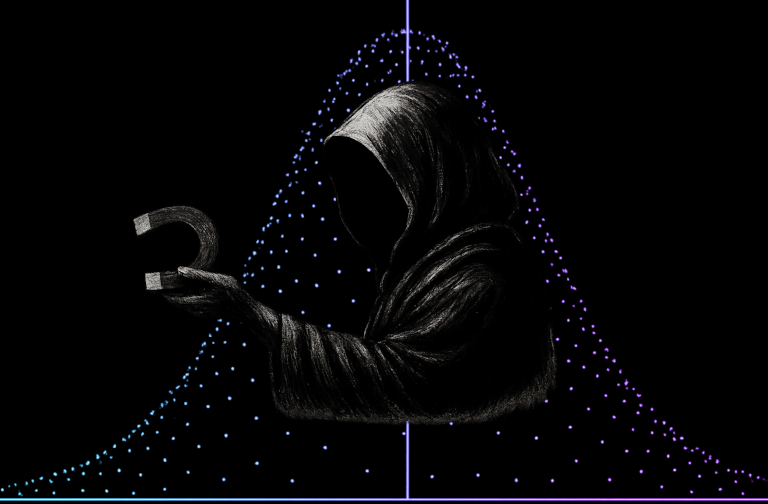
In this week’s Frankly, Nate reflects on intraspecies predation (ours) and the impact psychopathic actors have on the mean and median of human behavior – in the past all the way up to our modern society. Human evolution was shaped by both cooperative, pro-social behavior and a competitive, predatory approach for survival – resulting in a balanced distribution for most of humanity’s existence.

But, as agriculture, surplus, and other factors propelled more hierarchical social structure, aggregate human behavior and culture has slowly shifted over time to express more psychopathic traits. This thread of behavior continues to run through our modern society, where a relatively small (but disproportionately powerful) segment of the human population can pull societal behavior towards anti-social and individualistic values – even if the majority of people still inherently operate from a place of reciprocity.

Why might our modern society provide a more fruitful breeding ground for psychopathy than past societies did? What do chickens and eggs have to do with psychopathy and the economic superorganism? And ultimately, what strategies could we begin to think about in order to shift mean and median human behavior back towards a more cooperative, prosocial middle?

Show Notes & Links to Learn More

00:11 – Luke Kemp on TGS (Episodes 1 + 2)

00:14 – Reid Meloy and Nancy McWilliams on TGS Reality Roundtable

00:45 – Economic superorganism

02:06 – Psychopathy

02:39 – Predator

03:18 – Median versus mean

03:43 – 2022 U.S. income distribution

04:34 – The Olduvai Gorge in Tanzania

05:11 – Multi-level selection theory and the Chicken experiment

05:15 – David Sloan Wilson on TGS

05:25 – National Geographic – “The problem with superchickens”

06:14 – The hawk-dove model

06:45 – Tori DeAngelis – “A broader view of psychopathy”

09:10 – Peter Katuščák1 and Tomáš Miklánek – “What drives conditional cooperation in public good games?”

10:04 – Elinor Ostrom – Governing the Commons: The Evolution of Institutions for Collective ActionDerek Wall – “Commons and Contradictions: The Political Ecology of Elinor Ostrom”
16:15 – Uma S. Pandey – “Digital Mediatisation and Social Construction: Unravelling the Role of Media in Shaping Society”

Download transcript

Nate Hagens

Nate Hagens

Nate Hagens is the Director of The Institute for the Study of Energy & Our Future (ISEOF) an organization focused on educating and preparing society for the coming cultural transition. Allied with leading ecologists, energy experts, politicians and systems thinkers ISEOF assembles road-maps and off-ramps for how human societies can adapt to lower throughput lifestyles.

Nate holds a Masters Degree in Finance with Honors from the University of Chicago and a Ph.D. in Natural Resources from the University of Vermont. He teaches an Honors course, Reality 101, at the University of Minnesota.

Comments

Welcome to the new Resillience commenting system!

We have moved from the former Disqus commenting system to a new system as of September 10, 2026.

  • Your past comments have not disappeared.
  • You can log in with your old Disqus credentials, as well as Gmail credentials or a Resilience account (formerly Resilience+). Login with Facebook and other credentials is coming soon.

We made this change because of privacy concerns regarding Disqus. It's also part of a set of changes to bring more services to the Resilience community under a single login: commenting, (coming September 2026), and online courses (coming 2027). Unfortunately, your old Disqus comments may not reliably link to your account in this new system. Please contact us if you have any questions or concerns.

Subscribe
Notify of
3 Comments
Oldest
Newest Most Voted
Nicholas Gruen
Nicholas Gruen
11 months ago

I made a comment here. It was picked up, but has now disappeared 🙁

Bart_at_EB
Bart_at_EB
11 months ago
Reply to  Nicholas Gruen

Comments go through moderation here. I just approved your comment so it should appear now.
Best wishes,
Moderator

Nicholas Gruen
Nicholas Gruen
11 months ago

Have you seen any discussion or research on the kinds of institutions that propagate and nurture psychopaths and those that do the opposite? I think mechanisms which are openly competitive attract and nurture psychopaths – like elections in politics and competitive promotion in organisations – whereas mechanisms with mute this do the opposite. Thus for instance citizens’ juries make power about persuasion, not domination and competition. And the Papal Conclave is an example of merit selection, but one which mutes open competition. Venice's republic ran for 500 years without a civil war or successful coup on a similar system for selecting political officeholders.

But I've not been able to find any serious research on it.