

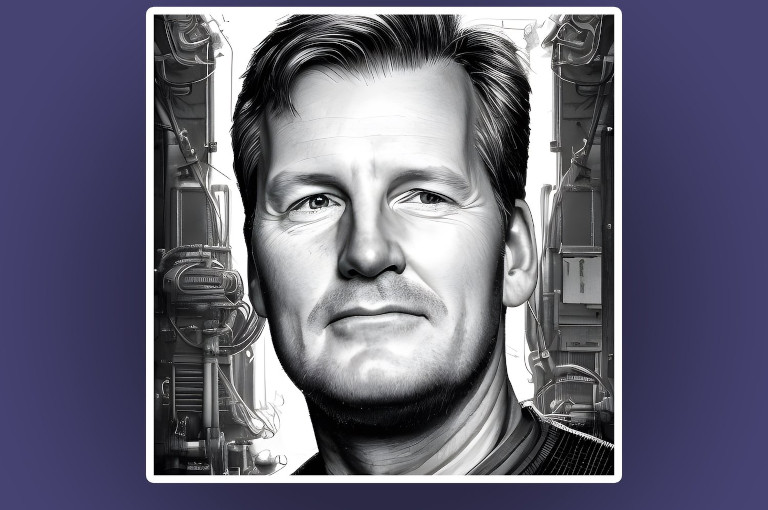
(Conversation recorded on December 4th, 2023)
Show Summary
On this episode, Nate is joined by author and technology analyst John Robb to discuss how geopolitics, information warfare, and technology are shaping how we understand the world and interact with each other. With the recent rise in global tensions and violence, plus an escalating threat of catastrophic scenarios, more and more people sense that the system is unstable. Coupled with accelerating developments in artificial intelligence, we live in an environment where interpretation and sensemaking – especially at an individual level – are more difficult than ever. What do these trends and challenges mean for governments and corporations trying to control the flow of information and data? How will near-term technological advancements affect the trajectories of politics, science, and journalism – and is it possible for individuals to be aware of and mitigate their influence? During a time where communication and collective problem solving is more important than ever, will it be possible to navigate between tribes and ideological groups amidst increasing polarization and fractured information systems?
About John Robb
John Robb currently publishes the Global Guerrillas Report, which covers the intersection of War, Politics, and Technology. He served as a tier one special ops, after which he went on to be a popular internet analyst, entrepreneur, the COO of a software company that open sourced the current RSS standard, and much more. He also published the book Brave New War on the subject of the future of warfare.
Watch on YouTube
Show Notes & Links to Learn More
00:00 – John Robb Works + Info
01:59 – Brave New War
02:40 – Three Realms of Warfare
02:50 – John Boyd
06:19 – Marshall McLuhan
06:55 – Entropy and Collapse
08:24 – Microaggression
09:10 – Limits to Growth, Update
09:55 – Social Contract
11:15 – Negative effects of too much inward reflection
12:04 – Economic growth over time
12:12 – Meaning Crisis
13:48 – Long Night Scenario
14:14 – Open AI, Sam Altman
15:15 – Chat GPT
16:42 – AI alignment
20:36 – Nate’s Frankly’s
22:26 – Simulation Hypothesis
22:55 – WestWorld
26:55 – Black Mirror
27:03 – Luddite
27:55 – Effects of black hole on human body
29:41 – Data Ownership
30:35 – Synthetic data, issues with bias
31:02 – Large language models
34:01 – Surveillance State
34:41 – Metcalfe’s Law
35:21 – Europe data protection law
35:35 – Privacy vs data ownership
37:32 – Energy use of AI, Consumption-amplifying effects of AI
38:14 – Smartphone adoption rate
38:20 – Augmented Reality
39:41 – Matrix
41:57 – Art Berman podcast, peak oil
43:11 – Increasing middle class
46:34 – DAI, Disney lost half its value
46:55 – Debt requires growth
51:41 – Rates of mental illness
52:13 – Jonathan Haidt + TGS Podcast
52:28 – Schools that don’t allow phones have better mental health outcomes
54:11 – Anti-Israel movement among young people
54:41 – Tribal moral warfare
54:52 – Russian-Ukraine information warfare
56:01 – People under 50 don’t watch TV news
1:01:22 – Fictive Kinship
1:03:08 – George Floyd
1:03:19 – Mirror Neurons
1:13:03 – Archduke Ferdinand
1:22:45 – 8 million people migrated in over last few years
1:25:28 – Corporate trust is higher than government trust
1:26:26 – Trends toward Facism
1:26:33 – Networked Facism
1:30:08 – Tristan Harris + TGS Episode, AI regulation
1:31:24 – Polarization
1:35:36 – Dissipative system




Comments
Welcome to the new Resillience commenting system!
We have moved from the former Disqus commenting system to a new system as of September 10, 2026.
We made this change because of privacy concerns regarding Disqus. It's also part of a set of changes to bring more services to the Resilience community under a single login: commenting, (coming September 2026), and online courses (coming 2027). Unfortunately, your old Disqus comments may not reliably link to your account in this new system. Please contact us if you have any questions or concerns.
A fascinating, exhausting, and painful listen. It paints a picture of a future separation of humanity from the natural world. It’s a carelessness that we need to overcome or it will be our demise.