

We don’t aim to seize colonial state power but to abolish it.
We seek nothing but total liberation.
~Indigenous Action[1]
Colonialism is still an issue today, as patterns of colonial exploitation continue in different parts of the world. Although the form might have changed, it is nonetheless still there. But the usage of anti-colonial narrative by the likes of Putin to justify their neo-colonial actions[2] has only contributed to the confusion among segments of the Western Left[3] of what the essence of fighting colonial rule really is.
There has been this state-centered perception of anti-colonialism that tends to equate the term with any type of government that will stand up to US hegemony. This has led many to overlook the role of authoritarianism, considering it, wrongly, as a secondary issue, and thus pledge their support to autocratic regimes. Proposals such as that of “multipolar world”, which often seeks to reassert old imperialist glory and nationalism[4], have become a point of reference for the supporters of this brand of pseudo anti-colonialism.
Activist Promise Li describes it as a faith in the reshuffling of the US hegemon’s power to a multipolarity of national elites to unlock better conditions of struggle, to which he adds that believing this would be idealism in its own right.[5]
This problem is also underlined by author and activist Kavita Krishnan, according to whom the concept of multipolarity doesn’t apply to small countries, peoples, or ethnicities; it applies to poles of big powers and of aspiring big powers.[6]

The problem of this state-centered type of thinking about anti-colonialism is that it stems from domination – the very same logic on which US hegemony rests as well. It simply seeks to replace one form of ‘unipolar’ imperialism with another ‘multipolar’ one. But in both cases, we have ruling elites that seek sovereignty in the form of freedom from accountability to universal standards of democracy, human rights, and equality.
That’s why it is important to look at other understandings of what the political essence of anti-colonialism really is. And it is necessary to emphasize here that any approach that, willingly or not, neglects the role of authoritarian rule must be decisively abandoned. This is so, because as Promise Li underlines, authoritarianism is a fundamental motor of imperialism:
Growing authoritarianisms around the world are a symptom of inter-imperialist competition between nation-states. In order to maintain their positions in an imperialist world-system, each of these nations are compelled to exploit workers, at times strengthen austerity measures, and contain their independent movements to benefit from the developing global dynamics of capital accumulation.[7]
The establishment of a powerful local elite capable of standing up to the US might instill a sense of national pride among colonized populations but it does very little in terms of challenging the very fabric of domination over and exploitation of everyday life. Furthermore, often the advocates of multipolarity tend to suggest a return to supposedly “traditional” non-democratic forms of social organization. One such logic stems from the fallacious perception that there can ever be inherently authoritarian societies, where those at the bottom accept “naturally” the enforced hierarchical order. Thinkers and researchers such as David Graeber, David Wengrow, Murray Bookchin, Pierre Clastres and many more have dedicated numerous pages at debunking this type of thinking, suggesting instead that there has been, throughout human history, a constant power struggle between power-hungry elites and the grassroots.

CLR James, one of the great anti-colonial revolutionary thinkers of the 20th century, has suggested that there is a universal sentiment towards self-management that is shared by oppressed people everywhere. According to him workers in supposedly “backward” and “underdeveloped” societies of the Global South are as inclined towards direct democracy as their counterparts in the so called “advanced” countries.[8] For CLR James, oppressed people in societies that were subjected to colonial exploitation don’t want to be governed by a home-grown elite, however honest and however progressive, but instead they desire to be themselves direct participants in the management of their life in common. He concludes that those who are not prepared to seek ways and means to satisfy this world-wide sentiment, are inevitably driven to authoritarian laws with a democratic covering, dictatorship undisguised, and, ultimately, violence against all the progressive elements in the population.[9]
In a 1968 article[10] CLR James suggests that the liberation of society is not something that will take place in the distant future, but begins in the here and now from the actions of common people. For him it is absolutely impossible for a national state of any kind to develop and even to maintain itself as a revolutionary entity even under the most progressive and proletarian of governments and instead the mass of the population must take over society and replace all existing bourgeois institutions with new participatory ones.

In a similar line of thought Jamaican author and labor organizer Joseph Edwards, also known as the ‘Caribbean situationist’, writes that colonized people have no intention of becoming only better-fed slaves.[11] For him the creation of a Nation-State is in no way a tool for anti-colonialism, because it is a hierarchical form of social organization that cannot be seized by the masses themselves, but only in their name by somebody else.[12] Edwards suggests instead that anti-colonial struggle is being waged by the masses of people to gain themselves direct control over all areas of social life, and not only over the economic sphere, as state-centered Marxism tends to imply.[13]
These visions are important as they offers us a radical perspective on anti-colonial struggles as the fight of local communities to regain control over their life in common, and not simply to replace a foreign elite by a home-grown oligarchy. One such project detects a common thread shared by oppressed people everywhere: whether in “developed” or “developing” countries, popular movements have always contained, to a different degree, a desire for direct democracy.
The passion for political participation is not something that depends on the developmental level of a given region. It is not something that you can be taught by supposedly enlightened rulers or encouraged by economic growth: instead, these tend to instruct obedience, passivity, and apathy among the subjects. Every person is equally suited for direct democracy, regardless of skin color or place of origin. The only requirement is the development of a passion for political participation, and such can only be attained from the self-activity of common people: when they join forces with their fellow toilers into social movements, amidst struggles, at popular meetings and assemblies, and everywhere else where they get the opportunity to take direct and active part in collective decision-making processes. That’s why it must come as no surprise that social struggles continue even after the foreign colonizer’s rule has been overthrown – because commoners have taken an active taste of freedom and aren’t willing to submit to a new “internal” colonizer.
There is no better example for this sentiment than the experiences of the Zapatistas and of the Autonomous Administrations of North East Syria. For years these communities have been exhibiting a democratic ethos that we don’t find even in supposedly the most “advanced” countries of our time. Through their anti-colonial struggles they both have developed direct-democratic systems of their own that allow direct participation to every single member of society and have endured for years under extremely harsh circumstances, showing in practice that self-management can be very resilient.
If we are serious about developing a revolutionary, anti-imperialist, anti-capitalist, and decolonial alternative to the exploitative current state of global affairs, we then must look beyond authoritarian nation-states and stronger local bourgeois, and towards the self-action of common people around the world and their potential for transnational cooperation. The first step in this direction is being able to listen to what the grassroots of each locality are actually saying, and offer them our solidarity and support when resisting neo-colonial and neo-imperialist aggression.
References
[1] https://theanarchistlibrary.org/library/voting-is-not-harm-reduction
[3] https://commons.com.ua/en/letter-western-left-kyiv/
[4] https://www.theindiaforum.in/politics/multipolarity-mantra-authoritarianism
[5] https://againstthecurrent.org/against-multipolar-imperialism-toward-socialist-multipolarity/#R3
[6] https://antidotezine.com/2023/04/15/against-multipolar-imperialism/
[7] https://againstthecurrent.org/against-multipolar-imperialism-toward-socialist-multipolarity/#R3
[8] Susan Craig (ed.): Contemporary Carribean: A Sociological Reader (Maracas: The College Press, 1981), p23
[9] Susan Craig (ed.): Contemporary Carribean: A Sociological Reader (Maracas: The College Press, 1981), p23
[11] Matthew Quest (ed.): Workers’ Self-management in the Caribbean: The Writings of Joseph Edwards (Atlanta: On Our Own Authority!, 2014), p127.
[12] Matthew Quest (ed.): Workers’ Self-management in the Caribbean: The Writings of Joseph Edwards (Atlanta: On Our Own Authority!, 2014), p129.
[13] Matthew Quest (ed.): Workers’ Self-management in the Caribbean: The Writings of Joseph Edwards (Atlanta: On Our Own Authority!, 2014), p119.
Source: TRISE
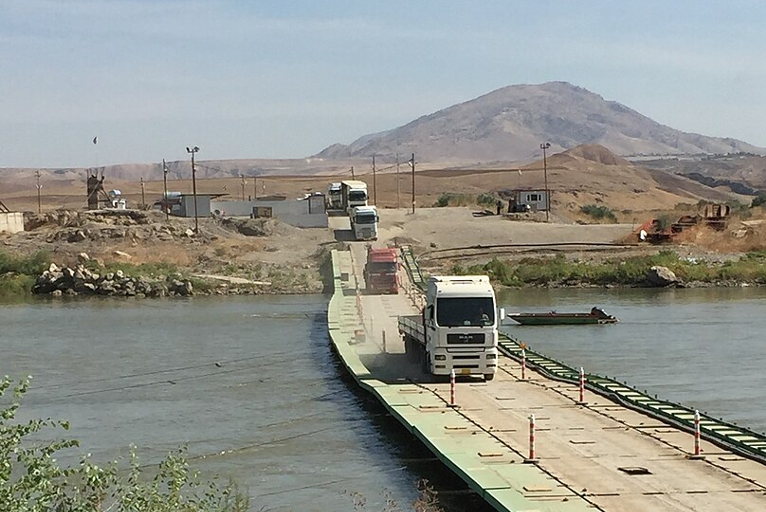
Teaser photo credit: Border crossing at Semalka between Iraqi Kurdistan government and the AANES on the Tigris river. By Janet Biehl – https://www.flickr.com/photos/janetbiehl/24172949252/, CC BY-SA 2.0, https://commons.wikimedia.org/w/index.php?curid=99470570






Comments
Welcome to the new Resillience commenting system!
We have moved from the former Disqus commenting system to a new system as of September 10, 2026.
We made this change because of privacy concerns regarding Disqus. It's also part of a set of changes to bring more services to the Resilience community under a single login: commenting, (coming September 2026), and online courses (coming 2027). Unfortunately, your old Disqus comments may not reliably link to your account in this new system. Please contact us if you have any questions or concerns.
“That’s why it must come as no surprise that social struggles continue
even after the foreign colonizer’s rule has been overthrown”
I’d have thought that was because European colonists entered into archaic societies that had no tradition of anarchic democracy in the first place. If you believe that only noble savages living in harmony with themselves and nature were ever colonised, you might expect that primitive eden to return once the colonists have left. Doesn’t seem to have been the case though, so decolonised people are bound to disappoint the anarchists. And they might go back to eating each other and having children at 12 years old – something you seldom see anarchists making a case for.
Counterpoint: Whenever states have encountered these loosely organised, self governed collectives, the defeat of the “self governed” has been crushing. In terms of anti imperialism that points to the role of a modern, organised, large state in actually, physically, protecting people from predatory other states. The only force that is able to counter US imperialism right now are these vast, powerful other states, no matter how that offends anarchist sensibility.