

It is self-evident that to survive this critical century, we need to learn the truth about it. Whether it is specific issues like the Ukraine war, the Covid pandemic, a conspiracy to take control of the world, or the wider pursuit of human progress, the truth is extraordinarily elusive, and fiercely contested.
Furthermore, knowing the truth helps us to see how these matters are themselves linked to each other, that they are different facets, layers, or scales, of a complex, reciprocal process of symptom and cause that is creating a crisis in liberal democracies, especially the US, and even a threat to global civilisation.
Seeking to understand the truth about these matters also reveals how badly mainstream politics and media are failing us because they are not interested in the truth, only in ‘selling’ a ‘narrative’ that serves a limited and self-interested agenda. Covid and the Ukraine war have made me see this more clearly.
I discuss these concerns in a recent essay in the American magazine Salon. This excerpt focuses on the human future, on examining whether the whole cultural basis of how we live is ‘true’ in the sense of guiding us in making the right choices to avoid disaster and improve our prospects.
I am not denying the roles of global political, economic, environmental, and other factors. But I believe the deeper story of existential uncertainty and concern is also part of the picture, a root influence. People know ‘the system’ is not working. This dislocates or ‘untethers’ us from official narratives, which then makes governments more susceptible to corrupt and self-serving behaviour, and citizens more prone to mistrust and improbable beliefs. When the foundations of a civilisation crack, all hell can break loose.
As I said in an earlier, 2022 essay for Salon, changes in society over past decades both reflect and strengthen the growing political influence of postmodernism, with its multiple narratives, relative truths, ambiguities, pluralism, fragmentation and complex paradoxes. We have yet to learn how to deal with this situation. Instead of accepting and working within it by being more flexible and open-minded, there is tendency, especially within politics and the media, to rush into conflict, contest, and censure, often over contrived or exaggerated issues. All this has served to fracture and divide Western societies.
By and large, our political leaders do not accept how serious our situation is. I quoted former US president Barack Obama in the essay as saying in 2016: ‘The world today, with all its pain and all its sorrow, is more just, more democratic, more free, more tolerant, healthier, wealthier, better educated, more connected, more empathetic than ever before.’ This past January, President Joe Biden echoed this optimism, tweeting: ‘Two years in, and I’ve never been more optimistic about America’s future’.
In other words, our leaders live in a world at odds with people’s lived realities, wishing away the gravity of the human predicament to continue pursuing, at best, incremental policy changes, which is what they know.
In the 1990s, as part of a larger program by the Australian Science, Technology and Engineering Council, I initiated and participated in a project that included a series of futures-scenarios workshops with young people. We then used the results to conduct a poll of young people. The questions were repeated in a 2005 poll of people of all ages. The results are fascinating given how the 21st century has begun.
One question we asked was: Thinking about the world in the 21st century, which of the following two statements most closely reflects your view?
- By continuing on its current path of economic and technological development, humanity will overcome the obstacles it faces and enter a new age of peace and prosperity.
- More people, environmental destruction, new diseases and ethnic and regional conflicts mean the world is heading for a bad time of crisis and trouble.
In 2005, of people of all ages, only 23% chose the first, optimistic scenario, while 66% chose the second, pessimistic scenario.
In another question, we asked people to read two descriptions of possible futures of Australia in 2020, again based on the workshop scenarios. They read in part:
- A fast-paced, internationally competitive society, with the emphasis on the individual, wealth generation and enjoying ‘the good life’. Power has shifted to international organisations and business corporations.
- A greener, more stable society, where the emphasis is on cooperation, community and family, more equal distribution of wealth, and greater economic self-sufficiency. An international outlook, but strong national and local orientation and control.
We asked which of the two futures described or came closer to the type of society that they expected Australia would be? And which of the two described or came closer to the type of society they would prefer Australia to be? In 2005, for all ages, 73% expected the first, ‘growth’ scenario, and 27% expected the second, ‘green’ scenario; but only 7% preferred the first, and 93% preferred the second.
In other words, most people did not expect the future they preferred. The descriptions were an attempt to capture, however approximately, the essence of the scenarios that young people constructed in the workshops, most of which were run over two days. The prevalent pessimism was left out of the survey scenarios to compare what I’ve called ‘the official future’ – that which governments promise, and on which they base their policies – with people’s preferred future.
The results are probably applicable to other Western nations, and broadly consistent with findings of many other surveys that capture people’s deep concerns for the future, and the way what they want – their preferred future – differs from the ‘official future’. I have described these surveys elsewhere, including in my first Salon essay and in a 2019 scientific paper.
One example I cited was a 2013 study investigating the perceived probability of threats to humanity in four Western nations – the US, UK, Canada and Australia – which found a majority (54%) rated the risk of our way of life ending within the next 100 years at 50% or greater. The responses were relatively uniform across countries, age groups, gender and education level. Almost 80% agreed ‘we need to transform our worldview and way of life if we are to create a better future for the world’.
The Pew Research Center found in a 2018 survey that 57% of Americans thought that when children today grew up, they would be financially worse off than their parents. A 2019 survey found 60% of American adults predicted that that the US would be less important in the world in 2050. Two-thirds of adult Americans held the view the US was less respected by other countries today than it was in the past, a 2022 Pew survey showed. These findings are another reflection of the disjunction between people’s perceptions and the political status quo.
The futurist Jim Dator said in the 1990s that he would like to avoid the 21st century and move straight to the 22nd, for which he saw some hope: a time when, one way or another, by choice or compulsion, humanity would have dealt with all the challenges it faces – population pressures, environmental destruction, economic equity, global governance, technological change.
Dator wrote that this century was not likely to be pleasant for anyone because we would pay the price for ignoring the future. ‘Things may seem calm now: the West – the USA – firmly in control’, he said. ‘But that is not so. The eye of the hurricane is passing, and the fury of the future getting back at us will be felt for some time to come.’ This was not how most Western commentators saw things at the time, instead celebrating the collapse of the Soviet Union and the ultimate triumph of liberal democracy and capitalism; hubris dominated.
Our situation represents what I have called ‘the demise of the official future’, a loss of faith in the future leaders promote and claim they can deliver. This ‘futures gap’ stems from political and journalistic cultures that are too heavily invested in the status quo, unable to see beyond their limited and constrained boundaries and horizons. Mainstream political and media players face a growing need to manage differently the ‘cognitive dissonance’ between how they think about the world and their work, and the emerging realities of life today and its existential challenges – instead of largely ignoring the latter, as they have done.
Learning the truth, the whole truth, behind global threats is extraordinarily difficult. The difficulty is worsened by the failure of governments and their agencies to tell us the full stories behind them. This failure is, in turn, deepened by the unwillingness of the mainstream media to investigate and interrogate the official narratives. This situation extends to the over-arching, grand narrative of progress, and how it is defined and pursued.
So, how do we know what is true in today’s world? The answer is with great difficulty; and by being sceptical, tolerant, open-minded, vigilant, and determined.
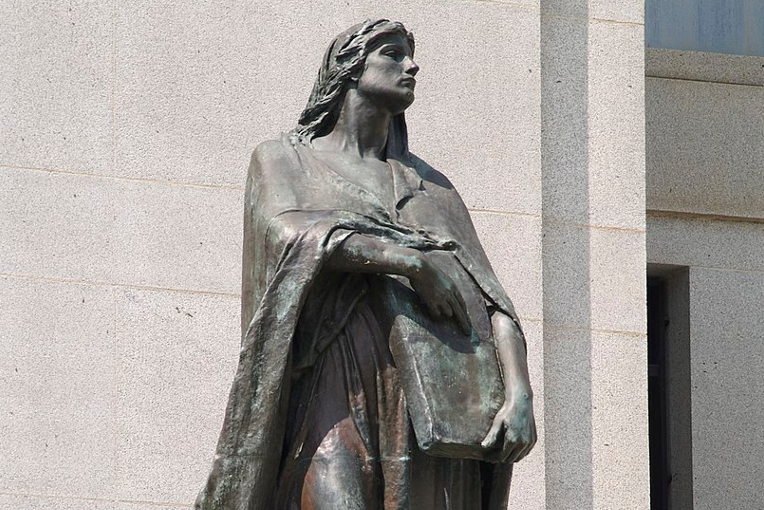
Teaser photo credit: Walter Seymour Allward‘s Veritas (Truth) outside Supreme Court of Canada, Ottawa, Ontario Canada. By Colin Rose – originally posted to Flickr as Truth, CC BY 2.0, https://commons.wikimedia.org/w/index.php?curid=3883863




Comments
Welcome to the new Resillience commenting system!
We have moved from the former Disqus commenting system to a new system as of September 10, 2026.
We made this change because of privacy concerns regarding Disqus. It's also part of a set of changes to bring more services to the Resilience community under a single login: commenting, (coming September 2026), and online courses (coming 2027). Unfortunately, your old Disqus comments may not reliably link to your account in this new system. Please contact us if you have any questions or concerns.
It’s easy to equivocate that word, “truth,” the process of which tangles up thoughts/perceptions like a plate of spaghetti. It’s too bad such equivocation continues so strongly. As a physicist, truth is clear (F = ma, for instance) to whatever depth you want to pursue it – I mean, not something to be worshiped, but something with immense practical day-to-day applicability, especially as a test against falsehood. On the Climate Breakdown front, politics of lying are the order-of-the-day (from the IPCC WG-III); so knowing and understanding the physical facts (i.e., IPCC WG-I) seems of little practical value.
The there’s myth and fantasy… to all appearances mostly underpinned by technooptimism; and, of course, outright denial. We should be really careful with that word truth.
It seems to me that a realistic approach to information and communication would be to understand that they are about power and rhetoric. The aim is to persuade people to co-operate or to create a world view in which it is natural to behave as you might want them to behave. and you are convincing yourself at the same time to get yourself motivated.
In other words, accuracy is less important in human language than persuasion. That is why doing ‘science’ is difficult.
This fits in with the second problem of the modern world which is probably neoliberalism not postmodernism.
When the corporate sector faced the “crisis of Democracy” (Samuel Huntingdon), they decided that they had to retake power, and stop paying taxes, and stop having environmental laws passed which hindered them. The aim was to protect themselves from democracy. The only way to do this was to lie. The rightwing in particular found it difficult to argue, “we want to take away the rights you are gaining, the wealth you are gaining, and the power you are gaining, and give it back to the market-elites” so they had to lie, that they were helping people and freeing them from government – while letting government be taken over by the market-elite.
Any statements which challenged corporate domination and the virtue of profit had to be dismissed, no matter how good the science behind them. Hence Exxon and others had to hide and deny their own research which predicted that burning fossil fuels generated climate change and would cause massive dissruption, in order to keep selling fossil fuels, and to help stop any interferrence in this economy.
People started loosing money, loosing their homes in various financial crises, they saw and still see their future, which had looked so promising in the 60s and early 70s, evaporate, as more and more wealth went upwards, and they became more and more ignored, and told that the market will save them, when it doesn’t.
The neoliberal master stroke was to tie together the discontent they had generated, with a politics that supports more stringent neoliberalism, and a greater crisis. And of course, this accidentally, makes it harder to deal with any challenges we face.
Elites have literally, uncontested even in mainstream publications, engaged in human trafficking and the sexual abuse of young girls on Epstein’s island. That is actually what happened.
Edit: That was a comment to the linked Salon article which I belatedly noticed was different from this one.