


Click on the headline (link) for the full text.
Many more articles are available through the Energy Bulletin homepage.
CO2 sensitivity possibly less than most extreme projections
Dean Kuipers, Los Angeles Times
A new study in the journal Science suggests that the global climate may be less sensitive to carbon dioxide fluctuations than predicted by the most extreme projections, and maybe slightly less than the best estimates of the Intergovernmental Panel on Climate Change.
Andreas Schmittner, a climate scientist at Oregon State University in Corvallis, Ore., and lead author on the new study, notes that, while man-made global warming is happening and tiny changes in global average temperatures can have huge and deleterious effects, the atmosphere may not be as sensitive to carbon dioxide change as has been reported.
“We used paleoclimate data to look at climate sensitivity to CO2 doubling in the atmosphere, and we are coming up with a somewhat lower value,” says Schmittner.
(25 November 2011)
Ice age analysis suggests global warming may be less severe than predicted
Scott Learn, The Oregonian
After crunching ice-age climate numbers, Oregon researchers and colleagues from Harvard, Princeton, Cornell and Barcelona came up with two encouraging conclusions about future global warming:
The planet appears less sensitive to carbon dioxide changes than expected, their study says, so extreme temperature increases in the near future appear highly unlikely.
And future warming may also be less than predicted by the Intergovernmental Panel on Climate Change in 2007, particularly at the upper end of the “likely” range.
“I think we should be worried, but we should not be desperate,” said Andreas Schmittner, an Oregon State University researcher and lead author of the study, published online today by the journal Science. “It’s not already too late to do something. We still have time to figure out a solution.”
(24 November 2011)
Chris Huhne: a new global climate change treaty is not a luxury
Fiona Harvey, Guardian
Energy secretary talks tough ahead of UN conference in Durban, attacking those pressing for weaker agreement
Chris Huhne robustly defended the need for a new global treaty on climate change on Thursday, in an attack on governments and advisors who want to opt for a weaker commitment that would not be legally binding.
But he admitted it could be the end of the decade before such a treaty would come into force, a deadline that many scientists and green campaigners view as too lax if the world is to avoid dangerous climate change.
Speaking days ahead of next week’s Durban climate change conference, Huhne said the UK was showing “leadership” in insisting on new treaty, rather than the “bottom-up” approach favoured by some, under which individual countries and industries would set their own greenhouse gas targets.
Citing research showing that a majority of large global businesses were in favour of a deal, Huhne told an audience at Imperial College London: “A global deal covering all major economies is not a luxury. It is not an optional extra. It is an absolute necessity.”
(24 November 2011)
Suggested by EB contributor billhook who writes:
“Huhne has been striving for a better European Council date than 2020 for the treaty’s operation, but the ongoing US “brinkmanship of inaction” with China still has significant support among the 27 EU nations. That developing nations (and their govt.s) will be harder hit by climatic destabilization than wealthy states has been a standard assumption at the US state department for over two decades – and it implies that US inaction is sensible policy since China’s negotiating strength has to be declining, particularly given mutual awareness of the 35-year timelag on the warming effect of today’s GHG emissions (due to the oceans’ thermal inertia).
“Certainly the demand by developing nations for greater prosperity before peaking their emissions looks increasingly threadbare given the level of damage to their prosperity and stability (especially via crop-failure) that today’s emissions will cause in coming decades.
“Yet nations’ real resilience to massive damage doesn’t actually correlate well with their wealth. Compare the status of America’s New Orleans six years after Katrina killed over 1,800 and left over 6,000 missing, with the status of Japan’s communities hit by the tsunami 8 months ago – which killed about three times as many and wiped out every coastal town for 370 miles. In the latter case the massive volumes of debris have largely already been cleared, with much of it being sorted for recycling, and with 50,000 new dwellings built so far : www.bbc.co.uk/news/in-pictures-15789694 – In this light nations’ real resilience reflects resources including multi-level political coherence, competence, compassion and decision-making capacity.
“Presumably those running China’s command economy are well aware of this fact – but is the state department ? If not, then it is unaware of how delay and the commitment to greater future damages is also weakening the US negotiating hand – which is a myopia that Americans (and the other 95% of us) could bitterly regret.
“Then again, maybe the US empire’s elite regard putting down a rival to its dominance as a priority that overrides all other concerns. It wouldn’t be the first empire with that perverse delusion. “
At Durban, the Big Emitters Will No Doubt Fail Us Again on Climate Change
John Vidal, Guardian/UK
World leaders have reduced climate change to a low-grade, backroom discussion. But developing countries are getting angry
—
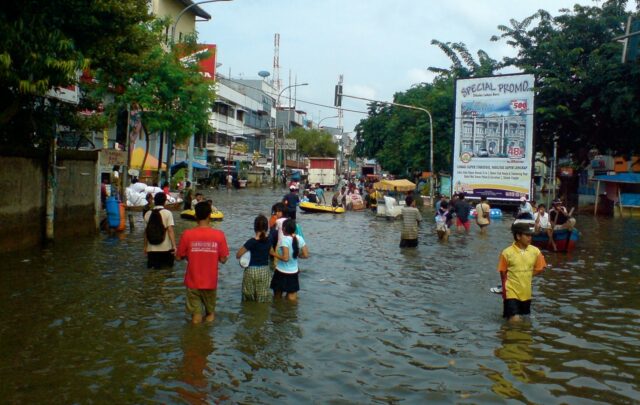
I have just spent 10 days traveling across Africa to assess the impact of climate change. From north to south the broad observations are remarkably similar. More floods, droughts, storms and changing seasons are being experienced: the heatwaves are getting longer and more frequent; the storms more intense; the nighttime temperatures higher; the farmers see new diseases and pests; and the growing seasons appear disrupted. On top of that, the marginal areas are turning to desert and cities are becoming unbearably hot. The peer-reviewed science is still sketchy, but it’s the best there is in a continent starved of research funds and it is consistent with the latest models done by the Intergovernmental Panel on Climate Change.
What is less predictable is the extreme variability of governments’ responses to this unfolding drama. Having dragged climate change from seemingly nowhere to the top of the global agenda only two years ago, and brought more than 100 heads of state to Copenhagen in 2009 to sign a historic new deal, the UN generals sitting in Brussels, Washington, Beijing and Delhi have not just marched it down, they seem now to have disbanded the troops and sent them back home.
Before Copenhagen we were told the world would stop at nothing to get an equitable, fair agreement. Then, we were told, a deal could be done in a week. After Copenhagen, it was so important for the future of humanity that we could expect a deal within the year. That then morphed to two or three years, and now ministers and senior diplomats are playing down expectations even further by suggesting it may take another four years of talks to come up with a plan that could, possibly, come into effect in 2020.
In other words, some leaders of the rich and big-emitting countries have lost interest and political momentum and want to consign the talks, like those on world trade, to a never-ending, never-achieving, low-grade, low-profile discussion to take place in backrooms without anyone listening or caring much.
(25 November 2011)



Comments
We changed commenting systems on September 10, 2026 as part of a site-wide functionality and security upgrade. Your past comments have not disappeared, and you can still log in with your old Disqus account credentials if you wish. Contact us with any questions.