

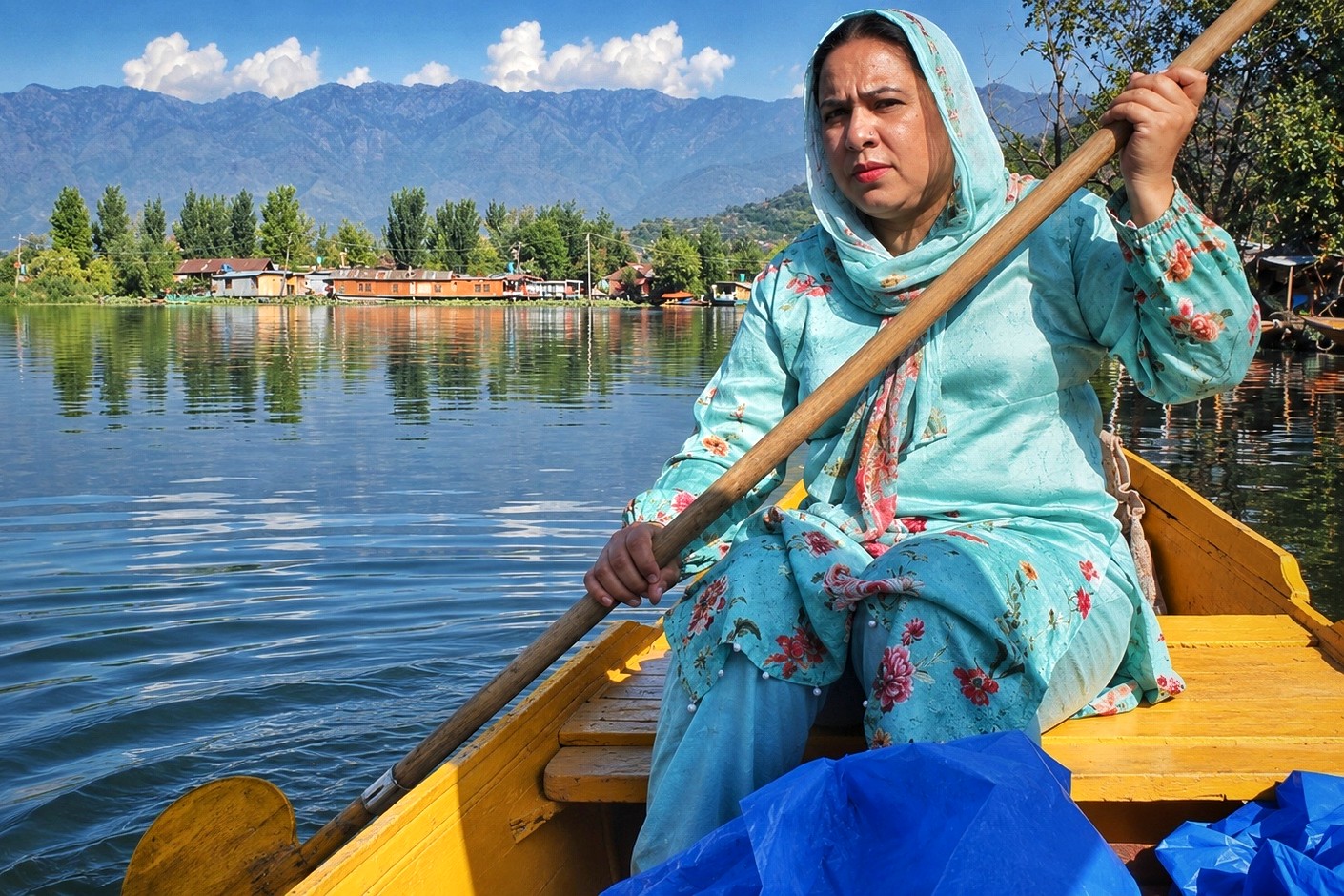
JAMMU AND KASHMIR, SRINAGAR – Every day before the sun rises over the Zabarwan range, casting its first rays on Dal Lake, often called the jewel in Kashmir’s crown, 35-year-old Simran Irshad heads towards the water with a singular mission: to clear its choking weeds.
The 7.44-square-kilometre lake, celebrated for its beauty and ecological importance, faces mounting pressure from pollution, encroachment and climate change. A study published in the International Journal of Latest Technology in Engineering, Management & Applied Science (IJLTEMAS) estimates that around 73% of Srinagar’s untreated sewage enters the Dal Lake and Jhelum River network.
The Lake Conservation and Management Authority (LCMA) has undertaken conservation and de-weeding drives, but the lake’s environmental challenges extend beyond vegetation. Wastewater discharge, nutrient pollution and encroachment continue to threaten its fragile ecosystem.
“This lake is our lifeline, and we have lived on it,” Simran says, describing her work gathering weeds from the water. “We can’t sit hand-in-hand and watch this lake die.”
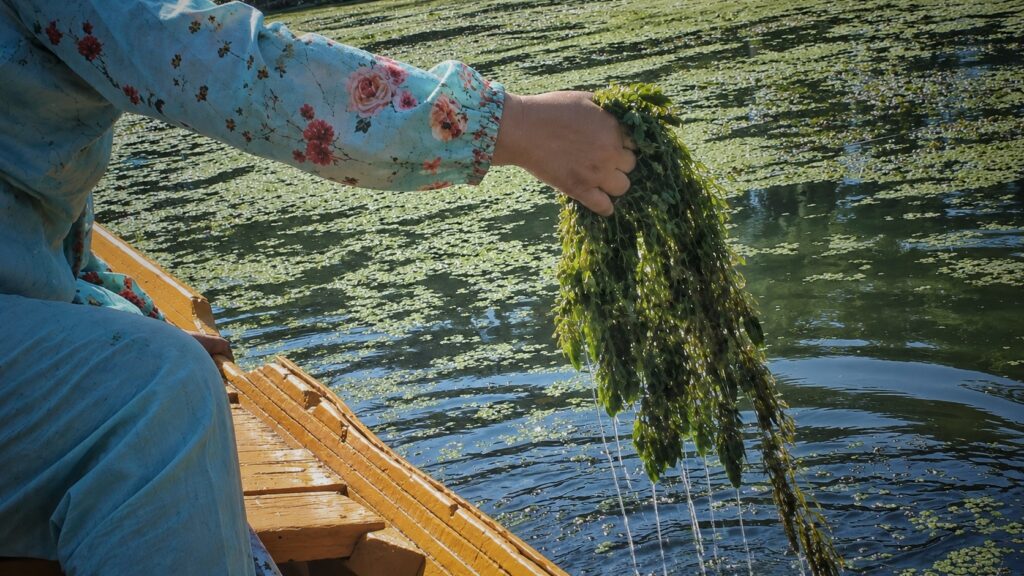
Over two years, Simran has removed more than 36,000 kilograms of weeds from the lake, turning some of the harvested vegetation into raw material for a new craft.
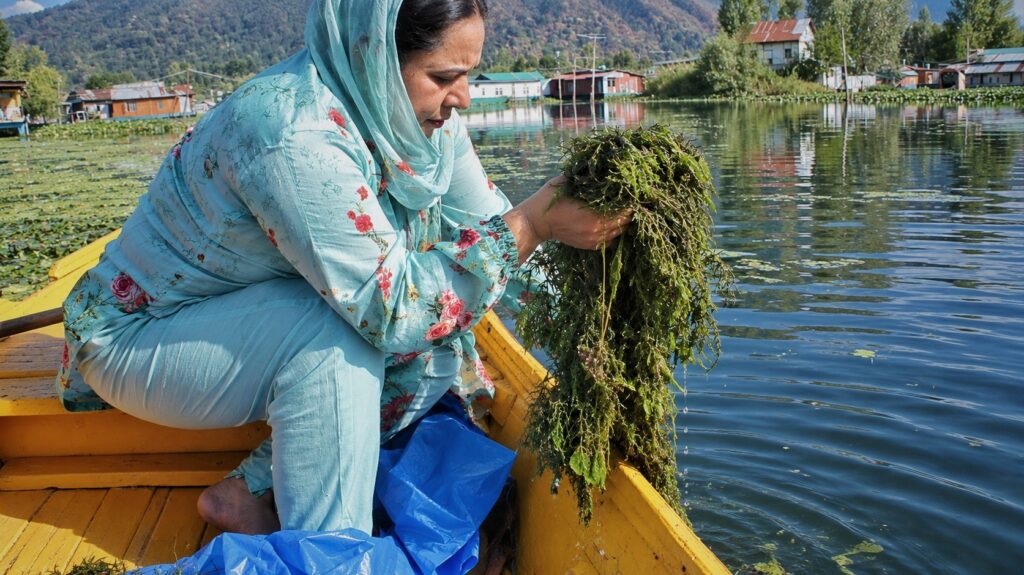
For Simran, however, clearing the weeds is only the beginning. Rather than treating the vegetation as waste, she brings it back to her workshop, where it becomes the basis for an experiment that could give new life to Kashmir’s traditional papier-mâché craft, reduce reliance on conventional paper pulp and create work for women.
She calls it Grass Mâché.
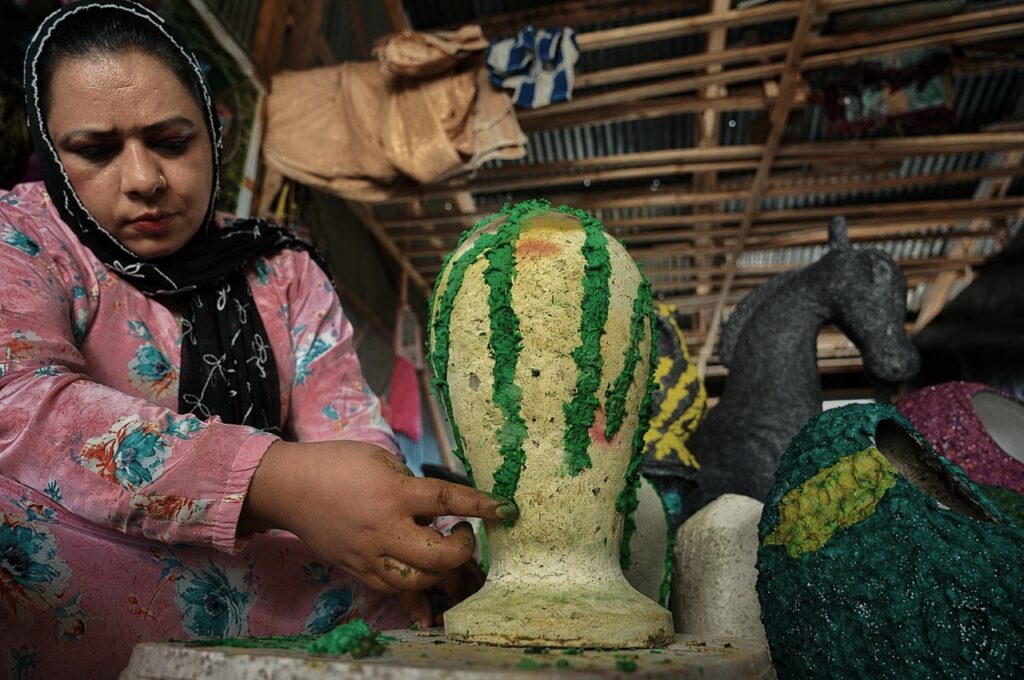
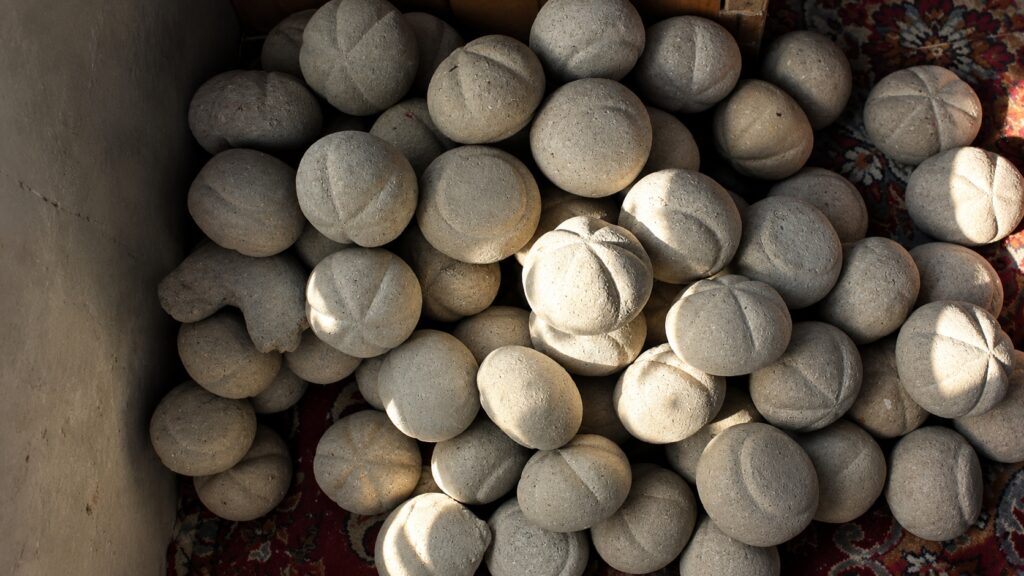
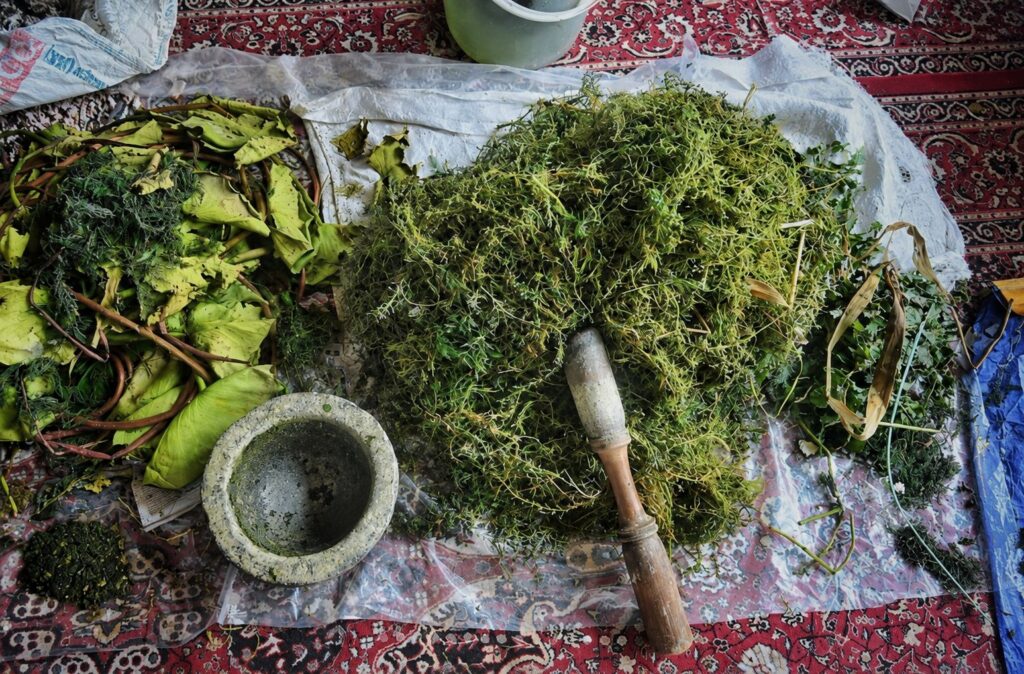
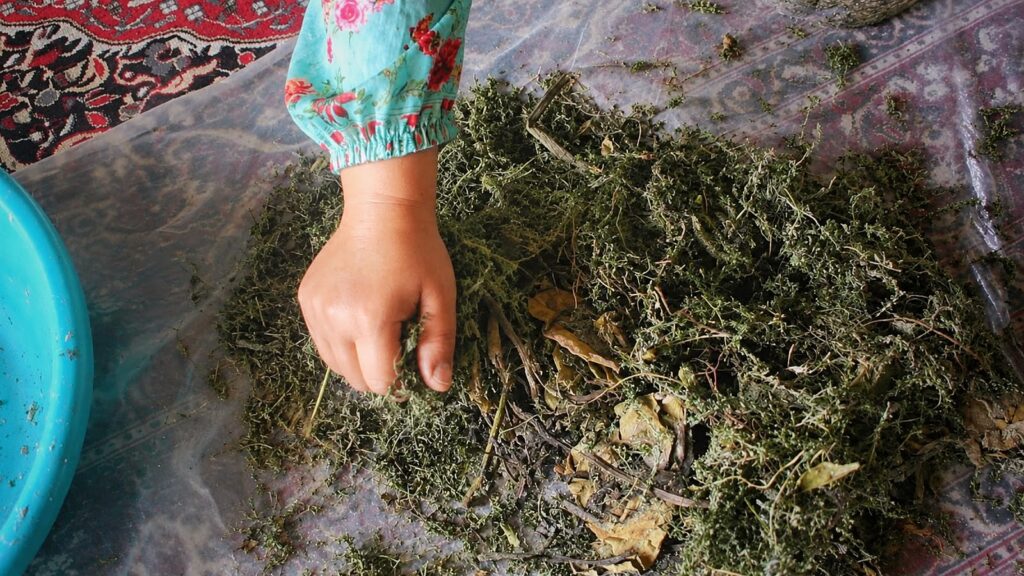
In Nowshera Zoonimar, the transformation from lake weed to finished craft is painstaking. The vegetation is dried and processed before being beaten into fibres. Simran combines it with recycled paper pulp and a binding agent, then moulds the mixture into decorative objects. As they dry, the pieces develop a firm, stone-like texture.
“I was initially working with paper pulp,” Simran says, reflecting on the origins of her enterprise. “It kept going around in my mind that my craft would eventually end if paper availability became a problem. Paper comes from trees; trees are cut down to make paper. What I am removing from the lake is like a treasure given to me by God.”
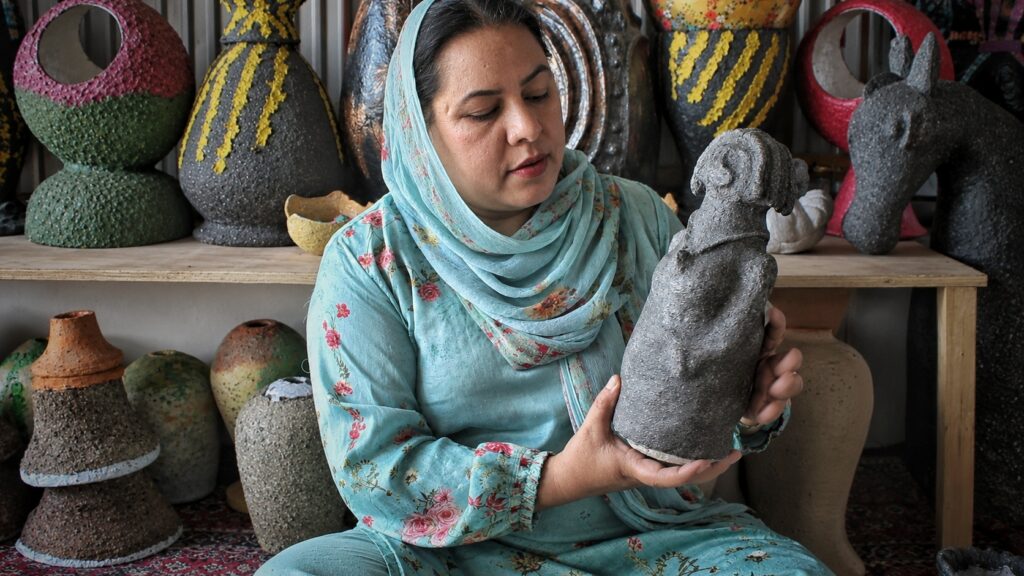
The finished pieces include decorative vases, hanging ornaments and other home accessories. Their significance lies not only in their appearance, but in the transformation they represent: vegetation removed from the lake becomes a material for a new production cycle.
Simran had spent around five years learning and practising papier-mâché, particularly sakhtsazi, the process of preparing and shaping an object’s base before it is decorated. Kashmir’s papier-mâché tradition, shaped by Persian artistic influences, is known for its elaborate floral designs, intricate patterns and painted boxes, trays and ornaments. But the craft depends heavily on paper pulp, and rising material costs prompted Simran to look for an alternative.
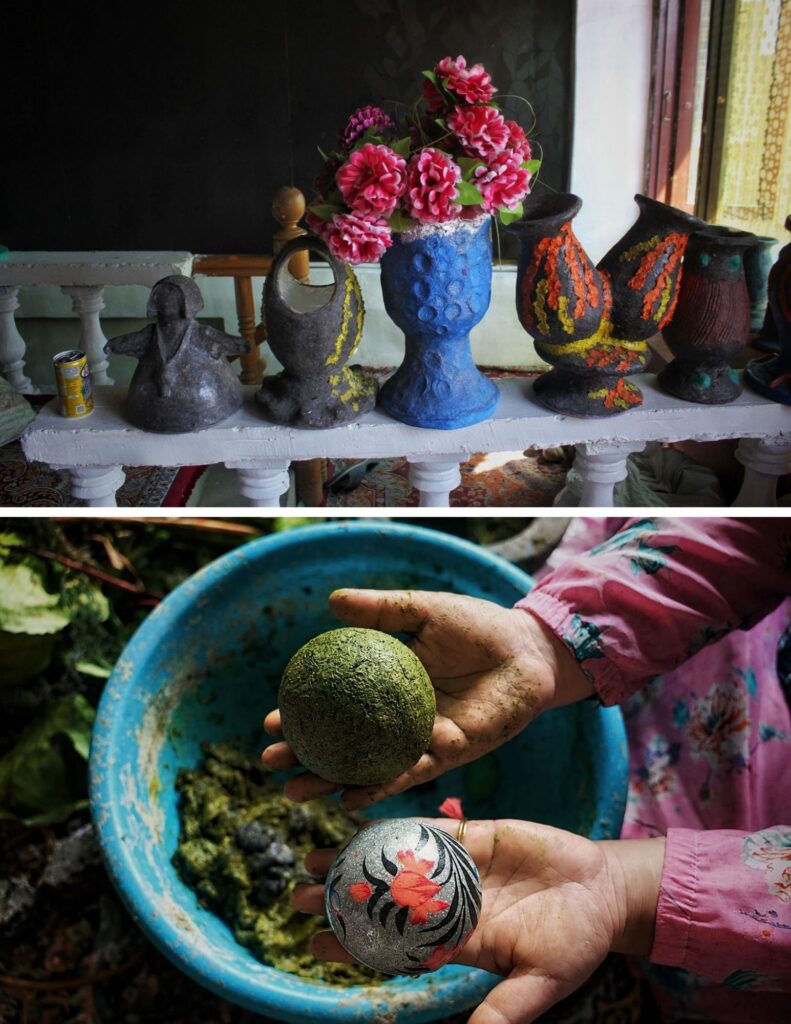
For nearly two years, she experimented with different grasses and plant fibres, testing how they could be dried, processed, mixed and moulded. Not every combination worked. Some materials failed to bind; others cracked or fell apart as they dried. She kept adjusting the process until she found a mixture that could hold its shape.
“I tried different kinds of grass, but not everything worked. Some fibres would not bind properly, while others would crack or fall apart once they dried,” Simran says as she decorates a flower vase. “I had to keep changing the process and trying again until I found a mixture that could hold its shape. It took a lot of patience, but I did not want to give up.”
The result is both a practical response to rising production costs and an attempt to adapt an established craft without abandoning its handmade character. By incorporating aquatic weeds and recycled paper, Simran hopes to reduce the need for fresh paper pulp while making use of vegetation already being removed from the lake.
Dal Lake is more than a landscape of houseboats, shikaras and mountain reflections. Its waters support fishing and other lake-based livelihoods, while tourism and floating gardens form part of Srinagar’s cultural and economic life. But pollution, encroachment, wastewater discharge, agricultural runoff and nutrient accumulation have put the lake under sustained pressure. Nutrient-rich water can encourage excessive plant growth, while sediment and vegetation complicate the maintenance of open channels and water circulation.
The government has undertaken restoration measures that include dredging, reopening navigation channels, installing aerators, catchment plantation and continuing de-weeding operations. The Jammu and Kashmir administration’s Economic Survey 2025–26 also identifies sewerage infrastructure as a priority, including a proposed 30-million-litre-per-day sewage treatment plant at Gupt Ganga in Nishat and upgrades to existing facilities. An integrated Dal-Nigeen conservation project has also been planned.
These efforts address a problem that cannot be solved by removing weeds alone. Aquatic vegetation is part of a lake ecosystem; the challenge is to manage excessive growth while tackling the sources of pollution and nutrients that encourage it. Turning some harvested biomass into craft material cannot, by itself, restore water quality or resolve sewage discharge.
Simran’s work, however, connects environmental management with local livelihoods. If vegetation already being removed can be turned into a marketable product, it can become a resource for local production rather than simply another waste-management burden.
For Simran, the lake’s condition and Srinagar’s economic prospects are closely linked. “If the Dal is clean, tourism will flourish,” she says.
Simran’s own path into handicrafts was not straightforward. She left school after the tenth standard and entered a field in which women can face barriers to becoming independent artisans and entrepreneurs. She has recalled being told that a woman’s place was at home, even as she tried to learn the craft.
Her persistence led her to Mohammad Yousuf Najar, a “master” of traditional Kashmiri papier-mâché, who became her mentor. The training gave her the foundation to experiment independently, first with paper pulp and later with aquatic vegetation.
Simran now wants to help other women develop skills, earn an income and participate more fully in the handicraft economy. She has trained around 50 women in papercraft, with 15 working on the weed-based technique. But expanding the initiative has proved difficult.
The process remains labour-intensive. The weeds must be beaten and prepared by hand before they can be mixed into pulp. Each piece can take between 10 and 20 days to complete, depending on its size and the weather. Rain and snowfall can slow the drying process, while limited workspace restricts how much can be produced at one time.
Simran says she has had to turn down some orders because she could not guarantee delivery on time. Machinery to process the fibres more quickly could increase production and allow her to involve more women. Space, finance and access to markets remain additional hurdles.
Women from villages have contacted her about working with grass and weeds available in their own areas. Simran wants to make that possible, but it will require equipment, workspace, and a reliable route to customers. For now, Grass Mâché remains a small, developing enterprise. Its growth will depend on finding a stable market, maintaining product quality and ensuring that the women involved receive a fair return for their labour.
For Simran, the ambition is straightforward: to make more products, train more women and ensure that the weeds gathered from Dal Lake do not end their journey in a waste pile. What began as an attempt to find an alternative to paper has become a way to connect the lake’s environmental challenges with women’s economic opportunities.
She knows how uncertain it can be to begin with an idea and spend months trying to make it work. The failed experiments and repeated adjustments taught her what the material could do, but she does not want other women to face the same long process without support. She hopes to secure the equipment and resources needed to expand production and make the technique accessible to more women.
“I don’t want their two years to go the way my two years went. I want more women to learn this craft, earn for themselves and become independent. With the right support, we can turn what the lake discards into something that changes lives,” she says.





Comments