

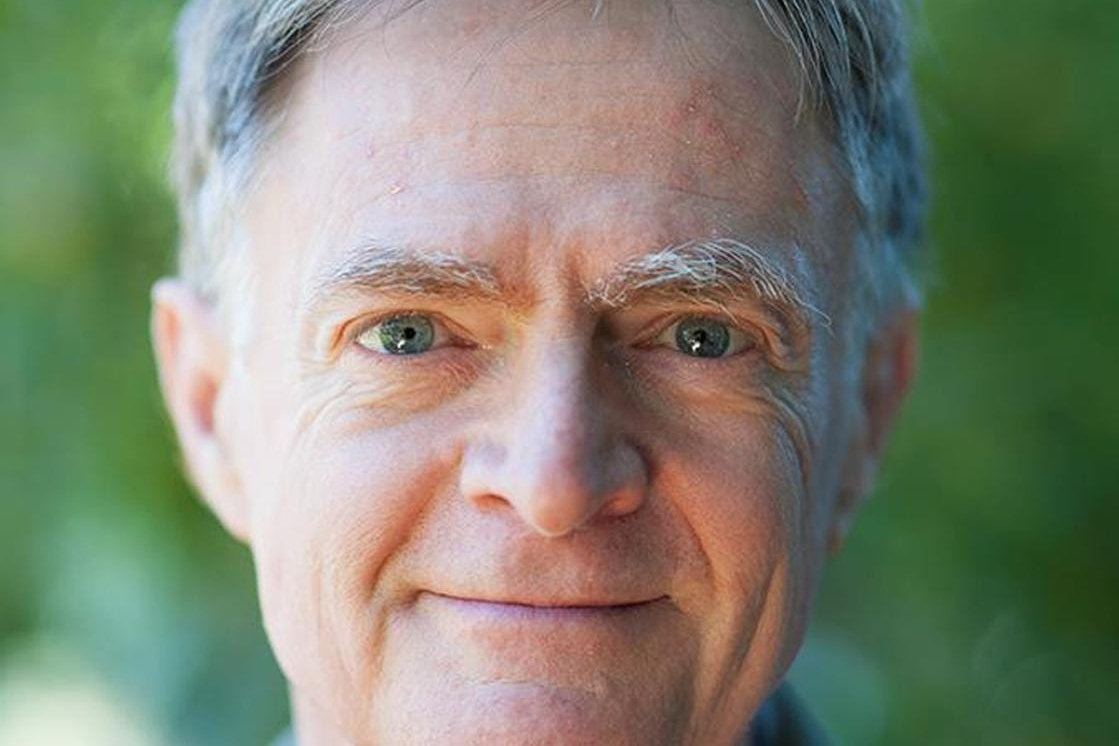
Richard Heinberg passed on July 19. His Wikipedia entry calls him an American journalist and educator, but he was far more than those appellations permit. He wrote 14 books and countless essays, all meticulously researched and each one brilliant. Like me, he spent formative years in a spiritual community, in his case, Colorado’s Sunrise Ranch. I came to know him when I read his book, The Party’s Over: Oil, War, and the Fate of Industrial Societies in 2003. I bought a case of the books to give out to friends and switched from my publisher to his. I was treated to his fiddle-picking for more than twenty years as we shared book and lecture tours.
Lately I’ve noticed that, as more people realize our collective goose may truly be cooked, there is, besides hand-wringing, denial, and grasping for untenable “solutions,” a growing urge towards peace and reconciliation. In my view, humans have always meddled with nature. You could say that is in our nature. We are the great disturbers in the grand ecosystem design. Homeostasis, as it has evolved, now relies on homo-stasis.
We are Gaia’s epigenome. Our role now is to midwife a post-Anthropocene recovery by regenerating carbon-capturing, harmony-restoring ecosystems, even if much of that may only come to fruition after Homo collosus has left the stage.
In his last book, Power: Limits and Prospects for Human Survival (2021), Richard’s advice to young people was broader than “prepping.”
Practical self-reliance, he wrote, was necessary but not enough: you need to learn social competence, and not the kind that issues from clickbait. Health, ecological literacy, and emotional resilience, including collective trauma repair, will aid you in all aspects of life in our uncertain, but very dire future.
The skills Richard listed:
- Grow food; study permaculture.
- Read people, especially to judge trustworthiness.
- Be trustworthy yourself.
- Express yourself clearly and persuasively.
- Consider not reproducing.
- Make decisions by consensus.
- Repair and use simple, durable technologies.
- Fix farming and construction tools and small engines; make spare parts from salvaged materials.
- Defend yourself.
- Heal the body through nutrition, herbs, and basic emergency care.
- Learn local nature: plants, birds, and insects; become comfortable in the wild.
- Produce beauty through art, music, or movement.
- Learn to process trauma emotionally.
I have been toying with the new A.I. tools for creating content, aware that every use carries nasty energy, water, and climate side effects. I am hopeful my personal lifestyle, which produces extra energy and water while actively reversing climate change in many and sundry ways, offsets at least some of that damage. Richard’s list offers a more positive use of this coloring book format, geared towards younger children.
Shortly after Richard passed, I started to draw a 32-page, all-ages coloring book that turns his advice into a practical, non-alarmist journey. A teenage protagonist named Maya learns to care for food, tools, bodies, ecosystems, relationships, creativity, and community. She is supported and guided by her neighbors: Richard, an inventive friend who loves repair and mechanical systems; Aunt Jo, a gardener, herbalist, and patient teacher; Sam, a skilled listener and facilitator of community meetings; and Maya’s ecovillage of people of varied ages, bodies, and cultures, emphasizing that resilience is cooperative rather than individualistic. The panels emphasize food growing, permaculture, trust, communication, consensus, repair, first aid, nature knowledge, art, and trauma processing.
Here are a few early draft pages of my coloring book, turning Heinberg’s recommended skills for youth into pages that might inspire them with a sketch—and let them paint the picture.






Comments
We changed commenting systems on September 10, 2026 as part of a site-wide functionality and security upgrade. Your past comments have not disappeared, and you can still log in with your old Disqus account credentials if you wish. Contact us with any questions.