

Originally published on December 5, 2025.
This excerpt is adapted from Tara Lohan’s Undammed: Freeing Rivers and Bringing Communities to Life (2025) and published here with permission from Island Press. It was produced for the web by Earth | Food | Life, a project of the Independent Media Institute.
With more than 550,000 dams in the United States, free-flowing rivers are an endangered species. We’ve dammed, diked, and diverted almost every major river in the country, straightening curves, pinching off floodplains, and blocking passage for fish and other aquatic animals. But this has come at a great cost. Freshwater biodiversity—all the organisms that hail from our rivers, streams, lakes, and wetlands—is among the most threatened on the planet. Dams have played a big role in that demise, pushing fish, mussels, and other animals to the brink, and some over it. In North America, nearly 40 percent of fish are imperiled, and 61 species have blinked out since 1900.
A growing dam removal movement has led to some 2,200 dams being blasted and backhoed from U.S. rivers—most of them in the past 25 years. It’s an extraordinary turn of events for a dam-loving country. Europeans began erecting river barriers soon after they arrived in North America. Massachusetts’s Old Oaken Bucket Pond Dam, built in 1640, is one of the country’s oldest known dams. Thousands more followed across New England, then down the East Coast, and eventually westward. They powered mills that ground corn, cut lumber, forged tack, and produced textiles. As dams raised the height of the water behind them, they also smothered rapids and white water so that logs could be floated from upstream forests—where they were felled—to downstream industry, where they were processed. After hydroelectric power replaced mechanical power in the 1880s, the dams kept towns and cities alight.
As dam building pushed westward, dam heights pushed skyward. Hoover Dam, built in the 1930s with the labor of 21,000 men, sits 726 feet high and more than 1,200 feet long—more a fortress than infrastructure. Grand Coulee Dam on the Columbia River in Washington rises to 550 feet and stretches nearly a mile long. The United States emerged from the Great Depression into a dam-building frenzy that lasted more than 30 years, dubbed the “go-go years” by Marc Reisner in Cadillac Desert, his iconic book on western water. Between 1950 and 1979, approximately 1,700 dams were built each year.
The Big Fix: Lessons from Two Large-Scale Restoration Projects
What happens when bold regenerative ideas meet human-caused environmental destruction? In this event with Sammy Gensaw (Yurok leader) and Andrew Millison (permaculture practitioner), explored how a deep-rooted sense of place, strong leadership, and thinking big can spark profoundly positive changes on the landscape and in our communities.
The U.S. Bureau of Reclamation, which built many of the country’s mammoth dams and reengineered its rivers, had a motto: “Our rivers: total use for greater wealth.” Millions of Americans cashed in on the boom, often without giving it a thought. Politicians and regulators championed dams for their power, flood control, water storage, and recreational potential. Indeed, dams shaped the architecture of the West, irrigating millions of arid acres to grow crops for people and livestock, corralling drinking water for cities hundreds of miles away, churning the engines of war to create aluminum for fighter planes and plutonium for bombs, and turning valleys and canyons into giant swimming pools for our amusement.
Woody Guthrie captured the sentiment of those years in his 1941 song “Grand Coulee Dam,” which refers to the Columbia River as a “wild and wasted stream.” Wasted until it was dammed, that is. The folksinger, spurred by a government paycheck for his efforts, penned 26 songs espousing the virtues of the Columbia River’s dams. That sentiment was also a natural extension of an ethos brought to the Americas by European colonists: Nature should be harnessed, subjugated, bent to the will of those manifesting their destiny. Along the way, any impact on fish and river health was either poorly understood or simply ignored. Often the latter. Also ignored were obligations to tribes that had treaty rights to fish rivers that were quickly becoming empty of fish.
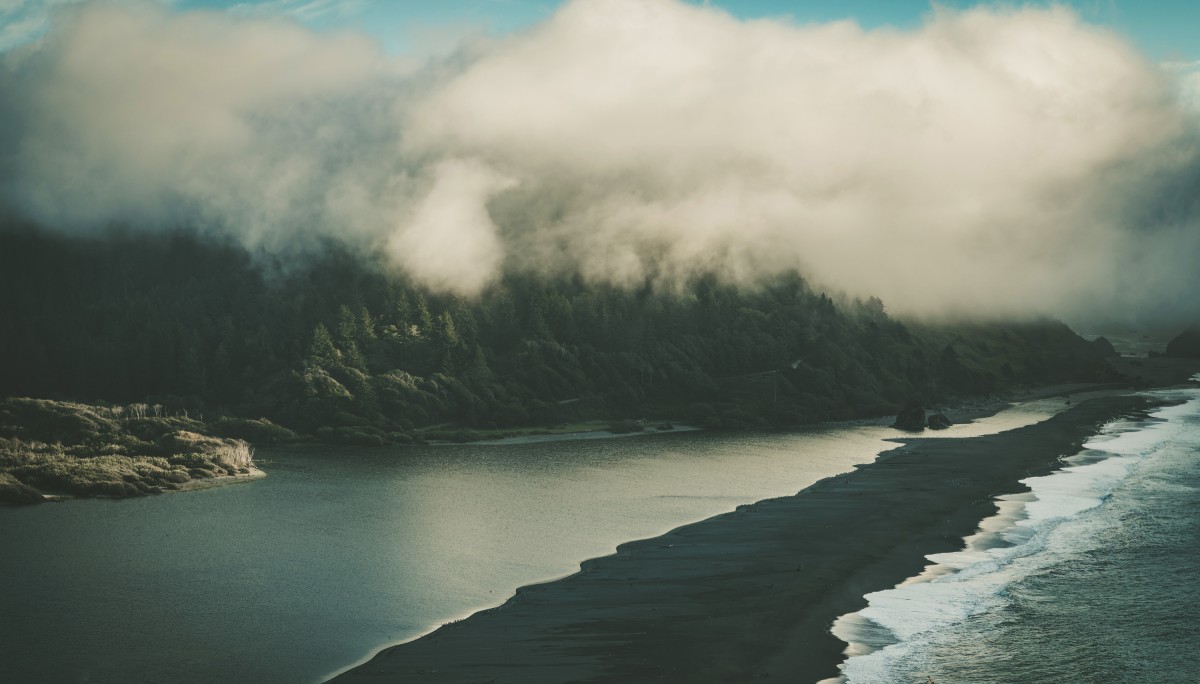
For most Indigenous people, dams didn’t bring enrichment or progress; it was one more theft from the enduring process of colonization in which food, community, ceremony, and sovereignty were stolen. Barry McCovey Jr., a member of the Yurok Tribe in California, called the dams on the Klamath River, where his people reside, “cultural genocide.” Dams have swallowed creation sites, burial grounds, gathering places, fishing holes, homelands, and human history.
In the 1990s, then-Interior Secretary Bruce Babbitt reflected that we have been building, on average, one large dam a day every day since the Declaration of Independence. It hasn’t been without ecological consequences either. Dams have decimated migratory fish populations by blocking their access to vital upstream habitat for spawning, feeding, and evading predators. The barriers also obstruct the downstream movement of sediment and nutrients, thus depleting riverbanks and coastal beaches, hastening erosion, and reducing the growth of riverside plants that feed insects, birds, and other animals.
The water that backs up behind a dam—its impoundment—turns a river into an unnatural lake. Migrating young salmon that once quickly rode spring freshets to the ocean must now navigate slow-moving water over a wide expanse, which takes more energy and increases the chances that they’ll end up as dinner to a hungry predator, of which there are many if you’re a tiny fish. And that’s all before they have to run the turbine gauntlet and face the drop from the dam’s height to the water below. The slack water in an impoundment behind the dam can also heat up, turning these reservoirs into bathtubs with lethal temperatures for some fish. The warm water can also spur the spread of invasive species that prey on native residents.
Dams upend so many natural processes that it could be argued a river dammed isn’t really a river at all. It’s also possible that many of us don’t remember how a free-flowing river really looks and sounds. Dam removals can help restore not just river function but our collective memory, and I think we’ll need to do a lot more of it. The U.S. dam-building flurry hit its peak in the 1970s, and since 2000, we’ve been taking down more dams than we’ve been building. But the dam removal movement didn’t happen spontaneously. It was fought for by tribes, conservationists, fishers, and eventually broad, somewhat unlikely coalitions. It was also aided by environmental laws that protect clean water and endangered species, by scientific studies of dam removals and their impacts, and by regulators willing to manage adaptively.
Many people may see removing dams as outlandish. After all, they provide clean, cheap energy, right? But it turns out that only 3 percent of dams produce hydropower. Although hydropower is often placed in the “clean energy” column, dams and reservoirs also produce greenhouse gases, such as methane, and some do so to a significant degree.
Climate change poses yet more challenges. In drought-plagued regions, such as the Colorado River Basin, very little water can leave major reservoirs too low to produce hydropower or deliver water supplies. On the flip side, many dams today aren’t designed to withstand climate-amplified storms, which are increasing in frequency and severity, can threaten public safety, and may leave big cleanup bills. A big storm in 2023 put Montpelier, Vermont, underwater, and experts found that dams actually made the flooding worse.
There are many compelling environmental reasons to remove dams—including the long list of ecological consequences given above—but public safety is also paramount. The American Society of Civil Engineers (ASCE) gave the nation’s dam safety a “D” grade in 2021. Until 2019, there were more than 15,000 “high-hazard” dams, where a failure would result in the loss of life. And there’s ample reason to be worried. The average age of our dams is 57 years, and more than 8,000 have surpassed 90 years. Aging dams require regular maintenance to ensure their safety, but this comes at a significant cost. As of 2024, $165 billion was required to rehabilitate all nonfederal dams in need of repair, and another $27 billion was needed for federal dams, according to the ASCE 2021 report.
Dams also don’t have to fail to be dangerous. At U.S. low-head dams, many only a few feet tall, some 1,400 people have drowned because of the unseen and unsafe hydraulics that these dams produce. The 6-foot-tall Dock Street Dam in Harrisburg, Pennsylvania, has taken 31 lives between 1913 and April 2025.
Of course, many of our dams serve critical purposes, and I’ve yet to meet a dam removal advocate who thinks that they should all come down. I certainly don’t. But there’s no shortage of low-hanging fruit when it comes to dams worthy of demolition. Tens of thousands of dams—in some states, the majority of dams obstructing rivers and streams—no longer serve a useful purpose. These so-called deadbeat dams include mill dams, where the mills are decades (or centuries) gone, and obsolete dams, such as the 168-foot-tall Matilija Dam in Southern California, which was built for water storage but filled with silt in just 50 years. Some dams are orphans, with no known owner and therefore no one overseeing their upkeep. In many cases, it’s cheaper to take down dams than to refurbish and retrofit them to meet modern safety and environmental laws.
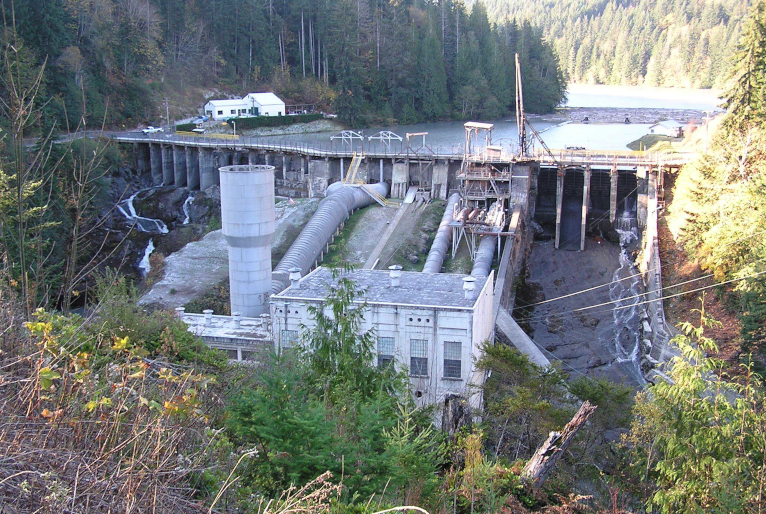
Dam removals can also be a necessary step toward ameliorating harm to Indigenous communities from the loss of food sovereignty, treaty rights, cultural resources, and homelands. More people are now realizing the benefits of restoring nature for nature’s sake—for the bears, birds, and beavers. For the salmon and cedars. Certainly, that’s been the case on the Elwha River in Washington state. People also benefit from ecological restoration. Over the last few decades, we’ve started to better account for what healthy rivers provide. These ecosystem services have helped put a value on something invaluable.
These days, we’re still building dams, although fewer than before, which is a step in the right direction. But to undo centuries of environmental harm, we’ll need bigger leaps.
American Rivers has set an ambitious goal to work with partners to remove 30,000 dams and open up 300,000 river miles by 2050. That work is aided by aquatic connectivity teams now operating in 26 states and counting. There are also some other unlikely partners, such as the hydropower industry, although it’s not a booster of every project.
“It has really come down to safety and economics. They’re electing to take out their lower-performing assets,” Brian Graber, senior director of River Restoration at American Rivers, told me. “There are many more dam owners who want to remove dams, and so trade groups, like the National Hydropower Association, are no longer adversaries.”
Opening up rivers, I think, opens up a door of possibilities both for fish and people. It allows us to reimagine how to grow food without emptying rivers of life, how to generate clean energy without driving extinction, and how to move forward without leaving part of the community behind. We can be better neighbors to each other, but also better people on this planet.


Comments
We changed commenting systems on September 10, 2026 as part of a site-wide functionality and security upgrade. Your past comments have not disappeared, and you can still log in with your old Disqus account credentials if you wish. Contact us with any questions.
Dam removal movement as a global civilizational (not just US) adaptation strategy is critical now as we approach the The Great Simplification of our dominant civilizational. This article highlights the ecological healing benefits well. The idea propounded in the article could also be expanded to include why rapid decommissioning of dams (especially large ones, if not the Mega Dams that are entrenched) now when we can afford is critical because they might have catastrophic consequences as we enter the cascading phases of the coming Simplification. The same logic applies to Nuclear reactors, Weapons, Bio-tech labs, AGI projects etc. We Cannot assume these Frankensteins will go down quietly (asbif there exists a simple "kill switch")as humanity scrambles for its survival. The best time is now.