

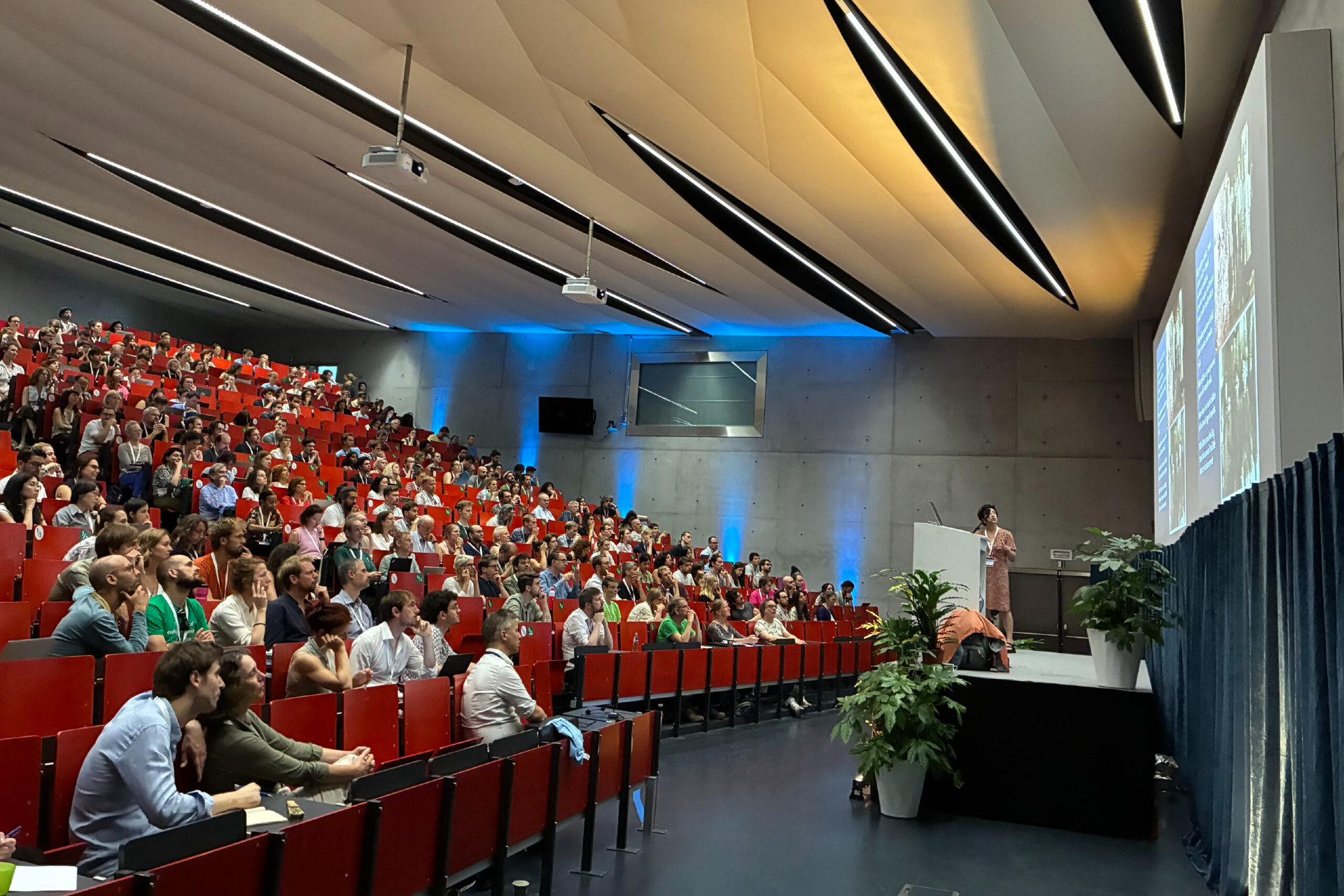
As authoritarianism, military tensions, and temperatures rise, it is easy to look at the end of the world as we know it and ask what the point of academia is. However, as I return home from a 3-day conference of the European Society for Ecological Economics, I want to offer a defence of academia and to argue that academic work is necessary for making the changes we need to see.
To do this, let me turn to the words of the late, great Ursula K. Le Guin:
“We live in capitalism, its power seems inescapable — but then, so did the divine right of kings. Any human power can be resisted and changed by human beings.”
Le Guin goes on to argue that possibilities for change are often found in art. In this brief note I want to argue that possibilities for change might also be found in academic work, especially in Ecological Economics.
The Problems of the Academy
There is a widespread frustration among activists, civil society leaders and even within academia itself. The prevailing wisdom is that academia falls somewhere between an impact-less ivory tower – where small groups of academics write for and read one another – and acting as the handmaiden of capitalism – a bourgeois class refining and reproducing the logic of the dominant destructive system.
There is truth to both these claims. There is pressure to publish at ever faster rates. And some of this work will only be read by a handful of people.
And, yes, much academic work acts to legitimate business as usual. Economics is the obvious example: carefully crafting justifications for exploitation (such as marginal productivity theory of wages) or incremental (rather than transformative) action on climate change (for example, the work of Nobel Prize winner William Nordhaus). But the problem is not confined to economics: much engineering and natural science acts to generate new profit opportunities rather than solve genuine problems.
(The pressures are real: I was once part of a grant review panel on which another reviewer expressed shock and concern because the research team had not attempted to commercialise their work.)
Here I will argue that a certain amount of self-referential work is required. And that some work is able to go beyond business as usual.
Academic work as a tool for change.
Returning to Le Guin, she says that change happens in art, and often in the art of words. While she is speaking directly about fiction, the same is true of academic writing.
This idea has been expressed by many people over the years. Kate Raworth argued it in Doughnut Economics, drawing on the ideas of Paul Samuelson, who said that if he could get his textbook in front of students, he didn’t care who wrote the country’s laws. Milton Friedman expressed a similar idea, writing that the job of intellectuals was to create and keep alive policies that could be implemented in a crisis. This was something he famously put into action through his time at the Mont Pèlerin Society – a group set up with the express purpose of supporting neoliberalism.
A central piece of this is the role academic work can play in embedding ideas in the wider culture. Keynes quipped that:
“Practical men, who believe themselves to be quite exempt from any intellectual influences, are usually the slaves of some defunct economist”.
This happens in various ways. Including by slowly sharing ideas through curricula and textbooks until for some students they are simply common sense. It may also come by making interventions in public debates, as has been done by ecological economists like Tim Jackson, Julia Steinberger, or Tim Parrique. Academic work also goes deeper, influencing hidden intellectual infrastructures: models, accounting systems, policy guidelines that shape what is measured and perceived.
One underappreciated role for academia is in how it confers legitimacy. Feminist economists, including Marilyn Waring and many who followed, have argued that academic work sets the tone and boundaries for what is possible to say and be taken seriously. Waring famously made this case for the System of National Accounts, arguing that it had a powerful hold over public discourse of what was valuable, what counted as real work, and that this derived from roots in academic economic theory.
To develop both these effects requires slow work, often repeating itself.
Slow can take different forms. In a conventional sense, one academic may take a long time to produce something. More commonly today, academic work appears to be fast and repetitive but remains slow. Mass production, by its nature, dilutes the contribution of each piece of work. So building and defending radical theory depends on the combined contributions of the total mass of academic research and teaching.
This work also requires building a community, which requires a certain amount of inward-looking behaviour, self-referential spaces and idiosyncratic tendencies. Without community, work on ideas or activism simply cannot happen. Look at mainstream economics, which is a famously closed shop, and yet holds hugely outsized influence in culture and politics.
Ecological Economics as a Home for Academic Activism
It is still possible to find academic spaces where radical ideas can be created, maintained and defended. Ecological Economics is such a home.
While I have couched this argument in terms of intellectual history and philosophy, it is also something I feel deeply: I am writing this on the train home from the Ecological Economics conference in Ghent. Here I saw and spoke to many people doing radical and exciting work.
I organised a session on learning from Non-Capitalist Economies. We showcased a wide array of papers, including my own work with Adam Green using Material Flow Analysis to understand how resources were used in inegalitarian medieval villages and egalitarian Indus metroplolises. Daria Agarkova and Filipa Reis explored how queer grassroots initiatives in Vienna are constructing non-capitalist infrastructures to support care in their communities. Lucie Sovová presented work on food practices rooted in pre-socialist and socialist traditions from the Global East. Anitra Nelson argued against money and theorised about possibilities for a non-monetary future economy.
Together these papers maintain and extend radical ecological thought: they identify actually existing non-capitalist spaces past and present, and theorise these out to imagine future sustainable economies. Through new and old ideas they set out a language to help us talk about non-capitalist possibility. In doing so they legitimise activist and technocratic work to shape changes in the economy.
Ammunition as well as insight
The role of radical academics is to support and inhabit radical spaces. In doing so we can develop evidence bases, tools, and languages that help activists to design, articulate, and defend their actions.
This happens slowly through papers, curricula, and classes. Messages diffuse from here into books, popular culture, and intellectual infrastructure. The work to do this may at times looks slow, and repetitive, and it is surrounded by unhelpful work holding back system change. But radical academic work is essential, especially at the end of the world.
Let me close by paraphrasing Le Guin: Resistance and change often find homes in academia. Today I find them in our academia, Ecological Economics.




Comments
We changed commenting systems on September 10, 2026 as part of a site-wide functionality and security upgrade. Your past comments have not disappeared, and you can still log in with your old Disqus account credentials if you wish. Contact us with any questions.
Universities need bums on seats, to pay salaries and overheads. Those bums – increasingly – are 'paying' with debt. Thus it can be argued that academics are spending tomorrow, today.
I have no problem with the discourse; indeed we need more. But within a part of unsustainability? Surely we need to be setting up education OUTSIDE paid academia?